

Our Luoyang food guide begins with the city’s strangest and most beloved tradition — the Water Banquet — but Luoyang rewards travelers who also chase its noodles, its night-market skewers, and the plain, honest cooking of the Henan plains. On our last trip with a couple from Toronto, we spent two full days eating from morning noodle stalls to a twenty-four-course banquet that nearly defeated them. This Luoyang food guide covers what to eat in Luoyang, the Water Banquet explained, what a meal costs in RMB, and how to reach the city by train.
Luoyang sits in western Henan, about 90 minutes by high-speed rail from Zhengzhou and under two hours from Xi’an, which makes it a natural stop on any central-China route. The climate is continental: spring (April–May) and autumn (September–October) are the most comfortable, with the April peony festival adding a reason to visit beyond food. We’ve sent clients in July and August, but the summer is hot and the noodle shops get steamy; winter is cold and dry but perfect for hot broth.
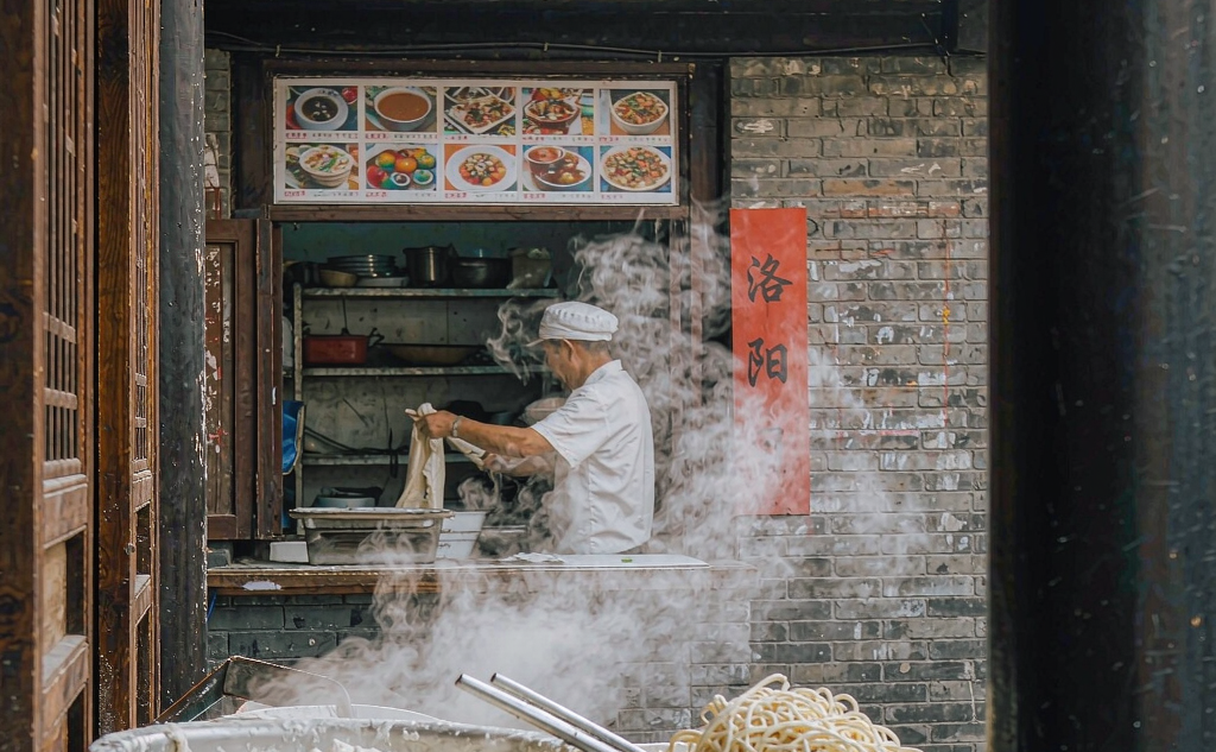
The Luoyang Water Banquet (水席) is the undisputed headline. It’s not water in the literal sense — the name comes from the fact that almost every one of its twenty-four courses is a soup or a braised, broth-heavy dish, served in waves like flowing water. The signature is 牡丹燕菜 (peony swallow dish), a nest of shredded turnip turned silky and dressed to look like a peony, floating in a clear chicken broth. A full Water Banquet for a table of four runs RMB 200–360 at the well-known halls like Zhen Butang near the old city, and you can also order a shorter eight-course version for RMB 120–180 if a full sitting is too much. On our last trip we booked the eight-course set for two clients and still left stuffed.
What to eat in Luoyang beyond the banquet is all about noodles. 洛阳水席 is the banquet, but 烩面 (hui mian) — wide wheat noodles in a lamb or beef broth with ribbons of vegetable — is the everyday bowl, RMB 12–18 at any street shop. 浆面条 (jiang mian tiao) is the local oddity: noodles in a lightly fermented sour soy slurry, topped with celery and sesame, about RMB 10 a bowl. We steer first-timers toward a hui mian shop near the Luoyi Ancient City gate first, then the jiang mian tiao, because the sour note divides opinions and it’s better to have a comforting bowl in your stomach first.
Luoyang’s street eats are where this Luoyang food guide gets casual. 烧烤 (shao kao, charcoal skewers) light up the night markets along Zhongzhou Road: lamb skewers RMB 3–5 each, grilled flatbread RMB 2, and 涮牛肚 (shuan niudu, boiled beef tripe on sticks dipped in sesame sauce) RMB 4–6 a stick. 不翻汤 (bu fan tang), a peppery soup with a thin pancake that “doesn’t flip” during cooking, is a breakfast-cum-hangover cure sold for RMB 8–12 near the old town. On our last trip the night-market dinner ran two hours and the clients tried nine different skewers before settling on the lamb and the tripe as favorites.
The Henan Yu cuisine guide we publish explains the regional logic: Henan cooking is the plain-spoken center of Chinese food, built on wheat, sesame, and gentle braises rather than the fire of Sichuan or the sweetness of the coast. That framework makes any Luoyang menu readable, and it pairs naturally with nearby Shaanxi — our Xi’an travel guide covers the noodle-and-dumpling cousin just across the border, useful if you’re extending westward. For transport, the China high-speed train guide for foreigners walks through buying tickets on the 12306 app and using your passport at the gate, which is how we move clients in and out of Luoyang.
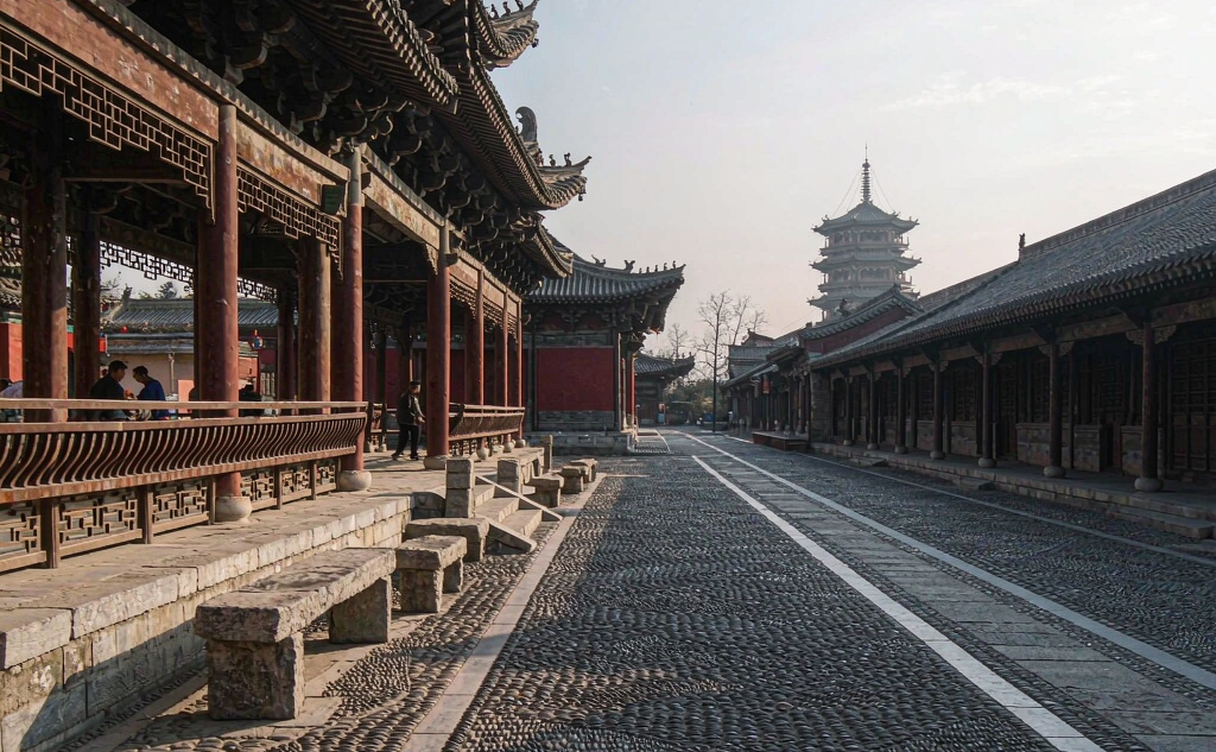
Best restaurants in Luoyang for a visitor are the old-city banquet halls for the Water Banquet and the small noodle shops everywhere else. Beyond Zhen Butang, try the food street behind the Luoyang Museum for cheap bites (most under RMB 25 a plate) and the riverside row near the Luo River for evening grilled fish. A whole grilled 黄河鲤鱼 (Yellow River carp) runs RMB 68–98 and feeds three. We steer groups toward the riverside after dark, when the bridges are lit and the skewer smoke makes the best photos.
Timing matters for the food. The best time to visit China broadly is spring and autumn, and Luoyang follows that rule; the April peony festival also brings the city’s best produce to the tables. Summer is hot but the night markets thrive; winter is cold and good for broths. We normally recommend a two-night stay: one day for the grottoes and a Water Banquet dinner, one day for noodle-hopping and a countryside 少林 (Shaolin-area) lunch if you’re driving east toward Zhengzhou.
Practical bookings you can make today: high-speed rail tickets (Zhengzhou East–Luoyang Longmen from RMB 60 second class), guesthouses in the old city from RMB 170 a night, and the Water Banquet halls, which take phone reservations we can place for you. The Longmen Grottoes, the city’s UNESCO-listed treasure, should be booked a day ahead on its WeChat mini-program (RMB 90 ticket) — we handle that so clients aren’t stuck in a queue before a banquet. For getting between the grottoes and the banquet halls without a hitch, our Luoyang travel guide covers the logistics.
If you want deeper context on the region’s cooking before you go, our broader China food tour guide maps how Henan fits into the national picture, and the Henan Yu cuisine guide drills into the wheat-and-sesame logic province-wide. Luoyang is the most theatrical entry point, thanks to the Water Banquet, but the noodles are the daily truth of the place.
A few dishes worth chasing that rarely leave the region: Luoyang 锅贴 (guo tie, pan-fried dumplings) at RMB 10–15 a plate from morning shops near the train station. 糊涂面 (hu tu mian, a rough maize-and-vegetable noodle gruel) is peasant food turned comfort dish, under RMB 12 a bowl. And 驴肉 (donkey meat) shows up in sandwiches and braises around the city — a donkey-meat sandwich runs RMB 8–12 and surprises clients who’ve never tried it. On our last trip a client declared the guo tie the sleeper hit of the whole Henan leg, which is exactly the kind of find this Luoyang food guide is meant to surface.
One last note for first-timers: English menus are rare outside the big hotels, so we hand clients a saved photo of dishes or run a translation app at the table. Card and Alipay/WeChat Pay cover most city places; village stalls are often cash-only, so carry RMB 100–200 in small bills. Vegetarians can eat well on noodle soups (ask for no meat broth), tofu, and vegetable skewers, but many broths contain meat, so tell the kitchen and we’ll mark the safe stops in your plan.
References: For background on the city’s headline sight that pairs with any food trip, see the Longmen Grottoes listing on the UNESCO World Heritage site.