

Our Zunyi food guide leans into the kind of food foreign visitors rarely expect from China: sour, smoky, and layered with chili that builds rather than burns. On our last trip with two clients from Lisbon, we ate our way across this Guizhou city for three days and came away convinced it’s one of the best under-the-radar eating stops in the southwest. This Zunyi food guide covers what to eat in Zunyi, the lamb hotpot that defines winter here, what a meal costs in RMB, and how to reach the city by train.
Zunyi sits in northern Guizhou, about 90 minutes by high-speed rail from Guiyang and roughly two hours from Chongqing. The climate is mild and damp, with the clearest, most comfortable travel falling in spring (March–May) and autumn (September–November). We’ve sent clients in July and August too, but the summer is sticky and the chili hits harder when you’re already sweating. For food specifically, late autumn through winter is prime time, because that’s when the lamb hotpot tradition peaks.
The dish that anchors a Zunyi food guide is 羊肉粉 (yangrou fen) — a lamb rice-noodle soup eaten at breakfast. A bowl of springy rice noodles sits in a clear lamb broth, topped with sliced boiled lamb, coriander, pickled chili, and a spoon of rendered lamb fat. At the best morning shops near Hongjun Road it costs RMB 12–18 a bowl, and locals queue before 8 a.m. On our last trip we took a client who claimed she didn’t like lamb; by day two she was ordering a second bowl with extra chili oil. The trick, vendors told us, is the broth — simmered six hours with ginger and Sichuan peppercorn, never rushed.
Zunyi lamb hotpot (羊肉火锅) is the evening counterpart. Unlike Chongqing’s red-oil hotpot, the Zunyi version uses a pale, herb-flecked broth with potatoes, radish, and wide slices of lamb shoulder cooked at the table. A pot for two runs RMB 98–148 including meat, and you add plates of leafy greens (RMB 8–15) and handmade tofu (RMB 10) as you go. We book a specific spot near the old town for groups because its broth is milder and the staff will dial the chili down for foreign palates on request.
What to eat in Zunyi beyond noodles and hotpot is a lesson in Guizhou’s signature sourness. 酸汤 (suan tang, sour soup) made from fermented tomatoes or rice water shows up in fish pots and hotpots across the region. A sour-soup fish for two is RMB 88–128 at the riverside restaurants along the Xiangjiang River. We’ve sent clients to a family place where the sour soup is fermented in-house for a week — you can taste the difference against the mass-produced versions near the station.
The city’s street food is where a Zunyi food guide gets fun. Look for 恋爱豆腐果 (liangan doufu guo), griddle-toasted tofu pockets stuffed with a chili-onion relish, sold at RMB 3–5 a piece from night-market carts. 烙锅 (lao guo), a DIY sizzle-pan of meat, potato, and vegetables cooked on a concave iron tray at your table, is a group activity more than a meal — figure RMB 50–80 per person all-in. On our last trip the laoguo dinner ran three hours because nobody wanted to leave the table, which is the highest compliment a Guizhou meal can get.
The Guizhou food guide we publish explains the regional logic: Guizhou cooking relies on fermentation, sourness, and the numbing tingle of local pepper varieties more than straight heat. That framework makes any Zunyi menu readable, and it pairs naturally with neighboring Sichuan, whose China Sichuan cuisine guide covers the bolder, oilier cousin just across the provincial line. For transport, the China high-speed train guide for foreigners walks through buying tickets on the 12306 app and using your passport at the gate, which is how we move clients in and out of Zunyi.
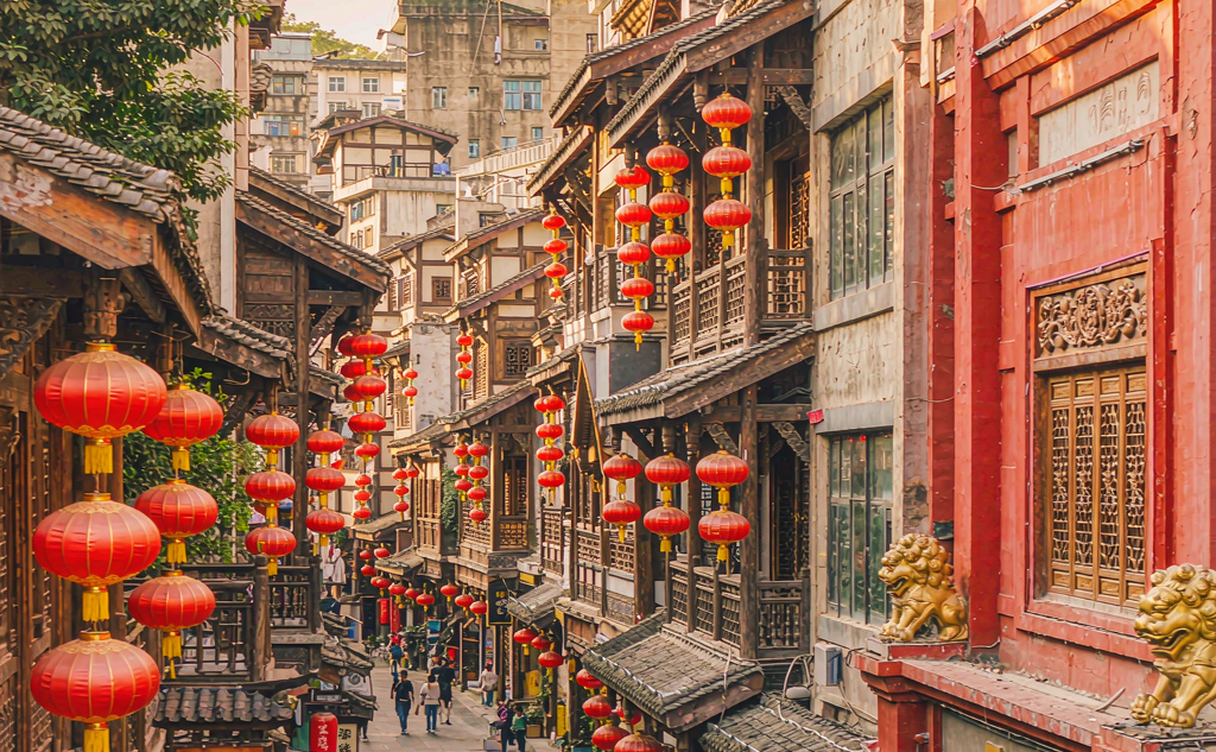
Best restaurants in Zunyi for a visitor are the mid-size local joints, not the hotel banquet floors. Beyond the lamb spots, try the food street behind Zunyi Meeting Site for cheap bites (most under RMB 25 a plate) and the riverside row for evening grilled fish and sour soup. A whole grilled 乌江鱼 (Wu River fish, a local carp) runs RMB 68–98 and feeds three. We steer groups toward the riverside after dark, when the lanterns and the charcoal smoke make the best photos and the heat of the day has lifted.
Timing matters for the food. The best time to visit China broadly is spring and autumn, and Zunyi follows that rule, but for hotpot specifically we push clients toward November–February. Summer is lush and green but the markets thin out and the humidity wears on appetite. We normally recommend a two-night stay: one day in the city eating noodles and hotpot, one day on a countryside loop to a Moutai-district town or a minority-village lunch.
Practical bookings you can make today: high-speed rail tickets (Guiyang North–Zunyi from RMB 51 second class), guesthouses in the old town from RMB 160 a night, and the riverside hotpot restaurants, which take phone reservations we can place for you. The Moutai distillery town of Maotai, about 90 minutes southwest by car, offers distillery tours that should be booked a week ahead through a licensed agent — we handle that for clients who want the full Guizhou-baijiu story alongside the food. For getting around town and the Moutai day trip, our Zunyi travel guide lays out the logistics.
If you want deeper context on the region’s cooking before you go, our broader China food tour guide maps how Guizhou fits into the national picture, and the Guizhou food guide drills into the sour-and-chili logic province-wide. Zunyi is the most approachable entry point, with less outright fire than neighboring Hunan and a lamb tradition you won’t find in coastal China.
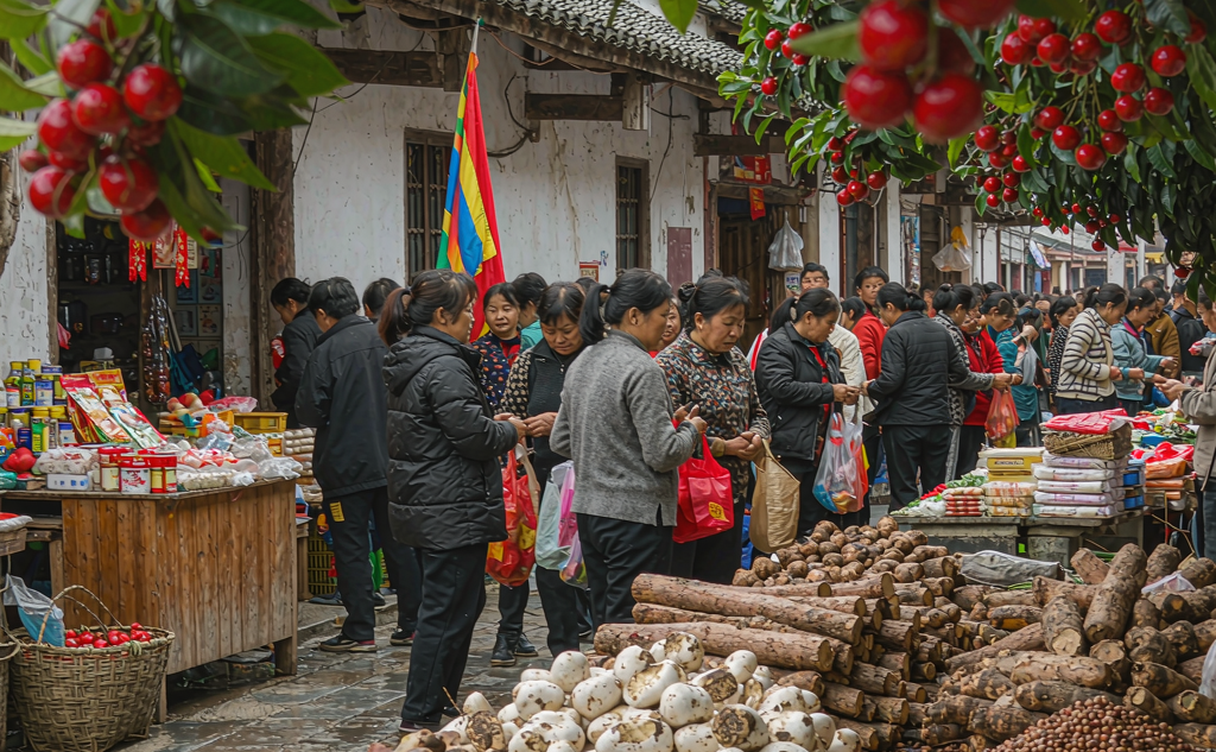
A few dishes worth chasing that rarely leave the region: Zunyi 豆花面 (douhua mian), noodles under a scoop of soft tofu with a chili-sesame sauce, RMB 10–15 a bowl at morning shops. 折耳根 (zhe’ergen, fishy-tasting horseradish stems) appear as a condiment and a cold side — an acquired taste we warn clients about, though some love it. And the local baijiu culture means a small cup of Moutai or a regional liquor is often pressed on dinner guests; a single pour is free at many tables, a full bottle RMB 80–300 depending on label. On our last trip a client who’d never touched baijiu ended up buying a small bottle of the local label as a souvenir.
One last note for first-timers: English menus are rare, so we hand clients a saved photo of dishes or run a translation app at the table. Card and Alipay/WeChat Pay cover most city places; village stalls are often cash-only, so carry RMB 100–200 in small bills. Vegetarians can eat well on tofu, sour soup with vegetables, and potato dishes, but broths frequently contain meat, so tell the kitchen and we’ll mark the safe stops in your plan.
References: For background on the famous local liquor that anchors the region’s drinking culture, see the Moutai overview on Wikipedia.