

About 130 kilometers southwest of downtown Chongqing, Simian Mountain, Chongqing, is the city’s best answer to travelers who want falling water, red cliffs, and quiet lake boats instead of skyscrapers and hotpot steam. The name means “Four-Sided Mountain,” for the way ridges enclose a basin of forest and streams. The scenic area holds more than 120 recorded waterfalls, the tallest of them among the highest in China, and a primeval gorge where the air stays cool even in midsummer. We’ve sent travelers here as a two-day reset after a few hectic days in the city, and the contrast is exactly what they needed: no horns, no crowds, just the sound of water.
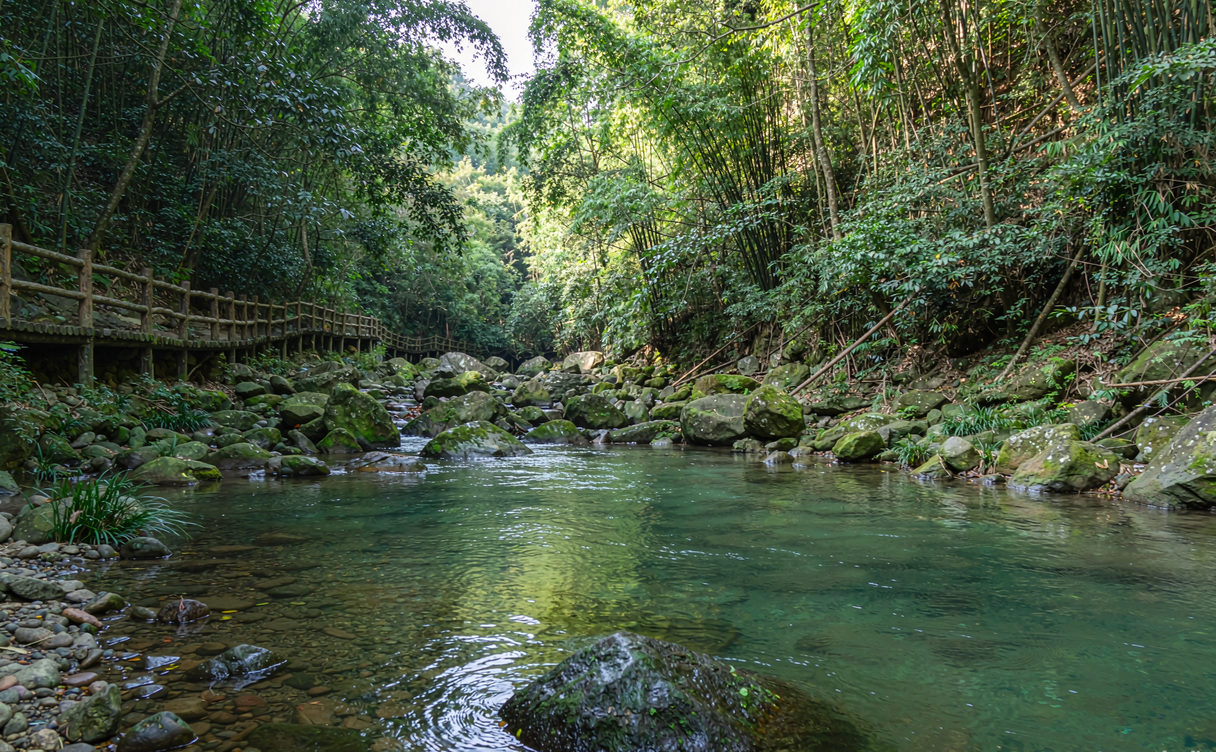
The Simian Mountain waterfalls flow through a landscape of Danxia red sandstone, the same iron-rich rock that gives the cliffs their warm color, cut by streams into gorges and terraces over millions of years. The core of the park is the Honghai (Red Sea) Lake, a long, narrow reservoir of green water backed by forested hills, and the Wangxiangtai Waterfall, a curtain of water about 150 meters high that throws a constant rainbow in sunny weather. Above the lake, a primeval forest of ancient firs and rare orchids survives because the valley was too remote to log until recent decades. This combination of water, colored rock, and intact woodland is what earns the area its national scenic-area status.
Things to do at Simian Mountain
The first things to do at Simian Mountain are the waterfall circuit. Start at Wangxiangtai, where a viewing platform sits close enough to feel the spray; arrive before 11 a.m. for the best rainbow. From there, a shuttle runs to Pearl Lake (Zhenzhu Hu), named for the round pebbles on its bed, and to the Pearl Beach where water sheets across flat rock. The highlight for many is the boat ride on Honghai Lake, a slow electric craft that glides past cliff faces and small inlets; a one-way trip costs about ¥40 ($6 USD) and lets you walk back along the shore trail. At Tudi Rock (Land Cliff) you can see the natural red murals, mineral stains that look painted on the stone.
Hiking options range from flat lakeside boards to steeper gorge paths. Our guides usually plan a half-day loop: boat out, walk back, stop at two waterfalls, lunch at the lakeside village. On our last visit in early June, the water was at full volume after rains and the gorge was lush; a family with us spotted a kingfisher diving the lake, which the kids talked about all the way home. We’ve sent couples chasing photos and older travelers wanting easy boards, and both groups found a pace that worked because the shuttle connects every major stop.
Best time to visit Simian Mountain
The best time to visit Simian Mountain is June through August, when the waterfalls run fullest and the forest stays 8 to 12 degrees cooler than Chongqing city, making it the top local summer retreat. April to May is lovely too, with fresh green and fewer people, and September to early November brings clear skies and red leaves on the Danxia slopes. Winter is cold, some boats and lodges close, and ice can make the boards slick, so we skip it unless a traveler specifically wants solitude. For a national calendar, our best time to visit China guide covers the months by region.
How to get to Simian Mountain
Learning how to get to Simian Mountain saves a wrong turn, because the park is farther out than Jinfo. From Chongqing, tourist buses run from the Caiyuanba and Longtousi stations to Jiangjin, then a transfer to a scenic shuttle, total about 2.5 to 3 hours. A simpler route we book for guests is a private car from the city for roughly ¥700 to ¥900 (about $100 to $130 USD) round trip with waiting time, which lets you reach the lake by mid-morning. The high-speed rail now reaches Jiangjin North, and from there a taxi covers the last 40 kilometers; our China high-speed train guide for foreigners explains the ticket app and seat classes.
Costs and the wider Chongqing plan
Admission is about ¥110 per adult in peak season and ¥80 in the low season (roughly $11 to $15 USD), with the Honghai boat and shuttle extra. A night inside the park at a lakeside guesthouse runs ¥300 to ¥600 ($42 to $85 USD) for a standard room, which we recommend so you catch the early light on the water. Simian sits opposite the city from Jinfo, so pick one mountain per trip unless you have a full week. Our Chongqing travel guide shows how to split a city stay with one or two nature days. For travelers collecting protected landscapes, a national parks overview places Simian beside the country’s other scenic reserves.
Food and a Chongqing angle
Inside the park, eat simple farm food: fresh river fish from the lake, cured pork with bamboo shoots, and Jiangjin rice wine (mijiu) at about ¥15 ($2 USD) a bowl. A rural lunch for two runs ¥80 to ¥140 ($11 to $19 USD). Back in the city, reward yourself with hotpot; a Chongqing hotpot guide tells you how to order the numb-and-hot broth without burning your mouth. If your route continues west, a Chengdu food guide helps you read the menu there too.
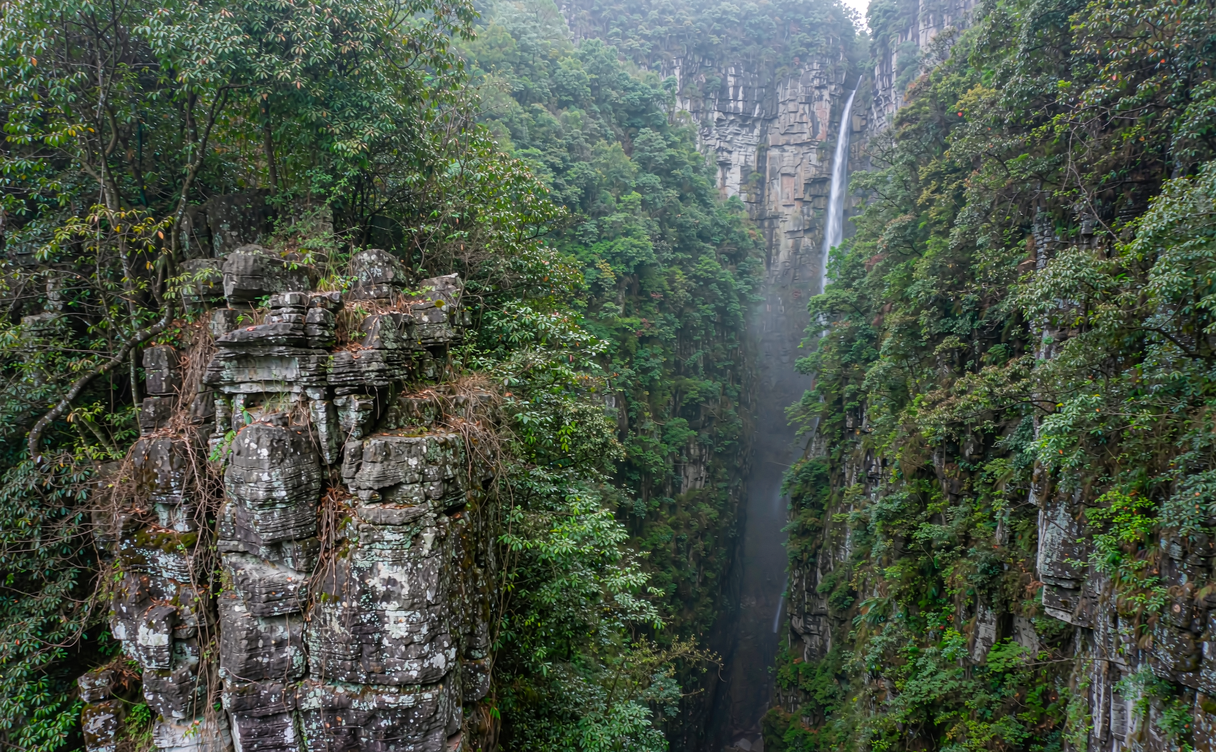
Simian’s quiet fame is its primeval forest, a slice of old growth that survived because the gorge was too steep to log. Birdwatchers come for the rare tragopan pheasant and the swallows that nest in the Tudi Rock overhangs, and in early summer the lake edge fills with fireflies after dark. A relaxed plan is to take the first shuttle to Wangxiangtai, boat across Honghai before the wind picks up, walk the shore trail back, and save Pearl Lake for the soft afternoon light. Our guides carry a small spotting scope and will point out the kingfishers that hunt the inlet where we saw them last June. If you stay overnight, the lake at dawn is the calmest and best-lit moment of the whole visit, and the Danxia cliffs glow deepest red about an hour before sunset, which is the time to be on the east shore rather than the west.
Why we keep sending travelers here
On our last visit the lake was dead calm at 7 a.m., and the only sound was a distant waterfall; the group agreed it was the most relaxed they had felt in two weeks of travel. The Simian Mountain Chongqing scenic area is built around water, and the Simian Mountain waterfalls are the main event. The best things to do at Simian Mountain are the boat and the gorge walk, and the best time to visit Simian Mountain is summer. Learning how to get to Simian Mountain by car saves a transfer. We’ve sent travelers there as a two-day pause between Chongqing and the next city, and it works because the shuttle and boat remove the hard walking while the scenery stays first-rate. The Chongqing Simian Mountain trip is best done as an overnighter: arrive midday, boat and waterfall in the afternoon, sleep by the lake, and walk the quiet shore at sunrise before heading back. It is the calm counterpoint we recommend to anyone whose China plan is all cities and no forest.
Background on the area’s protected status is summarized on Wikipedia’s Simian Mountain page, which notes its national scenic-area designation and waterfall count.