

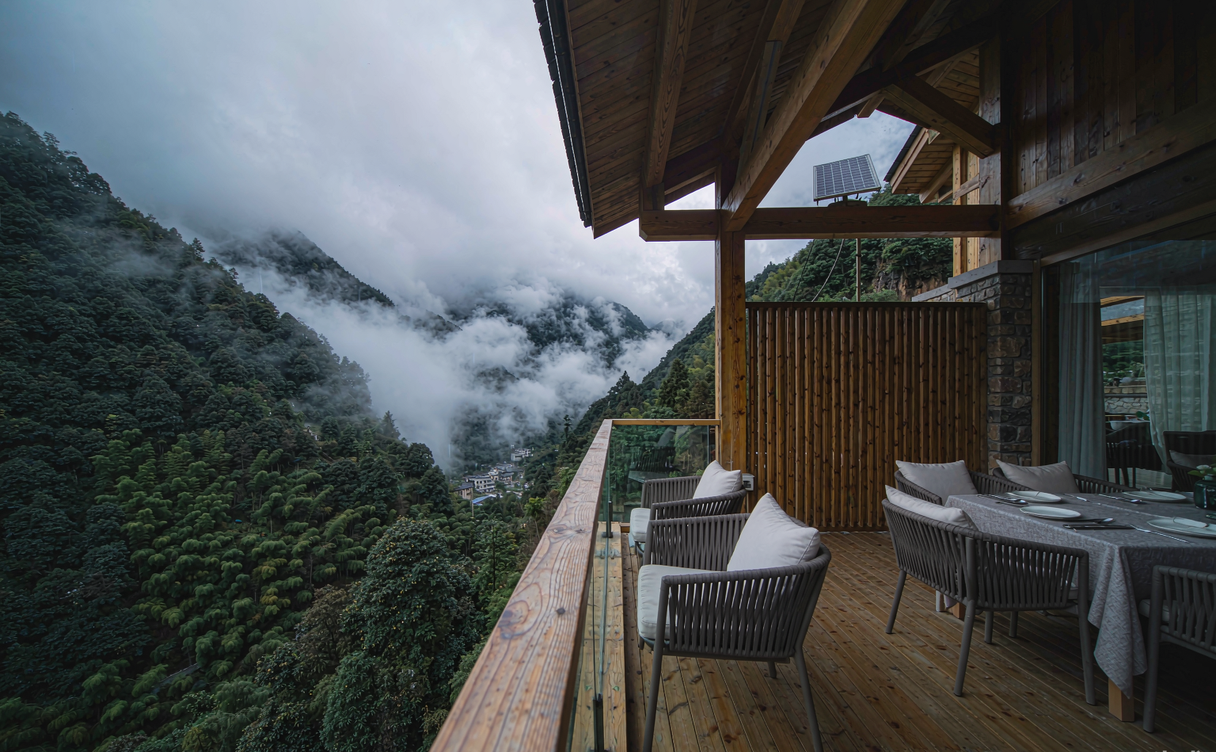
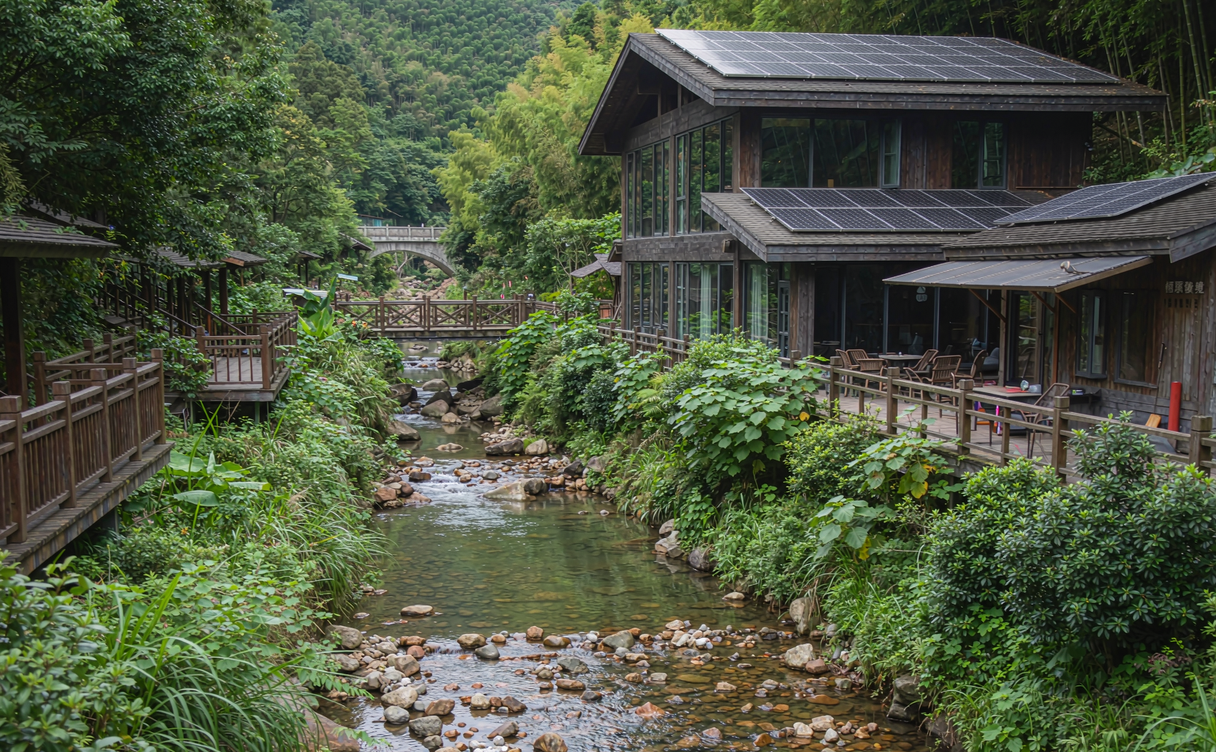
When clients ask me for the best eco lodges in China, they usually expect a single famous brand, and I have to explain that “eco” here means very different things depending on where you are. I’ve slept in a bamboo-walled suite run on solar power in Zhejiang, a Tibetan-style timber lodge in a Yunnan valley, and a reed-roofed hut above a Guangxi river — and the thread between them is that each one tries, in its own way, to tread lightly on a landscape worth protecting. This China eco-lodges guide pulls together the places I’ve actually stayed and the patterns that separate a genuine green hotel from a “sustainable” sticker on the brochure.
What “eco” actually means in China
The term China green hotels covers a state grading system (the “Green Hotel” stars run by the hospitality bureau), but the label is often awarded for efficiency measures — linen reuse, LED lighting, no single-use plastics — rather than for protecting wild land. The lodges I recommend go further: they’re built from local materials, they employ villagers, they keep the footprint small, and they sit inside or next to a protected landscape. That distinction matters, because a concrete block with a recycling bin is not what you came for.
On my trips I judge a stay on three things: does the building belong to its setting, does the food come from nearby, and can the staff tell me where the water goes. The best sustainable hotels China offers pass all three, and the ones that don’t I leave off the list.
Best eco lodges in China, by region
Here are the China nature retreats I’ve personally vetted and would send a friend to:
1. Moganshan, Zhejiang — naked Stables / naked Castle area — the pioneer of eco friendly stays China really noticed. Built around the old republican-era hill station, these use reclaimed timber, geothermal heating, and a no-plastic policy, with organic gardens feeding the restaurant. Rooms run ¥1,800–¥4,000 a night depending on season; book the pool villas months ahead for summer.
2. Anji, Zhejiang — Alila (now a Hyatt property) in the bamboo sea — a low-slung concrete-and-glass lodge tucked into a bamboo forest, with rainwater harvesting and a strong local-hire policy. ¥1,500–¥3,000 a night. The morning bamboo walk with a guide is included and worth waking for.
3. Yangshuo, Guangxi — Banyan Tree and the riverside boutique lodges — set above the karst and the Yulong River, several small lodges here run on solar and source rice and tea from nearby terraces. ¥1,200–¥2,800 a night. I stayed at one where the owner personally paddled me to a morning market.
4. Diqing (Shangri-La) and Lijiang, Yunnan — Songtsam lodges — a small chain of Tibetan-style timber lodges in Yunnan valleys, each built with local craft and staffed by villagers, with strict waste-sorting and a quiet, low-impact ethos. ¥1,400–¥3,500 a night. The Shangri-La property sits at altitude with meadow views that justify the flight in.
5. Wuyi Mountain, Fujian — tea-farm stays — family-run lodges inside the tea terraces that compost, harvest their own leaves, and cook from the garden. ¥600–¥1,400 a night. Rustic but honest, and the rock tea tasting is the real thing.
6. Guizhou village lodges — in the Miao and Dong areas, community-run guesthouses where your bed fee goes straight to the village. ¥300–¥700 a night. Not luxury, but the most directly “sustainable” stays I’ve found.
How to pick a genuine eco stay
The China eco-lodges market is noisy, so here’s my filter. First, check the building material and the view: if it’s concrete with a “nature” logo, be skeptical. Second, ask about staff — a real eco lodge in a heritage site hires from the village, not from a city 200 km away. Third, look at scale; the best ones cap room numbers so the land isn’t paved over. I’ve turned down several “eco resorts” that were essentially convention hotels with a green sign, and I tell clients to do the same.
If you want a more homely version of this, our China homestay guide covers staying with local families, while the China farm stay guide is the rural, hands-on end of the same idea — you feed the animals and eat the harvest. For sleeping under canvas rather than a roof, the China glamping and camping guide lists low-impact sites from Yunnan to Inner Mongolia.
If your trip is built around mountains, our China mountain lodge stays guide maps the best high-altitude andforest lodges province by province, with the ones that genuinely protect their watershed marked so you don’t have to guess. Pair it with this list before you book.
Seasons and pricing
Eco lodges follow the landscapes they sit in. Bamboo and river lodges in Zhejiang and Guangxi peak in July–August (¥2,500–¥4,000 a night) and drop 30–40% in April–May and October, which is when I’d go — green, mild, and quiet. Yunnan’s mountain lodges are best May–June and September–October; winter is cold but cheap and gloriously clear. Fujian tea stays are lovely in spring during the first flush harvest. The best time to visit China guide has the month-by-month climate if you’re matching a lodge to a wider route.
Budget realistically: a credible eco lodge in China runs ¥600–¥1,400 a night for the simple village and farm types, ¥1,200–¥2,800 for the designed boutique lodges, and ¥1,800–¥4,000 for the flagged luxury names. None are “cheap,” but the top tier includes meals and activities that would cost extra elsewhere.
Heritage-site stays
A special sub-set of eco friendly stays China offers are the lodges inside or beside protected heritage areas. Our China heritage hotels guide covers converted courtyards, old post houses, and restored timber inns where the building itself is the attraction and the restoration used original methods. And if you want the calmest possible version, the China temple stay guide explains sleeping at active monasteries — the ultimate low-consumption night, with a 5 am bell and vegetarian meals.
What to pack and how long to stay
For any eco lodge, pack layers (mountain and river nights cool fast), reef-safe nothing-needed toiletries (most provide refillable), and a reusable bottle — the good ones have filtered stations. Stay at least two nights; one night barely lets the place show itself, and the best experiences (a dawn walk, a market trip, a tea roast) need a morning you’re not rushing out of. I’ve never regretted a third night at a well-run lodge, and I’ve often regretted leaving after one.
Transport is the catch: most genuine eco lodges are 1–3 hours from the nearest station or airport, often on switchback roads. I arrange a private transfer through the lodge itself — it costs more than a bus but the drivers know the unmarked turns, and the lodge usually meets you at the county town.
For the rural and village end of this, combine this guide with a China farm stay and a China homestay — together they cover every tier from a ¥300 village bed to a ¥4,000 designer suite, so you can match the stay to your budget and your conscience.
A note on the bigger picture
For the philosophy behind all this, the Wikipedia page on ecotourism is a short, useful read before you book — it defines the line between “nature-based” and “nature-respecting,” and that line is exactly where I decide whether to recommend a lodge. China’s protected areas are under real pressure from visitor numbers, so choosing the operators who cap rooms and hire locally is one of the few ways a traveler can actually help.
When you book, email the lodge directly and ask the three questions — where does the water go, who runs the kitchen, how many rooms. The honest answers are how you tell a real eco stay from a green-painted one, and the good lodges will answer without hesitation.
Closing
The best China eco-lodges aren’t the ones with the greenest logo; they’re the ones where the building, the meal, and the wage all stay in the valley. From a bamboo suite in Anji to a timber lodge above a Yunnan meadow, the stays worth your money are the ones that will still be there, and still be beautiful, in twenty years. Pick by footprint, not by filter, and you’ll come home with a better story than the photos.