

Xingkai Lake (兴凯湖) straddles the border between China and Russia, with the Chinese shoreline in Heilongjiang province, near the city of Mishan (密山) and the Jixi region. Russians know the same water as Khanka Lake (Ханка), and the two names on one map tell the whole story: this is a cross-border lake, half a world away from the desert lakes of the west. We’ve sent birders and off-the-map travelers here for years, and the combination of open water, reed marshes, and a quiet fishing-village feel is unlike anywhere else in Northeast China. This Xingkai Lake guide covers access from Harbin, what to do, what it costs, and the birdlife that draws most visitors.
What Xingkai Lake is
The lake is enormous — about 4,190 square kilometers in total, most of it on the Russian side, with China administering the northern shore and the smaller northern basin (小兴凯湖, “Little Xingkai Lake”). A narrow sandbar and reed belt separates the two basins, and it’s walkable in places. What the Chinese side lacks in size it makes up in accessibility: a long sandy beach, a wetland reserve, and reed beds that run to the horizon.
The Xingkai Lake reeds are the signature. In late summer and autumn they form a rustling golden wall along the water, and the reed margins are exactly where the birds live. We last drove the eastern shore at dawn and the reed line was alive with calling rails and grebes — the kind of sound you don’t get at the better-known lakes. For Heilongjiang lake travel, Xingkai is the easy answer: a big horizon, few crowds, and a frontier feel you can’t fake.
Getting there from Harbin and beyond
Most visitors fly or train into Harbin, then make the overland run east. From Harbin, the high-speed train to Jixi (鸡西) or a bus toward Mishan takes roughly 4–5 hours by road or a bit longer by rail with changes; from Jixi or Mishan a county bus or taxi covers the final 50–90 km to the lake (taxi ¥120–200). Alternatively, the regional hub of Mudanjiang (牡丹江) is another gateway with its own airport and rail links — we map both in our Mudanjiang travel guide. For winter travelers, our Harbin ice festival travel guide explains how to combine the festival with an eastern Heilongjiang extension.
What to do
The developed shore has a beach resort strip with swimming in summer, simple water sports, and fish restaurants. A short hop away, the wetland reserve and the boardwalk into the reeds are the quieter draw. Boating on Little Xingkai Lake is calm and good for families; the open big lake is rougher and better viewed from the shore. The Khanka Lake China Russia boundary is invisible on the water — both countries share the same surface — but the Chinese shore’s infrastructure is what makes a visit practical for foreign travelers based in Harbin.
Tickets, hours, and costs
The lakeside scenic areas charge modest fees — the beach and wetland reserve run about ¥30–50 combined, with boat rides ¥40–80. Hours are roughly 08:00–18:00 in summer. A half-day covers the beach and one boat trip; a full day lets you do the reserve, a fishing village, and a sunset on the big lake.
When to go
Summer (June–August) is the beach season — warm, swim-friendly, busy on weekends. But the lake’s real reputation is birding. The spring (April–May) and autumn (September–October) passages bring the densest Xingkai Lake birds movement, and those are the windows we recommend to serious visitors. Winter freezes the shallows and the place goes quiet; it’s beautiful but most services close. The China birdwatching guide covers what else to pair in the region.
Birdlife
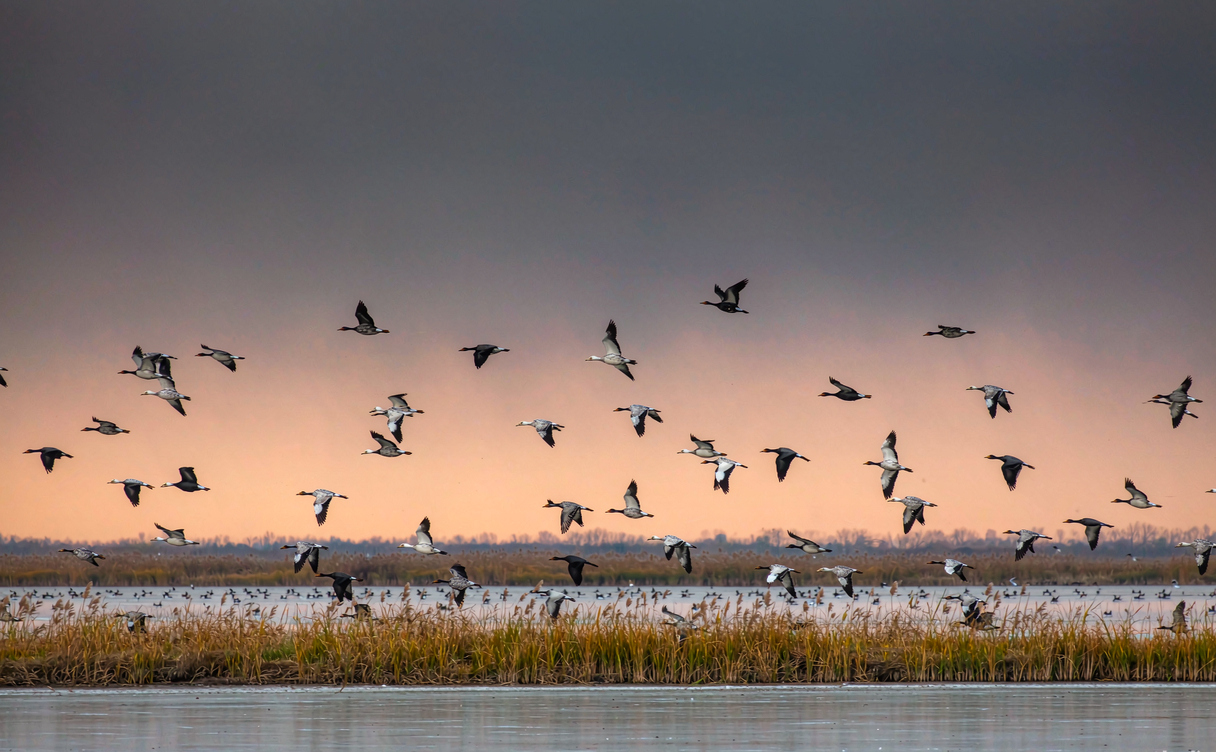
This is one of the most important wetlands in the Amur basin. Expect migratory geese and swans in season, plus herons, egrets, and a long list of ducks and rails in the reeds. The reserve rangers run a simple visitor center with sighting boards. Bring a scope if you have one — the birds work the far reed edges and a naked eye misses most of the show. We’ve seen the Xingkai Lake reeds flush with thousands of resting ducks on a single October morning, which is exactly why birders keep coming back.
Fishing-village life
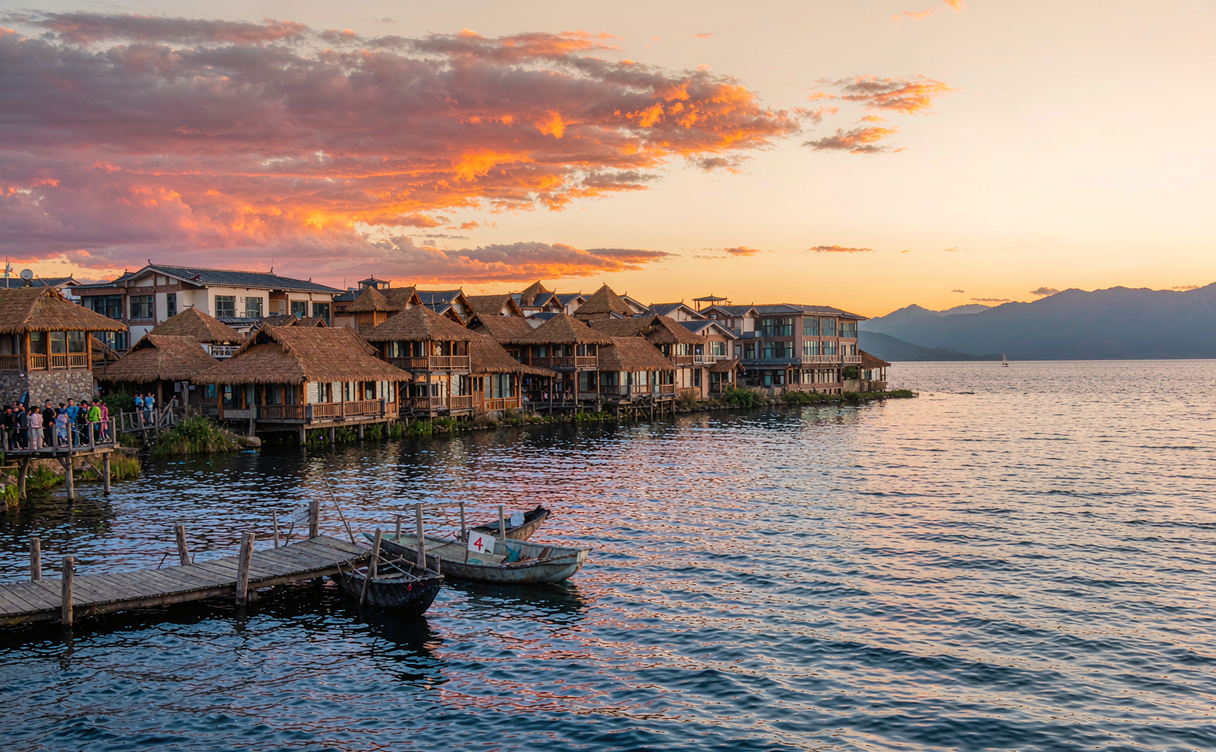
The northern shore is dotted with small fishing settlements where wooden huts sit right at the waterline and the day’s catch is sold off the boat. It’s a slow, plain kind of place — no promenade, no neon — and that’s the appeal. Buy a string of fresh fish, hand it to a village cook, and you’ll eat better than at any resort restaurant for a fraction of the price. We last stopped at a hut near the Little Lake causeway and paid ¥60 for a platter of grilled white fish that had been swimming an hour earlier.
What to eat and where to stay
The lake is famous for its fish — 白鱼 (white fish) grilled or steamed is the local flagship, ¥50–90 a plate at shore restaurants. The fishing villages serve simpler, cheaper set meals. For lodging, the beach strip has resorts (¥300–600/night in summer, much less off-season); Mishan and Jixi have cheaper city hotels. Our China lakeside resorts guide compares Xingkai with Bosten and the southern lakes.
Getting around the shore
The lake’s Chinese shore is compact enough to cover by taxi from Mishan or a rented car, but the scenic spots are spread along a single coastal road, so a driver for the day (¥200–300) saves the fuss of chasing buses. The beach, the reserve boardwalk and a fishing village can all fit into one relaxed loop if you start at first light and keep the late afternoon free for the big-lake sunset.
Pairing it with the northeast
Xingkai fits a Heilongjiang circuit. From Harbin you can swing east to the lake and then north to Heihe on the Russian border — our Heihe travel guide covers that frontier town. Volcanic scenery is close too: our Wudalianchi volcano guide is a natural add-on for geology fans. ## Border context and the Russian side
Because the lake is shared, the Chinese shore is only part of the picture. You can’t cross to the Russian side from here without a visa and a formal border crossing elsewhere, but standing on the northern beach you’re looking straight across at Russian territory — a frontier feeling that’s unusual for a swimming lake. The rangers sometimes point out roughly where the midpoint lies on a calm day. We mention this so visitors don’t expect to boat across; stay on the Chinese shore and the wetland reserve, where the infrastructure and the birdlife are the draw.
Best photo spots
For birds, the eastern reed line at first light is unbeatable — be in position by 5:30am in summer. For the lake itself, the Little Xingkai sandbar at sunset gives a clean two-water horizon, and the fishing-village huts make the best foreground. A long lens helps; a phone will capture the mood but not the distant flocks, so if photography is the point, bring real glass. The Xingkai Lake reeds also glow at golden hour in autumn, which is why we keep sending shooters back in October.
For neutral background on the shared lake, Wikipedia’s Khanka Lake page covers the cross-border hydrology.
Flying into the region? Our Mudanjiang travel guide shows the alternate gateway to Xingkai.
Into wetland birds? Our China birdwatching guide lists what to pair with Xingkai.
Want volcanic scenery nearby? Our Wudalianchi volcano guide is the natural add-on.