

Changdao (长岛), the island chain off the north coast of Yantai in Shandong, is one of those places Chinese travelers know and foreign ones almost don’t. The islands sit in the Bohai Strait, strung between the Bohai Sea to the west and the Yellow Sea to the east, and they’re famous for one natural spectacle you can actually stand on: the yellow-blue sea line where the two seas meet and refuse to mix. We’ve sent Yantai-based clients island hopping here for years, and between the sea caves, the basalt cliffs, and the seabird colonies, it’s the best easy island trip in North China. This Changdao Islands guide covers the ferry, the islands, costs, and how to pair it with Penglai and Yantai.
What Changdao is
The Changdao Islands (长岛, also historically the “Penglai Islands”) are a cluster of roughly a dozen inhabited and many uninhabited islets administered as Changdao District of Yantai. The two main tourist islands are South Island (南长山岛) and North Island (北长山岛), linked by a causeway, with the smaller outlying islands — including Bird Island (万鸟岛) and the sea-cave island — reached by tour boat. The headline natural feature is the 黄渤海分界线, the Yellow-Bohai dividing line, visible from the northern cliffs as a seam of two different-colored waters.
This Yantai island travel circuit is built around that line, the caves, and the birds. When we last took the north-coast road, the contrast was obvious even from a moving boat — a muddy yellow on one side, a cleaner blue on the other, meeting in a slow, shifting boundary. The Changdao Islands Yantai visitors talk about are really a small archipelago, and the pleasure is in moving between them rather than settling on one.
The yellow-blue sea line and the cliffs
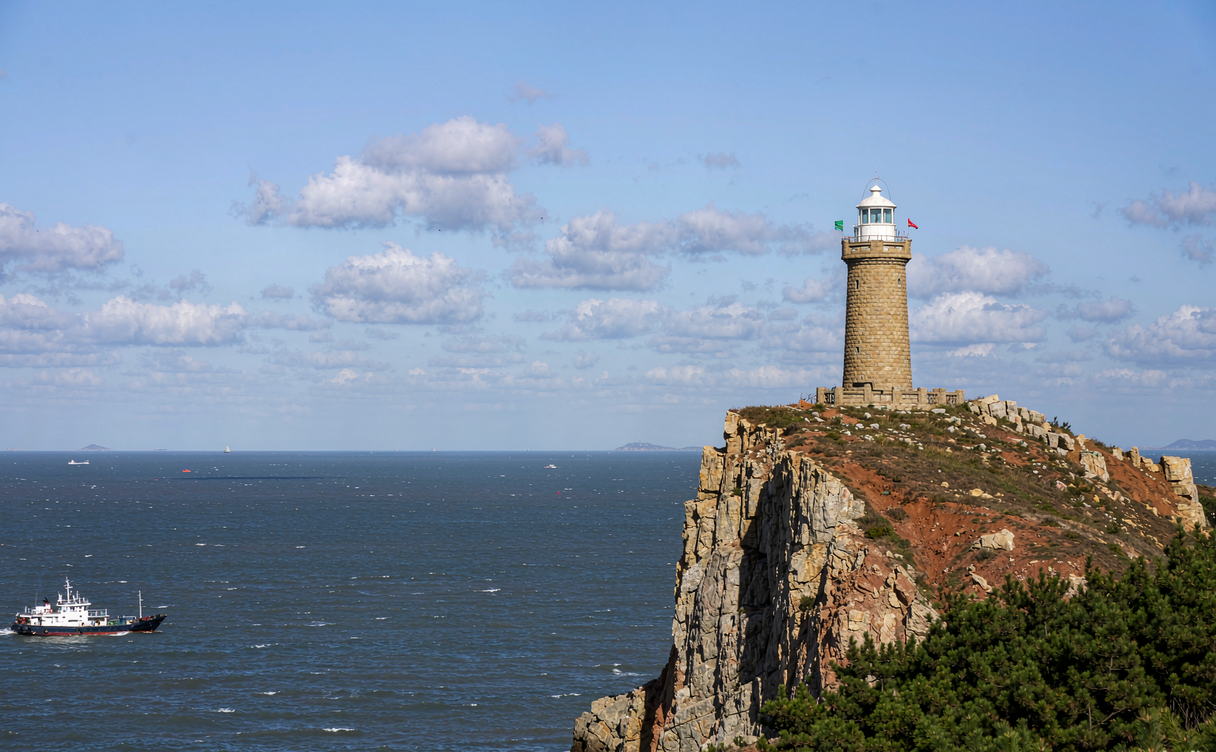
The dividing line is best seen from the northern tip of North Island or from a boat that runs the boundary. It’s not a hard wall — the seas mingle over hundreds of meters — but on a calm day the color difference is real and photographable. The northern cliffs themselves are the other draw: weathered basalt and sandstone dropping into the strait, with stone lighthouses perched on the high points. Penglai Changdao together make the classic North Shandong coastal pair, and the lighthouse shots are the postcard everyone brings home.
Sea caves and island hopping
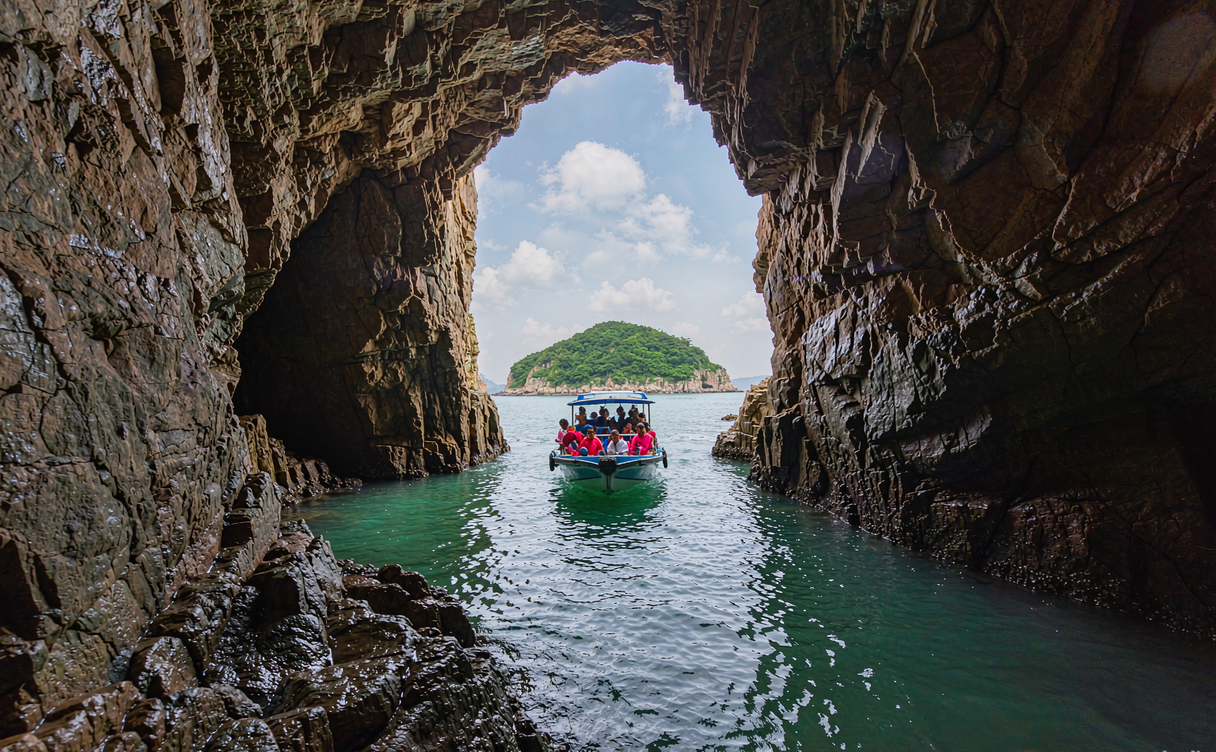
Boat tours run the cave route on the outlying islands — narrow openings you pass through when the swell is right, with names like the Moon Bay sea cave. Changdao island hopping is the reason to stay overnight rather than day-trip: the morning boat to Bird Island (万鸟岛) is the highlight, a vertical cliff colonised by tens of thousands of seabirds in season. The Bohai sea caves on the windward side are dramatic but the captains judge the swell, so timing matters — a calm morning means you go through, a rough one means you circle.
Getting there: the Penglai ferry
There’s no bridge — you go by ferry from Penglai (蓬莱), the coastal town just north of Yantai city. Boats run frequently (roughly every 30–60 minutes in season, 06:30–18:00) and take about 40–50 minutes; a standard ticket is ¥30–45 one way, with vehicle and faster catamaran options priced higher. Penglai is reachable from Yantai by bus or taxi (¥60–90, 60–90 minutes) and has its own draw — the Penglai Pavilion — covered in our Penglai Pavilion Yantai guide. Our Yantai travel guide lays out the full city-and-islands plan.
Tickets, hours, and costs
Island entry is modest — a combined pass for the main sites runs about ¥100–150 in season, with boat tours to Bird Island and the caves an additional ¥100–180 depending on route. The ferry is priced separately as above. Hours for boat tours are daylight only; the islands themselves are open, but services wind down after dusk. A day trip is possible but rushed; we recommend one or two nights.
When to go
Summer (July–August) is peak — warm swimming, full boat service, busy. We actually prefer late May–June and September, when the seabirds are active, the crowds thin, and the sea is still swimmable. The strait is windy year-round, so bring a layer even in August. Winter sees reduced ferry service and most tour boats stop, though the empty off-season islands have a stark beauty for photographers.
What to eat and where to stay
The islands live on what comes out of the water: fresh sea cucumber, abalone, oysters, and the small local 海胆 (sea urchin) in season. A seafood dinner runs ¥80–150 per person at the better island restaurants; a simple noodle-and-clam bowl is ¥20–30. Stay on South Island, where most hotels and the ferry terminal are — mid-range rooms run ¥300–600/night in summer, less off-season. For beach-minded travelers, our China beaches guide compares Changdao with Shandong’s mainland coasts.
Family trips versus solo travel
Changdao works for both crowds. Families usually settle on South Island’s beach and do a single cave boat, then relax — the causeway walk between the two main islands is flat and stroller-friendly. Solo travelers and photographers should stretch to two nights and prioritize the Bird Island dawn trip, because the colony is only active early. The islands are safe, the ferry is frequent, and going solo is both easy and cheap, so don’t wait for a group to form before you book.
Pairing Changdao with the coast
Changdao is the island half of a Yantai–Penglai trip, but the coast invites more. Weihai, an hour east, is a clean, breezy seaside city — our Weihai travel guide covers it. Qingdao, two hours south, is the big-city beach and beer destination in our Qingdao travel guide. If you want the mechanics of boats and routes across China’s islands, our China ferry island hopping guide is the planning companion. ## Getting around the islands
On South and North Island a local bus and rented e-scooters (¥40–60/day) cover the causeway and the north-coast road; private cars are restricted on the inner lanes, which keeps the place quiet. The outlying islands are boat-only, so the Bird Island morning trip is the one you book first. We recommend basing on South Island and doing North Island plus the caves as a single boat day, then a second morning for Bird Island if the seabirds are in season. The cliffs around the sea caves are slick, so wear proper shoes and listen to the captain about when a passage is safe to enter.
When the sea line is clearest
The yellow-blue boundary shows best after a spell of calm, dry weather, when the Bohai’s sediment load sits clearly against the cleaner Yellow Sea. Windy, choppy days muddy the seam and the photo suffers. Late May–June and September are the steadiest windows; ask at the pier the night before and pick your boat time around the forecast rather than locking it in weeks ahead. This is the single biggest factor in whether your Changdao island hopping pays off photographically.
For the geography of the two seas the islands divide, Wikipedia’s Bohai Sea page explains the strait and the boundary.
Starting from the mainland? Our Penglai Pavilion Yantai guide covers the ferry town and its famous pavilion.
Planning the island logistics? Our China ferry island hopping guide explains boats and routes across China.
Want a full Yantai trip? Our Yantai travel guide ties the city and islands into one plan.