

Bosten Lake (博斯腾湖) sits in the south of Xinjiang, China, about 57 km northeast of Korla, and it holds a title that surprises first-time visitors: it is the largest inland freshwater lake in the country. We’ve routed clients through Xinjiang, China for years, and Bosten is the one stop that lets travelers trade the desert narrative for open water, reed mazes, and the kind of lake light you don’t expect this far inland. This Bosten Lake guide covers what’s there, how to reach it from Korla, what it costs, and how to pair it with the rest of a Xinjiang, China trip.
What Bosten Lake actually is
The lake spreads across roughly 1,000 square kilometers, fed mainly by the Kaidu River (开都河) that flows out of the Tian Shan. What makes it special isn’t just size — it’s the ecology. The western and southern shores are walled by some of the largest reed beds in China, a golden, rustling maze that in autumn turns the whole shoreline the color of straw. These Bosten Lake reeds aren’t scenery alone; they’re a working resource, harvested for paper and weaving, and they shelter one of the richer bird populations on the northern Silk Road corridor.
Geographically the lake is the source of the Konqi River (孔雀河, “Peacock River”), which once fed Loulan, the lost desert city. So Bosten is both a wetland and the reason an oasis civilization could exist downstream. When we last drove the eastern shore, the contrast — snow-streaked Tian Shan behind, blue water in front, reeds on the side — was the kind of view that makes people rethink what Xinjiang, China means. The largest freshwater lake Xinjiang offers is also one of its most relaxing, a counterweight to the long desert drives that fill most southern itineraries.
What to do on the water
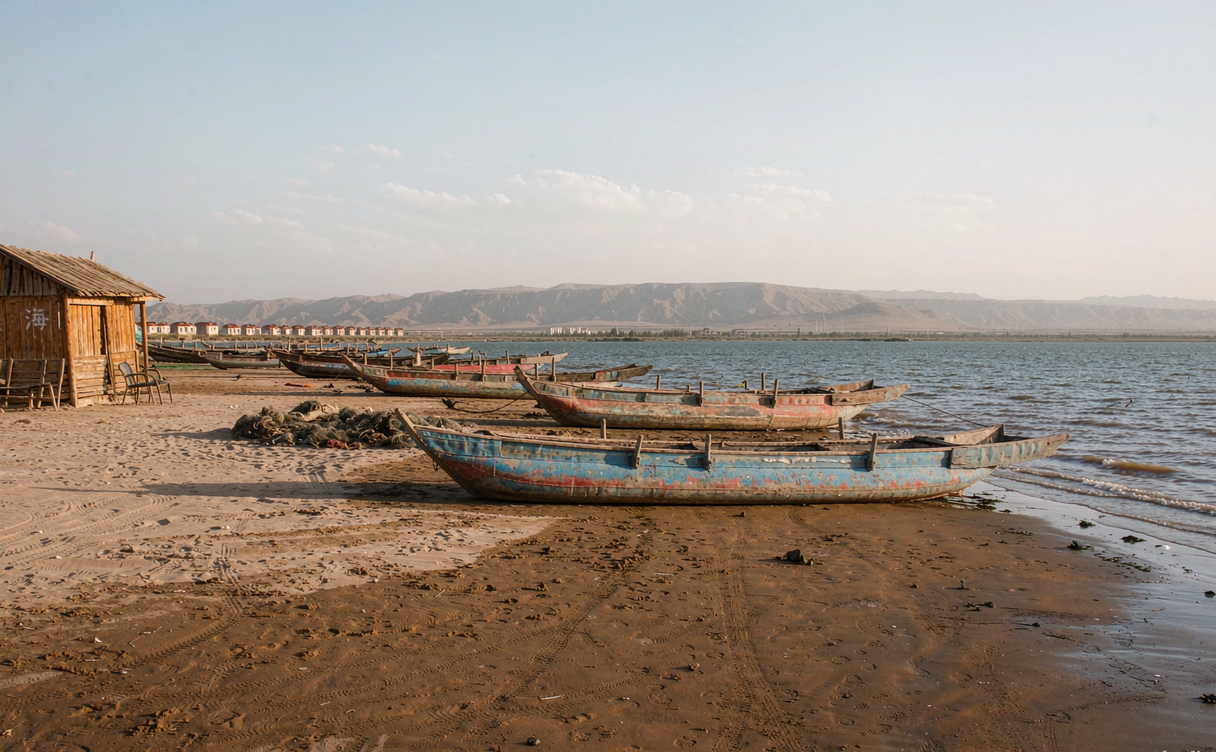
The developed side is the northeastern resort shore near Xiaohaizi (小海子) and the designated scenic area, where you’ll find a sandy beach, paddle boats, and a short boardwalk into the reeds. Swimming is possible in summer and the water is warm by July. Boat trips run from the main wharf (¥60–120 depending on route and season) and are the best way to see the reed maze without wading in. A Bosten Lake Korla day trip is the standard format, but we increasingly recommend an overnight so you can catch both sunrise and sunset on the water.
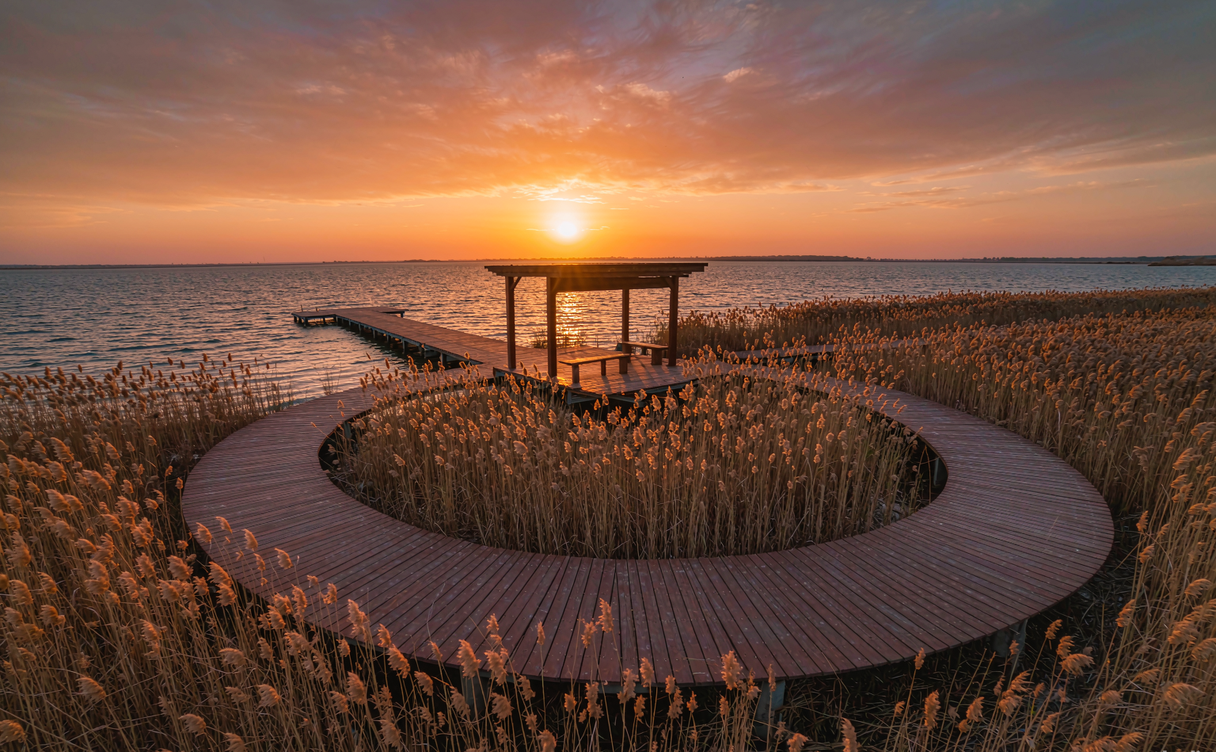
The reed boardwalk at sunset is the photographic set piece. We timed our last visit for late June and the light on the water was flat and silver; in October the reeds go gold and the same boardwalk looks completely different.
Tickets, hours, and getting there
The scenic-area ticket is about ¥45, with boat rides and the beach area sometimes charged separately (¥20–40 add-ons). Hours are roughly 09:00–20:00 in summer, shorter in winter. A relaxed visit is half a day; a full day lets you do a boat trip, the beach, and the reed walk.
Logistics run through Korla (库尔勒), the regional hub. Korla has an airport (Korla Licheng) with flights from Urumqi and other Xinjiang, China cities, and it’s a major stop on the Urumqi–Korla high-speed line — the train from Urumqi takes about 2.5–3.5 hours. From Korla, a taxi or hired car to the lake runs ¥150–250 one way (40–60 minutes); there are also local buses from Korla’s long-distance station, slower but under ¥20. We detail the city base in our Korla travel guide.
When to go
Timing decides the trip. Summer (June–August) is the water season — warm, swimmable, green reeds, full boat service — but it’s also the busiest. Autumn (September–October) is our pick: the reeds turn gold, the heat drops, and the bird movement picks up. Spring (April–May) is good for migratory birds and fewer crowds. Winter is harsh and most services close, though the frozen lake has its own stark appeal for photographers willing to brave the cold.
Birdlife and the reed marshes
This is a serious stop for anyone into wetland birds. The Bosten Lake reeds and the adjacent wetlands host migratory geese, ducks, swans, and the occasional rare crane on the spring and autumn passages. Bring binoculars; the birds are shy and the reed margins are wide. The lake is also part of a larger Xinjiang, China wetland system that includes the Tarim and Konqi corridors, so a birding day here links naturally to desert oasis stops further south.
What to eat and where to stay
Korla is the place to eat. The local specialty is Korla fragrant pear (库尔勒香梨), small, crisp, and sweet — available late August through October. Around the lake, fish from the water (carp and the local 五道黑, a perch-like fish) is grilled at simple shore restaurants for ¥40–80 a plate. For lodging, sleep in Korla (¥250–500/night mid-range, international brands ¥600+) and day-trip out; lakeside there’s a modest resort or two (¥400–700) if you want to wake up on the water. Our China lakeside resorts guide compares Bosten with other lake stays.
Family versus solo
Bosten suits families — the shallow resort beach and the wharf boat ride keep kids happy for a half day, and the boardwalk is an easy flat walk. Solo travelers and photographers should take the later light and stay for sunset on the reeds, which is when the lake is quietest and the gold is strongest. Either way, base in Korla and day-trip out; the lakeside itself has limited evening services once the boats stop running.
Pairing Bosten with the rest of Xinjiang, China
Bosten fits a southern Xinjiang, China loop. From Korla you can head north to Urumqi (our Urumqi travel guide covers the gateway) or west toward the Silk Road towns — our Turpan Silk Road guide picks up the desert route. If you want a second, very different lake, Sayram is the high alpine counterpoint; our Xinjiang Sayram Lake guide explains the contrast. For the overall shape of a trip, start with our Xinjiang travel guide.
Swimming, boating and what to pack
The northeastern resort shore is the only developed swim beach, and the water here is shallow and warms up fast by mid-July — fine for kids, though we don’t recommend the open big lake for weak swimmers. Paddle boats and the wharf cruise are the main options; a private charter into the reed fringe costs more but is the only way to get deep into the Bosten Lake reeds. Pack sun protection, because the shoreline has almost no shade, and a light windbreaker even in summer — the lake breeze coming off the Tian Shan is noticeably cooler than Korla city, and afternoons can turn choppy.
The Kaidu headwaters and Loulan lore
If you have a second day, the Kaidu River source area to the northwest is where the wetland story begins, and the Konqi corridor south is the historic route toward the Taklamakan. We often frame Bosten as the green half of a Xinjiang, China desert-and-oasis loop rather than a standalone stop — the contrast between the lake and the dunes an hour away is exactly what makes the region worth the long travel. The nearby 博湖 county town has a modest lakefront promenade and a handful of night-market stalls in summer if you want a low-key evening after the boardwalk.
For neutral background on the lake’s size and hydrology, Wikipedia’s Bosten Lake page is a reliable reference.
Basing in the south? Our Korla travel guide shows how to use the city as a Bosten launch pad.
Want a second Xinjiang lake with a different feel? Our Xinjiang Sayram Lake guide covers the alpine option.
Planning the wider route? Our Xinjiang travel guide ties Korla, Turpan and Urumqi into one loop.