

This Korla travel guide introduces the greenest city in southern Xinjiang, China — a riverside oasis at the foot of the Tianshan where the Peacock River runs through the middle of town and pear orchards stretch for kilometres in every direction. Korla is the capital of Bayingolin Mongol Autonomous Prefecture, the largest prefecture-level division in China, and it functions as the launch pad for three very different landscapes: Bosten Lake, the biggest inland freshwater lake in the country; the Taklamakan Desert Highway, which crosses 500 kilometres of dunes; and the high summer pastures of Bayinbuluke. Most travellers pass through. Give it two or three days and it repays you.
Why Korla Is Worth Your Time
Korla is not an ancient walled city and it does not pretend to be. It is a clean, modern, tree-lined place that happens to sit at a geographic hinge: mountains to the north, the world’s second-largest shifting-sand desert to the south, and a lake the size of a small sea to the east. The city itself is for eating pears, walking the river at dusk and boarding an early car; the prefecture around it is where the scenery lives. Iron Gate Pass, just north of town, is the reason Korla exists at all — a narrow gorge that controlled traffic between the northern and southern Silk Road branches for two millennia.
Best Time to Visit
The best time to visit Korla is September and October. That is fragrant-pear harvest, the desert poplars turn gold in mid-October, and daytime temperatures settle into a comfortable range.
- April–May: 18–28°C, warming fast. Orchards blossom in early April, which is lovely, but spring is also the dusty season — floating sand can grey out the sky for days.
- June–August: hot, 32–38°C in the city and higher on the desert highway. Bosten Lake becomes the local escape, and the Bayinbuluke grasslands at 2,400 metres stay a cool 15–22°C.
- September–October: the peak. Days of 20–28°C in September easing to 12–20°C in October, clear air, pears everywhere, and the Tarim poplar forests at their best around 10–25 October.
- November–March: cold and still, from 5°C down to −12°C by day. Bosten Lake freezes and mountain routes close, but the city stays functional and hotels are cheap.
Domestic tourism peaks during National Day week (1–7 October) and mid-summer school holidays, when Bosten Lake resorts fill and prices climb 40–60%.
How to Get There
Korla Railway Station sits on the Southern Xinjiang Railway between Ürümqi and Kashgar, and the Golmud–Korla line links it to Qinghai. Korla Licheng Airport is 20 minutes from the centre.
| From | Option | Time | Approx. Cost |
|——|——–|——|————–|
| Ürümqi | Conventional train (fastest services) | 5–7 h | RMB 90–190 (US$13–27) |
| Ürümqi | Flight to Korla Licheng Airport | 55 min | RMB 480–900 (US$68–127) |
| Turpan | Train via Ürümqi or direct service | 6–8 h | RMB 100–200 (US$14–28) |
| Kashgar | Overnight sleeper train | 12–14 h | RMB 180–330 (US$25–46) |
| Golmud (Qinghai) | Train on the Golmud–Korla line | 11–13 h | RMB 160–300 (US$23–42) |
| Xi’an | Direct flight | 3 h 30 m | RMB 900–1,600 (US$127–225) |
| Korla city | Chartered car, day trip to Bosten Lake | 8 h | RMB 500–700 (US$70–99) |
Buy rail tickets with your passport; the ID gates read the passport chip and station security in Xinjiang, China is thorough, so allow 45 minutes. Long-distance buses also connect Korla with Kuqa, Yanqi and Luntai, but for anything scenic a chartered car with a driver is far more useful.
Where to Stay
- Peacock River waterfront — the most pleasant base, with mid-range and four-star hotels along Renmin East Road and the riverside promenade, walkable to night markets and evening river cruises. RMB 260–480 (US$37–68) per night.
- Railway station and Chengqu budget belt — plain but tidy business hotels and guesthouses useful for early departures. RMB 120–220 (US$17–31). Check that the property registers foreign passports before booking.
- Upscale city hotels and Bosten Lake resorts — full-service hotels near the government district run RMB 500–800 (US$70–113); lakeside resorts and reed-marsh lodges at Bosten Lake cost RMB 300–650 (US$42–92) and are summer-only in practice.
Things to Do in Korla
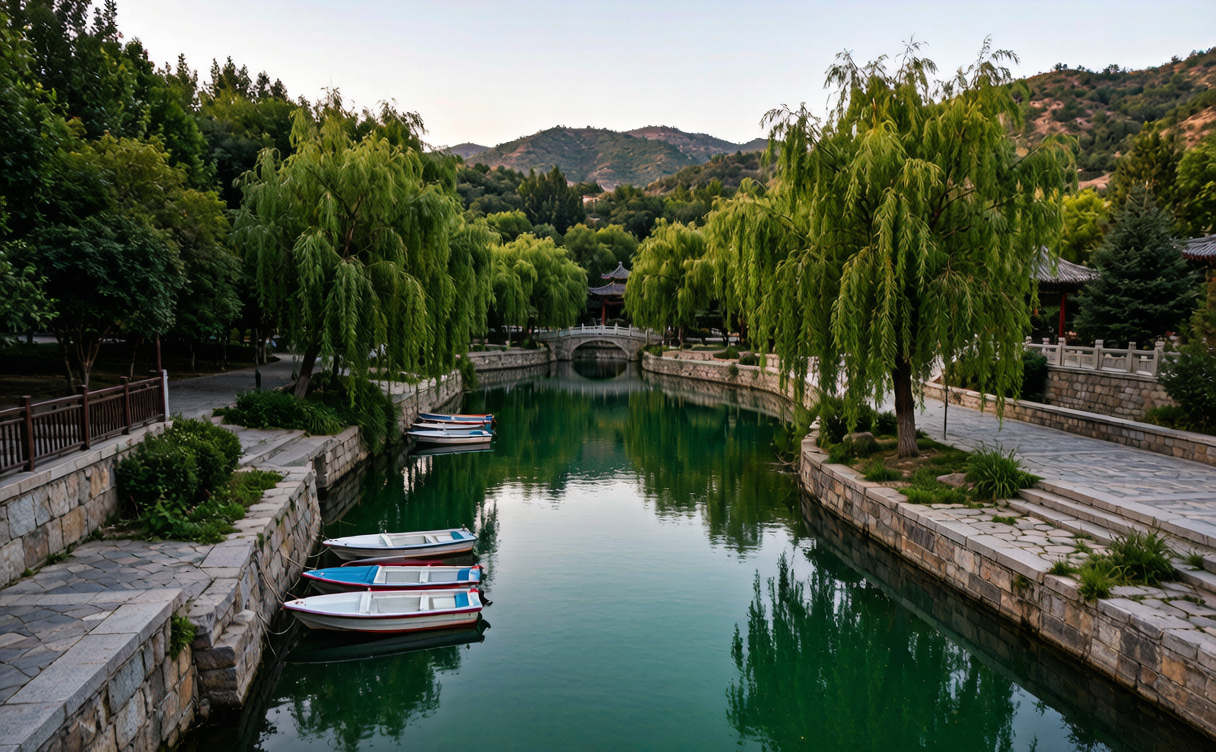
Peacock River (Kongque River) waterfront — the spine of the city. Willow-lined paths, arched bridges lit at night, and small boats running short evening cruises for around RMB 40–60 (US$6–8). Locals walk it after 21:00 when the heat drops.
Iron Gate Pass (Tiemenguan) — 8 kilometres north, a dramatic red-rock gorge where the old caravan road squeezed between cliffs. A restored gate tower, a short canyon walk and views back over the oasis. Entry roughly RMB 30 (US$4).
Bosten Lake — about 60 kilometres east, 1,000 square kilometres of open water with reed marshes, sand beaches on the western shore and a lotus lake that flowers in July and August. The Golden Beach and Lotus Lake sections each charge roughly RMB 60–90 (US$8–13) including shuttle. Bring a windbreaker: it gets breezy.
Taklamakan Desert Highway — the famous cross-desert road begins near Luntai, 180 kilometres west of Korla, and runs 522 kilometres south to Minfeng. Most visitors drive the first 100–150 kilometres to the high dune viewpoints and turn back — a long but unforgettable day out by chartered car.
Tarim Populus Euphratica Forest Park (Luntai) — ancient desert poplars, some over a thousand years old, that flare gold for roughly two weeks in mid-to-late October. This is the single best-timed thing to do in the prefecture.
Bayinbuluke Grassland — around 340 kilometres northwest in Hejing County, a high basin of wetland and pasture where the Kaidu River loops into the famous “nine bends” that catch multiple sunsets in one frame. It is a two-day trip from Korla and part of a UNESCO-listed natural area.
What to Eat
Korla’s food mixes the staples of Xinjiang, China with lake and orchard produce.
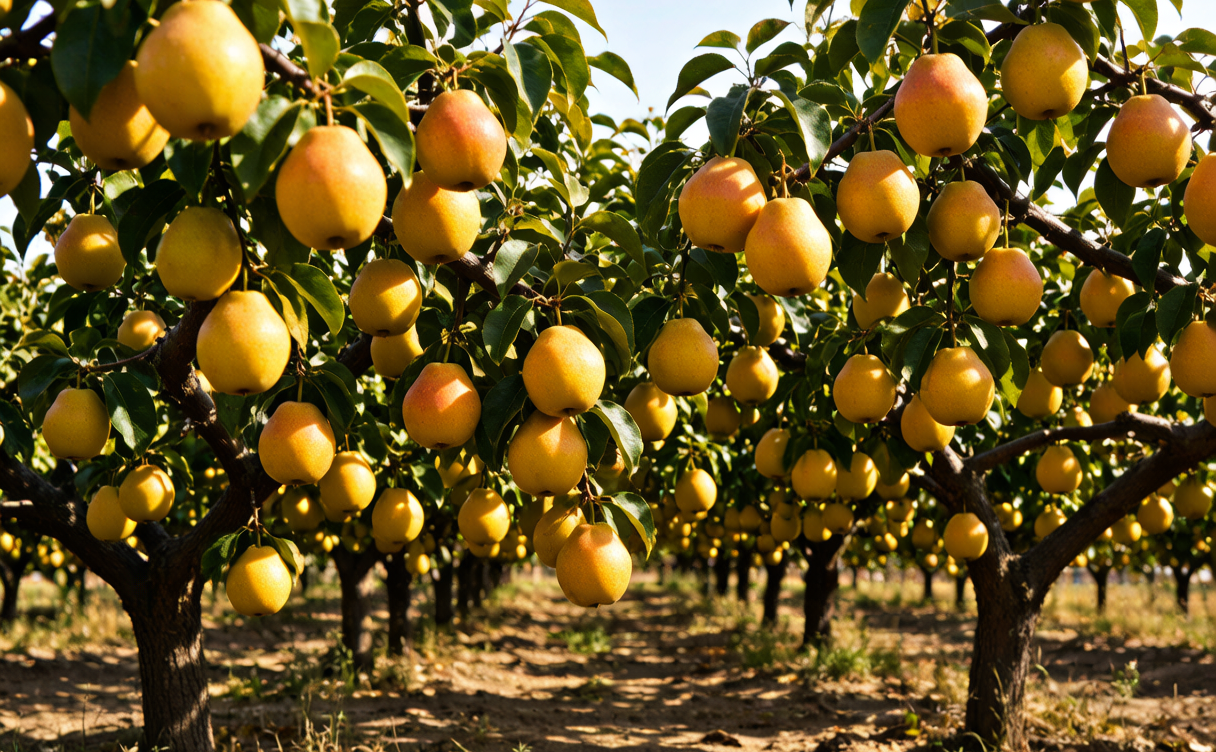
- Korla fragrant pear (xiangli) — small, thin-skinned, intensely aromatic. Sold by the crate from September; ask for the ones with the tell-tale russet “calyx” mark.
- Bosten Lake grilled fish — whole fish split, salted and cooked over open coals on the shore. Pike-perch and carp are the usual catch.
- Dapanji — big plate chicken with potato, pepper and belt noodles; the default group dinner.
- Laghman — hand-pulled noodles with lamb and vegetables, eaten at lunch across the city.
- Kawap and nang — charcoal lamb skewers and tandoor bread from the night market on the river’s south bank.
- Polo — carrot-and-lamb rice pilaf, best before 14:00.
- Yanqi mutton — from the sheep of the Yanqi basin north of town, usually boiled plain and eaten by hand.
Sample Itinerary
Day 1 — city, gorge and river
- 08:30 Breakfast of nang and milk tea
- 09:30 Drive to Iron Gate Pass; canyon walk and gate tower
- 11:30 Return to the city; Bayingolin Museum for Silk Road context
- 13:00 Laghman lunch, then buy pears at a fruit market
- 15:30 Rest through the heat — this is standard local practice
- 18:00 Walk the Peacock River promenade north to south
- 20:00 Short evening boat cruise
- 21:30 Night-market dinner: skewers, grilled fish, cold noodles
Day 2 — Bosten Lake
- 08:00 Chartered car east toward the lake
- 09:30 Lotus Lake section: reed channels and boardwalks
- 12:00 Lakeside lunch of grilled fish
- 14:00 Golden Beach: swimming in summer, walking otherwise
- 17:00 Drive back with a stop at the reed marsh viewpoint
- 19:30 Return to Korla for a dapanji dinner
With a third day, choose one: the desert highway dunes near Luntai, the Tarim poplar forest in October, or the long haul up to Bayinbuluke.
Practical Tips
- Hours and clocks: Xinjiang, China officially uses Beijing time, but daily life runs about two hours behind it. Shops open around 10:30, lunch is at 14:00, dinner at 21:00. Confirm which clock a booking refers to.
- Tickets: buy at the gate or through mini-programs; most scenic areas require passport registration at entry, so carry it at all times.
- Payment: Alipay and WeChat Pay are near-universal. Link an international card in advance and keep RMB 300–600 in cash for drivers, farm stalls and lake-shore vendors.
- Language: English is very limited. Mandarin and Uyghur are both in daily use. Offline translation plus written Chinese addresses solves most problems.
- Permits: none needed for Korla, Bosten Lake, Luntai or Bayinbuluke. Some remote desert tracks beyond the marked highway are simply not open to casual driving — stick to the signed routes.
- Desert driving: if you do the Taklamakan Desert Highway, go with an experienced driver, start early, carry 4 litres of water per person, and fill the tank at Luntai. Fuel stations require ID registration.
- Sun: humidity is extremely low and UV is fierce. Hat, sunglasses and SPF 50 from April to October.
FAQ
How many days should I spend in Korla?
Two days for the city plus Bosten Lake. Three or four if you want the desert highway or Bayinbuluke as well.
How do I get to Korla from Ürümqi?
The train takes roughly five to seven hours depending on service, at RMB 90–190 (US$13–27), while flights take under an hour. Live schedules are published by the national rail operator at China Railway’s English booking portal. Our China high-speed train guide for foreigners explains how passport ticketing works.
Is Bosten Lake swimmable?
Yes, in July and August, on the sandy western beaches. Water temperatures are pleasant, but the lake is shallow and wind can pick up fast, so stay near the marked swimming zones.
When exactly are Korla pears in season?
The main harvest runs from early September to mid-October. Pears are sold year-round from cold storage, but September fruit is noticeably better.
Is Korla a sensible first stop in Xinjiang, China?
It is easy, modern and low-altitude, which makes it a comfortable base. If it is your first trip to the country, read our China travel guide for first-timers before you book anything.
Written by Karl, last updated August 4, 2026.