

This Ili travel guide covers the greenest corner of Xinjiang, China — a wide river valley in the far northwest where the Tianshan opens toward Central Asia and catches enough moisture to grow real grass, real forest and orchards that flower in waves from April to July. Officially the Ili Kazakh Autonomous Prefecture, it is centred on the city of Yining and includes Nalati and Kalajun grasslands, the wild apricot valleys of Xinyuan, lavender farms around Huocheng, the blue expanse of Sayram Lake and the spectacular Duku Highway. If your image of Xinjiang, China is only desert, Ili will rearrange it.
Why Ili Is Different
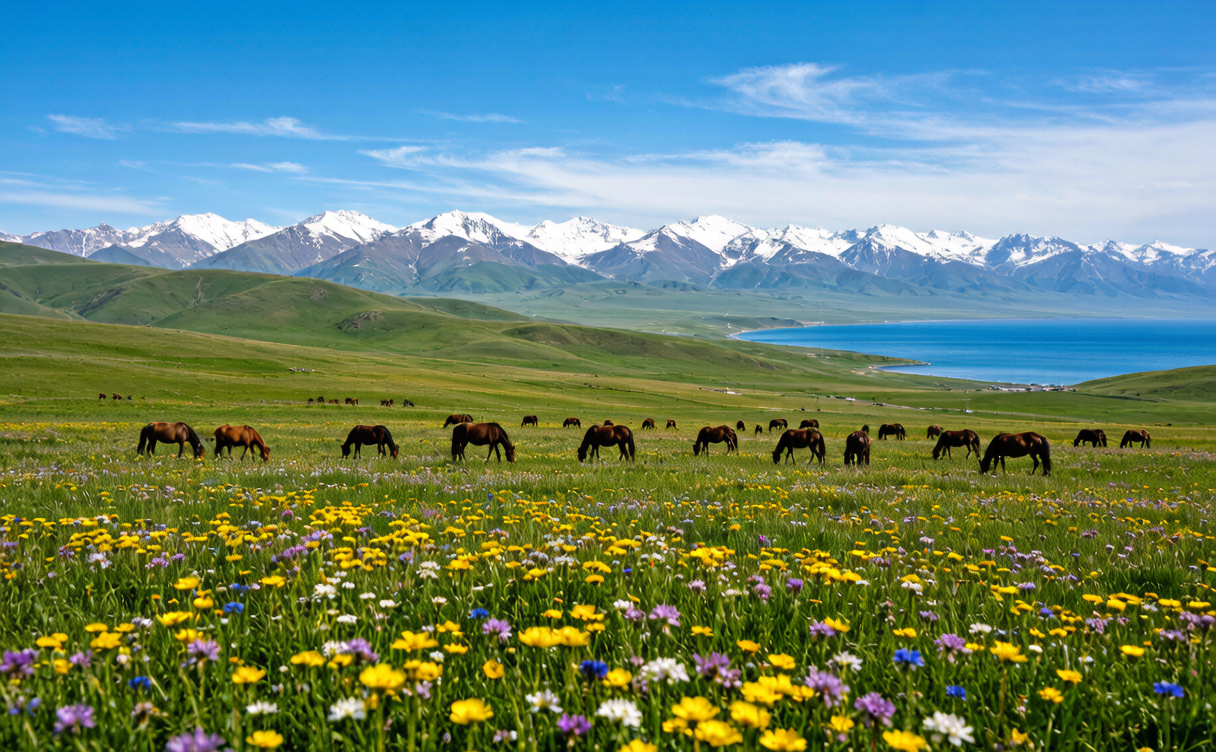
Nearly every other part of Xinjiang, China is arid. Ili is not. Westerly air funnels straight up the valley, drops rain and snow on the ranges and turns the slopes into deep meadow. The result is a landscape closer to alpine Kazakhstan or the Alps than to the Taklamakan: rolling green ridges, spruce forest in the gullies, horses everywhere, and wildflowers from May onward. Yining itself is a low-rise, tree-shaded city of blue-painted courtyard houses and old Russian-influenced streets, and it makes an easy base for a week of day trips and one big road loop.
Best Time to Visit
Ili has four distinct peaks, and choosing between them matters more here than almost anywhere else in China.
- Early to mid April — the Xinyuan Wild Apricot Valley (Tuergen) blooms, covering entire green hillsides in pink and white for roughly ten to fourteen days, usually 5–20 April. Days run 8–18°C, nights near freezing. This is the single most photographed event in the prefecture.
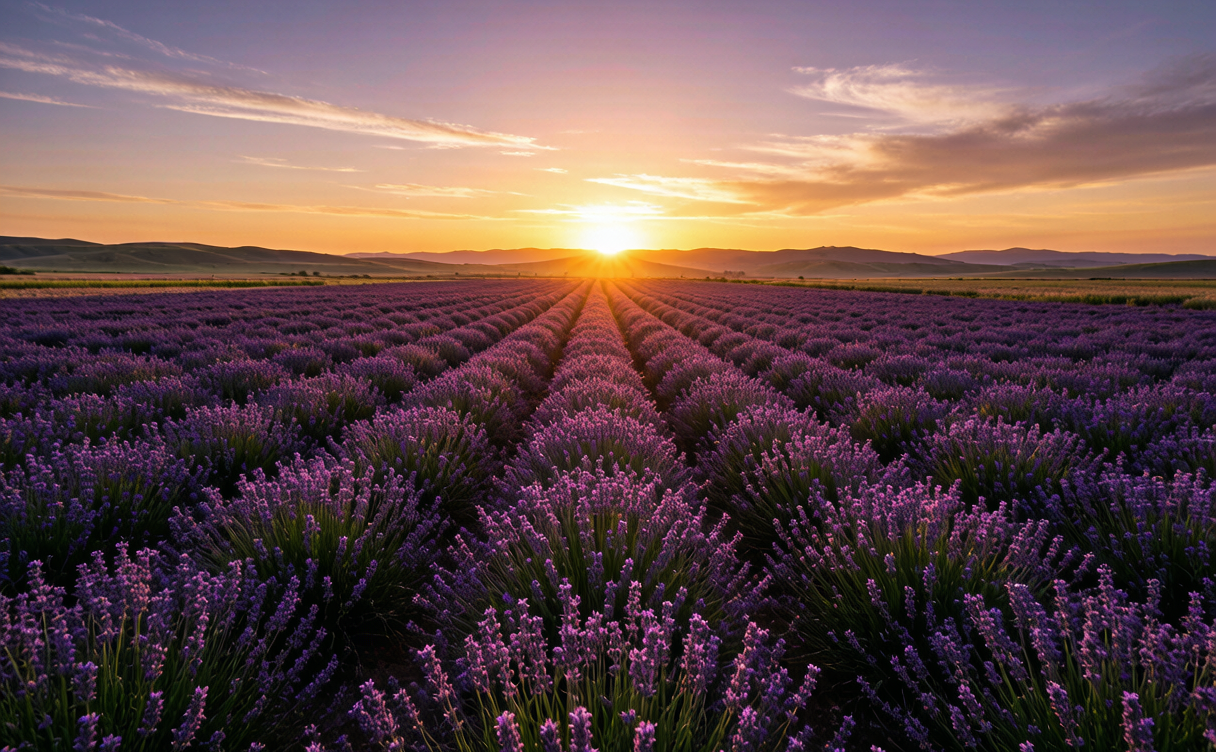
- June — lavender season around Huocheng County, with fields flowering from late May and peaking 10–25 June. Grasslands are at their greenest. Days of 18–28°C.
- July to late August — high season. Nalati and Kalajun are fully open, the Duku Highway is running, Zhaosu’s canola fields turn yellow in early July, and mountain pastures sit at a perfect 15–25°C while Yining reaches 28–33°C.
- Mid September to mid October — larch and poplar turn gold, crowds thin, and prices fall. Days of 12–22°C, cold nights.
Winter (November–March) brings −8 to −20°C, deep snow and closed mountain roads; only skiing and snow-village trips run. Note that the Duku Highway is normally open only from about early June to early October, and the exact dates are announced each year based on snowmelt.
Crowds peak in late July, August and National Day week (1–7 October), when Yining hotel rates can double.
How to Get There
| From | Option | Time | Approx. Cost |
|——|——–|——|————–|
| Ürümqi | Flight to Yining Airport | 1 h 05 m | RMB 550–1,100 (US$77–155) |
| Ürümqi | Overnight train to Yining | 10–12 h | RMB 130–280 (US$18–39) |
| Ürümqi | Expressway coach or chartered car | 8–9 h | RMB 220–350 (US$31–49) |
| Xi’an | Direct flight to Yining (seasonal) | 4 h 15 m | RMB 1,100–2,000 (US$155–282) |
| Yining | Car to Sayram Lake | 2–2.5 h | RMB 500–700 (US$70–99) charter |
| Yining | Car to Nalati Grassland | 4.5–5.5 h | RMB 800–1,100 (US$113–155) charter |
| Yining | Bus to Tekes (for Kalajun) | 3–3.5 h | RMB 55–75 (US$8–11) |
Flying into Yining and renting a car or hiring a driver is the standard approach; distances inside the prefecture are large and public transport between grasslands is thin. Rental cars are widely available at Yining Airport with an international permit plus a temporary Chinese licence — arrange the paperwork before you fly. Rail tickets require your passport, and station security takes time, so allow 45 minutes.
Where to Stay
- Yining city centre — the practical base, near Liuxing Street and the Kazanqi district. Mid-range hotels and design-minded guesthouses run RMB 260–500 (US$37–70) per night, climbing to RMB 500–900 (US$70–127) in late July and August.
- Grassland yurts and pasture lodges — at Nalati, Kalajun and Sayram Lake, ranging from simple shared yurts to en-suite cabins. RMB 200–450 (US$28–63) per night, summer only, and worth one night for the sunrise alone. Bring a warm layer: it can drop near freezing after dark even in July.
- County-town homestays — in Xinyuan, Tekes and Zhaosu, family-run rooms with home cooking at RMB 150–320 (US$21–45). During apricot-blossom week in Xinyuan, book a month ahead.
Things to Do in Ili
Nalati Grassland — in Xinyuan County, a vast sub-alpine pasture with a river valley, forested ridges and long horseback routes. Entry plus internal shuttle runs roughly RMB 160–200 (US$23–28). Stay overnight and ride out at dawn.
Kalajun Grassland — above Tekes, arguably the more beautiful of the two: smooth green ridges folding into each other with snow peaks behind. It forms part of the UNESCO-inscribed Xinjiang Tianshan World Heritage property. Entry plus shuttle roughly RMB 170–210 (US$24–30).
Sayram Lake — a 2,070-metre alpine lake of astonishing blue on the road between Yining and Bole, ringed by pasture and, in June, by wildflowers. A 90-kilometre loop road circles it.
Xinyuan Wild Apricot Valley — the April blossom hills, best walked in early morning before the light flattens.
Tekes Bagua City — a county town laid out as a set of concentric rings with no traffic lights, best appreciated from the central viewing tower.
Huocheng lavender farms — rows of purple running toward the mountains in June, with a smaller second bloom in late August and September.
Duku Highway (G217) — 561 kilometres from Dushanzi over five passes to Kuqa, crossing glacier valleys, canyons and the Bayinbuluke basin. Driving even the northern third is a highlight.
Yining’s Kazanqi district and Liuxing Street — cobalt-blue doorways, horse-drawn carts, courtyard cafés and a hexagonal 1930s street plan lined with accordion shops and bakeries. The best half-day in the city.
What to Eat
Ili’s kitchen is grassland cooking, and it is generous.
- Kawap — cumin-dusted lamb skewers grilled over charcoal; Ili lamb is famously mild.
- Naren — hand-torn noodle sheets with boiled lamb and onion broth, eaten communally.
- Dapanji — big plate chicken with potato and belt noodles.
- Laghman — pulled noodles stir-fried with lamb, tomato and pepper.
- Nang — tandoor bread, sold hot all morning from street ovens.
- Milk tea and kumis — salted milk tea is the everyday drink; fermented mare’s milk is the summer pasture speciality, sour and mildly fizzy.
- Ili apples, apricots and honey — orchard fruit here is exceptional, and roadside honey stands appear all along the valley in July.
- Yining ice cream — dense, egg-rich and sold from carts; a genuine local institution.
Sample Itinerary
Day 1 — Yining and the road east
- 08:30 Breakfast of nang, milk tea and Ili honey
- 09:30 Walk the Kazanqi district: blue courtyards, a short horse-cart ride
- 11:30 Liuxing Street cafés and the accordion shops
- 13:00 Naren lunch
- 14:30 Drive east toward Xinyuan (about 4 hours)
- 18:30 Check into a valley homestay; walk the apricot slopes at golden hour
- 20:30 Home-cooked lamb dinner
Day 2 — grassland day
- 07:00 Sunrise over the valley
- 08:30 Drive to Nalati Grassland; shuttle to the high pasture
- 10:00 Two-hour horseback ride or a ridge walk
- 13:00 Lunch at a pasture yurt: boiled mutton, milk tea
- 15:00 Continue over the ridge to the river valley section
- 18:00 Overnight in a grassland yurt, or return to Yining
With a third and fourth day: drive west to Tekes and Kalajun, then loop north to Sayram Lake before flying out of Yining.
Practical Tips
- Time: Xinjiang, China officially runs on Beijing time, but Ili’s daily rhythm sits about two hours later. Sunset in July is close to 22:00. Confirm which clock a tour or driver means.
- Tickets: grassland entry plus compulsory internal shuttles is the standard model, and the shuttle often costs as much as the ticket. Buy at the gate or via mini-program; passports are registered on entry.
- Payment: Alipay and WeChat Pay work almost everywhere, including yurts. Keep RMB 500–800 in cash for pasture stays, horse hire and small stalls.
- Language: English is rare outside a few Yining hotels. Mandarin and Kazakh are both widely spoken; an offline translator is essential.
- Permits: no special permit is required for Yining, the grasslands, Sayram Lake or the Duku Highway. Carry your passport at all times for hotel and site registration.
- Weather: mountain temperatures swing 20°C in a day. Pack a warm mid-layer, a rain shell and sunscreen even in August.
- Driving: the Duku Highway is single-carriageway with slow trucks and sudden weather. Do not attempt it in a rush, and check the seasonal opening date before you commit.
FAQ
How many days do I need in Ili?
Four to five days is the realistic minimum: one for Yining, two for a grassland, one for Sayram Lake and one buffer for driving. A week lets you add Tekes and the Duku Highway.
When is the apricot blossom in Xinyuan?
Usually 5–20 April, peaking around the 10th, but it shifts a week either way with the spring. Watch local photo feeds in late March before booking flights.
Is Ili suitable for families?
Yes. Grassland stays, horse rides and short walks work well for children, and altitudes stay moderate. Read our China travel guide for first-timers for the wider practicalities of travelling with kids in China.
Can I drive the Duku Highway myself?
You can, with a temporary Chinese licence and a rental car, between roughly early June and early October. Many visitors prefer a hired driver because the passes are tiring and the parking at viewpoints is chaotic in August.
Is Ili hard to reach for foreign travellers?
Not at all — daily flights and overnight trains connect Yining with Ürümqi, and hotels are used to registering foreign passports. Our China off the beaten path guide covers similar regions that reward a little extra planning.
Written by Karl, last updated August 4, 2026.