

Xiqiao Mountain (西樵山) rises out of the flat Pearl River Delta about 30 km southwest of central Guangzhou, in Nanhai District, Foshan. We started sending clients there as a Guangzhou day trip years ago, and it’s one of the easiest “real mountain” experiences in the whole delta — an extinct volcano with crater lakes, waterfalls, a 62-meter bronze Buddha, and a temple complex that locals treat as a serious pilgrimage, not a photo stop. This Xiqiao Mountain guide covers what’s actually on the mountain, how to get there from Guangzhou or Foshan, what it costs, and where to eat and stay.
Why Xiqiao Mountain is worth the trip
Most people in Guangdong think of mountains as something you drive hours north to find. Xiqiao Mountain Guangdong style is different: you can be at the base in under an hour from Guangzhou South Railway Station, yet the summit is 344 meters of genuine basalt cliff, subtropical forest, and spring-fed waterfall. Geologically it’s the best-preserved extinct volcano in the Pearl River Delta, last active millions of years ago, and the Xiqiao volcano crater is still obvious once you know what you’re looking at — a rounded caldera cradling Tianhu Lake.
Culturally, Xiqiao is called the “Gateway to Lingnan culture” (岭南名山). It’s where the Confucian scholar Zhan Ruoshui and the Ming-dynasty Neo-Confucian school left their mark, and where the modern martial arts figure Huang Feihong was born in nearby Nanhai. For a Guangdong mountain day trip that combines nature, geology and a bit of history without an overnight, it’s hard to beat. The Nanhai Xiqiao area also feeds straight into Foshan’s wider temple-and-food scene, so a half day on the mountain pairs naturally with an afternoon in the old town.
The Nanhai Guanyin and the summit
The headline sight is the Nanhai Guanyin bronze statue (南海观音), which at 61.9 meters tall is one of the largest seated Guanyin figures in China. It stands at the top of a long flight of steps on the south ridge, and the climb itself — shaded, with view breaks over the delta — is half the experience. We last went on a weekday morning and had the steps almost to ourselves; weekends are busier but the crowd thins above the midway pavilion. The Xiqiao Buddha is best photographed from the lower terrace, where the whole bronze rises framed by the treeline.
From the statue platform you can see clear to the Guangzhou skyline on a clear winter day. Bring a light jacket even in summer — the summit catches wind the city below doesn’t, and the temperature drops a few degrees compared with the base.
The crater lake and waterfalls
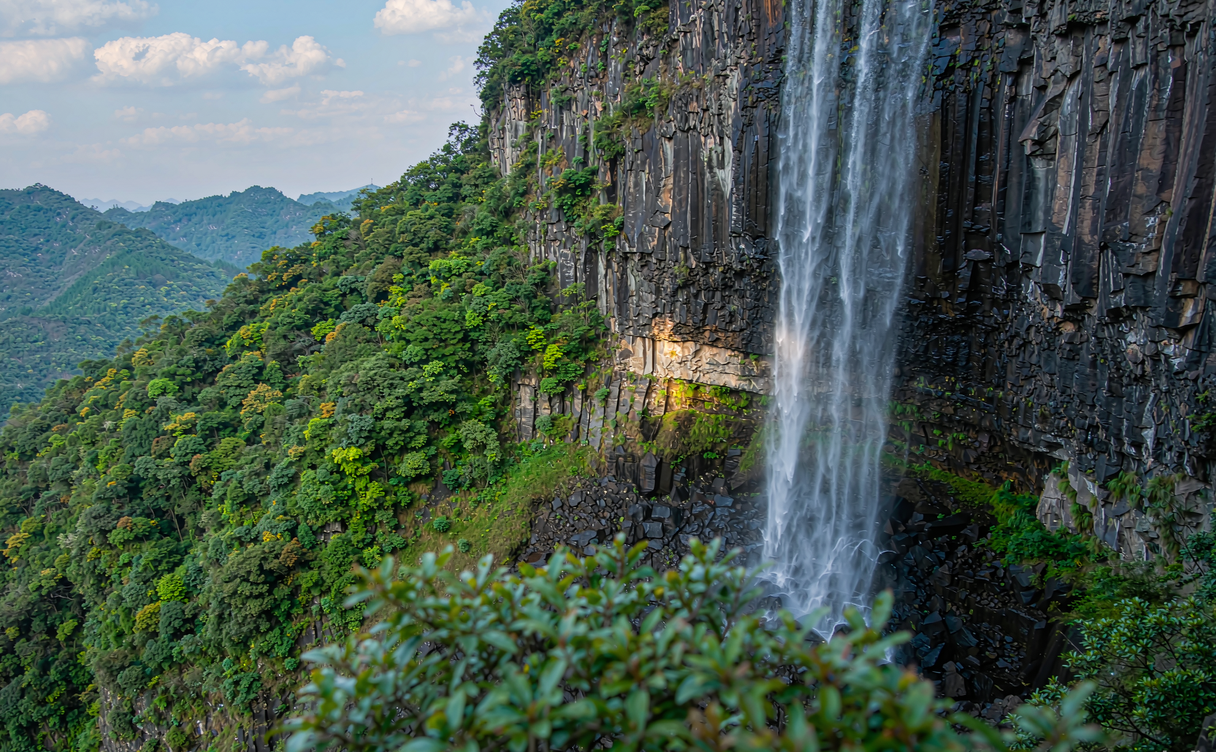
Tianhu (天湖) is the Xiqiao volcano crater lake, a calm, tea-colored pool ringed by walking paths and a small boating area. It’s the calmest spot on the mountain and a good place to let kids run. The waterfall that gives the mountain one of its postcards plunges over basalt cliffs on the eastern side — a short walk from the main shuttle road. After heavy rain (May–August) it’s at its most dramatic; in dry winter it’s a trickle, but the basalt columns around it are the real geological draw.
Baofeng Temple and the forest trails
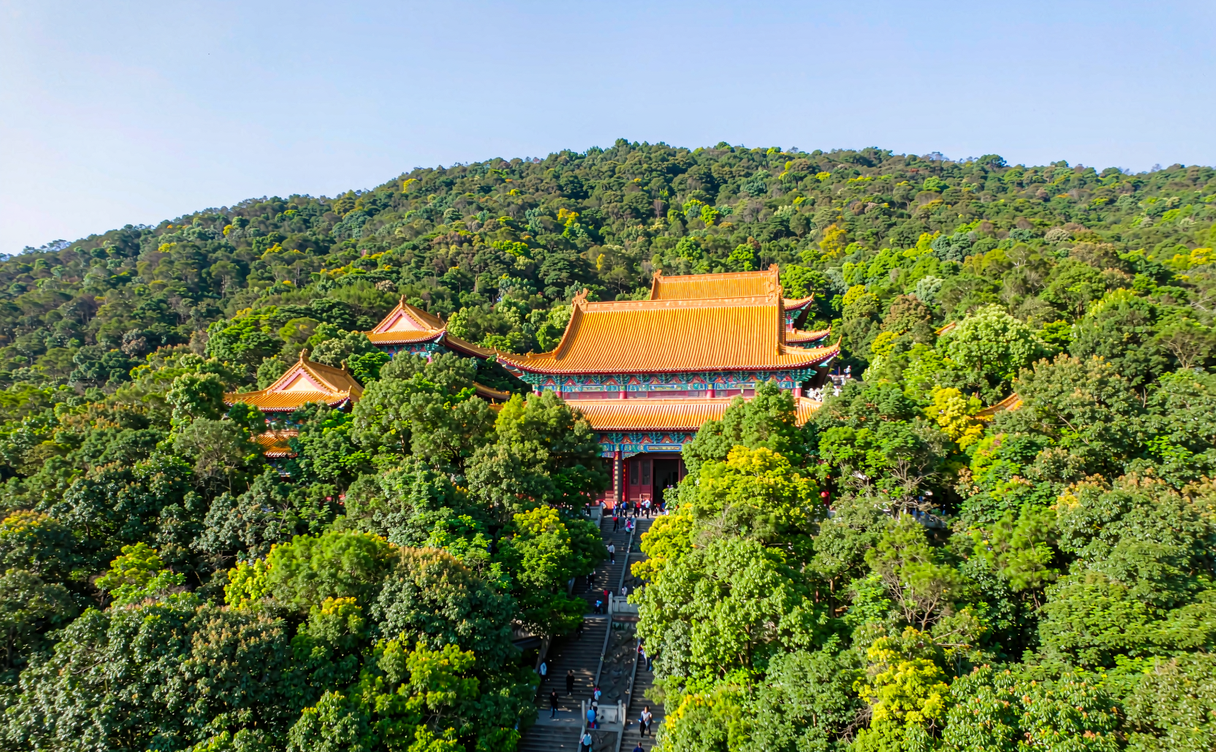
Baofeng Temple (宝峰寺) sits mid-mountain and is a working monastery, not a reconstruction. The roofwork and the smell of incense are authentic, and the vegetarian lunch served on the temple grounds (¥20–30) is a genuine local experience rather than a tourist trap. Behind the temple, a network of forest trails loops through dense subtropical cover — we counted more bird species on one slow morning than on most city parks in a month.
Tickets, hours, and getting up the mountain
Entry to the scenic area is about ¥70, which includes the internal shuttle bus that saves you the steep walk from the south gate. Hours run roughly 08:00–17:30. A full visit is 4–5 hours if you do the statue, the lake, the waterfall and the temple; a quick highlights run is 2.5 hours.
Getting there: from Guangzhou, take the metro to Guangzhou South, then a high-speed train to Foshan West (佛山西站), or simply a direct intercity/regional train — many visitors just take a D-train from Guangzhou South to Foshan West (20–30 minutes, ¥15–25), then a taxi (¥60–80, 40 minutes) to the Xiqiao entrance. From Foshan city center a taxi is ¥50–70. Driving from central Guangzhou takes 60–90 minutes depending on the Guangfo highway traffic. We lay out the wider city pairing in our Foshan travel guide and the base-city logistics in our Guangzhou travel guide.
When to go
Xiqiao is a year-round mountain, but the delta’s climate shapes the trip. Spring (March–May) is warm and green, with the best waterfall flow after rains. Summer is hot and muggy — go early and carry water; the forest gives more shade than you’d expect. Autumn (October–November) is ideal: cool, dry, and clear enough for the summit views. Winter is mild by northern standards but the wind on the ridge is real, and the temple fairs around Lunar New Year are worth timing a visit to.
What to eat
Nanhai and Foshan are the heartland of Cantonese food, so pair the trip with a proper meal. The Xiqiao mountain-water tofu (山水豆腐) is a local specialty — silky, made with spring water, served steamed or fried. Down in Foshan, the yum cha is as good as Guangzhou’s and cheaper; our Guangdong yum cha guide lists the houses worth the detour. If you want to soak after the climb, the area feeds into the regional hot-spring scene covered in our China hot springs resorts guide.
Where to stay and what to pair it with
Most visitors do Xiqiao as a day trip and sleep in Guangzhou or Foshan. If you’d rather stay near the mountain, there are lakeside resorts at the base (¥400–800/night) and the temple occasionally runs simple guest rooms. For families, Guangzhou Chimelong is the obvious next day — our Guangzhou Chimelong park guide covers tickets and timing. If you want a second, very different Guangdong mountain, our Danxiashan Shaoguan guide is the red-rock counterpoint two hours north by train.
Getting around and photography
The internal shuttle is included in the ticket and loops the key stops, but the prettiest stretches are on foot — the forest trail behind Baofeng Temple and the lakeside path around Tianhu. For photographs, the classic shot is the Guanyin from the lower terrace at opening; the basalt waterfall reads best in the soft light right after a rainy spell, when the flow is up and the spray catches the sun. We tell clients to keep the late afternoon free for the summit, when the delta haze thins and the bronze catches warm, low light. Drones are restricted over the temple and the statue, so check with the rangers before flying — they’re used to the question and will point you to the legal ridges.
For the geology and protected-status background, Wikipedia’s Xiqiao Mountain page is a useful reference.
Basing yourself in the delta? Our Foshan travel guide shows how to fold Xiqiao into a two-day Foshan loop.
Want Cantonese food to match the mountain? Our Guangdong yum cha guide points you to the best houses near Nanhai.
Looking for a second mountain with a different look? Our Danxiashan Shaoguan guide covers the red-rock alternative.