

Some bridges get you across a river. The Chengyang Wind and Rain Bridge, in Sanjiang county in the north of Guangxi, does that and then becomes the social heart of a Dong village — a covered timber walkway where old women weave, children run, and the smell of smoked chili hangs in the rafters. I came for a photo and stayed for two days. This Chengyang wind and rain bridge guide is the practical field notes I kept so you can do the same without the trial-and-error I went through.
The bridge spans the Linxi River at the edge of Chengyang village, about 20 km north of Sanjiang town in Guangxi Zhuang Autonomous Region. It is one of the finest surviving examples of a Dong “wind and rain bridge” — a covered span built without nails, its timbers joined by mortise and tenon, topped with a procession of tiered pavilion roofs. The Dong are one of China’s ethnic minorities, famed for their drum towers, polyphonic choral singing, and a timber architecture that has outlasted empires. If you are mapping a wider minority-heritage route, our China ethnic minorities travel guide explains the Dong, Zhuang, and Miao cultures you’ll meet across the southwest.
How to get to Sanjiang from Guilin
The gateway is Sanjiang, and figuring out how to get to Sanjiang from Guilin is the first task. The high-speed train is the win: direct services from Guilin North to Sanjiang South take about 35–50 minutes and cost ¥39–65 ($5.5–9). From Sanjiang South station, a taxi to Chengyang village is another 30 minutes for roughly ¥60–80 ($8–11). I took the train both ways and it was seamless — far better than the old mountain roads. If you are coming from the north, our Liuzhou travel guide covers the faster rail link from Guangxi’s second city, and pairs well if you are looping Liuzhou–Sanjiang–Guilin.
Buses exist but are slower and less comfortable; I’d only consider one if the trains are sold out during a holiday week. Either way, aim to arrive before mid-afternoon so you have daylight for the bridge and the village lanes.
Chengyang bridge Sanjiang tickets
The Chengyang bridge Sanjiang tickets are sold as part of the Chengyang Eight Villages scenic area, which includes the bridge, the surrounding Dong hamlets, and the rice-terrace views between them. As of 2026 the combined ticket runs ¥60 ($8.5) in peak season and ¥40 in winter, covering entry to the village cluster; the bridge itself is free to walk once you’re inside. Children under 1.2 m and seniors over 70 with ID enter free. Buy at the entrance gate or the mini-program; carry some cash or Alipay as foreign cards are not reliably accepted at the window.
A note on etiquette: the bridge and villages are living communities, not a stage set. The ticket funds upkeep, but the people you photograph are neighbours, not performers — ask before a close portrait, and a few yuan of temple or bridge offering goes a long way with the locals.
The bridge and the Dong drum tower villages Guangxi
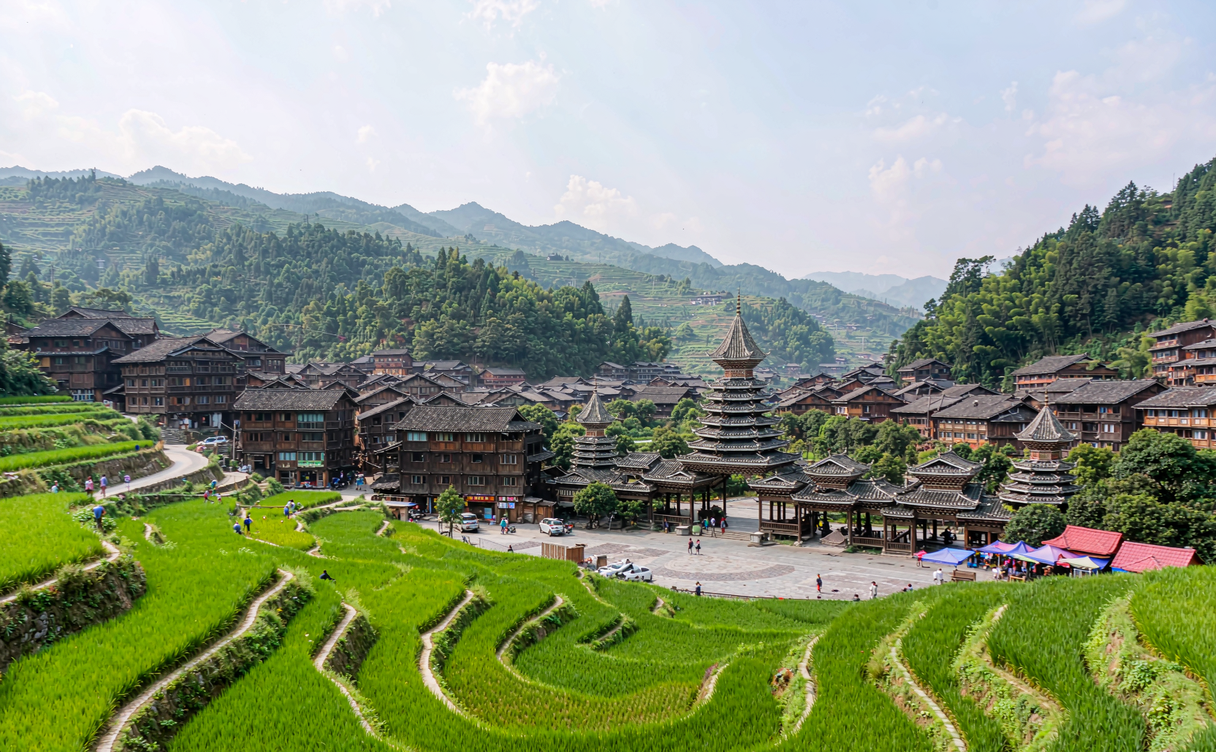
The structure is the obvious draw, but the Dong drum tower villages Guangxi around it are the deeper reward. Chengyang is actually a cluster of eight villages, each built around a drum tower — a multi-tiered wooden tower where the community meets, settles disputes, and hosts the famous Dong grand-song performances. I wandered from one to the next along stone paths between flooded paddies, and every few hundred metres found another tower, another covered well, another group of women stitching embroidery in the shade.
The bridge itself is about 64 metres long, with five pavilion-like roofs rising like a string of pagodas above the river. Step inside and the light is low and golden, the rafters black with age and incense smoke, the floorboards worn into gentle dips by a century of feet. Standing in the middle, listening to the river below and the village murmur above, is the moment the place clicks. For comparison with the Dong architecture just over the provincial line, our Guizhou Zhaoxing Dong village guide covers a larger, more tourist-developed Dong settlement if you want to see the style at bigger scale.
Chengyang bridge homestay: sleeping in the village
The best decision I made was not to day-trip. A Chengyang bridge homestay lets you catch the bridge at dawn, when the mist sits on the river and the only sound is a single villager sweeping the planks. Family-run guesthouses line the approach lane, many in traditional stilt houses with woven-bamboo walls and wood-fire breakfasts. Rates run ¥120–220 ($17–31) a night including a simple meal, and the hosts will happily point you to the quiet upper terraces or lend you a rain cape.
I stayed with a family who woke me at 5:30 for the morning fog and fed me oiled-rice cakes and sweet potato porridge. That intimacy — hearing the Dong songs drift over from the drum tower at dusk — is the real product here, and you only get it by sleeping over. For travellers who like this slow, hosted style, our China off the beaten path guide lists other minority villages worth the detour.
Best time to visit Chengyang bridge
The best time to visit Chengyang bridge is April to June, when the terraces are flooded and mirror the sky, and September to October, during the rice harvest when the paddies turn gold and the village is busy with threshing. Spring brings azalea blooms on the hills; late autumn is crisp and clear. Winter is cold and quiet, with some homestays closed, but the bridge dusted with frost is spectacular and you’ll have it to yourself. Avoid the May Labour Day and October National Day weeks, when domestic tour buses clog the lane.
Where to eat
Village food is hearty and cheap. I ate on oil-tea (a savoury, slightly bitter tea with fried rice and peanuts that Dong hosts serve as welcome), stuffed tofu, sour-pickled river fish, and sticky purple-rice cakes. A homestay dinner runs ¥40–60 ($5.5–8.5) per person; a plate of grilled river fish at a lane stall is ¥25 ($3.5). The Dong are proud of their fermented vegetables, and a small jar of sour cabbage on the table is the universal condiment — try it with the rice cakes and you’ll understand the local obsession. For the regional palate, our Guangxi cuisine guide explains the sour, smoked, and rice-forward flavours of the north-Guangxi hinterland, which differ sharply from the noodle-and-seafood south.
Insider tips
- Stay overnight. The bridge at 6 a.m. is a different, better place than at noon.
- Bring cash and small notes; rural Guangxi payment apps are unreliable for foreign cards.
- Wear grippy shoes — the bridge planks are smooth and slick after rain.
- Time your train: the last direct service Sanjiang to Guilin leaves in the early evening, so confirm the timetable before committing to a late homestay checkout.
- Combine with Yangshuo: the Guilin Yangshuo travel guide is an easy next stop south, swapping timber villages for karst rivers.
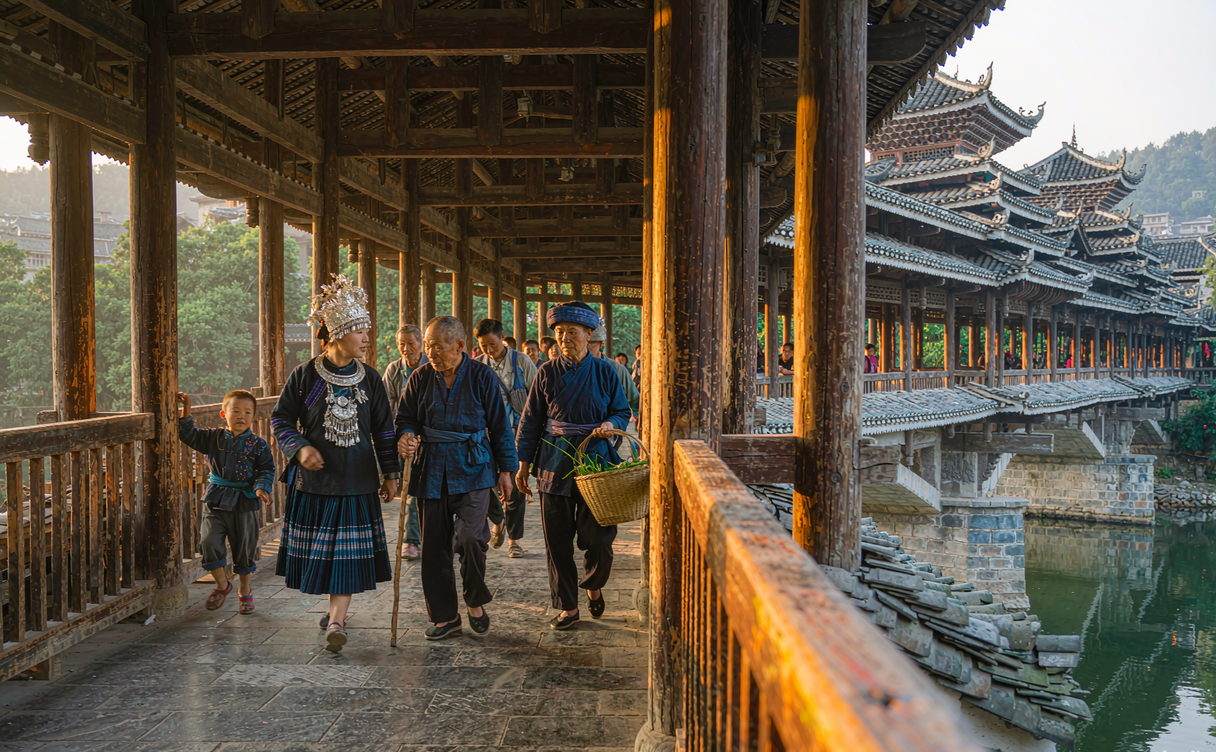
The Chengyang Wind and Rain Bridge is more than a photograph of pretty roofs. It is a working piece of a living culture, where the architecture, the music, and the meals all flow from the same communal rhythm. Go expecting a crossing and you’ll leave having crossed into something rarer — a village that still moves at the pace of its own river. For the people behind it, the Dong people overview details the craft and choral traditions that make places like Chengyang worth the journey.