

Fuzhou in Jiangxi province is not the Fujian city with the same name—a confusion I have had to clear up with clients more than once, usually at a ticket counter. This Fuzhou Jiangxi travel guide comes from two trips I led there: one for a literature lover, one for a food-focused couple. Both left with more than they expected, and neither had heard of the place before I suggested it.
Why Fuzhou Jiangxi rewards the curious
A mid-size river town in eastern Jiangxi, Fuzhou is the hometown of Tang Xianzu, the Ming-dynasty playwright often called the “Shakespeare of China.” That alone draws a specific kind of traveler, but the everyday appeal is the food and the slow old-town lanes. If you are compiling things to do in Fuzhou Jiangxi, the list is a memorial garden, a riverside old town, and a table of dishes you will not find in Beijing or Shanghai. It is an easy, low-cost add-on if you are already in the Jiangxi corridor between Nanchang and the north.
Getting there: the Fuzhou Jiangxi to Nanchang train
The gateway is Nanchang, the provincial capital with the main airport. From there, the Fuzhou Jiangxi to Nanchang train is the standard hop: high-speed services take roughly 50–80 minutes and cost ¥45–70 CNY in second class, running several times daily. A taxi from Fuzhou station to the old town is ¥15–30 CNY, and the ride is short enough that you can plausibly do the memorial and a long lunch before the last train back. I usually advise clients to base in Nanchang and make Fuzhou a relaxed day-and-a-half, unless they are combining it with Jingdezhen to the north. New to the rails? Our China high-speed train guide for foreigners covers booking and etiquette, which smooths the first journey.
For the bigger plan, our China travel guide for first-timers is the starting point, and our best things to do in China lists other cultural stops that pair well with a literature-themed day.
The Fuzhou Tang Xianzu memorial
The Fuzhou Tang Xianzu memorial is the city’s centerpiece: a calm courtyard complex with reflecting pools, winter-sweet trees, and exhibition halls on the playwright’s life and works. I spent a quiet hour there with a client who had read translations of “The Peony Pavilion,” and the gardens suited the mood perfectly, with few other visitors and the sound of water over stone. Entry is usually ¥30–50 CNY, with a few English panels that sketch the plays well enough for a first-time reader. Go mid-morning before school groups arrive, and read a short synopsis of the plays beforehand—it transforms the visit from a pleasant stroll into something personal. Background on the writer is in the Wikipedia entry on Tang Xianzu, which I point clients to before they go.
Old town lanes and riverside life
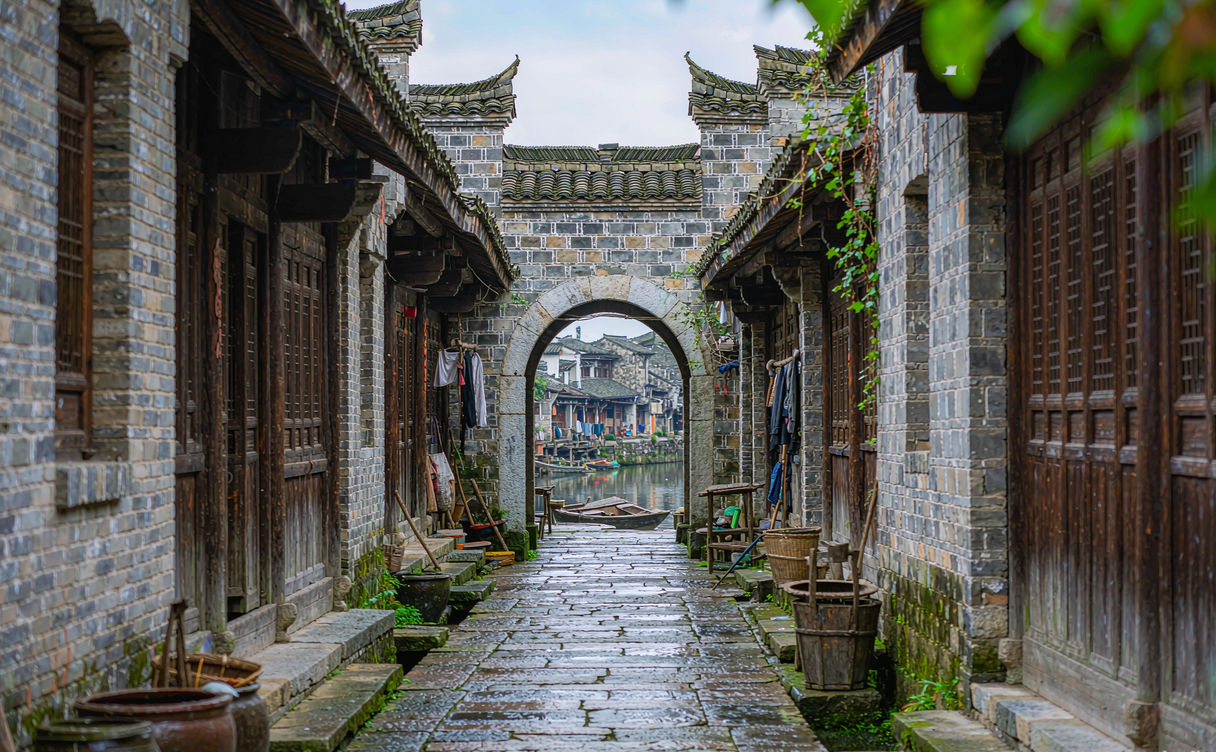
Beyond the memorial, the grey-brick lanes along the river are where Fuzhou breathes. I like walking them at dusk when the lanterns come on and old men play cards under the archways, and a few family workshops still press oil or mend bamboo. There is no ticket, no performance—just a working Jiangxi town that happens to have a literary soul. Pair this with a stop at the smaller local museums if your schedule allows a full day, and leave room to simply sit by the water with a tea from a street vendor at ¥5–10 CNY a cup. If you want to extend north toward the porcelain city, our Jingdezhen travel guide covers the studios and kilns a comfortable train ride away.
Add a ceramics leg to your trip with a stop in Jingdezhen, which sits a comfortable train ride north of here.
Fuzhou Jiangxi local food
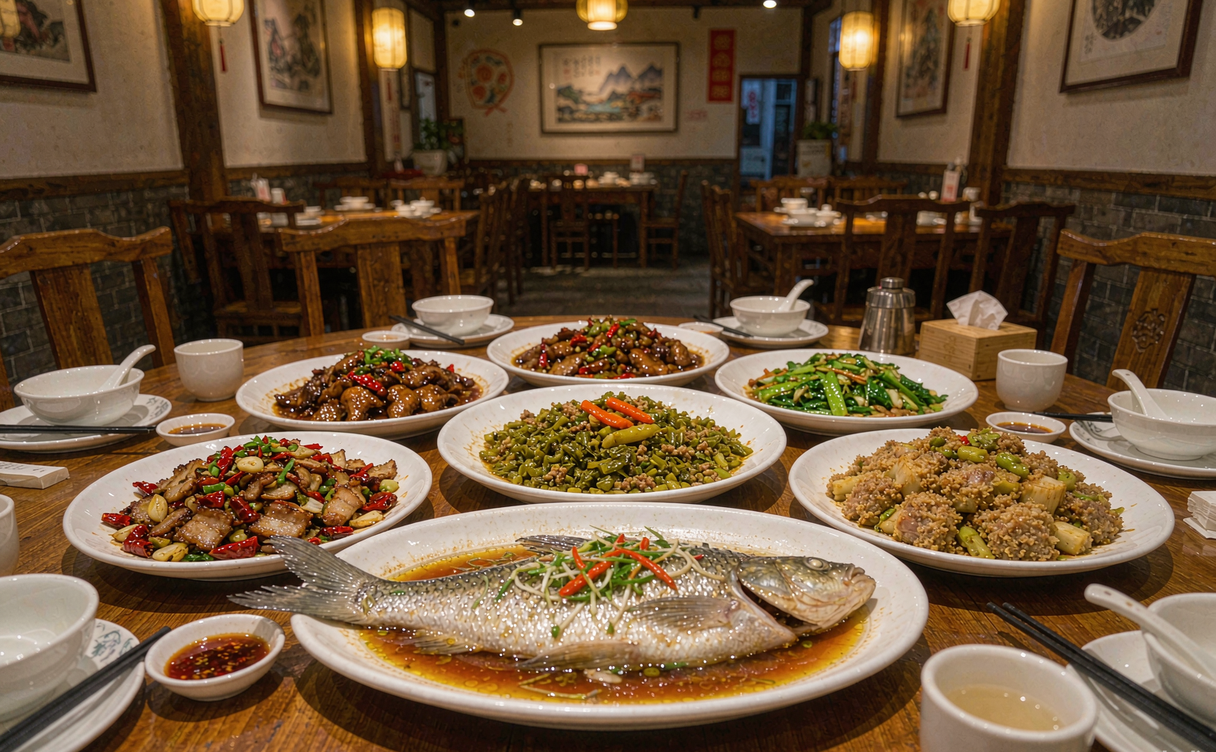
The Fuzhou Jiangxi local food is the sleeper hit. Jiangxi cuisine is salty, sour, and chili-hot—distinct from neighboring Hunan, and often sharper than Sichuan for my clients who like heat. I ordered steamed river fish with pickled vegetables at ¥45–70 CNY, a clay-pot pork belly that fed two, and cold tossed greens with fermented chili that cleared the sinuses. A full local meal for two runs ¥90–160 CNY, and the night streets near the river are the best value, with tiny stalls doing one or two dishes perfectly rather than a long menu badly. If you enjoy this region’s table, our Ganzhou travel guide covers the southern Jiangxi food trail, which gets even spicier as you head toward the Guangdong border.
Best time to visit and practical tips
The best time to visit Fuzhou Jiangxi is March–May and September–November, when the lanes are green and the humidity is bearable. June–August is hot and sticky, with afternoon thunderstorms that can strand you without a cab, and winters are cool but not harsh, with bare trees that suit the old town’s grey walls. Carry cash for small eateries, keep an offline map handy, and expect little English signage—translation apps handle the menus, which is most of what you need. For the national calendar, our best time to visit China explains regional timing, which helps you catch the spring plum blossom along the river.
Time your visit with the national calendar and aim for spring or autumn to get the old town at its most photogenic.
Getting around Fuzhou Jiangxi and money on the ground
Fuzhou is compact enough to walk, but the memorial sits a short taxi ride from the old town, about ¥10–20 CNY, and I tell clients to keep the Chinese name on their phone because the romanization throws off the local apps. Cash is handy at the river stall vendors and the small eateries, where QR pay can be flaky, so I carry ¥150–250 CNY in small notes. The old town lanes are pedestrian-friendly and best on foot at dusk, but if you plan to reach the outlying museums, a chartered car for half a day runs roughly ¥200–300 CNY. Signal is solid in town and weak only on the rural approach roads, so confirm your return train time before lingering over a long lunch—I have had a client cut a meal short to make the last train, and a fixed departure keeps the day relaxed.
A relaxed day plan
If you have one day, here is the rhythm I use. Morning train from Nanchang, straight to the Tang Xianzu memorial while it is quiet, then a slow walk through the old lanes and a long lunch of river fish. Afternoon tea by the river, a last wander as the lanterns light, and the evening train back. I have run this exact plan with both a scholar and a foodie, and it scaled surprisingly well to both.
Who should add Fuzhou Jiangxi to their trip
I steer Fuzhou toward two groups. Literature and history travelers who know Tang Xianzu, even loosely, will find the memorial more moving than its size suggests, and the old town gives it context. Food travelers who want regional Chinese cooking beyond the big cities will love the Jiangxi table, which is sharper and more sour than the better-known provinces. I do not recommend Fuzhou as a standalone destination for a first China trip—it works best as a half-day or overnight tag-on from Nanchang, or as a calm pause between Jingdezhen’s kilns and the south. Used that way, it rewards curiosity without demanding a big detour.
Final thought
Fuzhou Jiangxi will not dazzle you with skyline or spectacle. It will, if you let it, hand you a quiet literary town and a meal worth the train ride. I have watched doubtful clients leave as fans—and that is the best review a small city can get, the kind no five-star resort can manufacture.
Extend south into Jiangxi with Ganzhou as the next stop, especially if the food here hooked you.