

I have now traveled China in every season, and the two windows I tell everyone to book are late March to May and September to early November. On a September 2025 loop through Guilin and Xi’an, I walked the Terracotta Army at 9 a.m. with room to breathe and paid RMB 280 a night for a room that the same hotel listed at RMB 520 in August. This China shoulder season guide explains the pricing, the crowds, the regional weather, what closes, and how to book so you get the country at its calmest and cheapest.
What shoulder season means here
In China the shoulders sit between the brutal summer rush and the frozen winter, and between the two Golden Week holidays that spike prices and people. A China shoulder season guide has to start with the calendar: avoid the first week of May (Labour Day) and the first week of October (National Day) entirely, because those are the worst crowds of the year. The sweet spots are late March to April, May 10 to June 10, September 15 to September 30, and October 8 to early November. Our best time to visit China maps this nationally, and it is the baseline I build every trip around.
Spring travel: March to May
China spring travel rewards the flexible. Late March can still be cold in the north (Beijing highs around 14°C, nights near 4°C) while the south is already lush and 22°C. April is the national sweet spot: peonies in Luoyang, rice terraces filling in Yunnan, and comfortable 18 to 26°C across most of the map. I did the Guilin stretch in late April and the Li River cruise had maybe a third of the summer crowd. The risk is the occasional sandstorm in the north and rising heat in the deep south by May. This is the best time to visit China avoid crowds if you can travel before the Labour Day week.
Autumn travel: September to early November
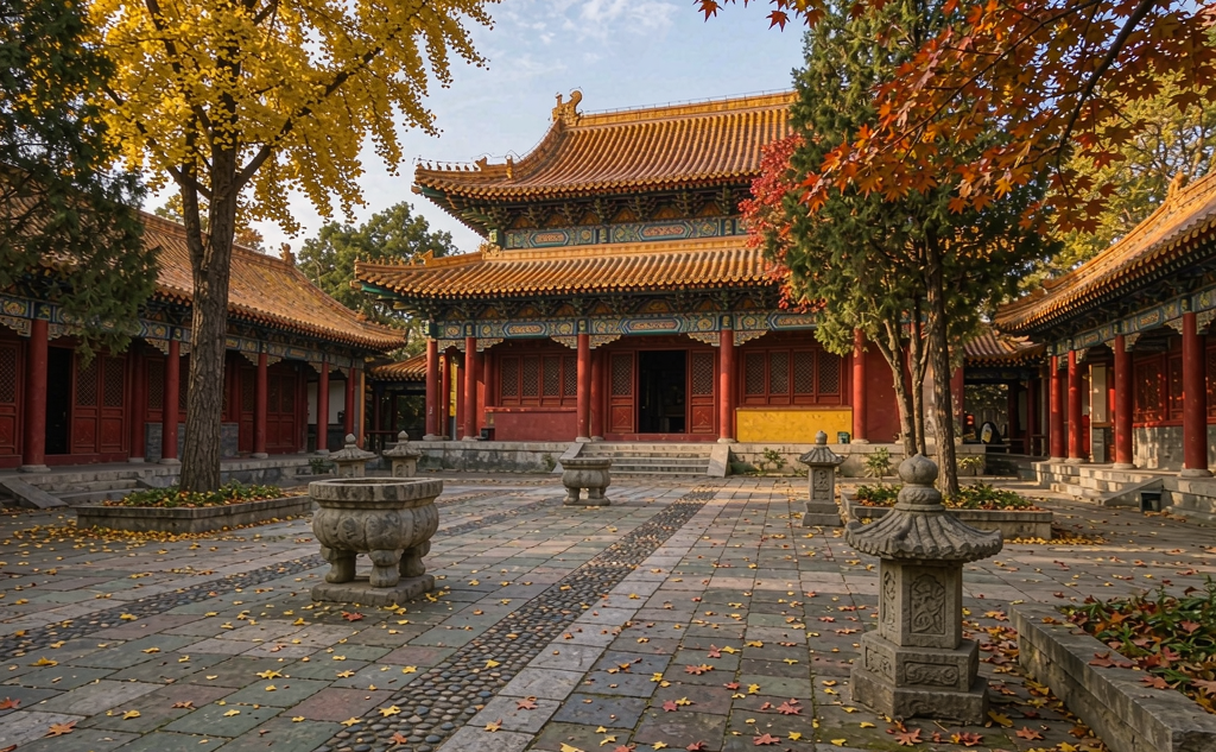
China autumn travel is my favorite. September brings cool, dry air after the summer storms, and October 8 onward (once National Day ends) is the quietest two months of the year. Xi’an sat at a perfect 20°C in late September; Chengdu was 24°C and clear; the Yellow Mountains were crisp at 12°C by day and 5°C at night. Prices drop 30 to 50 percent the moment the October holiday closes. For a China crowd calendar, think of early October as the last spike and mid-October as the opening of the best six weeks. Our China golden week survival guide explains exactly why you want to land on October 8, not October 1.

Weather by region, shoulder edition
The country is huge, so shoulder season is not one thing. North China (Beijing, Xi’an, Shanxi) is dry and cool, 12 to 24°C, with big day-night swings — pack a layer. Central China (Yangtze cities) is mild and sometimes drizzly, 16 to 26°C. The south (Yunnan, Guangxi) is warm and green, 20 to 30°C, with the odd shower. The far west (Xinjiang, China; Tibet, China) is short but glorious: September golden poplars in the west, clear skies on the plateau, daytime 10 to 20°C. The regional climate picture is laid out on Climate of China at Wikipedia, and I check it against the dates before locking flights.
What closes and what books out
Shoulder season is mostly open, but watch three things. First, some mountain cable cars do maintenance in early November, so verify before you go to places like the Yellow Mountains. Second, a handful of seasonal hotels in resort towns (Beidaihe, some lake lodges) close from November to March, so confirm availability. Third, domestic travel spikes hard during the two Golden Weeks, so if your dates drift into them, book trains a week ahead. Our China typhoon and rainy season guide is worth a read if you travel the south coast in early autumn, because the tail of typhoon season can still close ferries in September.
A note on transport and trains
High-speed rail fares stay fixed year-round, so the shoulder-season saving comes from hotels and flights rather than trains, but the trains are still the comfortable way to link your stops. I rode Beijing to Xi’an (RMB 515.5 second class) and Xi’an to Chengdu (RMB 263) in September with plenty of empty seats, something you will not see in July or during the holidays. Book rail a week out in shoulder season and you will almost always get the train and seat you want, which keeps the whole low-crowd plan relaxed.
Pricing and the booking strategy
This is where China low season travel pays off. I tracked a mid-range double in Guilin at RMB 520 in August, RMB 300 in September, and RMB 680 during National Day. High-speed train fares do not move (they are fixed), but hotels, some attraction combo tickets, and domestic flights do. Book hotels two to three weeks out in shoulder season — you have slack, unlike summer — and grab trains a week ahead outside holidays. Our China travel budget per day shows the daily savings add up fast: my September loop ran about RMB 450 a day all-in versus RMB 700 in August for the same route. The China budget travel guide has the hostel and local-bus notes that push that lower still.
A sample shoulder-season itinerary
To make this concrete, here is the September loop I actually ran. Day one to three: Beijing at 20°C, RMB 320 a night, the Forbidden City calm at 9 a.m. Day four to six: Xi’an, RMB 280 a night, the city wall by bike before the heat. Day seven to ten: Guilin and Yangshuo, RMB 300 a night, the Li River with a third of the summer crowd. Day eleven to twelve: Chengdu, RMB 260 a night, the pandas active in cool weather. Total hotel spend was about RMB 3,400 for twelve nights, roughly half what the same dates in August would have cost, and I never fought a queue I could not walk around. The only booking I made more than two weeks out was the train, which I kept clear of the holidays by traveling September 15 to 27. This China crowd calendar approach — land after the holiday, leave before the next — is the whole trick, and it is why a China low season travel plan beats chasing discounts during the peaks.
Summer contrast and when to avoid
To appreciate the shoulders, know what you dodge. Our China summer heat travel guide details July and August, when Wuhan, Nanjing, and Chongqing can hit 38 to 40°C with humidity that drains you by noon, and when every pool and mountain resort is packed with domestic families. I did one August in Chongqing and spent midday indoors; never again if I can help it. The spring and autumn windows give you the same sights at half the sweat and a fraction of the queue.
Is shoulder season worth planning around
For me, completely. A China shoulder season guide is really a guide to traveling the country the way locals wish they could — between the extremes. You trade a little weather uncertainty for empty lanes, cheaper beds, and photos without strangers in them. Build your route around the two windows, avoid the two holiday weeks, and let the calendar do the heavy lifting. The sights do not change; the experience of them does.