

We get the message at 9 p.m.: “I land in Shanghai on Friday, any ideas?” Spontaneous trips to China are far easier than most first-time visitors expect, and real China last-minute deals exist if you know which apps to open and how the local market moves. Over the past year we’ve routed clients onto unplanned Beijing weekends, same-day Yangtze side-trips out of Chongqing, and ¥180 hotel nights in Chengdu booked from the back of an airport taxi. This guide collects the concrete tactics that actually save money when you book late — not theory, but what we see working week to week.
The app stack we actually use
China’s travel market is app-driven, and if you only browse Booking.com or Expedia you’re seeing the tourist-priced outer layer. The deeper discounts live inside local platforms. Our daily stack is Trip.com (the English-language face of Ctrip, with dependable support), Fliggy (Alibaba’s travel arm, strong on domestic hotels and attraction tickets), Meituan for same-day city hotel drops, and Qunar for flight price comparison. For trains there is exactly one system that matters: the official China Railway 12306 platform, run by the national rail operator at China Railway 12306. We walk through installing and verifying these in our China travel apps guide, because half the battle is having them set up and payment-linked before you actually need a room at midnight.
Train tickets: the waitlist trick
High-speed rail is the backbone of spontaneous China travel. Beijing–Shanghai second class runs about ¥553, Guangzhou–Shenzhen about ¥75, Xi’an–Chengdu about ¥263. These fares don’t usually crash in price, but they do sell out, especially on Friday evenings and Sunday nights. The single best last-minute move is the 候补 (houbu, “waitlist”) feature inside 12306: you pay upfront, the system automatically grabs any cancelled seat on your route, and you’re refunded if nothing opens within roughly 48 hours. We’ve had clients snag a Beijing–Hangzhou seat this way two hours before departure. For genuine China train ticket deals, also watch slower D-category and Z-category overnight trains, and business-class seats on lightly travelled daytime departures, which occasionally release at 30–40% off within a day of travel. Our China domestic flight booking guide covers the air side in detail, including how to read the fare calendars that show the cheap windows.
Flights: budget carriers and the red-eye gap
Domestic China flight deals cluster on Spring Airlines, 9 Air, and West Air, particularly on routes fanning out of Shanghai, Guangzhou, and Shenzhen. A one-way Shanghai–Xiamen can land under ¥300 if you book three to seven days out and travel with carry-on only. The pattern we see repeatedly: Tuesday and Wednesday departures are cheapest, and the 0:00–6:00 red-eyes are where the real sub-¥400 fares hide. Open the Ctrip or Qunar app, sort by price, and switch on price alerts for your route. A note on China travel apps deals — many of the best numbers are app-only coupons, a ¥20–50 voucher just for completing the booking inside the app, which quietly adds up across a multi-city trip. If you’re flexible on the clock, the savings are real.
Hotels: same-day is where it really drops
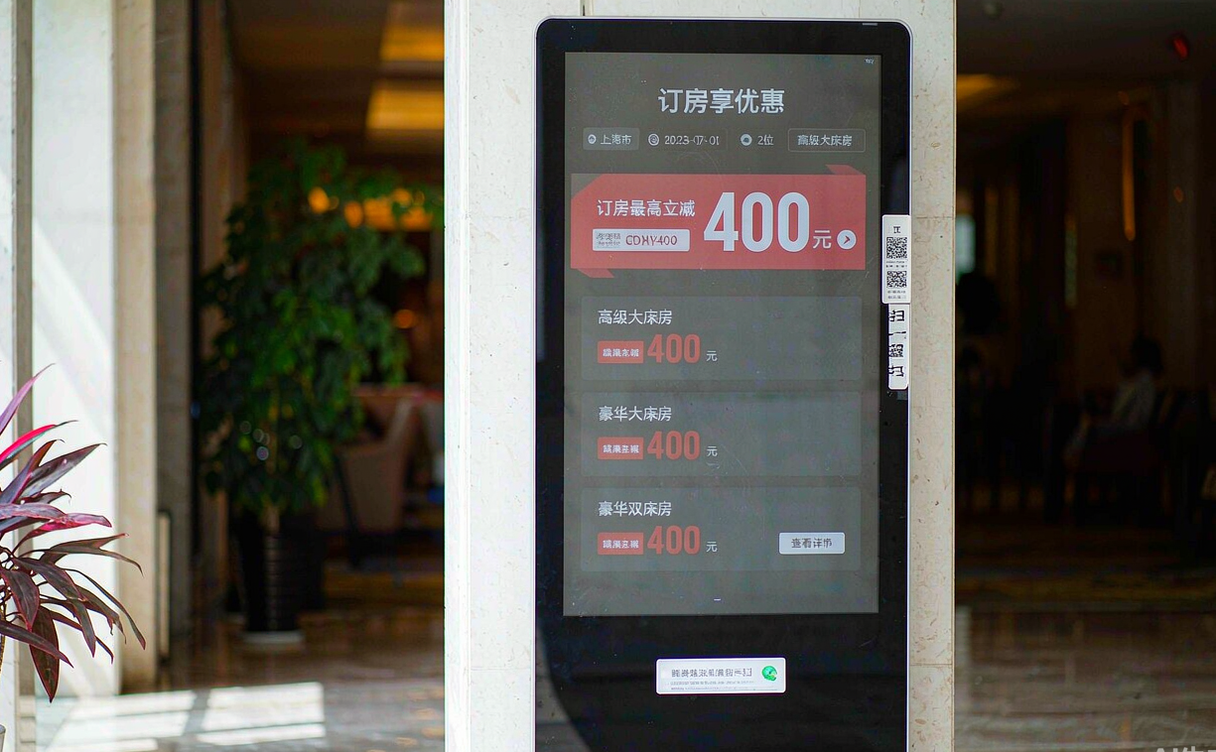
This is the biggest last-minute win and the one we lean on most. A 4-star property in a tier-two city — Xi’an, Chengdu, Guilin, Hangzhou — listed at ¥600 can show at ¥220–350 on the day, because a hotel would rather fill the room than eat the cost. China hotel last minute pricing is most aggressive on Friday and Sunday nights, when corporate demand is soft. In the mega-cities of Beijing and Shanghai the spread is smaller but still ¥100–200 off a walk-up rate. Our rule for clients is simple: choose the neighborhood in advance, then book the specific hotel the morning of, not two weeks prior. The China budget travel guide maps out which districts give the best value per yuan, and it’s worth reading before you pick a base.
Attraction tickets and the 240-hour window
Many scenic spots — Zhangjiajie, the Forbidden City, West Lake boat rides — release same-day or next-day discounted e-tickets through the platform apps, and several offer off-peak pricing for afternoon entries when the coach tours have gone. We track the current promos in our attraction ticket discounts guide. And if your whim is “I’m transiting through China anyway,” remember the 240-hour visa-free transit rule can convert a layover into two free days inside a city — the mechanics are in our 240-hour visa-free transit explainer. Combine that with a last-minute hotel and you’ve got a free mini-trip bolted onto a longer journey.

Regional hot-spots where the cuts run deepest
The deals aren’t evenly spread. The cities with the most hotel oversupply — Chengdu, Xi’an, Guilin, and Chongqing — are where we see the biggest same-day drops, sometimes 60% off a listed rate. Coastal business hubs like Shanghai and Shenzhen hold price better but reward flexibility on weeknights. For flights, the competitive corridors out of Shanghai (to Qingdao, Xiamen, Guilin) and out of Guangzhou (to Yunnan, Guizhou) are where Spring Airlines and 9 Air fight for customers with fares under ¥300. If your only constraint is “somewhere in China,” lead with these oversupplied cities and let the app sort by price.
Read the refund fine print
Last-minute doesn’t mean no-strings. Train waitlist refunds are clean — you’re refunded automatically if no seat appears. Hotel same-day rates are often non-refundable, which is part of why they’re cheap; only book a non-refundable room if you’re certain you’ll use it. Flight tickets booked on discounters usually allow changes for a fee but rarely full refunds. We tell clients to keep screenshots of every booking confirmation and the price at the moment of purchase, because the occasional double-charge or phantom cancellation is easiest to dispute with proof in hand.
A sample whim weekend
Say you land in Chengdu Saturday morning with nothing booked. By 10 a.m. you’ve grabbed a ¥260 night at a fresh hotel near the metro, a ¥58 hotpot set lunch, and a ¥140 high-speed seat to Leshan for the Giant Buddha departing that afternoon. Sunday you book a ¥190 panda-base ticket through Fliggy and a ¥230 red-eye home. Total impulse trip, under ¥1,200, and not a single thing reserved before you flew. That’s the shape of what’s possible when the apps are already on your phone.
Mistakes we see
First, don’t assume you can wing the visa — even the transit option needs a confirmed onward ticket and an eligible passport. Second, Golden Week (early October) and Spring Festival flatten every deal: prices triple and availability evaporates. Third, cheap red-eyes sometimes land at secondary airports; budget an extra ¥120–200 and 90 minutes to reach the city. Finally, link a foreign card to Alipay or WeChat before you arrive; paying inside the local apps is what unlocks the coupons, and tourists who skip this step pay the tourist layer we mentioned.
When the deals die
The seasonal calendar matters more than the day of week. Mid-January to mid-February (Spring Festival travel rush) and the first week of October are write-offs for budget China travel. The soft spots are mid-March, late May, and especially November to early December, when domestic hotels in the north sit half-empty and flight sales appear weekly. If your trip is flexible, aim for those troughs and the same-day discounts get dramatically deeper.
We’ve watched clients save ¥1,500 on a four-night Chengdu stay simply by booking day-of instead of ahead. The deals are there. The skill is knowing where to look, linking your payment in advance, and staying flexible on the clock.