

Guangxi has famous names, Guilin, Yangshuo, Nanning, but the trip I keep recommending to friends who want to dodge crowds is Laibin. I went in May 2025 after a reader asked about the karst heartland nobody visits, and the description fit. Laibin, Guangxi, China, sits in the center of the province along the Hongshui River, with Yao minority mountains, deep canyons, and a Ming-dynasty tribal administrative office that few foreigners have seen. This Laibin travel guide is from four days on slow local transport: how to get to Laibin, the things to do in Laibin, what to eat, and a Laibin itinerary for travelers who like the road less taken.
Why Laibin
Laibin is for people who have already done the headline sights. Its appeal is raw and local: cloud seas on a sacred Yao mountain, a gorge you can float, and towns where almost no English is spoken. I met maybe three other foreign visitors in four days, which felt like a small miracle in modern China. If you want the classic route first, the Guilin Yangshuo travel guide on our site is the place to start before heading deeper inland.
How to Get to Laibin
Laibin North Station is on the Liuzhou to Nanning high-speed line. From Nanning East, trains take about 50 to 75 minutes and cost RMB 55 to 80. From Guilin takes roughly 1.5 hours for RMB 90 to 120. From Liuzhou, allow 30 to 45 minutes and RMB 30 to 50. The station is a short taxi ride of RMB 15 to 30 from the center. There is no international airport, so fly into Nanning or Guilin and transfer by train. For booking help, see our China high-speed train guide for foreigners.
Things to Do in Laibin
Shengtang Mountain and Jinxiu Yao County
The highlight of my trip was Jinxiu, home to the Dayao Mountains and Shengtang Mountain. In May the slopes blaze with wild rhododendrons, and on clear mornings you get a sea of clouds below the ridges. Entry to Shengtang is about RMB 80, with a shuttle to the trailheads. I stayed overnight in Jinxiu town, simple rooms RMB 120 to 200, to catch the sunrise, and it was the best decision of the trip. The guesthouse owner lent me a rain shell, which I needed when the mist rolled in by noon.
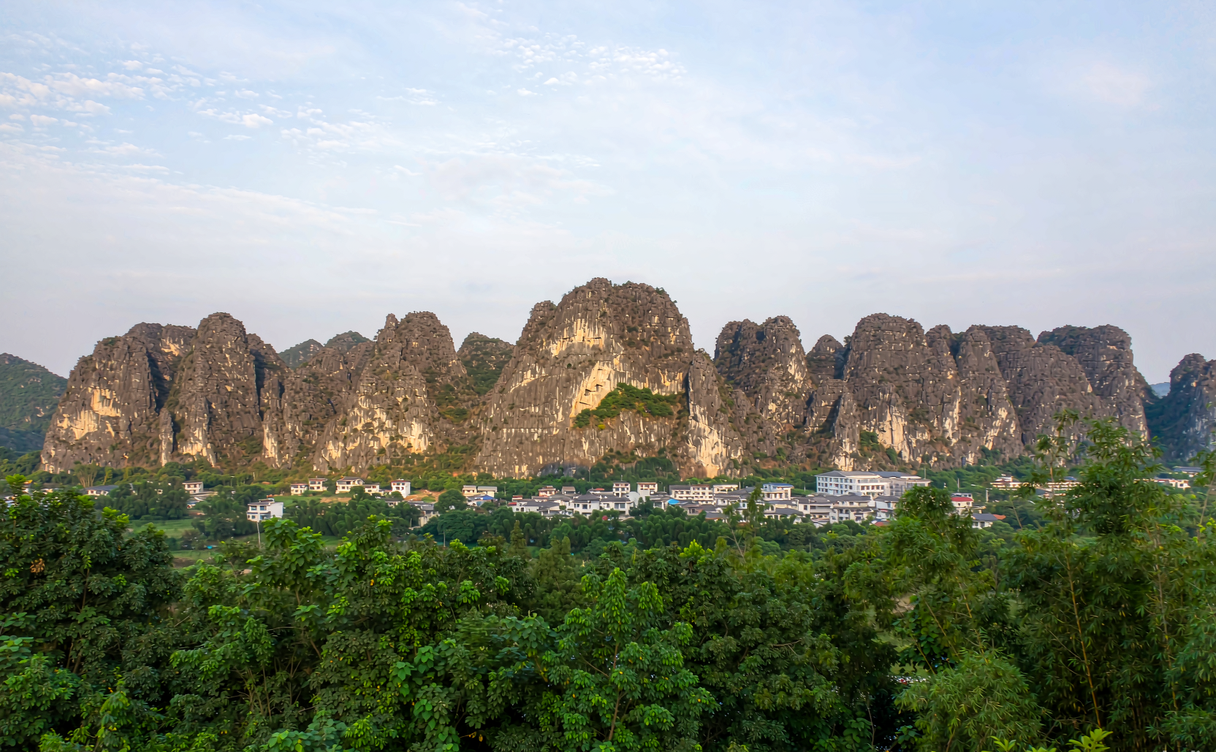
Baiya Grand Canyon
In Wuxuan County, this narrow limestone gorge has cool pools and a shaded walking path that follows the stream. Entry is around RMB 50, and it is an easy half-day escape from the heat. I went midweek and shared the trail with only a few local hikers, stopping often to listen to the water and the birds.
Molu Tusi Yamen
In Xincheng County stands one of the largest surviving Tusi, native chieftain, administrative complexes in China, built in the Ming dynasty. The walled compound, with its courtyards and carved gates, shows how local ethnic governance worked for centuries. Entry is about RMB 20, and it took me just over an hour to walk the main halls and the garden behind.
Hongshui River and Penglai Islet
Back in the city, the Hongshui River offers slow boat trips and a riverside path. Penglai Islet is a small leafy island with ruins you can reach by a short ferry. I spent a quiet evening here watching the current and the fishing lines, and it was the calmest hour of the whole journey.
Laibin Food
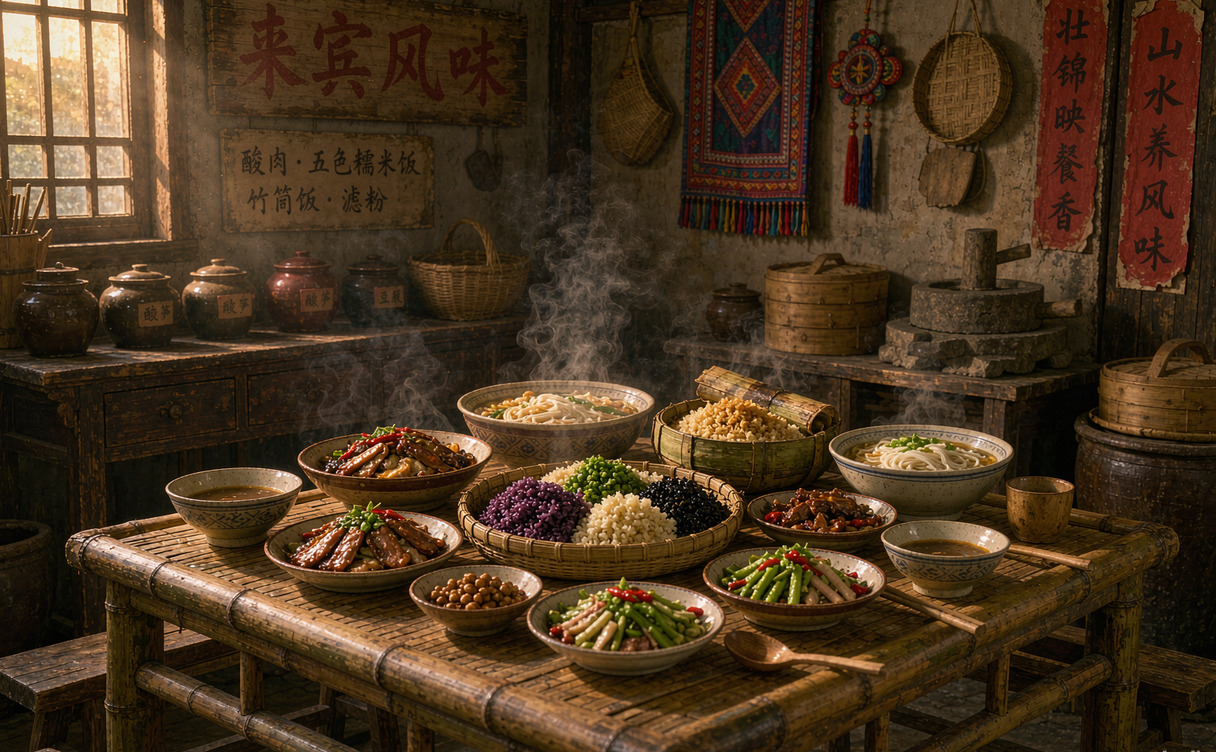
Laibin’s table mixes Han and Yao flavors. Bamboo-tube rice cooked over fire is a Yao staple I tried in Jinxiu for RMB 15 to 25. Local rice noodles with braised pork cost RMB 10 to 18 a bowl. The region’s sour sides, red rice-wine greens and preserved taro stalks, wake up any meal. For a broader survey of the province’s cooking, our Guangxi cuisine guide maps the dishes across Guangxi, from river fish to fermented vegetables.
A Practical Laibin Itinerary
With three days, do Jinxiu and Shengtang on days one and two, overnight in Jinxiu, then Baiya Canyon and the Tusi yamen on day three. With four days, add a slow riverside evening in the city. I kept costs down using our China budget travel guide and averaged RMB 260 to 360 a day, including the Jinxiu overnight and the occasional hired driver.
Where to Stay and When to Go
Laibin city has budget rooms from RMB 120 to 190 and mid-range from RMB 220 to 360. In Jinxiu, expect simpler guesthouses at RMB 120 to 220. The best time to visit China matters here: May for rhododendrons and October to November for cool, clear hiking are best, while summer is hot and wet and the gorges can close after heavy rain.
Getting Around
This is the hard part. Jinxiu and Xincheng are reachable by bus from Laibin’s main station for RMB 25 to 45 and 1.5 to 2.5 hours, but departures are limited, so I built my days around the timetable. Ride-hailing covers the city; for the mountains, hiring a local driver for the day, RMB 250 to 400, saved hours and a lot of waiting.
Final Thoughts
Laibin rewarded the extra effort with scenery and culture that felt untouched. For a food-focused plan, the China food tour guide on our site shows how to string regional eats into a route, and the Wikipedia page on Laibin has background on the area that I read on the train down.
Practical Notes for Visitors
Laibin tested my planning more than any other stop, and the notes below would have helped. Card payments worked in the city hotels, but the Jinxiu guesthouses, the Wuxuan stalls, and the bus stations preferred cash or a Chinese app, so I carried RMB 200 to 300 in small notes. Foreign-card ATMs sat in the city center, not in the counties, so I withdrew before heading to the mountains. Mobile data was fine in Laibin and on the Nanning line, but it nearly vanished in Jinxiu and Xincheng, where offline maps and a written timetable were essential.
Language was the largest barrier. Outside the city, almost nobody spoke English, and my Mandarin covered buying a bus ticket and ordering noodles but little else. A translation app carried me, and guesthouse owners helped with driver numbers written in characters. Build your days around the bus departures, because missing the morning Jinxiu bus means a long wait or a pricey charter.
The Jinxiu Overnight
I want to stress the overnight in Jinxiu, because a day trip from Laibin does not work. The buses take 1.5 to 2.5 hours each way, and the rhododendron ridges need morning light to show their best. I arrived the afternoon before, walked the lower town, ate bamboo-tube rice at a roadside stall for RMB 18, and slept early. At 5:30 a.m. the guesthouse called me, and the shuttle took me above the cloud line for a sunrise I still describe to friends. The extra night cost RMB 150 and was worth ten times that. The walk up took about two hours at a steady pace, and the rhododendron fields near the top went on farther than I expected, so I sat among them long after the light peaked. A local guide later told me late May is best, and I believe him.
Side Trips from Laibin
From Laibin you can rail north to Liuzhou for its noodles and museums, or south to Nanning for the provincial capital and the airport. I used Laibin as a quiet middle leg between those two, which broke a long Nanning to Guilin run into manageable pieces. The Hongshui River also supports slower boat trips if you have a free afternoon and want the water rather than the road.
What I’d Tell a Friend
Hire a driver for at least one county day, because the time saved is real and the cost, split with others, is modest. Bring a rain shell even in May, because the mountains make their own weather. And lower your expectations of English signs, then enjoy being one of the only foreigners for miles. Laibin rewarded patience with scenery that no ticket queue could spoil.