

Fayuan Temple Beijing is the oldest working Buddhist monastery in the capital, a quiet warren of courtyards, peony beds, and incense smoke hidden in the hutongs just southwest of the former Inner City wall. We have sent travelers here who were tired of the crowds at the Lama Temple and wanted something older, calmer, and far more local, and this stop almost always delivers on that promise. If you are building a Beijing travel guide for yourself, this is the temple that rewards the curious rather than the checklist visitor.
Why Fayuan Temple matters
The temple was first built in 645 AD during the Tang dynasty under Emperor Taizong, and has been destroyed and rebuilt several times since. What stands today is mostly Qing-era architecture from the 17th century, but the site’s continuous religious life spans well over a thousand years. In our experience the sense of age is the real draw: this is not a restored showcase, it is an active seminary where the China Buddhist Academy holds classes and monks still chant, sweep, and tend the gardens. The contrast with Beijing’s more famous temples is immediate. The Lama Temple is grand and Tibetan; the Temple of Heaven is imperial theater. Fayuan is monastic and human-scaled, the kind of place where you might pass a young monk carrying a bucket of water and nod without either of you performing for a camera.
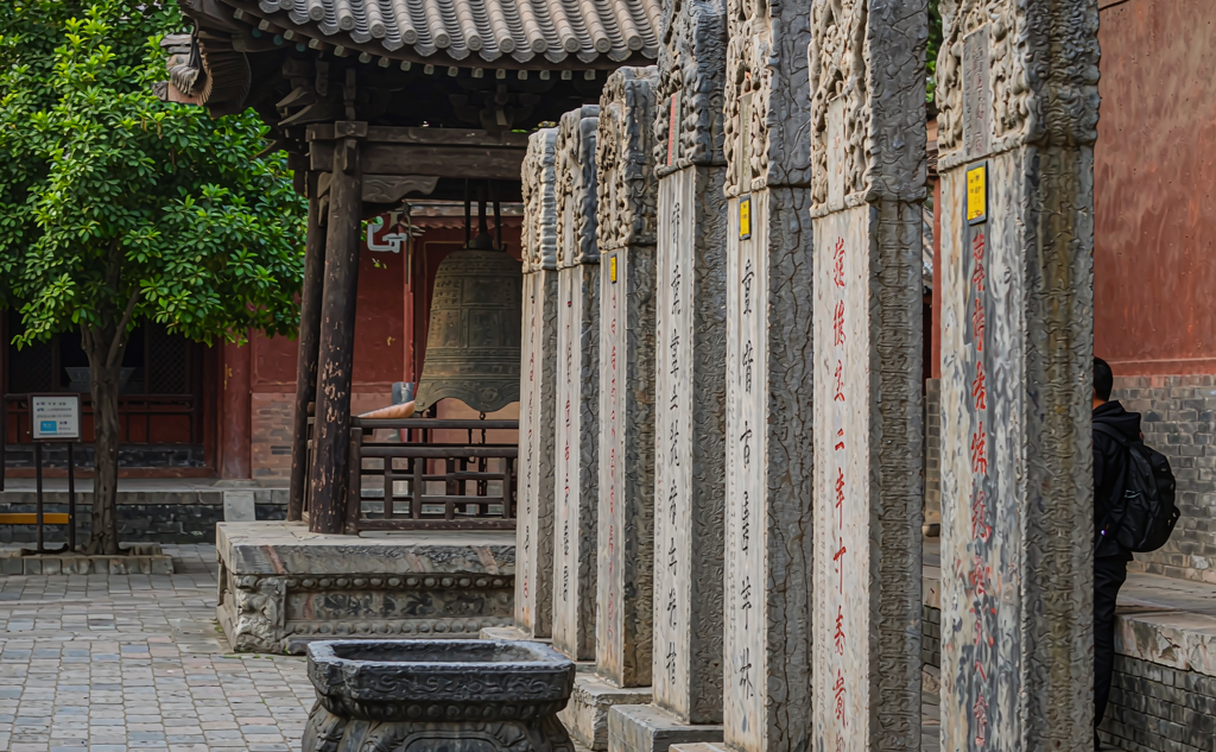
The temple also holds one of China’s most important collections of Buddhist relics and statuary, including Tang-dynasty stone steles, Ming-dynasty bronze bells, and a famous standing Guanyin figure carved with unusual tenderness. For a Beijing Fayuan Temple guide, the key point is that the museum wing is included in your ticket, so there is no upsell once you are inside. We tell first-time visitors to slow down in the Scripture Hall especially, because the gold-on-indigo sutras there are easy to miss if you are rushing to the next site.
How to get to Beijing and to the temple
If you are flying in, Beijing Capital International Airport and the newer Daxing International Airport both connect to the city by airport express train and metro. From either airport, budget 50 to 90 minutes to reach the center depending on traffic and which terminal you land at. From the center, reaching Fayuan Temple is straightforward on the subway. Take Line 4 to Caishikou Station and walk about 10 minutes southeast, or use Line 7 to Hufangqiao and walk west. The temple sits on Fayuansi Qianjie, a narrow lane off Nanheng West Street, and the walk from either station takes you through ordinary residential hutongs rather than tourist shopping streets.
For travelers arriving from other cities, the high-speed rail is the easy answer. The main arrival hub is Beijing South Railway Station, which sits on Line 4, the same line you will use for the temple, so you can step off a train from Shanghai or Xi’an and be at the temple gate within the hour. Our China high-speed train guide for foreigners walks through ticket booking with a passport step by step, which is the part that trips up most first-time visitors, because the English interface and the ID-number field do not always behave as expected.
What to see inside
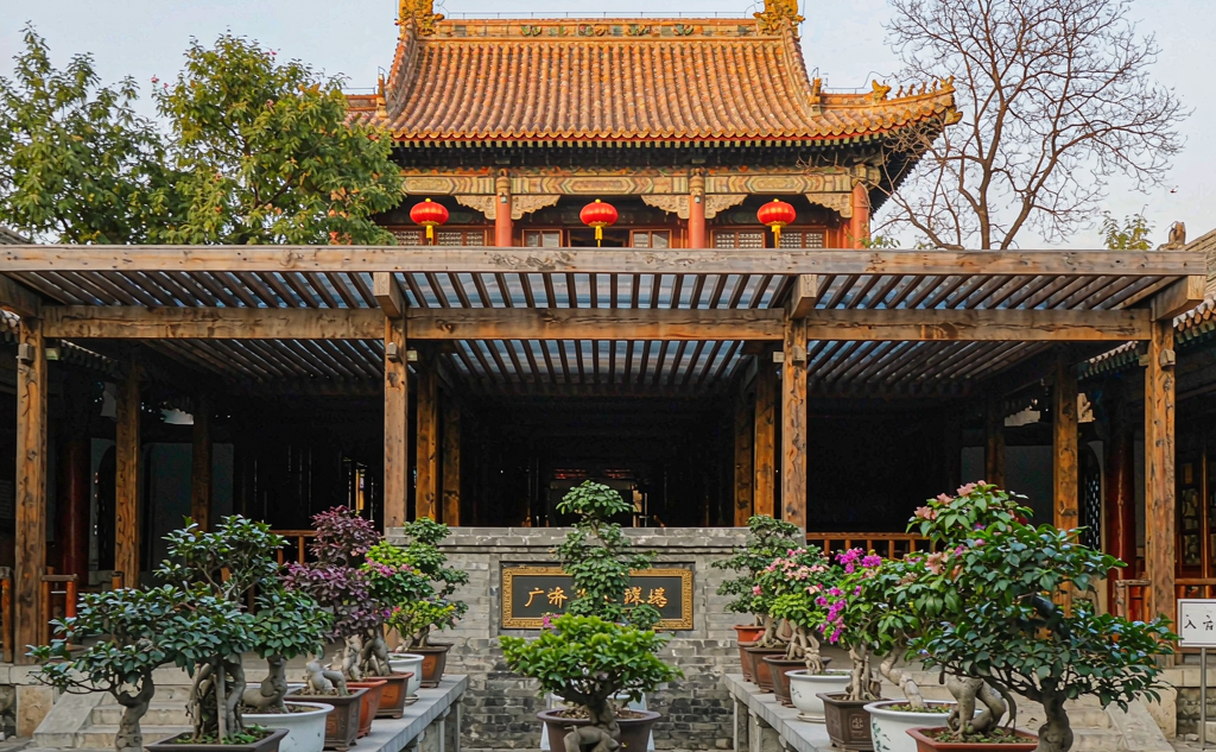
The complex follows the classic courtyard sequence: a screen wall, the Hall of Heavenly Kings, the Mahavira Hall, and the Hall of Great Compassion. Between them are peony and lilac gardens that are at their best in late spring, when the old trees drop shade across the flagstones and the air smells of damp earth.
- The Mahavira Hall holds the main Buddha triad and is where morning chanting happens around 6:30 am. Arriving then means you hear the low drone of the monks before you see them.
- The rear Scripture Hall displays the relic collection, including sutras written in gold on indigo paper and a set of Qing wooden printing blocks.
- The eastern wing houses a small museum of Buddhist art, free to enter with your ticket, with stele rubbings and donated artifacts from across Asia.
- The western side opens onto the gardens, where a single old ginkgo turns the color of brass in November.
We generally tell visitors to budget 60 to 90 minutes. Photography inside the halls is discouraged out of respect, but the courtyards and gardens are fair game, and that is where the best light falls anyway.
Tickets, hours, and seasons
Entry is cheap: the standard ticket is RMB 5, and there is no separate charge for the museum wing. Hours are typically 8:30 am to 4:00 pm, with last entry around 3:30 pm. The temple sometimes closes for special religious observances, so it is worth confirming the day before if your schedule is tight, especially around major Buddhist festivals such as Vesak in spring.
The best time to visit Beijing for temple-hopping is spring, from April to May, and autumn, from September to October, when the air is clear and the gardens are alive. Summer brings heat and occasional downpours that send you ducking under the eaves; winter is dry and cold but wonderfully empty, and the bare branches against the tiled roofs make for the most atmospheric photos. For a Beijing Fayuan Temple guide, our practical advice is to arrive right at opening, because you will often have the main courtyard to yourself before the tour buses reach the bigger sites at ten.
Pairing it with nearby temples
Fayuan Temple is part of a loose cluster of Beijing’s great religious sites, and it makes sense to group two or three in a single day on foot and by subway. A short ride north brings you to the Beijing Lama Temple guide stop at Yonghegong, where the scent of juniper incense and the size of the Maitreya statue make a vivid contrast with Fayuan’s restraint. The Confucius Temple and the adjoining Guozijian academy sit a few streets further northeast, and the Temple of Heaven offers imperial ritual altars on a completely different scale again. We usually suggest doing Fayuan in the morning, the Lama Temple before lunch, and saving the Confucius Temple for the afternoon, with a noodle stop in between.
For background on the site’s history and architecture, the Fayuan Temple entry on Wikipedia is a solid, sourced reference we point guests to before they go, particularly for the Tang-origin story that most on-site signage leaves out.
Practical tips from our team
- Dress modestly: cover shoulders and knees, because this is an active monastery rather than a photo set, and the monks notice.
- Mornings are quietest, and the 6:30 chanting is open to respectful observers at the back of the hall; stand still and you will be left in peace.
- Combine the visit with a hutong walk afterward, because the lanes around Caishikou are genuinely local, with breakfast stalls selling jianbing and soy milk rather than souvenir shops.
- There is no English signage to speak of, so downloading a map or planning ahead with our China travel guide for first-timers helps a lot, especially for the subway exit you need.
- Cash is useful for the RMB 5 ticket, though mobile payment is increasingly accepted; bring a few coins just in case the scanner is down.
In our experience the things to do in Beijing that stick with travelers are rarely the headline attractions. A slow hour at this temple, hearing the bells and watching light move across the old timber, is one of those quiet surprises that people mention months later.
Fayuan Temple rewards a slow pace, and it sits close enough to the city’s other religious landmarks that you can see two or three in a single relaxed day without ever feeling rushed.
Whenever we send first-time visitors to China, we remind them that the capital’s spiritual side is best appreciated on foot, one courtyard at a time, and the imperial altars round out that picture neatly.