

The Yulong River is the gentler sister of the Li River, a narrow, jade-green tributary that winds through the karst peaks and flooded rice paddies around Yangshuo in Guangxi. Where the big Li River cruise carries hundreds of passengers in a single boat, the Yulong offers slow bamboo raft rides for two, stone arched bridges older than the Ming dynasty, and countryside so photogenic it has become the postcard image of rural China. For travelers who find the Li River cruise too crowded, Yulong River travel is the more intimate way to see the same landscape at walking pace.
Yangshuo as your hub
Yangshuo town is the obvious base, with bike-rental shops on every corner and frequent shuttle vans to the rafting put-ins. Our Guilin Yangshuo travel guide covers how to reach Yangshuo from Guilin airport by bus and high-speed train, and where to stay within walking distance of the West Street nightlife and the river bends. The Yulong’s most popular stretch runs from Jingxiang ferry to the old Panlong Bridge, about 6 kilometers of calm water dotted with weirs where the raft guides skillfully paddle you down a small drop.
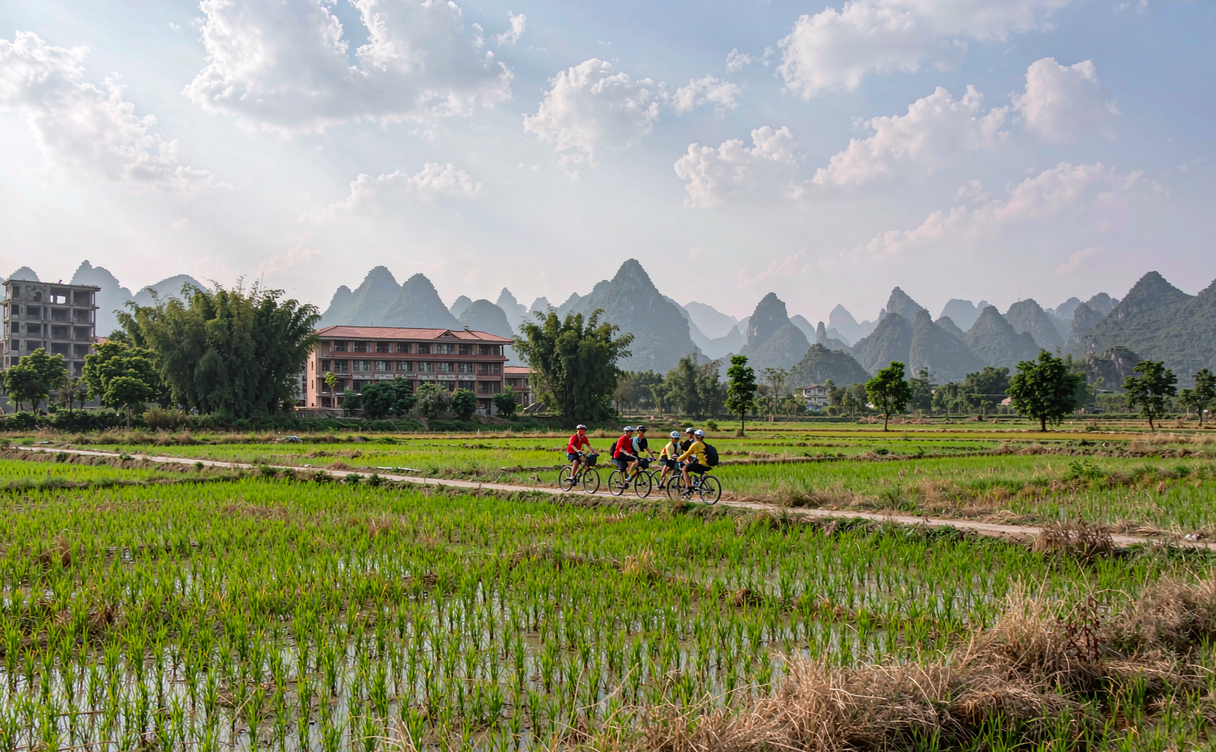
Renting an electric bike or a standard bicycle lets you follow the riverside path, cross the famous Yulong Bridge, and stop at organic farms and coffee shops that have opened along the bank. The Yangshuo countryside guide maps the best cycling loops, including a half-day route that links the river with the Moon Hill and the Big Banyan Tree, two of the area’s classic photo stops.
Things to do on Yulong River
The signature experience is the Yulong River bamboo raft, a hand-polished craft propelled by a standing boatman who uses a long oar to steer through the shallows. Each raft seats two adults and moves at a walking pace, so you can lean back, listen to the water, and watch the karst towers slide past. Several weirs along the route create gentle chutes; the guide times the descent so the raft bumps down with a small splash and a lot of laughter. Life jackets are provided, and the ride is calm enough for most children over five.
For something more active, a Yulong River kayak rental gives you your own paddle and the freedom to linger where you like. Kayaks can be hired near the town stretch and are a good choice for confident swimmers who want exercise rather than a guided float. Anglers sometimes join at dawn, though catching anything is secondary to the silence of the mist on the water.
Beyond the water, the riverside is lined with working rice fields, and the best season to see them flooded and mirror-still is late spring. The Guilin rice noodle guide points you to the right bowl of guilin mifen after a morning on the river, a local breakfast that fuels a full day of exploring.
Best time to visit Yulong River
The best time to visit Yulong River is April through October, with the shoulder months of April to May and September to October offering the clearest light and the greenest paddies. Summer brings warm water and the fullest river but also afternoon thunderstorms, so aim for a morning raft. Winter is quiet and cold, with low water that can pause rafting on the shallowest weirs, but the misty peaks make it a favorite for serious photographers.
Water levels change fast after heavy rain, and the raft companies suspend trips when the current runs strong, so check the day’s status with your hotel before setting out. Mornings are calmer and less crowded; by midday tour groups arrive and the put-ins get busy.
Yulong River to Guilin and wider routes
The river sits about an hour south of Guilin city, and many visitors do a Yulong River to Guilin transfer by combining a morning raft with an afternoon bus back to the urban sights. If you want the big picture, the Li River Guilin cruise guide describes the longer upstream voyage from Guilin to Yangshuo, which pairs well with a Yulong float the next day. For higher viewpoints over terraced fields, the Guilin Longji rice terraces guide adds a dramatic day trip north of the city. Photographers planning a longer shoot should see our China photography tour guide for the best light windows across Guangxi’s landscapes.
Best viewpoints and photo spots
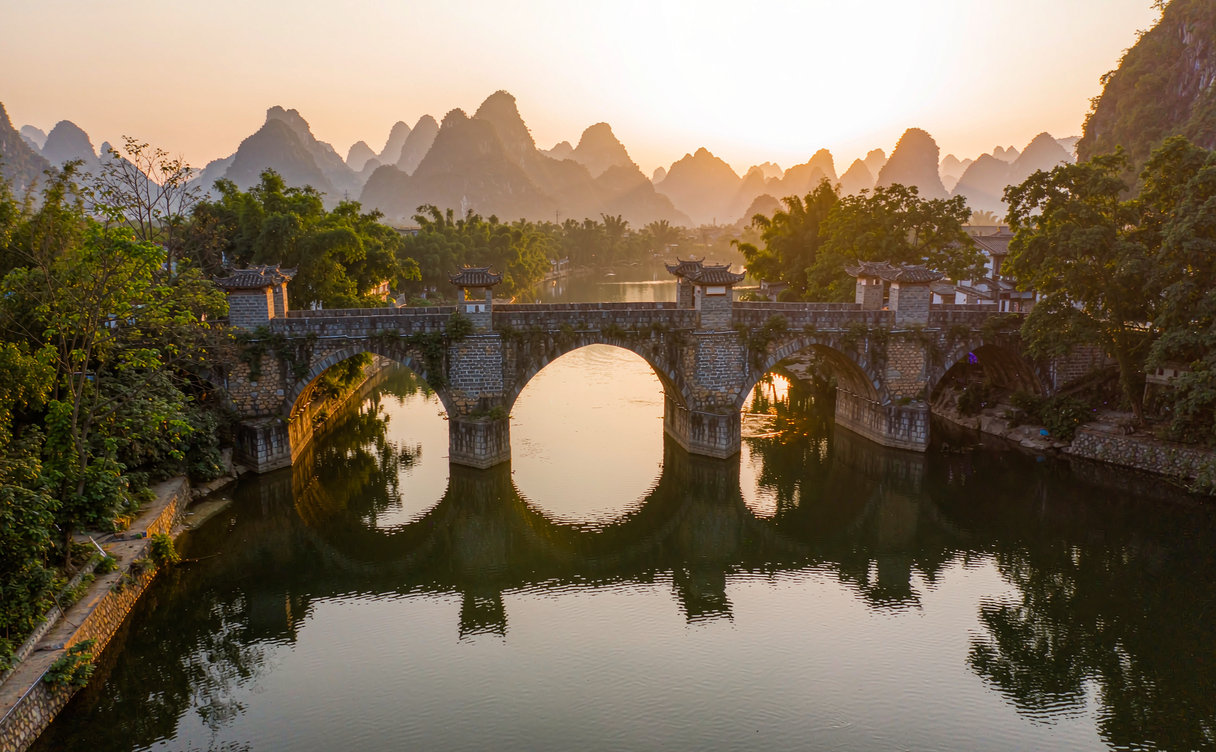
The most famous frame is the Yulong Bridge, a curved stone arch that has stood for centuries and appears on countless Guangxi postcards. Arrive before eight and you may have it nearly to yourself, with mist still hanging between the peaks. The stretch just downstream of the bridge has the calmest water for reflections, while the upper river near the Jingxiang put-in is wider and better for action shots of the raft guides working the weirs.
For a higher perspective, the paths above the south bank give a bird’s-eye view of the paddies meeting the river, especially vivid in late spring when the fields are flooded and mirror the sky. The seasonal light windows across the region reward photographers who plan a longer Guangxi shoot rather than a single rushed morning.
Family and first-timer tips
Families with young children will find the raft gentle enough, though the official minimum age is usually five and life jackets are mandatory. Bring a change of clothes, because the weir drops can splash, and secure phones and cameras in a dry bag. Bikes with child seats are available in Yangshuo for the flat riverside path, a calm alternative if little ones tire of the water.
First-timers should book the raft through the hotel rather than street touts, agree the route and price clearly, and start early to beat both the heat and the crowds. The whole experience moves at a slow pace, so build in lazy time afterward for a riverside coffee. Pairing the float with a short cycle keeps the day active without rushing the landscape that makes Yulong special.
Where to eat and stay
Yangshuo town has the densest food scene, from street barbecue to riverside restaurants serving beer fish, the local specialty of fresh catch braised in ale. Out by the river, a handful of farm-to-table cafes serve coffee and light meals with front-row karst views. For lodging, stay in Yangshuo for convenience, or pick a riverside guesthouse near Yulong Bridge for a quieter night and a sunrise walk to the water.
Practical notes: book raft tickets through your hotel or the official stand to avoid touts at the put-in, and bring sandals that can get wet. Drones are restricted near some bridges, so ask before flying.
The Travel China Guide page on Yangshuo offers an independent overview of the area’s rafting and cycling options, useful for cross-checking opening times before you travel.
A relaxed two-day sketch
Day one: arrive in Yangshuo, rent bikes, and ride to Yulong Bridge for a sunset walk. Day two: morning bamboo raft from Jingxiang to Panlong, late breakfast of rice noodles, then either a transfer to Guilin or a bike loop to Moon Hill. This keeps the river at its best, early and uncrowded, and leaves the afternoon open for food and photos.
Yulong River travel is less about ticking sights and more about the feel of the place: the dip of the oar, the smell of wet rice, the slow turn of a stone bridge. It is the Guangxi countryside at its most generous, and an easy highlight for almost any Guilin itinerary.