

Hengshan is the northernmost of China’s Five Great Sacred Mountains, rising along the border of Shanxi province near the city of Datong. Unlike its dramatic sibling Huashan, Hengshan is a gentler, pine-clad ridge threaded with Taoist temples — but it has one spectacle that steals the show for most visitors: the Hengshan suspended temple, a wooden monastery bolted to a cliff face hundreds of meters above the ground.
This Hengshan Mountain guide explains what to see, when to visit, how to get there from Datong, and how to combine the mountain with the region’s other wonders. It is aimed at travelers who are already exploring Shanxi’s northern heritage trail.
Why Hengshan Matters
The Five Sacred Mountains were chosen centuries ago as earthly pillars of China’s cosmological order, each guarding a direction. Hengshan guards the north, and for over two thousand years it was a center of Taoist worship, military staging, and imperial ceremony. The mountain’s name appears in histories and poems, and its temples have been rebuilt and restored across dynasties.
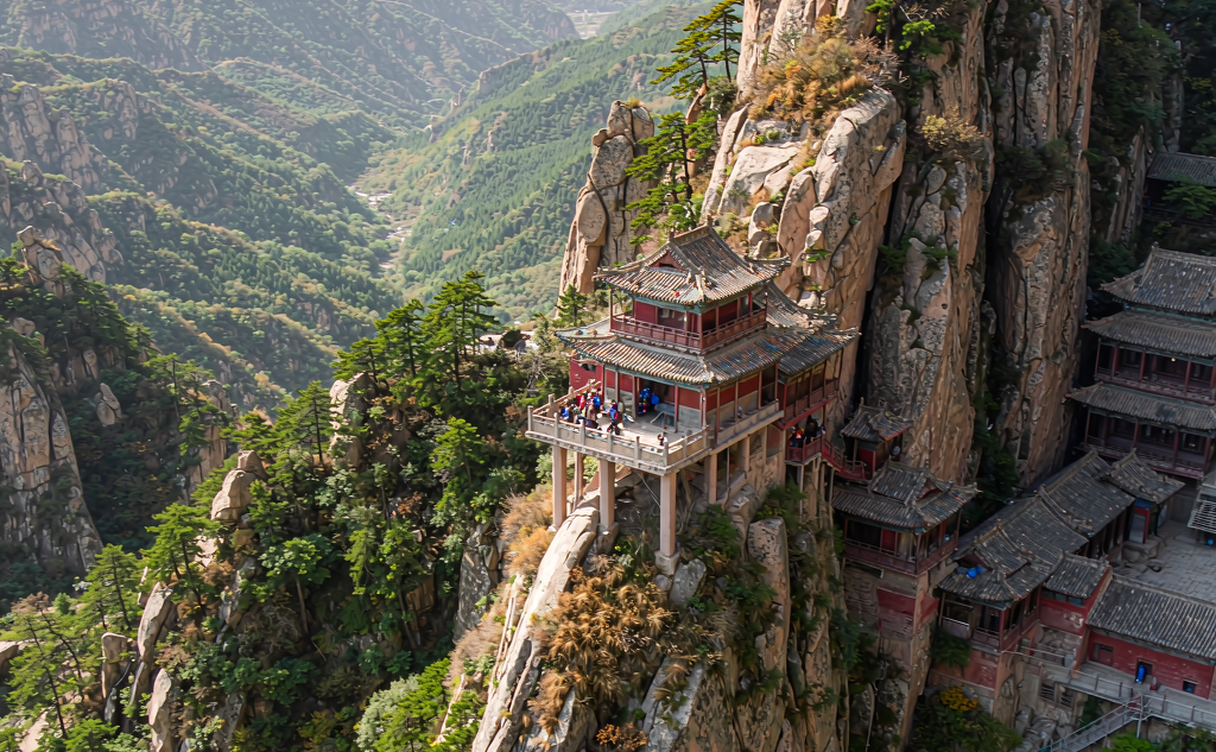
What makes the site unforgettable today is not the summit but the cliff architecture. The Hengshan suspended temple, known as Xuankong Si, was first built more than 1,500 years ago and appears to defy gravity, its halls and walkways cantilevered out over a narrow gorge. It is one of the most photographed structures in northern China, and for good reason.
Historical background on the mountain’s place among the sacred peaks is detailed on Wikipedia’s Hengshan (Northern) page). To plan the wider region, our Datong travel guide is the best starting point, since Datong is the hub for Hengshan and the nearby caves.
Things to Do at Hengshan
Most visitors split their time between the suspended temple at the mountain’s foot and the temple cluster higher on the ridge.
- Xuankong Si (Hanging Temple): walk the narrow wooden galleries that jut from the cliff, blending Buddhist, Taoist, and Confucian imagery in one compact complex.
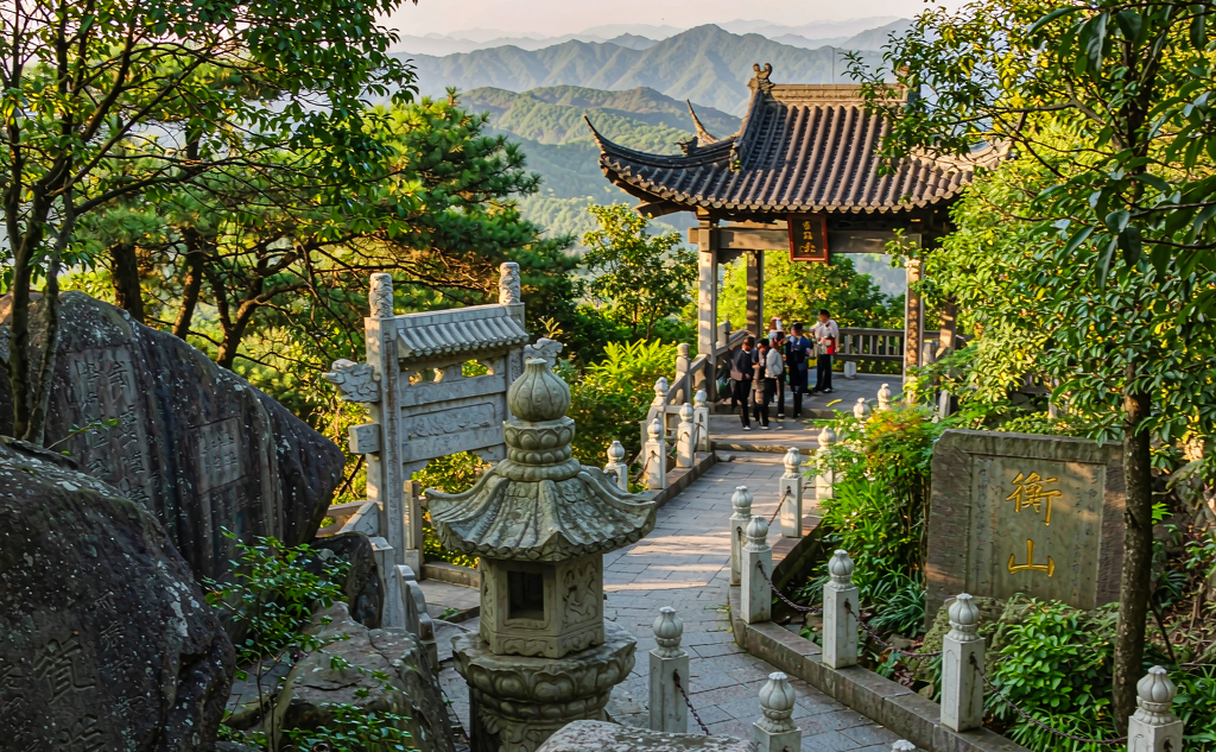
- The mountain road and gates: a shuttle bus climbs from the base to the main temple area, where stone steps lead past pavilions and cypress trees.
- Hengshan Temple complex: working shrines, a bell tower, and quiet courtyards offer a calmer counterpoint to the famous cliff monastery.
- Lookout points: from the upper terraces you can see the rolling northern Shanxi plain and, on clear days, distant sections of the Great Wall corridor.
For the temple itself in depth, the Datong Hanging Temple guide covers visiting hours, ticket tips, and photography angles. The Datong Yungang Grottoes guide adds the Buddhist cave art that rounds out a northern Shanxi cultural trip, and our Mount Wutai Shanxi guide describes the other great sacred peak in the province.
Best Time to Visit Hengshan
Hengshan has a continental climate with cold winters and warm summers, so the shoulder seasons are kindest.
- April to May: trees green up, the air is clear, and crowds are light after the winter lull.
- September to October: cool, dry, and crisp, with the best light for photographing the cliff temple against blue sky.
- June to August: comfortable but busier, especially on weekends when Datong residents drive out.
- November to March: very cold, with ice on the mountain paths; the hanging temple stays open but the upper ridge is less pleasant.
Our China hiking treks guide includes Hengshan among its sacred-mountain walks and helps you compare it with harder climbs elsewhere.
How to Get to Hengshan
Hengshan lies about 80 km south of Datong, near the town of Hunyuan. The most common route is by road.
1. From Datong, take a direct bus to the Hengshan scenic area, or hire a car for the day — many visitors pair the mountain with the Yungang Grottoes or the wooden Pagoda at Yingxian.
2. Within the scenic area, shuttle buses run from the parking zone to the hanging temple and then up to the main ridge.
3. There is no train station at the mountain itself; Datong is your rail gateway, reached by high-speed line from Beijing or Taiyuan.
Foreign visitors should read our China high-speed train guide for foreigners before traveling, and carry your passport for tickets and hotel check-in in Datong.
The Hanging Temple Up Close
Xuankong Si is the reason most travelers make the trip, and a few facts deepen the wonder. The first wooden halls were raised more than fifteen centuries ago by a monk who, according to legend, sought a place where three faiths could meet; the result blends Buddhist, Taoist, and Confucian statues under one roof, a rarity in China. The structure clings to a cliff of jointed rock by means of crossbeams driven into holes chiseled into the stone, with a hidden underlying shelf of bedrock carrying most of the weight. A narrow gorge in front of the temple funnels wind upward, and the overhang above keeps rain off the wood, which is why the timbers have survived for so long. Walk the galleries slowly, because the passages are only a body’s width and the drop is real.
What to Eat Around Hengshan
The area eats like northern Shanxi: belt-thick noodles shaved straight from a block into boiling water, then dressed with vinegar and chili; savory bean curd pudding for breakfast; and local mushrooms and wild herbs gathered on the slopes. Hunyuan, the gateway town, has simple noodle shops where a filling bowl costs a few yuan, while Datong offers the fuller range of Shanxi fare, from sweet millet cakes to lamb hotpot. Carry small cash, because the best roadside stalls rarely take cards.
A Two-Day Northern Shanxi Plan
Give Hengshan two days and it links cleanly with Datong’s other wonders. Day one leaves Datong after breakfast for the hanging temple and a short climb of the lower ridge, with lunch in Hunyuan, then returns via the Yungang Grottoes before they close. Day two stays in Datong for the city wall, the Nine-Dragon Screen, and the wooden Pagoda at Yingxian, a fifty-meter timber tower built without nails that is among the oldest of its kind on earth. That sequence turns a single cliff into a rounded picture of the region’s faith, art, and engineering.
Photography and Timing
The cliff temple faces roughly south, so it catches the warmest light in the late morning and early afternoon; arrive right at opening to beat both the glare and the tour buses. From the upper ridge, frame the pagoda roofs against the pine slopes, and watch for the moment when low sun turns the wooden eaves a deep red. Winter visitors get crisp, snow-dusted shots but must mind ice on the walkways.
What to Expect and Pack
Hengshan is not a strenuous hike, but the cliff temple involves steep, narrow walkways.
- Comfortable shoes with grip: the wooden galleries can be slippery.
- A light jacket even in summer: the gorge holds a cool draft.
- Patience at peak times: the hanging temple limits entry numbers, so queues form midday.
- Respectful attire: this is an active place of worship.
Arrive early in the day to photograph the suspended temple before the tour buses arrive, and leave time afterward to climb a little of the ridge for the quieter shrines.
A Suggested Day Plan
Leave Datong after breakfast, spend the morning at the hanging temple and lower ridge, have lunch in Hunyuan, and return via the Yungang Grottoes if time allows. Staying overnight in Datong lets you add the city wall and temples the next day.
Final Thoughts
Hengshan rewards travelers who like their mountains with history attached. The suspended temple alone justifies the trip, and the peaceful ridge shrines make it more than a photo stop.
A Note on the Sacred Landscape
Like the other sacred peaks, Hengshan is still a living religious site. Keep your voice low in the shrines, ask before photographing worshippers, and you will find the mountain far more rewarding.