

Xianning lies about an hour south of Wuhan by high-speed train, tucked into the hills where Hubei begins to rise toward the Jiangnan highlands. The city brands itself as a spa town, and for good reason: the area has been famous for its hot springs for more than a thousand years. A Xianning travel guide should balance those soothing pools with the cooler air of Jiugong Mountain, which gives the region a second season entirely.
Most foreign visitors reach Xianning as a slow-day escape from Wuhan, the provincial capital and a major transport hub. The appeal is simple. You trade the noise of a big city for mineral water, forested slopes, and a pace that invites you to do very little. It is an easy add-on for travelers who have already booked Hubei and want a rest day that still feels like travel.

Why Xianning works as a getaway
Xianning is built around relaxation rather than sightseeing. The hot spring resorts sit on the edge of town, many of them with indoor and outdoor pools fed by the same geothermal source. After days of walking in Wuhan or hiking in Shennongjia, a night here feels like a reset.
The Xianning hot springs are the headline, but the city is also a gateway to Jiugong Mountain, a forested ridge with temples, cable cars, and summer temperatures that stay pleasantly cool. Together they make Xianning useful in any season: warm pools in winter, cool peaks in summer.
Things to do in Xianning
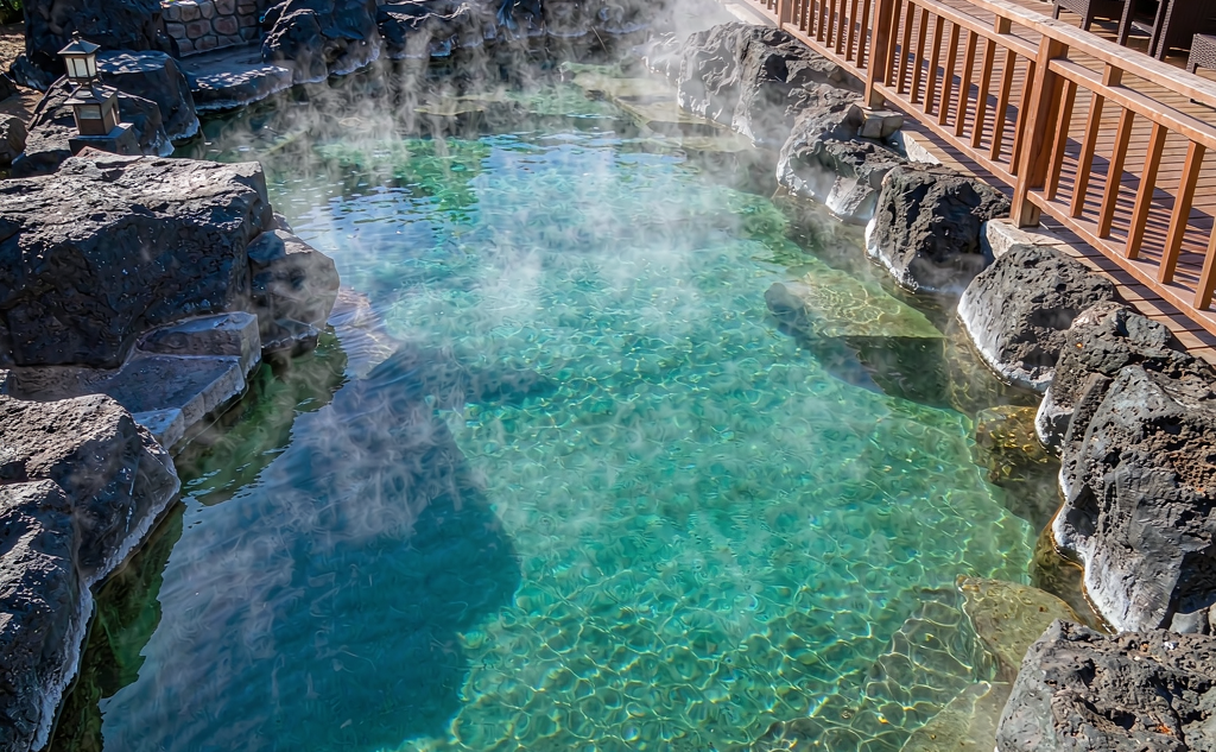
The hot spring resorts are the main event. The larger complexes offer dozens of pools at different temperatures, herbal baths, and sometimes fish spa areas. Arrive in the late afternoon and stay through the evening, when the steam and lantern light make the experience most atmospheric. Weekdays are quieter; weekends and Chinese holidays fill up fast.
Jiugong Mountain, about two hours from the city center, is the region’s mountain escape. The name means “Nine Palace Mountain,” after the temples that once crowned its ridges. Today you can take a cable car up to the viewing areas, walk the temple grounds, and, in summer, escape Wuhan’s heat entirely. The cloud sea at sunrise is the reward for an early start.
Closer to town, the Xianning Museum gives a compact introduction to the area’s history and its long hot-spring tradition. The nearby Qianlong (or local river) greenways are pleasant for an evening stroll, and the rural villages around the city offer simple farmland scenery and occasional fruit-picking in season.
For travelers who want more than pools and peaks, the Wuhan food guide is worth reading before you go, since Xianning’s tables share Hubei’s love of freshwater fish, lotus root, and hot dry noodles.
Best time to visit Xianning
The best time to visit Xianning depends on the experience you want. Winter, from December to February, is prime hot-spring season, when soaking in an outdoor pool while cold air hits your face is the whole point. Summer, especially July and August, draws visitors to Jiugong Mountain for relief from the lowland heat.
Spring and autumn are mild and good for combining both: a morning on the mountain and an evening in the water. Avoid the big holiday weeks if you can, since the resorts near Wuhan fill with city escapees. If you are coming from the provincial capital, the Wuhan travel guide explains how to use the city as your base and jump south for the day.
How to get to Xianning
How to get to Xianning is refreshingly easy because of its rail link to Wuhan. High-speed trains run frequently and take roughly 40 to 70 minutes depending on the service. From Wuhan’s main stations you can also connect onward to Yichang or Shennongjia. Our China high-speed train guide for foreigners covers ticketing and station navigation for the wider Hubei network.
Once in Xianning, the hot spring resorts run shuttle buses, and taxis cover the short hop from the station. For Jiugong Mountain you will want a hired car or a tour, as public transport thins out beyond the city.
Pairing Xianning with Hubei
A sensible Hubei plan uses Wuhan as a hub and radiates outward. Add Xianning for a spa night, Yichang for the Yangtze gorges, and Shennongjia for primeval forest. The Yichang travel guide covers the Three Gorges Dam and river cruises, and the Shennongjia Hubei guide describes the UNESCO-listed forest where wild takin and snub-nosed monkeys live. For a broader soak-focused plan, the China hot springs resorts guide lists other geothermal regions across the country.
A simple two-day plan
Xianning suits a one- or two-night add-on to Wuhan. With a single night, arrive in the afternoon, check into a hot-spring resort, and spend the evening moving between outdoor pools as the light fades. The next morning, before your train back, walk the riverside greenway or visit the local museum if it is open.
With two nights, add Jiugong Mountain on the middle day. Leave after an early breakfast, take the cable car up, and time your return for a second soak. This rhythm, mountain air by day and mineral water by night, is the point of the trip, and it pairs well with the food and history of Wuhan.
If you visit in winter, the pools matter more than the peak, so plan a resort night and keep the mountain for a warmer month when the cable car runs reliably.
Where to stay and eat
Xianning’s resorts are the place to stay if hot springs are your goal; many rooms come with private or shared pool access. Budget and chain hotels sit in the city center for travelers using Xianning as a transit stop. Food leans on Hubei staples: freshwater fish, braised pork with dried vegetables, and lotus root soup. Try the local Chongyang glutinous rice wine if you see it. Book the resort spa access when you reserve the room, since day-pass availability varies and the better pools fill on weekends. The city-center hotels are plainer but put you within walking distance of the train station for an early departure.
Practical notes for visitors
English is limited, so a translation app and offline map are essential. The resorts generally accept international cards at the front desk but mobile payment rules at small stalls, so carry cash. Nudity is not part of the public pool culture here; swimwear is required in mixed pools. The mountain roads to Jiugong can be foggy, so leave early and hire a careful driver.
For a wider view of China’s spa culture and how Xianning fits in, this overview of the country’s hot spring regions is useful: https://www.chinatravel.com/hubei/xianning/