

Shannan, Tibet, China is the cradle of Tibetan civilization, lying southeast of Lhasa along the gentle Yarlung River valley. For travelers putting together a broader plan, Shannan is usually visited as a side trip from Lhasa, and it holds some of the most important sites in Tibet, China: the first monastery, the first palace, and some of the oldest temples. This Shannan travel guide explains what to see, how to get there, the permit situation, the best season, and where to eat, with practical facts for foreign visitors traveling within China.
Why Shannan Matters
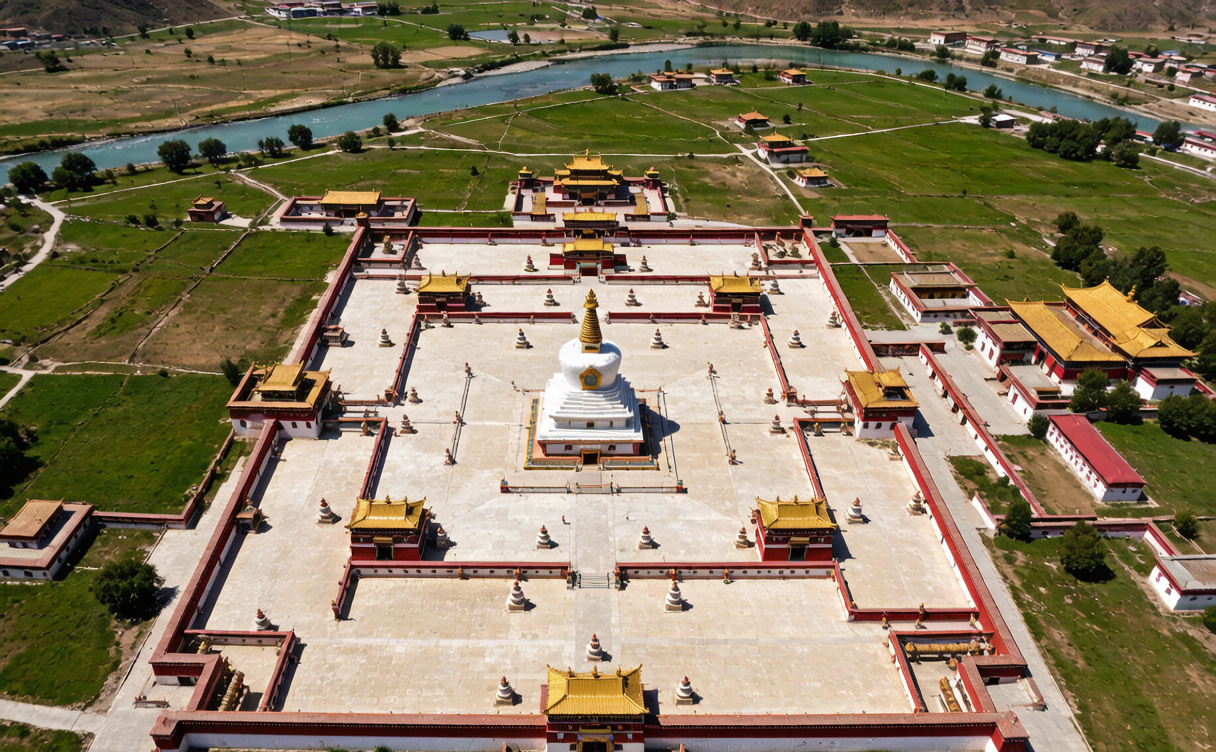
Things to do in Shannan begin with Samye Monastery, traditionally regarded as the first Buddhist monastery established in Tibet, China. Its layout mirrors a mandala, with a central hall representing Mount Sumeru and surrounding buildings standing for the continents of Buddhist cosmology. Our Samye Monastery guide walks through the symbolism and the best route through the complex.
Not far away stands Yumbulagang, a striking white tower-palace said to be the first palace in Tibet, perched on a hill above the Yarlung Valley. Tradruk Temple, near the town of Nedong, houses ancient murals and a famous thangka said to have been embroidered by a princess. Together these sites trace the story of how Buddhism and kingship took root in the valley that became the heart of Tibet, China.
Permits and Travel Rules
Foreign visitors to Tibet, China need a Tibet Travel Permit in addition to a Chinese visa. The permit is arranged through a licensed Chinese travel agency and cannot be applied for independently. Once in Tibet, foreign travelers must travel with a licensed guide and a private vehicle; independent travel is not permitted. This is a practical requirement for visiting Shannan, Tibet, China, and most visitors join a Lhasa-based tour that includes Shannan. Our China travel guide for first-timers covers the broader paperwork you will need before departure.
The permit process typically takes several weeks, so plan early. Your tour operator handles hotel registration and the checkpoints you will pass between Lhasa and Shannan, where identity documents are checked routinely. Budget extra time and never attempt to bypass the system, as it is enforced consistently across the region.
Getting to Shannan
How to get to Shannan is easy from Lhasa, about 150 kilometers away on a good highway, roughly two to three hours by car. Many tours combine Shannan with a stop at Yamdrok Lake, one of the three sacred lakes of Tibet, China. See our Yamdrok Lake guide for photography tips and the best viewpoints along the high pass.
The drive itself is a highlight, climbing to a viewpoint over the turquoise lake before dropping toward the monastery. Because foreign travelers move with a guide and vehicle, the logistics are handled for you, leaving you free to enjoy the scenery.
For background on the region’s history and geography, see Britannica’s overview of Tibet.
Best Time to Visit
Best time to visit Shannan is late spring through early autumn, from May to October, when roads are clear and the valley is green. Winter is cold and some passes can close with snow, but the light is dramatic and crowds disappear. For season planning across the country, our best time to visit China page is a useful reference.
Shannan Monasteries and Temples
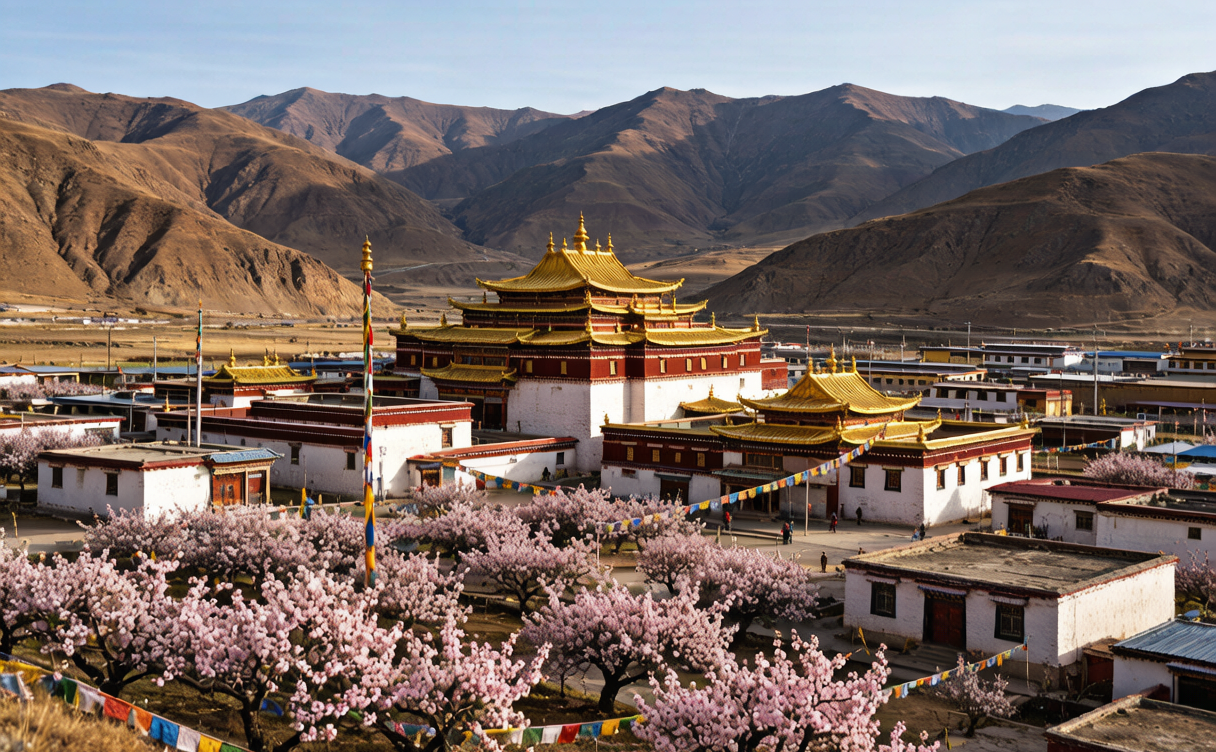
Beyond Samye and Tradruk, the region holds cliffside retreats and pilgrim circuits that define religious life in Tibet, China. The Yarlung Valley itself is dotted with stupas and prayer-flag ridges. Dress modestly, walk clockwise around shrines, and ask before photographing inside temples, where flash is never allowed.
The Yarlung Valley Landscape
The setting is half the story. The Yarlung Valley is a broad, fertile strip carved by the Yarlung Tsangpo’s tributary, framed by bare hills that turn copper at sunset. This was the political and spiritual nursery of Tibet, China, and standing on the ridge above Yumbulagang you can see why early rulers chose it: sheltered, irrigable, and defensible.
Today the valley floor is a patchwork of barley and rape fields, with whitewashed farmhouses and the occasional chorten marking a sacred point. Early morning light is best for photography, when smoke rises from village chimneys and pilgrims begin their circuits. A stop at a viewpoint between Nedong and Samye rewards the slow traveler with the classic postcard panorama of the valley.
Food in Shannan
Shannan food follows Tibetan staples: tsampa, roasted barley flour, butter tea, yak meat, and hearty noodle soups. In Nedong and near the monasteries, small restaurants serve momos, dumplings, and sweet rice dishes. Vegetarian options are available at monastery canteens, usually simple noodle or potato preparations that are filling after a day of walking.
Festivals and Local Life
The Yarlung Valley comes alive during regional festivals, when pilgrims circle the monasteries and families picnic on the valley floor. The most visible is the monastery festival season in spring and autumn, when cham dances and prayer ceremonies draw crowds from across Tibet, China. Even outside festival dates, the daily rhythm of prostrations, butter-lamp lighting, and kora walks gives visitors a clear sense of living faith rather than a museum setting.
Villages between Nedong and Samye keep older customs: barley cultivation on the valley terraces, yak herding on the higher slopes, and the weaving of woolen cloth. A stop at a roadside teahouse, where locals drink sweet milk tea and play cards, is often the most memorable cultural moment of a Shannan visit.
What to Pack for the Altitude
Because Shannan, Tibet, China sits above 3,500 meters, packing for altitude matters. Bring layered clothing, as temperatures swing from warm afternoons to near-freezing nights even in summer. A warm hat, gloves, and a windproof jacket are wise year-round. Sunglasses and high-factor sunscreen protect against intense UV, and a refillable water bottle helps with hydration that eases altitude effects.
Carry your passport, Chinese visa, and Tibet Travel Permit together in a secure pouch, since you will show them at multiple checkpoints. A small amount of cash in yuan covers temple donations and roadside stalls where cards are not accepted.
Suggested Itinerary
A two-day Shannan trip from Lhasa works well. Day one drives over the Yamdrok pass, then continues to Samye for the afternoon. Day two visits Yumbulagang and Tradruk before returning to Lhasa. Build in altitude rest, since Shannan sits above 3,500 meters and the thin air catches many first-time visitors off guard.
Practical Tips
Acclimatize in Lhasa before heading to Shannan, Tibet, China. Carry your passport and permit at all times, as checkpoints are common. Cash is useful at small temples and roadside stalls. Shelter from the sun and wind with a hat and sunglasses, as UV is strong at altitude, and drink plenty of water to ease the thin air.
Where to Stay
Most visitors base in Lhasa and day-trip to Shannan, Tibet, China. A few guesthouses near Samye serve those who want a quiet night by the monastery. Book through your tour operator, since foreign guest registration is required and cannot be done independently.
- Base in Lhasa for the widest hotel choice and the easiest permit handling.
- Samye guesthouses suit travelers who want an extra quiet morning at the monastery.
- Reserve every night through your tour operator, as foreign registration is mandatory.
- Carry cash for guesthouse extras, since cards are not always accepted in rural stays.