

Set on a broad plain where the Yarlung Tsangpo curves through Shannan, Tibet, China, Samye Monastery is traditionally held to be the first Buddhist monastery built on Tibetan soil. Founded in the 8th century under King Trisong Detsen, with the Indian master Shantarakshita and the tantric adept Padmasambhava among its architects, Samye marks the moment Buddhism moved from court debate to settled monastic life in the Himalaya. Most visitors to the region base themselves in Lhasa, but the two-hour drive south to Samye is one of the most rewarding day trips in central Tibet. This Samye Monastery guide explains the layout, how to get there from Shannan, and when to visit, along with a few things that surprised me on my own trip. For a wider regional plan, our Shannan travel guide covers the valley’s other early sites.
Why Samye matters
Before Samye, Buddhist practice in Tibet was largely carried by wandering teachers and royal patrons. Samye changed that by establishing ordained Tibetan monks, a fixed liturgy, and atranslation bureau where Indian and Chinese texts were rendered into Tibetan. The monastery became the cradle of the Nyingma tradition and a symbol of the Indian-Chinese synthesis that defined early Tibetan Buddhism. Standing in the main courtyard, it is easy to feel the weight of that origin story. The site was damaged and rebuilt several times over the centuries, most severely during the Cultural Revolution, but the central plan survives and the restoration work has been careful. Even in its reconstructed form, Samye remains the clearest window onto Tibet’s religious beginnings that you can reach by road from Lhasa.
The Samye Monastery layout
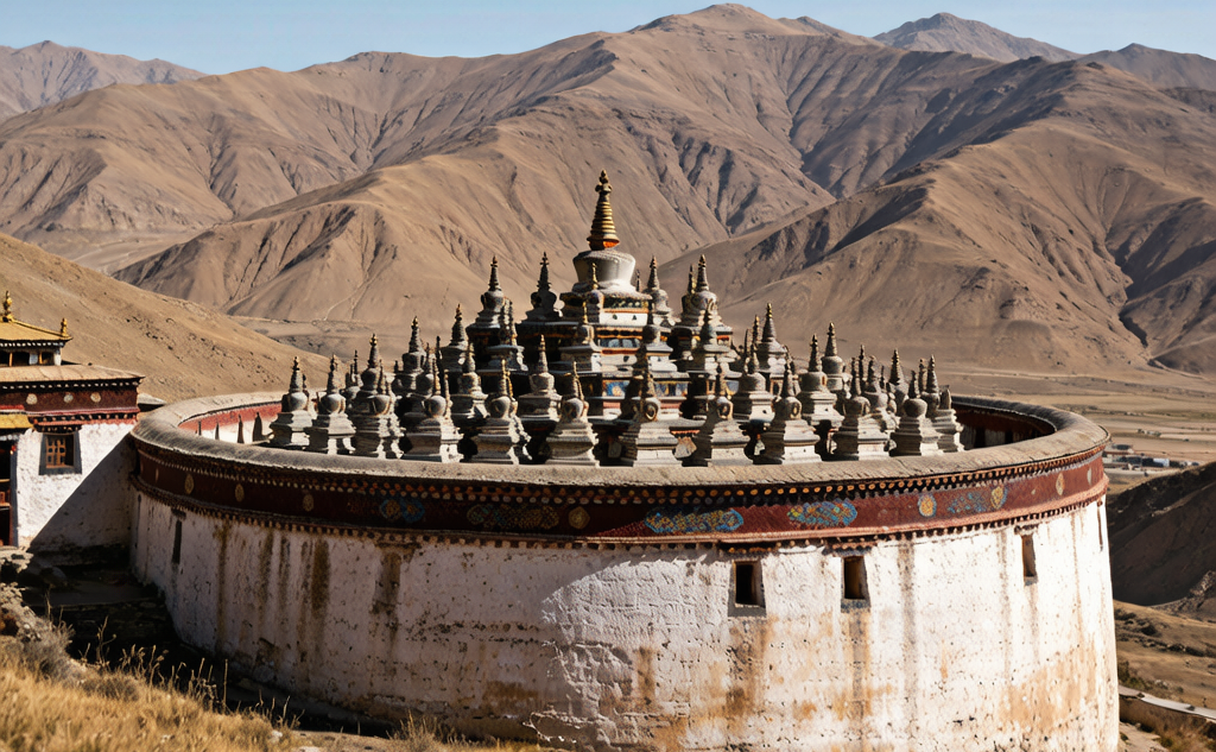
The Samye Monastery layout is the part that trips up first-time visitors, because it is built as a three-dimensional mandala. At the center stands the Utse, a tall tiered temple that combines Tibetan, Han Chinese, and Indian architectural styles in its lower, middle, and upper levels — a deliberate statement of synthesis. Around it, four large temples mark the cardinal directions, each in a different style, and the whole complex is ringed by a circular wall with 1,008 small chortens. Walking the circuit clockwise from the Utse outward lets you read the cosmology as you go. Give the directional temples time: the eastern one often holds the best surviving murals, while the southern and western halls are quieter places to sit. If you only rush the central temple, you miss the point of the design.
How to get to Samye Monastery
The monastery sits in Shannan Prefecture, about 170 kilometers southeast of Lhasa and roughly 50 kilometers from Shannan city (Tsedang). The most common route is to take the Friendship Highway south, then turn toward the river crossing. A quicker option since the opening of the Yarlung Tsangpo bridge is a direct road that cuts the drive from Lhasa to under two hours. Buses run from Lhasa’s southern station to the Samye area, but a private car or arranged transfer gives you flexibility and lets you stop at nearby sites like the Tombs of the Tibetan Kings. Knowing how to get to Samye Monastery in advance matters because rural Tibetan transport is thin and the last return vehicles leave mid-afternoon. Our Lhasa Tibet travel guide has notes on permits and drivers for the region.
One practical note: the crossing onto the south bank uses a relatively new bridge, and some older maps still show the slower ferry. Confirm with your driver which route you are taking, because the ferry adds scenic time but can be suspended in high wind. Either way, build in a buffer — rural Tibetan roads run on their own clock, and a roadside prayer-flag ceremony or a yak crossing is not unusual. Leaving Samye by 4 p.m. keeps you ahead of the light and the returning Lhasa buses.
Best time to visit Samye
The best time to visit Samye is late spring through early autumn (May to October), when the Yarlung valley is green and the passes are clear of snow. July and August bring warm days and the chance of afternoon rain, but also the fullest monastery activity. Winter is stark and very cold, with some facilities closed, though you may witness the quiet of the plateau at its most sincere. Try to arrive in the morning for soft light on the Utse and fewer tour buses from Lhasa. If your trip overlaps a festival — particularly the spring or autumn prayer gatherings — expect crowds and a far livelier atmosphere inside the halls. Pair a Samye visit with the high-altitude calm of nearby water at our Tibet Yamdrok Lake guide for a balanced day.
What to see inside
Start at the Utse and climb its levels slowly; each floor shifts architectural language, from the Indian-style ground hall to the Han-style middle and the Tibetan upper tier. The murals here depict the founding of the monastery, the lives of the early masters, and protective deities whose faces are worth studying up close. Outside, the ring of chortens and the four directional temples reward a full clockwise walk — plan on ninety minutes minimum just for the circuit. Photography rules vary by hall, so ask before raising your camera. The monastery’s position, framed by distant mountains and the wide river, is itself a draw; bring a layer even in summer, as the wind off the Tsangpo is brisk.
Practical tips
Altitude is the first thing to respect. Shannan sits around 3,500 meters, lower than Lhasa but still enough to wind you if you have just flown in. Spend a night in Lhasa first and move gently. Dress in layers, carry water, and bring small denomination notes for offerings if you wish to light a butter lamp. There is a basic restaurant and guesthouse near the entrance, but options are limited, so eat before you leave the city. A local guide at the gate can unlock the symbolism of the mandala plan far better than any plaque. For travelers new to the region’s logistics, our China travel guide for first-timers covers permits, health, and pacing.
The wider Yarlung valley
Samye rarely stands alone on a Tibet trip, and the Yarlung valley around Shannan holds the cradle sites that explain why this monastery mattered. A short drive north brings you to Yumbulagang, said to be the first Tibetan palace, perched on a ridge above the same river. Farther along, the Trandruk Temple preserves an apricot-and-pearl thangka few travelers see. These sites share Samye’s origin story and make a logical half-day loop. For the broader picture of Tibetan monastic architecture, the UNESCO-listed Potala Palace in Lhasa (whc.unesco.org/en/list/707) is the obvious next stop, though it sits two hours north and deserves its own day. Pairing Samye with the Yarlung palaces gives you the full arc from palace to monastery to the later Lhasa heights.
Food and rest near Samye
Facilities at the monastery are simple but adequate. The guesthouse near the entrance serves butter tea, momos, and noodle soup, and a few family-run spots outside the gate do the same. If you want a proper meal, eat in Shannan city before driving in. Staying overnight at the monastery guesthouse is an option for the committed — the dawn liturgy and empty courtyards at first light are a different experience from the day-tripper hours. Bring snacks and water regardless, because the plateau sun and wind dehydrate you faster than expected. Vegetarians do fine here; Tibetan cuisine leans on noodles, potato, and cheese (dre) over meat at the simpler stalls.
A note on respectful visiting
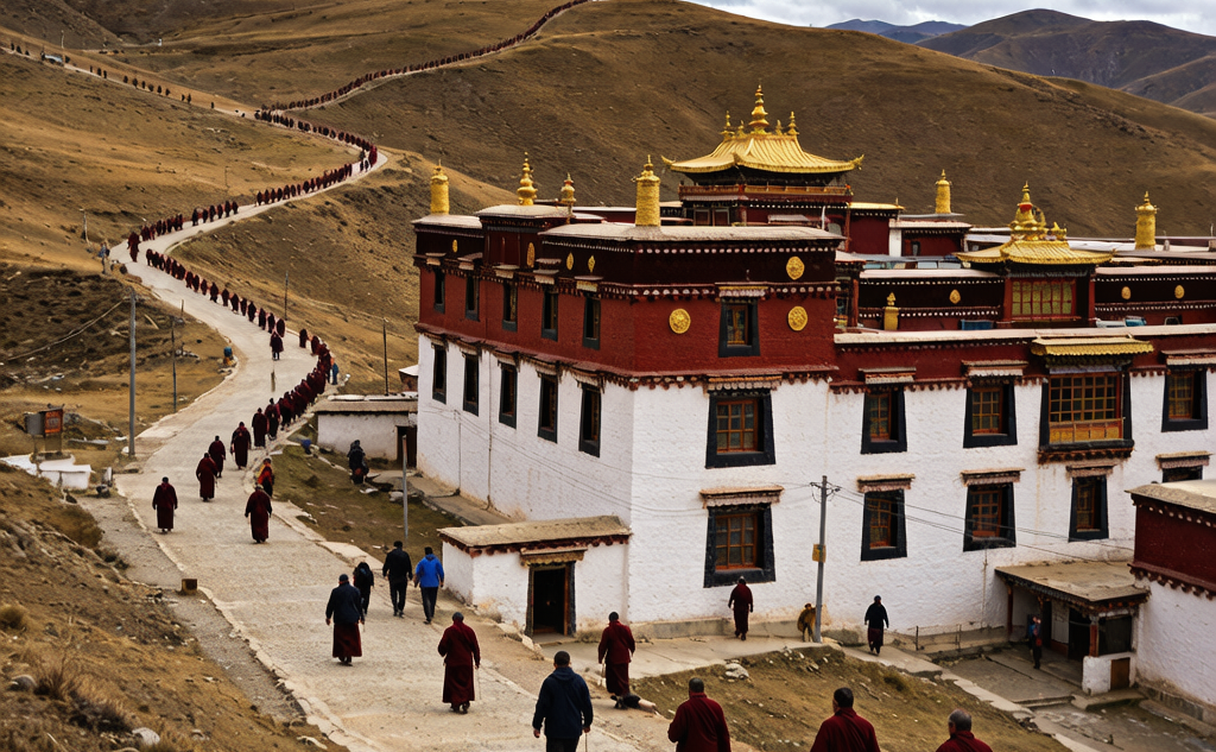
Samye is an active monastery, not a museum. Keep your voice low, walk clockwise, and step around rather than through any ceremony. Photography of monks at prayer is intrusive; ask or simply refrain. The reconstruction history means some buildings are recent, but the continuity of worship is genuine and centuries old. Treat the site as a living place and you will likely be met with the quiet warmth that Tibetan monasteries are known for.
Final thoughts
Samye rewards the traveler who slows down. It is less polished than the headline monasteries of Lhasa, and that is its strength — you can read the whole arc of Tibetan Buddhism’s arrival in one mandala-shaped plan. Go early, walk the circuit, and let the layered architecture tell its own story. Few places in Shannan, Tibet, China let you stand so directly inside a founding moment.