

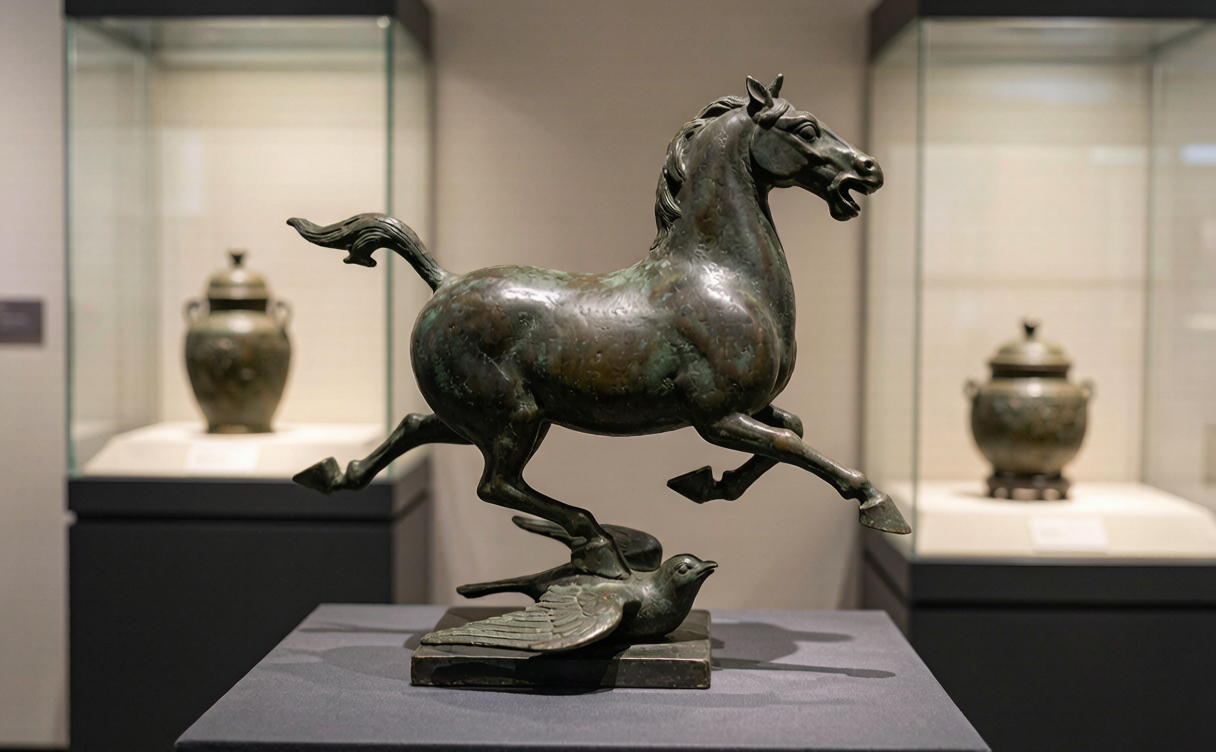
If you have seen China’s national tourism emblem — a bronze horse at full gallop, one hoof resting on a flying swallow — you have already seen Wuwei. The figure was dug out of a tomb here in 1969, and the city it came from is one of the most under-visited stops on the entire Hexi Corridor. Trains between Lanzhou and Zhangye rush straight past a walled oasis that was called Liangzhou for most of its history, held one of China’s largest Confucian temples, and carved the cliff grottoes that Chinese art historians treat as the ancestor of Mogao. This Wuwei travel guide makes the case for stopping.
Why Visit Wuwei
Wuwei sits at the eastern mouth of the Hexi Corridor, the narrow desert passage between the Qilian Mountains and the Gobi that funnelled every Silk Road caravan into and out of China. It is a working city of about a million, low and dusty, with the Qilian snow line visible to the south on clear days.
Three reasons to break the journey. It has real depth of history — Han tombs, a Ming Confucian temple, Western Xia steles and one of the oldest grotto complexes in the country. It is cheap and empty. And it is the natural first stop on any Silk Road itinerary through China, giving you the corridor’s story before the famous caves further west.
Best Time to Visit Wuwei
May to early July — the best window. Warm, dry days of 18–30°C, cool nights, and the Qilian foothills green. The most comfortable travelling weather of the year.
Late July to August. Hot at 25–34°C with the year’s small rainfall total, though desert air keeps it bearable. Good for the Tengger dunes at dawn and dusk.
September to mid-October. Clear, 12–25°C, harvest in the oasis fields and the best light for photography. Avoid the 1–7 October holiday.
November to April. Cold and windy, −12 to 8°C, with dust storms in March and April. Hotels are very cheap, the museums are heated, and the Qilian snow line looks superb — but the grottoes are bleak.
How to Get to Wuwei from Lanzhou
Two stations. Wuwei East (武威东站) is on the Lanzhou–Xinjiang high-speed line and handles the fast trains, sitting east of town, around 25 minutes by taxi. Wuwei Station (武威站) is the older downtown terminal used by conventional services. Check which your ticket names before booking a hotel.
| From | Mode | Typical duration | Approx. cost |
|—|—|—|—|
| Lanzhou West → Wuwei East | High-speed rail | 1 hr 10 min – 1 hr 40 min | ¥75–105 (US$10–15) |
| Lanzhou → Wuwei Station | Conventional train | 3 hr – 3 hr 30 min | ¥35–55 (US$5–8) |
| Wuwei East → Zhangye West | High-speed rail | 1 hr – 1 hr 20 min | ¥80–100 (US$11–14) |
| Wuwei East → Jiayuguan South | High-speed rail | around 2 hr 30 min | ¥180 (US$25) |
| Xi’an North → Wuwei East | High-speed rail | around 5 hr | ¥340 (US$48) |
| Wuwei → Tiantishan Grottoes | Taxi or car | around 1 hr | ¥250 return (US$35) |
Tickets are issued against your passport number on the 12306 app. City buses cost ¥1 and a Didi across town rarely exceeds ¥15. Distances between corridor towns are long, so book seats a day or two ahead in summer.
Top Things to Do in Wuwei
Leitai Han Tomb (雷台汉墓)
In 1969, villagers digging an air-raid shelter under a temple mound broke into an Eastern Han brick tomb holding an entire bronze cavalcade — chariots, riders, oxen and, at its head, the Bronze Galloping Horse (铜奔马), poised on one hoof over a swallow in flight. It became the emblem of Chinese tourism.
Be clear before you go: the original bronze is in the Gansu Provincial Museum in Lanzhou, not here. Wuwei has the tomb itself, which you descend into along a low brick passage, plus replicas and a park full of horse sculpture. Around ¥50, and worth an hour — standing where the hoard sat undisturbed for 1,800 years beats any vitrine.
Wuwei Confucian Temple and the Western Xia Museum (武威文庙·西夏博物馆)
The best single site in the city. Founded in 1439 and expanded repeatedly, this is among the three largest surviving Confucian temple complexes in China — courtyards of black-tiled halls, old cypresses and about forty inscribed plaques under the eaves of the Wenchang Palace.
Attached is the Western Xia Museum, holding the Xixia stele, a bilingual monument in Chinese and Tangut script that gave scholars the key to a language dead for centuries. Combined entry runs ¥30–50, and you will likely share the courtyards with a handful of local retirees.
Tiantishan Grottoes (天梯山石窟)
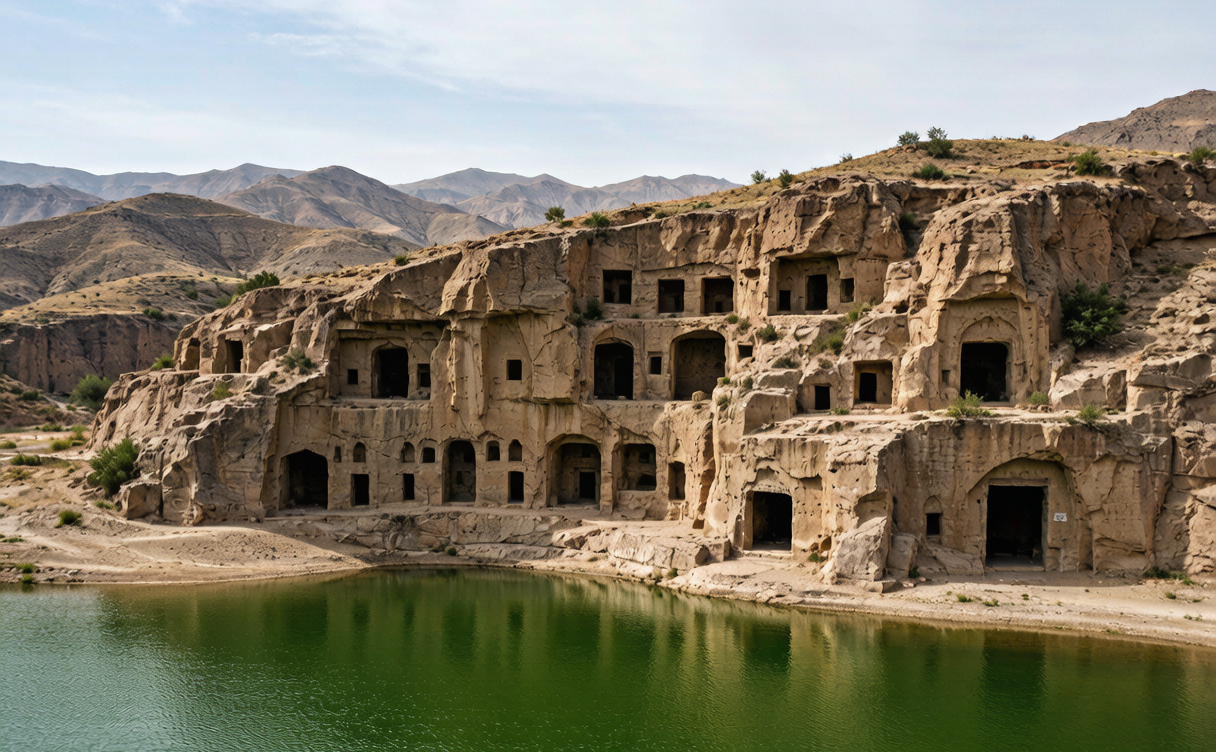
Fifty kilometres south, where the Qilian foothills meet a reservoir, a cliff face holds Buddhist caves begun in the fifth century under the Northern Liang. Art historians call Tiantishan the “ancestor of Chinese grottoes”, because the craftsmen and conventions developed here travelled west along the corridor and shaped the caves at Mogao and beyond.
Much was moved or lost when the reservoir was built, but the surviving centrepiece is spectacular: a seated Buddha over 20 metres high, flanked by attendants, rising straight out of the cliff above green water. Around ¥30–50 plus transport; hire a taxi for the round trip and allow half a day.
Kumarajiva Temple (鸠摩罗什寺)
In the middle of the city stands a brick pagoda commemorating Kumārajīva, the Kuchean monk who spent seventeen years in Liangzhou around 400 AD before going on to Chang’an, where his translations shaped Chinese Buddhist literature for the next millennium. Free or a token fee, twenty minutes on foot from the centre, and a quiet counterpoint to the tombs.
The Tengger desert edge and the vineyards
North of the city the oasis stops abruptly and the Tengger Desert begins. Operators in Minqin County run dune buggies, camel rides and sunset viewpoints an hour out of town for ¥150–250. Note the vineyards on the way back: this is a serious wine region, and Liangzhou’s grape wine appeared in Tang poetry twelve centuries ago. Several estates offer tastings.
Where to Stay in Wuwei
Budget — ¥90–170 (US$13–24). Chain hotels around Wuwei Station and Nanguan Road. Basic but clean; app-based check-in, no English.
Mid-range — ¥220–400 (US$31–56). Business hotels near the Confucian temple and Dongdajie, the most convenient base for walking the old centre.
Splurge — ¥500–900 (US$70–125). A small number of four-star properties in the newer eastern district. Wuwei has no luxury tier — if you want one on this route, save it for Dunhuang.
Confirm your hotel accepts foreign passports before booking. In smaller Gansu cities this is worth a message in advance.
What to Eat in Wuwei
Hexi Corridor food is wheat, lamb and vinegar, built for cold nights.
- Liangzhou santaoche (凉州三套车). The local set meal and the thing to order: hand-pulled noodles, a plate of cured pork, and a bowl of sweet brick tea with jujubes. Around ¥30 for all three.
- Hand-grabbed lamb (手抓羊肉). Qilian mountain lamb boiled plain and eaten with salt, cumin and garlic. The meat here is genuinely excellent.
- Mianpizi (面皮子). Cold wheat-starch noodles with chilli oil, vinegar and garlic, sold at every market stall in summer.
- Rice soup with oil fritters (米汤油馓子). The classic Liangzhou breakfast: crisp fried dough coils dropped into warm millet soup.
- Liangzhou grape wine. Cabernet and Merlot from the desert-edge vineyards; supermarket bottles start around ¥60.
Sample Wuwei Itinerary for Foreign Tourists: Two Days
Day 1 — the city
- 08:30 rice soup and fritters near Dongdajie
- 09:30 Wuwei Confucian Temple and the Western Xia Museum
- 12:00 santaoche for lunch
- 14:00 Leitai Han Tomb and the horse park
- 17:00 Kumarajiva Temple pagoda, then the night market
Day 2 — out of town
- 08:00 car to Tiantishan Grottoes; giant Buddha and the reservoir shore
- 13:00 lunch back in town, hand-grabbed lamb
- 15:00 Tengger dune edge, or a vineyard visit
- 19:00 evening train west to Zhangye or back to Lanzhou
Practical Tips
- Two stations. High-speed services use Wuwei East, 25 minutes out; conventional trains use downtown Wuwei Station.
- Hire a car for Tiantishan. There is no reliable public transport to the grottoes. Agree ¥250–300 for the return trip with waiting time.
- Altitude and sun. The city sits at about 1,500 metres in very dry air. Drink more than you think you need and use sunscreen even in spring.
- Payment. Alipay and WeChat Pay accept foreign Visa and Mastercard and cover buses, taxis, tickets and stalls. Keep ¥200 in notes for rural sites.
- Passport as ID. Required at every train barrier, museum desk and hotel check-in.
- Book seats ahead. Corridor trains fill in July and August, and there are only a few fast services a day to each town.
- Sequence it right. Wuwei, then Zhangye, then Jiayuguan, then the Mogao Caves at Dunhuang — the history runs west, and so does the scenery.
FAQ
Is Wuwei worth visiting?
For Silk Road travellers, yes — one night is enough to see the Confucian temple, the Leitai tomb and Tiantishan, and it costs almost nothing. If your trip is only Dunhuang and Zhangye, you can skip it without regret.
How many days do I need?
One full day covers the city sites. Two lets you add Tiantishan Grottoes and the desert edge without rushing.
Where is the original Bronze Galloping Horse?
In the Gansu Provincial Museum in Lanzhou, where it has been since shortly after its discovery. The Leitai site in Wuwei displays replicas and the tomb it came from — plan to see both, and read our Lanzhou travel guide for museum opening times.
How do I get from Wuwei to Zhangye?
High-speed trains from Wuwei East take about an hour to Zhangye West for ¥80–100, with several services a day. Zhangye is the base for the Danxia rainbow mountains.
Is Wuwei suitable for a first-time visitor to China?
It is safe and simple, but there is almost no English and no tourist infrastructure aimed at foreigners. Come here after a few days in a bigger city, or on a corridor route that also takes in Tianshui and Dunhuang, where you will find more support.
Written by Karl, China Travel Places — updated August 2026.