

Everyone has heard of the Mogao Caves at Dunhuang. Far fewer travelers know that Gansu province holds a second Buddhist cave complex of world importance — and that it might be even more dramatic to visit. At Maijishan, near the city of Tianshui, more than 7,000 sculptures fill 200-plus grottoes carved into a sheer cliff shaped like a wheat stack, reached by a lattice of walkways bolted to the rock face a hundred meters above the treetops. Climbing them feels closer to via ferrata than museum-going. This Tianshui travel guide covers the grottoes, the city’s Fuxi heritage, its famous breakfast noodles, and how to slot this underrated stop into a Silk Road or west-China rail journey.
Why Visit Tianshui
Tianshui is Gansu’s second city, a long green valley town on the Wei River that has been continuously settled for 8,000 years. Chinese tradition names it the birthplace of Fuxi, the legendary ancestor credited with the Eight Trigrams, and his Ming-dynasty temple in the old town is one of the finest in the northwest. But the headline is Maijishan: one of China’s four great Buddhist grottoes (alongside Mogao, Yungang and Longmen), set not in desert but in lush, misty foothills of the Qinling range. Because Tianshui sits on the main high-speed line between Xi’an and Lanzhou, you can hop off, spend a day and a night, and continue west — a perfect low-effort detour for travelers who like places most itineraries skip. Our off-the-beaten-path China guide ranks it among the best-value cultural stops in the country.
Best Time to Visit Tianshui
The best time to visit Tianshui is April–June and September–October. The city enjoys a milder, wetter microclimate than most of Gansu — locals call it the “Jiangnan of the northwest.”
- Spring (April–May): 12–24°C, blossoming hills, clear walkway views at Maijishan.
- Summer (June–August): Warm (25–30°C) with afternoon showers; the forest around the grottoes is at its greenest, and morning mist swirling around the cliff is spectacular.
- Autumn (September–October): Crisp, dry, golden foliage — arguably the most photogenic season.
- Winter (November–March): Cold (−5 to 8°C), occasional snow dusting the Buddhas; very few visitors.
Slotting Tianshui into a longer route? Our best time to visit China guide helps you align Gansu with the rest of your trip.
How to Get There
Tianshui South station on the Xi’an–Lanzhou high-speed line is the gateway; the grottoes lie about 35 km southeast of town.
| Route | Option | Time | Approx. Cost |
|—|—|—|—|
| Xi’an North → Tianshui South | High-speed train (G/D) | 1.5–2 hr | ¥110–160 ($15–22) |
| Lanzhou West → Tianshui South | High-speed train (G/D) | 1.5–2 hr | ¥110–150 ($15–21) |
| Beijing → Tianshui South | High-speed train (via Xi’an) | 6–7 hr | ¥600–750 ($84–105) |
| Tianshui South → Maijishan | Bus 60 / taxi | 50–70 min | ¥6 bus, ¥70–90 taxi |
| Tianshui South → old town | Taxi / bus | 25–35 min | ¥25–35 taxi |
Trains run roughly hourly in each direction, so a stopover requires almost no planning. If you have never booked Chinese trains before, our high-speed train guide for foreigners walks through tickets, luggage and station navigation.
What to See: Top Experiences in Tianshui
Maijishan Grottoes
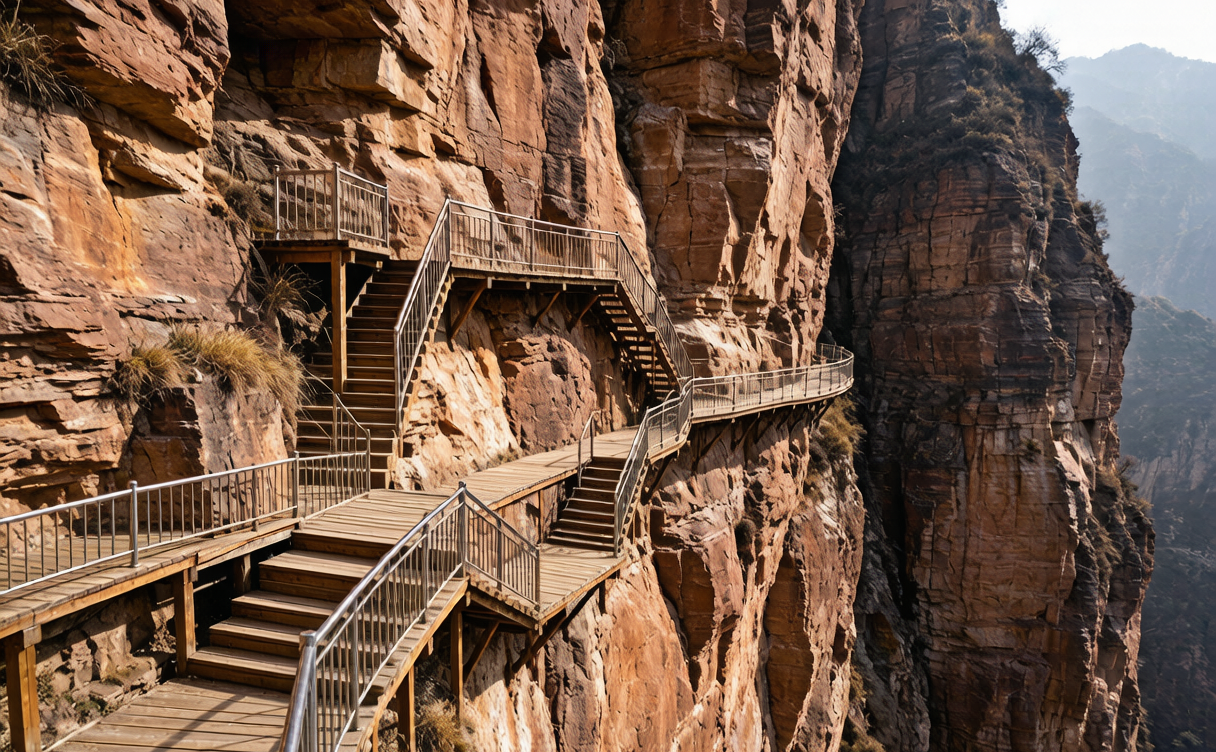
The main event. Maijishan (“Wheat Stack Mountain”) rises 142 meters from the forest, its red conglomerate cliff honeycombed with grottoes begun in the Later Qin (late 4th century) and expanded for a thousand years. The colossal 16-meter Buddha triad on the cliff face is visible from the valley floor; up close, staircases and caged walkways zigzag past niches holding clay sculptures whose paint has survived fifteen centuries in the dry cave air. Highlights include Cave 133’s serene young monk statue — often called the most beautiful smile in Chinese art — and Cave 4’s seven-bay “Scattered Flower Pavilion” at the very top. The site is inscribed on the UNESCO World Heritage list as part of the Silk Roads corridor; see the official UNESCO listing for detail. Entry with shuttle is about ¥90 ($13); the site typically opens around 8am–5:30pm. Some special caves cost extra and open only with a guide. Allow three hours, and note the walkways are not ideal for anyone with serious vertigo.
Fuxi Temple
Back in the city, the Fuxi Temple (built 1490) honors the mythical creator of the Eight Trigrams with a cypress-shaded courtyard complex of carved beams and a statue of Fuxi robed in leaves. An annual public ceremony each summer draws visitors from across China. Entry around ¥30; the surrounding old-town lanes hide teahouses and lacquerware shops — Tianshui’s carved lacquer is a protected regional craft.
Yuquan Temple and the Wei River Valley
A Taoist complex climbs the hillside north of the old town among ancient cypresses, with pavilions giving views over the city. Combine it with a riverside walk at dusk when locals gather to dance and fly kites.
Xianren Cliff
If Maijishan whets your appetite, this quieter cluster of temples and grottoes 15 km further into the hills sees a fraction of the visitors and sits above a green reservoir — a pleasant half-day extension by taxi.
Where to Stay
- City comfort (¥250–450 / $35–63): Mid-range hotels cluster in Qinzhou district near the Fuxi Temple and pedestrian street — the best base for food and atmosphere.
- Budget (¥120–200 / $17–28): Chains near Tianshui South station suit one-night stopovers.
- Near the grottoes (¥200–400 / $28–56): A handful of guesthouses in the Maiji scenic area let you reach the cliff at opening time, before tour buses arrive around 10am.
What to Eat
Tianshui’s food leans hearty and wheat-based, with a famous breakfast culture:
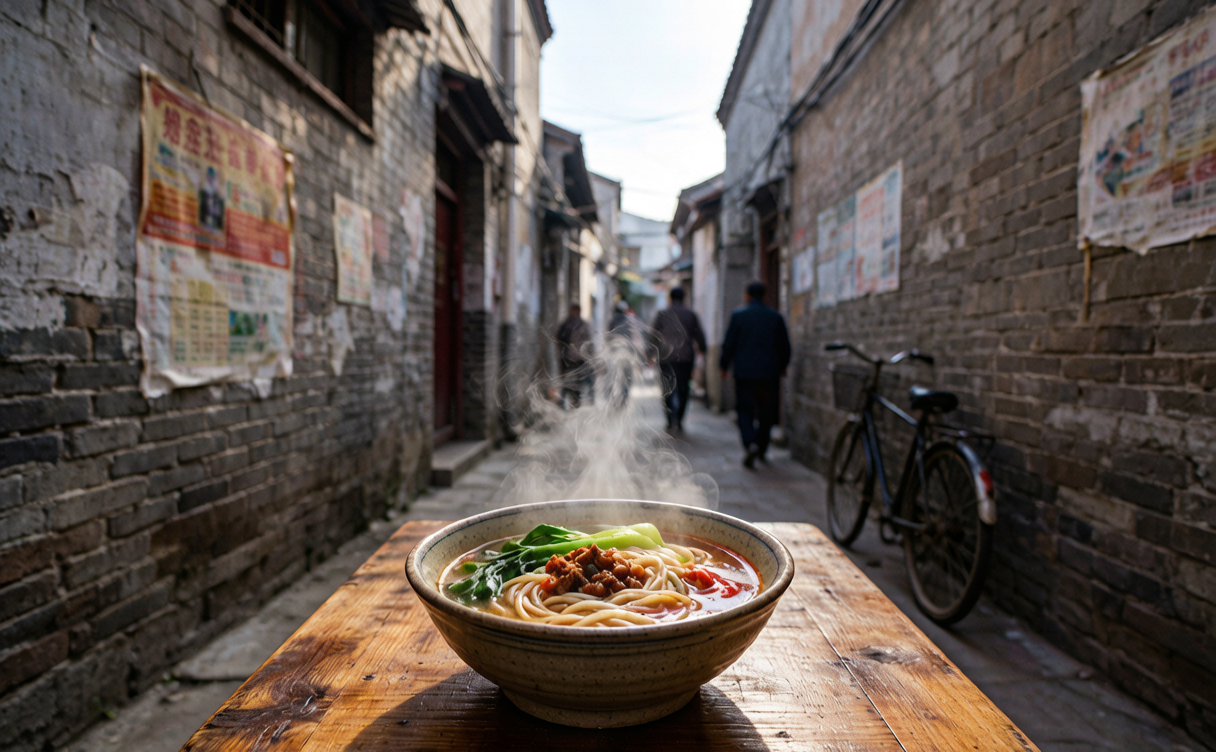
- Guagua: The signature dish — a spicy, jelly-like buckwheat pudding doused in chili oil, eaten at dawn from hole-in-the-wall shops.
- Niang pi: Chewy cold wheat noodles with vinegar, garlic and chili, Gansu’s answer to liangpi.
- Tianshui zajiao: Mixed-grain pancakes and potato dishes from the surrounding loess farmland.
- Hulu he: Hand-cut noodles in a rich pork-and-vegetable broth, a local lunch staple.
- Huaniu apples: Tianshui’s dark-red apples are famous nationwide; buy them from street carts in autumn.
Sample Itinerary: 1–2 Days in Tianshui
Day 1 — The grottoes. Arrive on an early train from Xi’an or Lanzhou, drop bags at a locker or hotel, and head straight to Maijishan (aim to be on the cliff before 10am). Spend three hours on the walkways and the forest paths below, lunch at a farmhouse restaurant in the scenic area, then return to the city for the Fuxi Temple and an evening noodle crawl on the pedestrian street.
Day 2 — Old town and onward. Guagua breakfast in a back alley, a slow morning at Yuquan Temple and the lacquerware shops, then an early-afternoon high-speed train onward. Add Xianren Cliff if you have a full second day.
Practical Tips
- Beat the buses: Tour groups hit Maijishan mid-morning; arrive at opening or after 3pm for near-empty walkways.
- Cash-free but carry ID: Alipay/WeChat Pay everywhere; your passport is needed for tickets and hotels.
- Walkway etiquette: One-way loops apply on busy days; photography is fine on the walkways but flash is banned inside caves.
- Luggage: Tianshui South station has lockers, making a same-day stopover between Xi’an and Lanzhou entirely feasible.
- Independence required: These Tianshui travel guide tips assume you are comfortable with translation apps and self-guided sightseeing — English support on the ground is minimal.
FAQ
Is Tianshui worth visiting?
Yes — Maijishan alone justifies the stop. It is one of China’s four great Buddhist cave complexes, and the cliffside walkway experience is unlike Mogao, Yungang or Longmen.
How much time do I need?
One busy day covers Maijishan plus the Fuxi Temple. Two relaxed days add the old town, Yuquan Temple and Xianren Cliff — that is the honest scope of things to do in Tianshui.
How do I get to Tianshui?
High-speed trains from Xi’an or Lanzhou take under two hours each way; that is how to get to Tianshui with zero hassle. Bus 60 or a taxi covers the last stretch to the grottoes.
Are the Maijishan walkways safe?
They are sturdy steel-and-concrete structures with high railings, inspected regularly. Visitors with severe fear of heights may find the upper tiers challenging, but families climb them daily.
Can I see the painted caves up close?
Standard tickets show you dozens of open niches behind mesh screens. A limited number of special caves, including Cave 133, can typically be arranged on-site with a licensed guide for an extra fee.
Written by Karl Huang, updated July 2026.