

The two oldest written characters for “China” are not in Beijing or Xi’an. They are cast inside a bronze wine vessel in a museum an hour west of Xi’an, in a city most foreign visitors have never heard of. Baoji sits where the Wei River valley narrows against the Qinling range, and it has produced more Western Zhou bronzes than anywhere else on earth — plus a finger relic of the Buddha, a 3,767-metre alpine peak and the noodle bowl Shaanxi built its reputation on. This Baoji travel guide explains why it deserves a day of your Shaanxi itinerary.
Why Visit Baoji
Baoji is a long industrial city of around three and a half million strung along the Wei River, backed to the south by the wall of the Qinling Mountains. It is not pretty in the centre, but it holds one of the densest concentrations of early Chinese archaeology in the country.
This was the heartland of the Western Zhou dynasty, and farmers here have been turning up ritual bronzes for over a thousand years. Add Famen Temple, where a sealed Tang crypt was opened in 1987, and Mount Taibai, the highest peak in the Qinling, and you get what Xi’an cannot offer: serious history without the queues, and real mountains within ninety minutes.
Best Time to Visit Baoji
April to early June — the best window. Clear, dry days of 15–28°C, blossom in the Wei valley, and Taibai’s lower trails open with snow still on the summit ridge.
July and August. Hot in the valley at 26–35°C and the wettest months, but the only reliable window for the Taibai boardwalk, when the alpine lakes are ice-free. Expect afternoon thunderstorms.
September to October. Second-best: 12–25°C, dry, with autumn colour in the Qinling gullies from mid-October. Avoid the 1–7 October holiday.
November to March. Cold and grey, −5 to 8°C, with valley haze, and the upper cable car often shut for snow. The museums are warm and empty, so winter still works if you skip the mountain.
How to Get to Baoji from Xi’an
Two stations again. Baoji South Station (宝鸡南站) takes the G trains on the Xi’an–Baoji high-speed line and sits in the southern suburbs, 20–30 minutes by taxi from the centre. Baoji Station (宝鸡站) is downtown on the conventional line, slower but far more convenient if your hotel is in the old centre.
| From | Mode | Typical duration | Approx. cost |
|—|—|—|—|
| Xi’an North → Baoji South | High-speed rail | 50 min – 1 hr 10 min | ¥55–80 (US$8–11) |
| Xi’an → Baoji Station | Conventional train | 2 hr – 2 hr 30 min | ¥25–40 (US$3.50–5.50) |
| Lanzhou West → Baoji South | High-speed rail | 2 hr 20 min – 2 hr 50 min | ¥170–210 (US$24–30) |
| Chengdu East → Baoji South | High-speed rail | around 3 hr | ¥250 (US$35) |
| Baoji → Famen Temple, Fufeng | Coach or car | 1 hr 15 min – 1 hr 30 min | ¥25 coach (US$3.50) |
| Baoji → Tangyu, Mount Taibai | Coach or car | around 1 hr | ¥20 coach (US$3) |
Tickets are issued against your passport number and booked on the official China Railway 12306 portal. City buses cost ¥1–2. For seat classes and station procedure, see our high-speed train guide for foreign travellers.
Top Things to Do in Baoji
Baoji Bronze Ware Museum (宝鸡青铜器博物院)
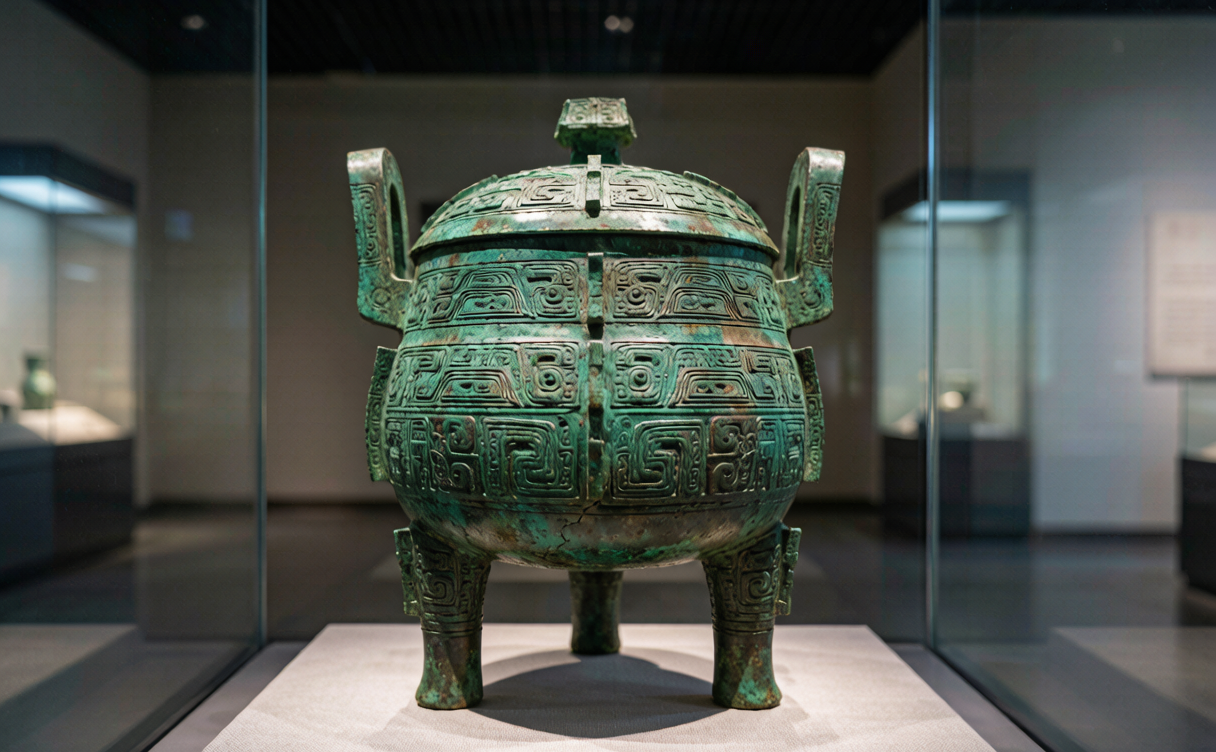
China’s only museum dedicated entirely to bronzes, and the single best reason to come. It stands in Shigu Park on the south bank of the Wei, built as a stepped terrace echoing a ritual altar, and holds thousands of Western Zhou vessels dug up in the surrounding counties.
The star is the He zun (何尊), a wine vessel cast around 1038 BC whose inner inscription carries the earliest known written use of the characters zhong guo — “central states”, ancestor of the modern word for China. Also here are the Shi Qiang pan and a hall of the Stone Drums of Qin, ten granite boulders bearing the oldest surviving stone inscriptions in the country. Free with your passport; closed Mondays. Allow two hours.
Famen Temple (法门寺)
Ninety minutes east in Fufeng County, Famen Temple was a Tang imperial temple whose pagoda collapsed in 1981, revealing a crypt sealed since 874 AD. Inside were relics said to be a finger bone of the Buddha, with the finest hoard of Tang gold, silver, glass and secret-colour porcelain ever found in one place.
The site has two halves: the old courtyard with the rebuilt pagoda and the Famen Temple Museum, where the Tang treasures are — go there first — and a vast modern ceremonial avenue built in the 2000s. Tickets run ¥100–120 combined. Budget two hours and concentrate on the museum.
Mount Taibai National Forest Park (太白山)
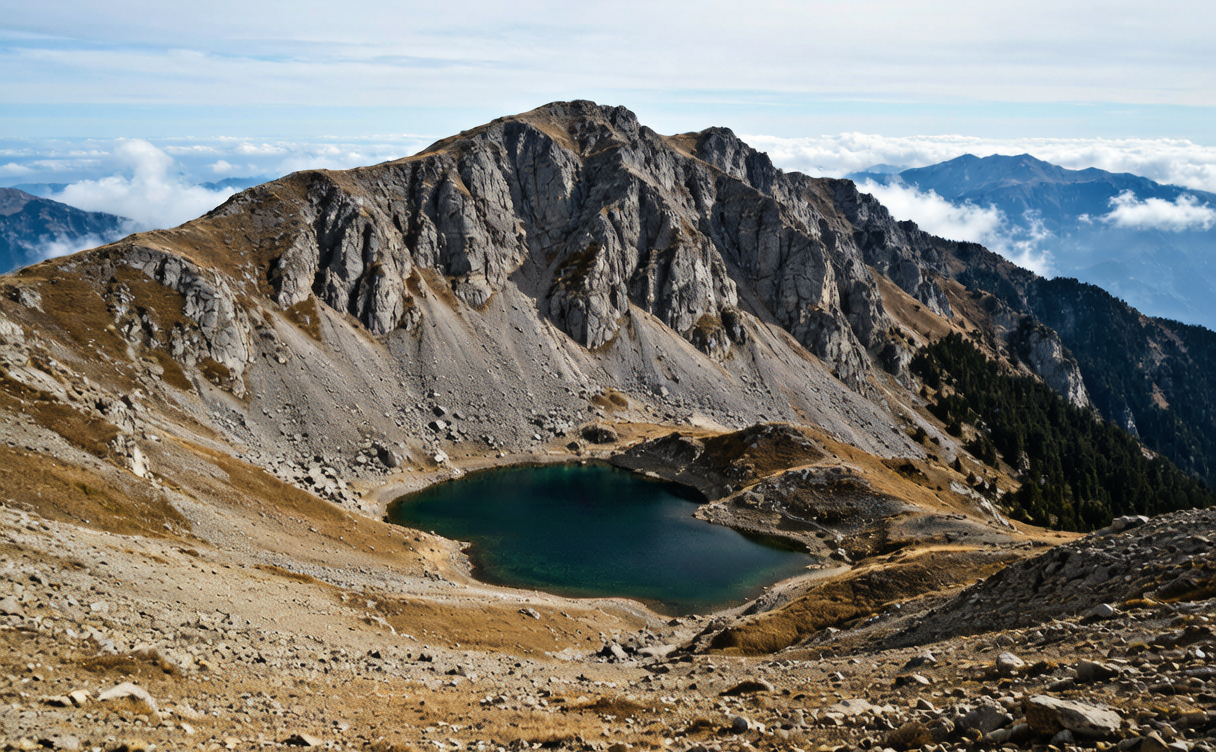
At 3,767 metres this is the highest peak in the Qinling and the easiest true alpine environment to reach from Xi’an. From the gate at Tangyu a park shuttle runs up the valley to a cable car that lifts you to around 3,500 metres, where a boardwalk crosses bare rock and glacial lakes above the treeline. Shuttle, entry and cable car together run roughly ¥250–300.
Even in July it is cold and windy at the top, so bring a fleece and a shell. Serious walkers can do the two-day summit traverse, but the boardwalk gives most visitors what they came for in an afternoon. Compare it with our Hua Mountain hiking guide — Taibai is higher and wilder, Hua Shan steeper and far more famous.
Zhouyuan and Zhougong Temple (周原·周公庙)
The Zhouyuan plain in Fufeng and Qishan counties was the Western Zhou capital region, and the Zhouyuan Museum sits on the excavation itself — foundations, oracle bone pits and bronze hoards in situ. Twenty minutes away, wooded Zhougong Temple honours the Duke of Zhou. Both are cheap and best combined with Famen Temple by hired car.
Jintai Guan (金台观)
This small Daoist terrace complex is cut into the loess bluff above the old town, associated with the semi-legendary martial artist Zhang Sanfeng. A few yuan, twenty minutes on foot from Baoji Station, and the best view over the river valley.
Where to Stay in Baoji
Budget — ¥110–200 (US$15–28). Chain hotels around Baoji Station. Simple, clean, app check-in, no English.
Mid-range — ¥250–450 (US$35–65). Business hotels along Jingtan Road and near Shigu Park — the best base, walkable to the Bronze Ware Museum and the evening food streets.
Splurge — ¥600–1,100 (US$85–155). International-standard hotels in the Weibin district, plus hot spring resorts at Tangyu below Mount Taibai, the better choice if you are climbing next morning.
Check the hotel registers foreign passports; chains always do.
What to Eat in Baoji
Western Shaanxi cooking is sour, wheat-based and generous with chilli.
- Qishan saozi noodles (岐山臊子面). The regional dish: thin hand-cut wheat noodles in a hot, sour, oily pork broth with diced tofu, egg and wood ear. Traditionally you eat the noodles and leave the soup. ¥12–20.
- Ganmianpi (擀面皮). Rolled and steamed wheat-dough strips, chewy and springy, under chilli oil, vinegar and gluten cubes. Baoji’s version is the benchmark.
- Douhua paomo (豆花泡馍). The local breakfast: soft tofu curd in spiced broth with torn flatbread. ¥8.
- Rou jia mo (肉夹馍). The Shaanxi pork flatbread sandwich, here often made with saozi-style meat.
- Xifeng liquor (西凤酒). One of China’s four historic baijiu, distilled in Fengxiang County since the Tang dynasty.
Pick up a Fengxiang clay figurine (凤翔泥塑) too: hand-painted tigers and horses in red, green and black, made in that county for centuries.
Sample Baoji Itinerary for Foreign Tourists: Two Days
Day 1 — bronzes and the city
- 08:30 douhua paomo breakfast near Baoji Station
- 09:30 Baoji Bronze Ware Museum, two hours minimum
- 12:30 Qishan saozi noodles for lunch
- 14:30 Jintai Guan and the loess terrace view
- 18:00 dinner and ganmianpi on Jingtan Road
Day 2 — pick one
- History: hired car to Famen Temple Museum, then Zhouyuan and Zhougong Temple, back by 18:00
- Mountains: 07:30 coach to Tangyu, shuttle and cable car onto the Taibai boardwalk, down by 17:00
- 19:30 evening high-speed train back to Xi’an or onward west to Lanzhou
Practical Tips
- Two stations. G trains use Baoji South in the suburbs; conventional trains use downtown Baoji Station.
- Hire a car for the county sites. Famen Temple, Zhouyuan and Qishan are scattered. A car with driver costs roughly ¥500–700 a day and saves three hours of waiting.
- Museum closures. The Bronze Ware Museum closes Mondays, as does most of Shaanxi’s museum network. Plan the mountain for that day.
- Passport everywhere. Free museum entry, train barriers and hotel check-in all need the physical document.
- Payment. Alipay and WeChat Pay take foreign Visa and Mastercard and cover buses, taxis, tickets and stalls. Keep ¥200 in cash for village vendors.
- Layer up for Taibai. The summit area can be 20°C colder than the valley, in any month.
- Context first. An hour in the Shaanxi History Museum makes the Zhou material here far more legible.
FAQ
Is Baoji worth visiting?
If you have any interest in early Chinese history, yes — the Bronze Ware Museum is world-class and free, and Famen Temple’s Tang hoard is the best of its kind. If you are in Shaanxi only for the Terracotta Army, skip it.
How many days do I need?
One long day covers the Bronze Ware Museum and the city. Two lets you add either Famen Temple or Mount Taibai.
Can I visit Baoji as a day trip from Xi’an?
Yes. Trains take under seventy minutes each way, so an 08:00 departure gives you six hours — enough for the Bronze Ware Museum, lunch and Jintai Guan. Famen Temple is easier as a separate day trip direct from Xi’an.
Is Mount Taibai suitable for casual walkers?
The cable car and boardwalk section is, given warm clothing and comfort at 3,500 metres. The full summit traverse is a demanding two-day hike.
Is there much English in Baoji?
Very little. The Bronze Ware Museum has good bilingual labelling; almost nothing else does. Bring an offline translation app and save addresses in Chinese characters.
Written by Karl, China Travel Places — updated August 2026.