

Most people crossing Sichuan go Chengdu to Chongqing and never look north. Two hours up the Jialing River there is a city of six million that almost no foreign visitor stops in, and inside its boundaries sits one of the four best-preserved ancient towns in China. Nanchong has been weaving silk for two thousand years, gave the country the man who wrote the Records of the Three Kingdoms, and still eats a breakfast bowl of rice noodles that Chengdu cannot match. This Nanchong travel guide covers what is worth your time and how to fit it into a Sichuan rail loop.
Why Visit Nanchong
Nanchong is the second city of northeastern Sichuan, spread along a wide bend of the Jialing River in a basin of low green hills. It is not a beautiful city in itself — expect concrete towers and busy ring roads — but it works well as a base, and three things justify the detour.
First, Langzhong Ancient City, a walled Tang-to-Qing town ninety minutes north that is administered by Nanchong and is one of the finest surviving old towns in the country. Second, silk: Nanchong is China’s officially designated “Silk Capital” and you can still watch reeling and weaving in working workshops. Third, price and space — hotels cost half what they do in Chengdu, and you will often be the only foreigner in the room.
Best Time to Visit Nanchong
March to May — the best window. Temperatures of 14–26°C, rapeseed flowers across the river terraces in March, and less humidity than the basin holds from June. April is ideal.
June to August. Hot and heavy: 28–37°C with frequent afternoon downpours, and the Jialing running high and brown. Plan indoor mornings and river walks after 19:00.
September to November. The second good window: dry, 15–27°C, with pomelo and persimmon season in the surrounding counties. Skip the 1–7 October national holiday, when Langzhong fills with domestic tour groups.
December to February. Grey, damp, 4–12°C, and no central heating anywhere in Sichuan. The upside is empty lanes and very cheap rooms — except at Chinese New Year, when Langzhong bills itself as the hometown of Spring Festival traditions and gets seriously busy.
How to Get to Nanchong from Chengdu and Chongqing
Nanchong has two main stations. Nanchong Station (南充站) is the downtown terminal on the Chengdu–Dazhou line. Nanchong North Station (南充北站) sits on the Lanzhou–Chongqing railway and handles most trains toward Chongqing and Langzhong, about 25 minutes by taxi from the centre. Check which one your ticket names.
| From | Mode | Typical duration | Approx. cost |
|—|—|—|—|
| Chengdu East → Nanchong | D train | 1 hr 40 min – 2 hr | ¥85–110 (US$12–15) |
| Chongqing North → Nanchong North | D train | 1 hr 20 min – 1 hr 50 min | ¥75–100 (US$10–14) |
| Chengdu → Nanchong | Express coach | around 3 hr | ¥110 (US$15) |
| Nanchong North → Langzhong | Train | 40–55 min | ¥25–40 (US$3.50–5.50) |
| Nanchong centre → Langzhong | Coach | around 1 hr 30 min | ¥45 (US$6) |
| Nanchong Gaoping Airport (NAO) → centre | Taxi | 25 min | ¥50 (US$7) |
Every rail ticket is issued against your passport number — our complete guide to China’s high-speed trains for foreign travellers covers booking and station procedure. City buses cost ¥2; Didi rides across town rarely pass ¥25.
Top Things to Do in Nanchong
Langzhong Ancient City (阆中古城)
This is the reason to come. Langzhong is a walled river town founded over 2,300 years ago, wrapped on three sides by the Jialing and backed by hills, with a street grid that has barely shifted since the Tang dynasty. Unlike most restored old towns in China, a large share of the courtyard houses here are original Ming and Qing timber, and people still live in them.
Buy the through-ticket (around ¥100–120) for the main courtyards; the lanes themselves are free. Priorities: the Zhang Fei Temple (汉桓侯祠), dedicated to the Three Kingdoms general who governed here and is buried on the site; the Gongyuan (贡院), a rare intact imperial examination hall with the cells candidates were locked into; and Zhongtianlou tower for the rooftop view. Come back after dark — the lanes are lantern-lit and far quieter than Lijiang.
Silk: the China Silk Capital Museum
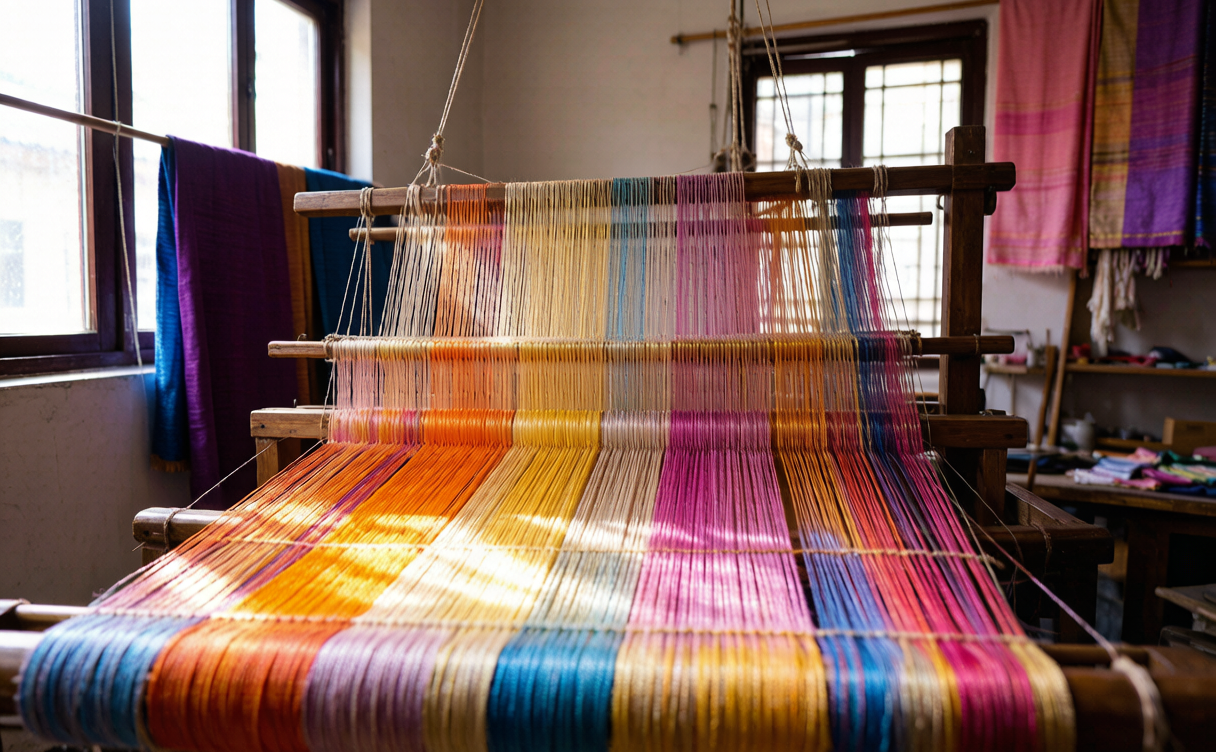
Nanchong has raised silkworms and reeled thread since the Han dynasty and still supplies a serious share of China’s raw silk. The China Silk Capital Silk Museum (中国绸都丝绸博物馆) walks through the whole chain — mulberry leaf to cocoon to reeled thread to jacquard loom — with looms running on site and a shop where scarves cost a third of Shanghai prices. Entry is cheap, often free with your passport. The craft is inscribed on UNESCO’s list of intangible cultural heritage.
Xishan Scenic Area and Wanjuan Pavilion (西山风景区·万卷楼)
The wooded ridge on the western edge of town is Nanchong’s lung: free trails, tea houses and views over the river bend. Halfway up stands Wanjuan Pavilion, on the site where the historian Chen Shou studied. Chen Shou compiled the Records of the Three Kingdoms, the source text behind every Three Kingdoms novel, film and video game. Around ¥40.
Sichuan Giant Puppet Theatre (四川省大木偶剧院)
Nanchong is home to China’s only troupe of da mu’ou — giant puppets nearly the height of an adult, driven from behind by a puppeteer whose own arms move the figure’s arms. Performances are irregular, so ask your hotel to phone ahead; when one is running it is the most memorable ninety minutes in the city. The related Chuanbei shadow puppetry is sometimes staged in Langzhong’s courtyards.
Pengan County and the Jialing riverside (蓬安)
Forty minutes downstream, Pengan calls itself the “first homestead on the Jialing” — old riverside lanes, ferry crossings and an odd summer spectacle when hundreds of cattle are driven across a channel to graze on midstream islands. Outside that event, the riverbank walk still makes a relaxed half day.
Where to Stay in Nanchong
Budget — ¥100–200 (US$14–28). Chain hotels (Hanting, 7 Days, Home Inn) around Nanchong Station and Wuxing Huayuan. Clean, modern, app-driven check-in.
Mid-range — ¥250–500 (US$35–70). Business hotels along Renmin Zhonglu, walkable to the riverside promenade and the night food streets. This is where I would base myself.
Splurge — ¥600–1,200 (US$85–170). Four- and five-star properties in the Jialing new district — or the far better option, a converted courtyard guesthouse inside Langzhong’s walls at ¥400–800.
Confirm the property is licensed to register foreign passports. National chains always are; small Langzhong guesthouses sometimes are not.
What to Eat in Nanchong
Northeast Sichuan cooking is less numbing than Chengdu’s and more sour and salty.
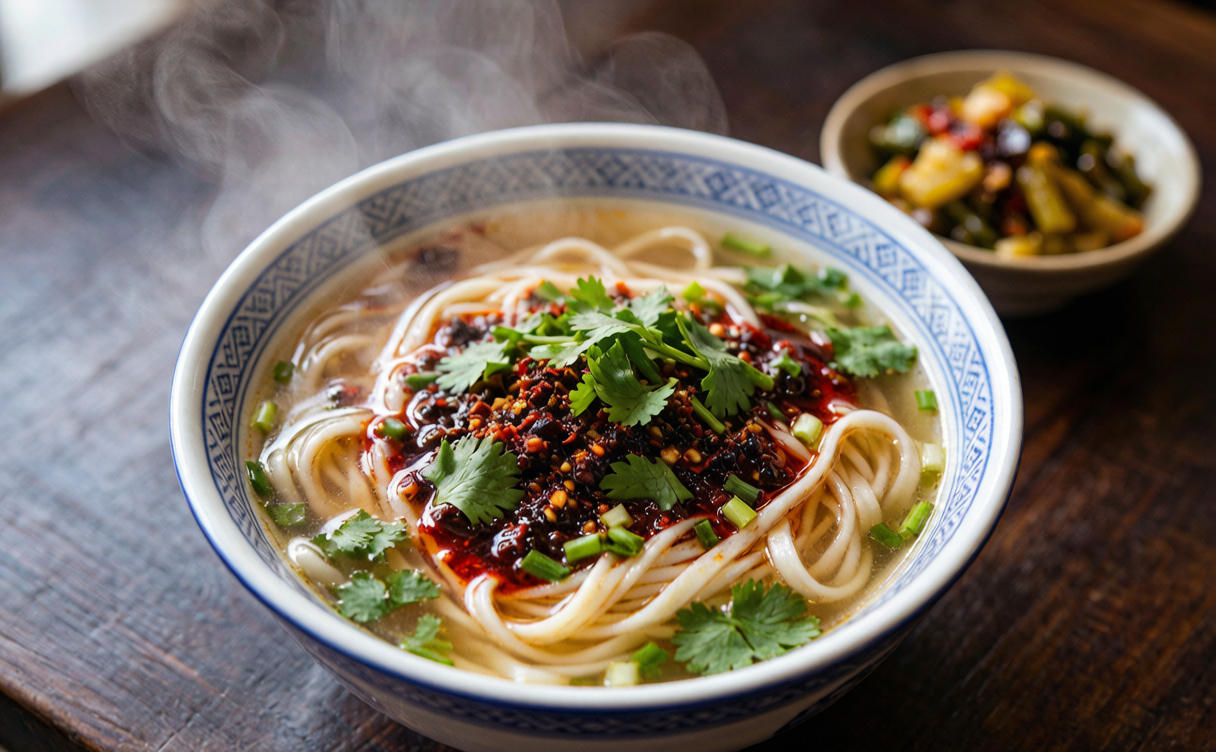
- Nanchong rice noodles (南充米粉). The city’s breakfast: fine rice noodles in mutton or beef broth, dressed at the counter with chilli oil, pickled greens and coriander. ¥10–15.
- Chuanbei liangfen (川北凉粉). Cold mung-bean jelly under chilli oil, garlic water and crushed peanuts — invented in this region, and the version here is the benchmark.
- Zhang Fei beef (张飞牛肉). Langzhong’s cured beef, dark outside and red inside, sold sliced across the old town.
- Baoning vinegar (保宁醋). A bran-fermented vinegar brewed in Langzhong since the Ming dynasty; it goes in the noodle bowl and comes home in a bottle.
- Guokui stuffed with liangfen (锅盔灌凉粉). A crisp griddled flatbread split and packed with cold jelly noodles. ¥6, and the best street snack in Sichuan.
If your Sichuan trip is really about food, pair this with our Chengdu hotpot guide.
Sample Nanchong Itinerary for Foreign Tourists: Two Days
Day 1 — the city
- 08:00 rice noodles near Wuxing Huayuan
- 09:00 Xishan trails and Wanjuan Pavilion
- 12:00 liangfen and guokui downtown
- 14:00 China Silk Capital Silk Museum and the fabric shops
- 18:00 Jialing riverside promenade, dinner on Nanjie
Day 2 — Langzhong
- 07:30 train or coach north
- 09:30 Zhang Fei Temple, then the Gongyuan examination hall
- 12:00 steamed beef and Baoning vinegar noodles
- 14:00 climb Zhongtianlou; walk the river wall
- 19:00 lanterns in the lanes; sleep in a courtyard house or take the last train back
With a third day, continue north to Guangyuan or turn south for Chongqing.
Practical Tips
- Two stations, two districts. Nanchong North serves Chongqing and Langzhong; downtown Nanchong Station serves Chengdu. They are 25 minutes apart.
- Almost no English. Download offline translation and save every address in Chinese characters before you leave the hotel wifi.
- Payment. Alipay and WeChat Pay both accept foreign Visa and Mastercard and cover buses, taxis, tickets and street stalls. Carry ¥200 in notes for the smallest vendors.
- Passport as ID. Museums, the Langzhong gate and every train barrier want the physical passport, not a photo.
- Langzhong overnight. Day-trippers leave by 17:00 and the town transforms. If you do one thing from this guide, sleep inside the walls.
- Bronze Age detour. The Sanxingdui Museum sits between Chengdu and Nanchong and makes a natural half-day stop on the way.
FAQ
Is Nanchong worth visiting?
For Langzhong Ancient City alone, yes. The city itself is a functional base rather than a sight, but Langzhong ranks with Pingyao for preservation and receives a fraction of the visitors.
How many days do I need?
Two: one for the city and silk museum, one for Langzhong. Three if you add Pengan.
How do I get to Nanchong from Chengdu?
D trains from Chengdu East take one hour forty minutes to two hours for roughly ¥85–110, with departures through the day. Book on the 12306 app using your passport number. Coaches from Chengdu’s Beimen station take about three hours.
Can I visit Langzhong as a day trip?
Yes — trains from Nanchong North take under an hour, so a 07:30 departure gives you a full day. But the town is much better at night, so stay if your schedule allows.
Is Nanchong easy for a first-time visitor to China?
It is straightforward but not soft. Transport is simple and prices are low, but English is scarce and nothing is aimed at foreigners. If this is your first stop in the country, do Chengdu first and come here on day four or five, once you have the apps working.
Written by Karl, China Travel Places — updated August 2026.