

Fifty minutes north of Chengdu by high-speed train, Mianyang is Sichuan’s second city and its least-visited one — a place of research institutes, riverside parks and enormous bowls of rice noodles, where the plain runs out and the mountains start. Head north-west from the centre and within two hours you are in Qiang villages of stone watchtowers below snow peaks; head north and you reach the hometown of the poet Li Bai and one of the finest Ming timber temples in China. This Mianyang travel guide is for travellers who want the Sichuan beyond pandas and hotpot, without giving up either.
Why Visit Mianyang
Mianyang is known in China as the Science City, home to major research institutes and the electronics industry, which explains the wide boulevards and the well-funded museums. For visitors, the appeal is different: it is the most comfortable base for the mountainous north of the province, and it sits on the road and rail lines that lead towards Jiuzhaigou and the high country.
The city itself gives you a Tang-style tower over the Fu River, a genuinely good free museum, and hillside parks tied to Three Kingdoms history. The counties around it give you far more: Qiang minority villages in Beichuan, the Li Bai sites at Jiangyou, Bao’en Temple at Pingwu and, four hours further, panda habitat on the edge of the reserves.
Prices are noticeably lower than in Chengdu, and outside a handful of hotels you will hear no English at all.
Best Time to Visit Mianyang
April to June — the best window. Warm at 18–28°C, with rapeseed and then wild flowers in the mountain valleys, clear enough to see the snow line from the city on a good morning.
July and August. Hot and humid at 26–34°C in the city, and the rainy season, when mountain roads towards Beichuan and Pingwu can be closed by landslides. The upside is that the highlands are cool and green; build slack into any itinerary.
September to November. The second-best window. Dry, 12–25°C, superb autumn colour in the Qiang valleys through late October, and cheaper rooms once the summer holidays end.
December to March. Cold, 2–12°C, damp and grey on the plain, but crisp in the mountains, with skiing and snow play at Jiuhuang Mountain in Beichuan. Avoid Chinese New Year week for transport.
How to Get to Mianyang from Chengdu and Xi’an
Mianyang Station (绵阳站) sits on the Xi’an–Chengdu high-speed line, close enough to the centre for a ¥15 taxi ride, with trains every 20–30 minutes to Chengdu East. Mianyang Nanjiao Airport (MIG) has domestic flights, but almost everyone arrives by rail, and Chengdu’s Tianfu and Shuangliu airports run direct coaches.
| From | Mode | Typical duration | Approx. cost |
|—|—|—|—|
| Chengdu East → Mianyang | High-speed rail | 50 min | ¥54 (US$8) |
| Xi’an North → Mianyang | High-speed rail | 2 hr 30 min | ¥250 (US$35) |
| Chongqing North → Mianyang | High-speed rail | 2 hr 30 min | ¥180 (US$25) |
| Chengdu Tianfu Airport → Mianyang | Airport coach | 2 hr | ¥90 (US$13) |
| Mianyang → Jiangyou | High-speed rail | 15 min | ¥17 (US$2.40) |
| Mianyang → Beichuan Qiang City | Coach | 1 hr | ¥25 (US$3.50) |
| Mianyang → Pingwu | Coach | 3 hr | ¥70 (US$10) |
City buses cost ¥2, taxis start at ¥8, and there is no metro. For the mountain counties, a car with driver at ¥600–700 a day saves hours over the bus timetable.
Top Things to Do in Mianyang
Yuewang Tower
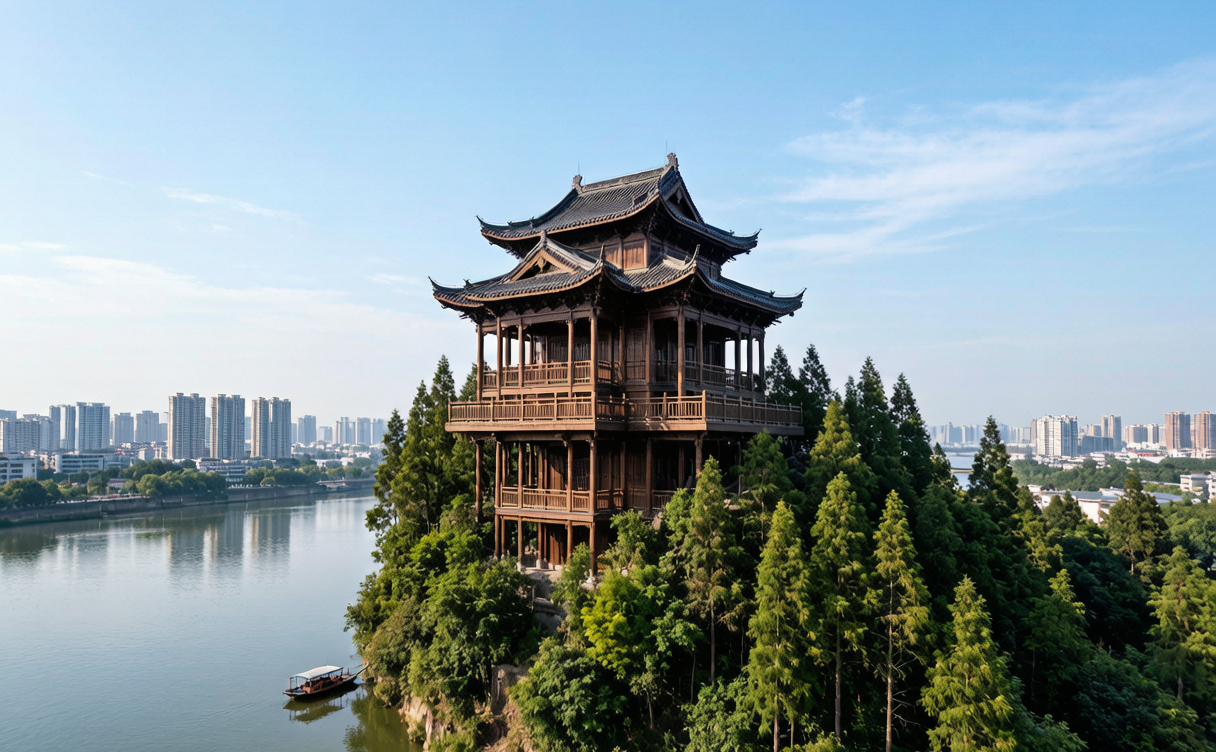
Yuewang Tower (越王楼) stands on a bluff above the Fu River, rebuilt in 2011 to a Tang design at 99 metres — routinely described as the tallest ancient-style tower in China. Inside are galleries on the city’s history and a lift to viewing decks looking over the river bends and, in clear weather, the mountains. Around ¥50; go an hour before sunset and stay for the floodlights.
Fule Mountain Park
Across the river, Fule Mountain (富乐山) is where, according to the Three Kingdoms chronicles, Liu Bei was feasted by his host and decided he liked Sichuan enough to take it. The park is a wooded hill of pavilions, halls and stone stairways with wide views, and costs around ¥30. Early morning belongs to tai chi groups and tea drinkers.
Mianyang Museum
Free and closed on Mondays, the museum’s Han-dynasty collection is the reason to go: bronze “money trees” from local tombs, tomb bricks and figurines that fill in the picture between Sanxingdui and the imperial period. It pairs well with the Sanxingdui Museum near Chengdu, an hour south.
Jiangyou: Li Bai’s hometown and Mount Douzhuan
Fifteen minutes by train, Jiangyou claims China’s most famous poet. The Li Bai Former Residence (陇西院) and memorial hall complex costs around ¥50 and is best appreciated with some background reading. More striking is Mount Douzhuan (窦圌山), a pair of near-vertical rock pinnacles linked by iron chains, with a cable car, cliff temples and — on schedule most days — a tightrope walker crossing between the peaks. Around ¥80.
Beichuan: Qiang villages and Jiuhuang Mountain
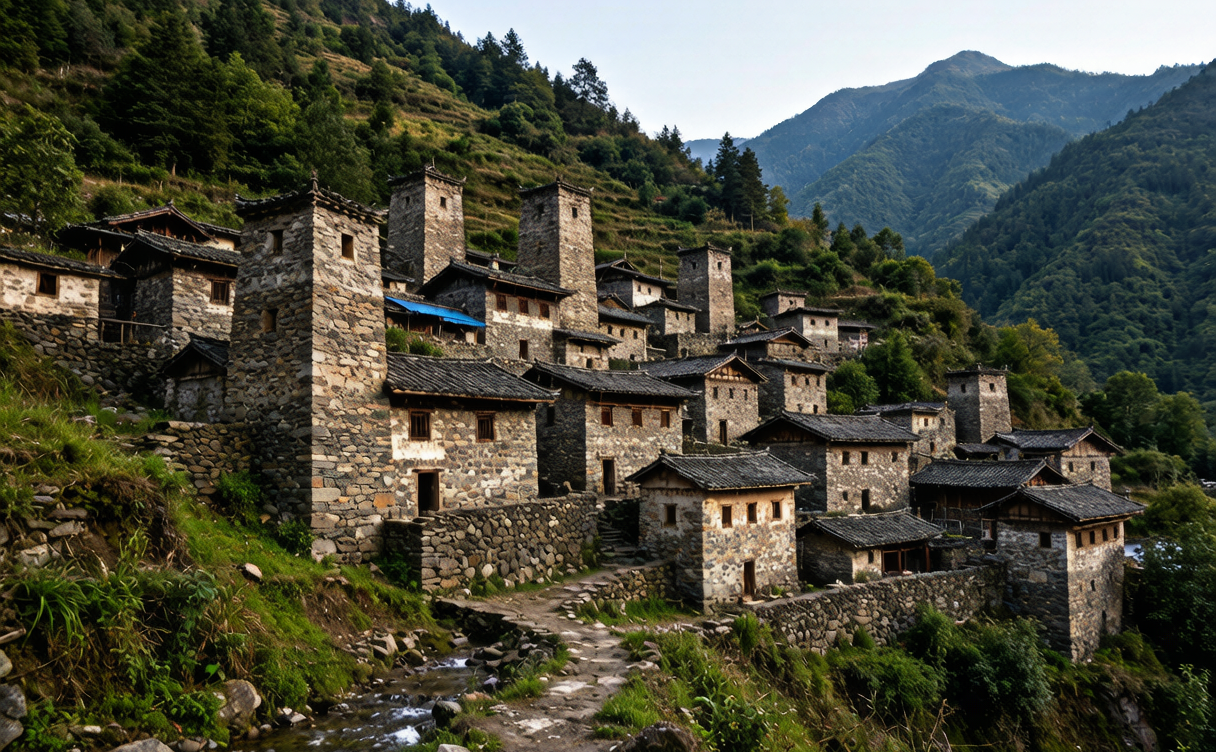
An hour north-west, Beichuan is a Qiang autonomous county. The rebuilt county seat centres on Bardzha (巴拿恰), a pedestrian street of Qiang-style stone and timber architecture, and makes a base for Shiyi Qiang Village (石椅羌寨), where families serve barley wine and roast lamb on a terrace above the valley, and Jiuhuang Mountain (九皇山), a scenic area with cable cars, cliff walkways, watchtowers and winter snow play at around ¥130. The county also preserves a memorial site to the 2008 earthquake; visitors are welcome, and it is treated as a place of quiet respect rather than sightseeing.
Pingwu: Bao’en Temple and panda country
Three hours north, Bao’en Temple (报恩寺) in Pingwu is an almost intact Ming complex from the 1440s, built by a local chieftain in imperial style, with a thousand-armed Guanyin carved from a single camphor trunk and a revolving sutra cabinet that still turns. Around ¥50 and, for timber architecture, the single best thing in the prefecture. Beyond it lies Wanglang National Nature Reserve, wild giant panda habitat — sightings are essentially impossible, but the forest is magnificent. For the protected panda landscapes further west, see UNESCO’s Sichuan Giant Panda Sanctuaries listing.
Where to Stay in Mianyang
Budget — ¥120–250 (US$17–35). Chains such as Hanting, Atour and Jinjiang Inn around the station and Linyuan Road. Reliable and used to foreign registration.
Mid-range — ¥300–600 (US$42–84). Business hotels in Fucheng district near the Fu River and Yuewang Tower, the best base for walking to food streets and evening riverside markets.
Splurge — ¥700–1,400 (US$98–195). A few five-star properties in the new town, plus hot-spring resorts at Luofu Mountain in Anzhou, 40 minutes out.
In the mountains, Qiang village guesthouses in Beichuan run ¥150–300 including two meals; confirm they can register foreign guests before travelling.
What to Eat
Mianyang cooking is Sichuanese, but leans on numbing spice and pickles rather than pure chilli heat. Our Chengdu hotpot guide covers the wider tradition.
- Mianyang rice noodles (绵阳米粉). The city’s breakfast obsession: hair-fine rice noodles in red broth with beef, offal or a fried egg. Around ¥12, eaten before 09:00.
- Jiangyou braised intestines (江油肥肠). Slow-cooked pork intestine with pickled chilli — a regional cult dish, and better than it sounds.
- Xi’s cold jelly (席凉粉). Silky mung-bean jelly under chilli oil, vinegar and garlic, a century-old street snack.
- Zitong crisp cakes (梓潼酥饼). Flaky sesame pastries from the county east of the city, sold at every station kiosk.
- Qiang roast lamb and barley wine (咂酒). In the Beichuan villages, drunk communally through bamboo straws from a shared jar.
Sample Mianyang Itinerary for Foreign Tourists
Day 1 — the city and Jiangyou
- 08:00 rice noodles for breakfast in Fucheng
- 09:00 Mianyang Museum
- 11:00 train to Jiangyou; Mount Douzhuan and the cliff temples
- 16:00 back to the city
- 18:00 Yuewang Tower at sunset, dinner on the riverside
Day 2 — Qiang country
- 07:30 car north-west to Beichuan
- 09:30 Shiyi Qiang Village, terraces and tea
- 12:00 lunch of roast lamb and barley wine
- 14:00 Jiuhuang Mountain cable car and cliff walkways
- 18:30 return to Mianyang, or continue towards Mount Siguniang the next morning
Add a third day for Pingwu and Bao’en Temple if you have it — the drive is long but the temple justifies it.
Practical Tips
- Use Mianyang as a hub, not a destination. One day in the city is enough; the value is in the counties around it.
- Book a driver for the mountains. Coaches to Beichuan and Pingwu run, but timetables thin out by mid-afternoon and villages are off the main road.
- Altitude and weather. Beichuan’s scenic areas sit between 1,500 and 3,000 metres. Take a warm layer year-round and expect fast weather changes.
- Payment. Alipay and WeChat Pay accept foreign Visa and Mastercard and cover buses, taxis and restaurants. Carry ¥300 cash for village guesthouses.
- Language. English is rare outside four-star hotels. Save all destinations in Chinese characters and download offline maps before leaving Chengdu.
FAQ
Is Mianyang worth visiting?
Yes, if you have five days or more in Sichuan and want mountains and minority culture without a long drive. On a first three-day Sichuan trip, stay in Chengdu instead.
How do I get to Mianyang from Chengdu?
High-speed trains from Chengdu East take about 50 minutes for roughly ¥54, running every 20 to 30 minutes. Book on 12306 with your passport number and collect or scan at the gate.
How many days should I spend in Mianyang?
Two to three. One day for the city and Jiangyou, one for Beichuan’s Qiang villages, and a third for Pingwu’s Bao’en Temple if timber architecture interests you.
Can I see giant pandas near Mianyang?
Not reliably. Wanglang in Pingwu is genuine wild habitat with no viewing facilities. For guaranteed sightings, visit the breeding centres near Chengdu instead.
Is Mianyang a good stop on the way to Jiuzhaigou?
It is the logical overnight stop on the road route north, and a far more comfortable one than the small towns further up the valley. Flights and coaches both serve Jiuzhaigou from here.
Written by Karl, China Travel Places — updated August 2026.