

Stand on the embankment at Wuzhou in the late afternoon and you can see the join: the Gui River arrives clear and green from the karst country upstream, the Xun River comes in brown and heavy from the west, and for a few hundred metres they run side by side without mixing before becoming the Xijiang and heading for Guangdong. Locals call it the Mandarin Duck River. Everything about this city follows from that confluence — the arcade streets built for merchants, the dark tea shipped downstream in bamboo baskets, the herbal jelly sold on every corner. This Wuzhou travel guide covers a river port that most travellers pass at 250 km/h without noticing.
Why Visit Wuzhou
Wuzhou sits in the far east of Guangxi, closer to Guangzhou than to Nanning, and it has always faced downstream. It opened to foreign trade in 1897, and the wealth that followed produced Qilou City (骑楼城) — some 560 arcaded shophouses along 22 streets, the largest surviving cluster of its kind in China. Look at the upper walls and you will spot iron rings bolted into the brickwork: when the Xijiang floods, boats tie up at first-floor level and people come and go through the upstairs doors.
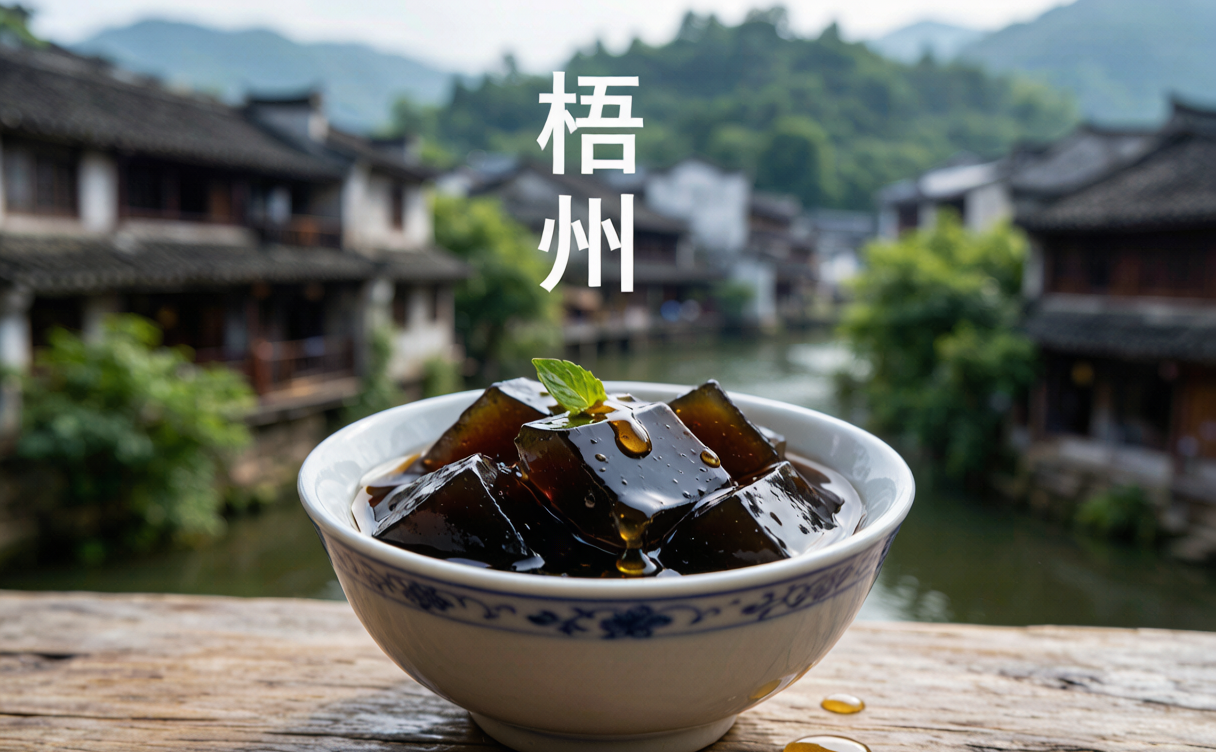
The city is also a food and drink destination out of proportion to its size. Liubao tea (六堡茶), a fermented dark tea from the hills of Cangwu county, travelled from here along the old Tea Boat Road to Malaysian tin mines and Hong Kong, China teahouses. Turtle jelly (龟苓膏), the bittersweet herbal dessert now sold across Asia, is a Wuzhou original.
It works best as a one- or two-night stop between Guilin and Yangshuo and Guangzhou, rather than a destination you fly in for.
Best Time to Visit Wuzhou
October to December — the best window. Dry, clear and 18–28°C, with the rivers low and the arcades pleasant to walk. This is the answer to the best time to visit Wuzhou.
January and February. Cool at 8–18°C, occasionally grey and drizzly. No heating indoors, but hotels are cheap and the teahouses are at their most convivial.
March to May. The wet season builds. Humid, green and prone to sudden heavy rain; the confluence colours are at their most dramatic after a storm upstream.
June to August. Hot and very humid, 28–36°C, and the flood season proper. Major floods are uncommon but river levels rise fast, and the riverside walkways sometimes close. Arcades are, as designed, the best place to be in a downpour.
How to Get to Wuzhou from Guilin and Guangzhou
Wuzhou South Station (梧州南站) is on the Nanning–Guangzhou high-speed line, which is fast but inconveniently placed: the station sits in Longwei district, roughly 20 km and 30 minutes from the old town, with shuttle buses and taxis at the exit. Wuzhou Xijiang Airport (WUZ) handles a handful of domestic routes.
| From | Mode | Typical duration | Approx. cost |
|—|—|—|—|
| Guangzhou South → Wuzhou South | High-speed rail | 2 hr | ¥120 (US$17) |
| Nanning East → Wuzhou South | High-speed rail | 2 hr – 2 hr 30 min | ¥125 (US$18) |
| Guilin North → Wuzhou South | Rail via Liuzhou | 3 hr 30 min – 4 hr | ¥170 (US$24) |
| Liuzhou → Wuzhou South | High-speed rail | 1 hr 40 min | ¥90 (US$13) |
| Wuzhou South → Qilou City | Shuttle bus / taxi | 40 min / 30 min | ¥10 / ¥60 |
| Old town → Longmu Temple | City bus | 20 min | ¥2 (US$0.30) |
Getting to Wuzhou from Guilin usually means changing at Liuzhou; a small number of through services run daily, so check before assuming a direct train. Within the city, buses cost ¥2 and the old town is comfortably walkable end to end.
Top Things to Do in Wuzhou
Wander Qilou City
The arcade quarter around Dazhong Road and Datong Road is the main event, and it is free. Two- and three-storey shophouses with Roman columns, plaster wreaths and shuttered balconies run for block after block, their ground-floor walkways continuous so you can cross the district without stepping into the rain. It is a living neighbourhood rather than a restored showpiece: barbers, noodle counters, tea merchants and mahjong tables. Go at 08:00 for the market, then again after dark when the facades are lit.
The Mandarin Duck River viewpoint
The confluence of the Gui and Xun rivers is best seen from the Heshui riverside promenade or from the hill in Baiyun Mountain Park (白云山), where the Yungai Pavilion gives a full view over the two-tone water and the bridges. The park is free and the climb takes 25 minutes.
Longmu Temple
Longmu Temple (龙母庙), the Dragon Mother temple on the Gui River bank, is the ritual heart of Xijiang river culture and draws worshippers from across Guangxi and Guangdong. The complex has been much enlarged, with a tall statue above the river, but the main hall and the riverside setting are worth the ¥30 or so. Busiest around the Dragon Mother festival in the fifth lunar month.
Liubao tea town
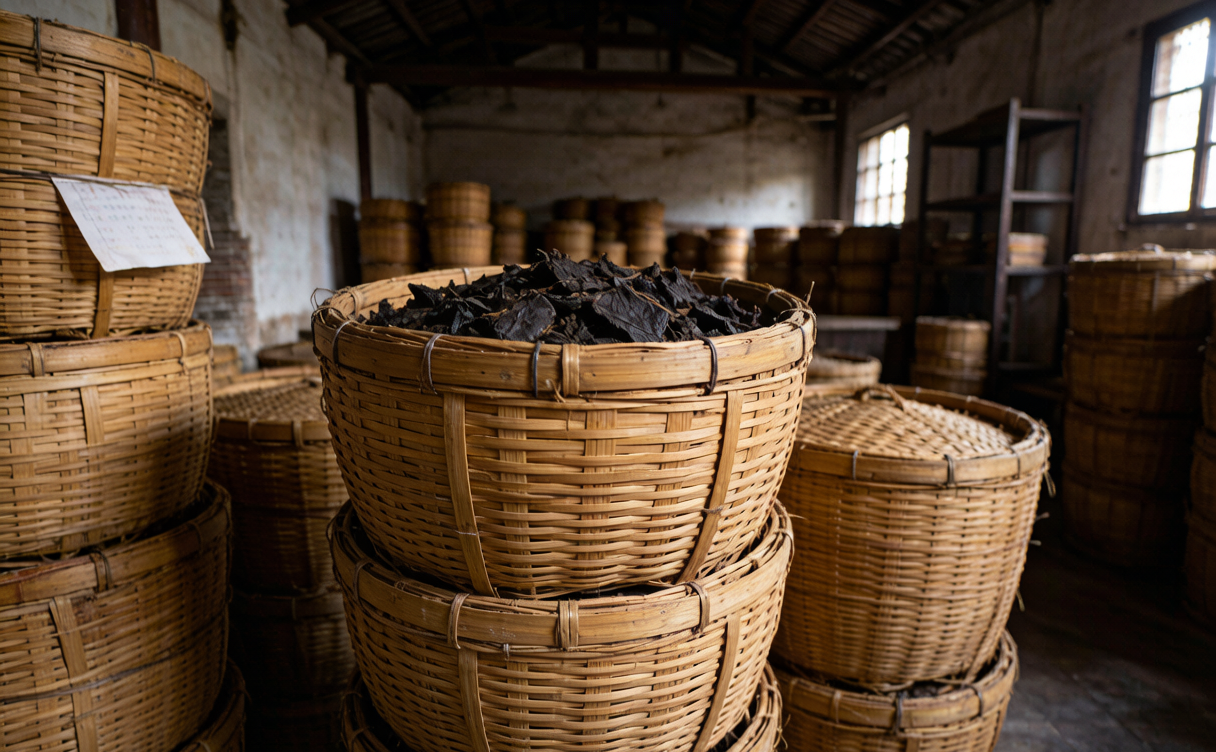
Around 40 km north in Cangwu county, Liubao (六堡镇) is the source of the dark tea. Working factories and cooperatives welcome visitors to see the pile-fermentation sheds and warehouses where bamboo baskets age for years, and tastings are generous. A car with driver for the round trip costs about ¥300. If tea culture is your thing, our China tea house guide explains what to look for in the cup.
Museums and the gem market
The Wuzhou Museum (free, closed Mondays) covers the river trade well. For something odder, the city processes a very large share of the world’s synthetic gemstones, and the gem market near Xijiang Fourth Road is a hall of loose cut stones sold by the bag.
Where to Stay in Wuzhou
Budget — ¥100–200 (US$14–28). Chain hotels in Wanxiu district near the arcade quarter. Rooms are basic but central and often under ¥150.
Mid-range — ¥250–450 (US$35–63). Riverside business hotels along Xijiang Road with views over the confluence. This is the best-value tier and where I would stay.
Splurge — ¥600–1,000 (US$84–140). A limited selection of four-star hotels in the newer eastern districts, plus one or two resort properties out towards the mountains.
Do not stay near Wuzhou South Station unless you have a very early train; there is nothing to do there.
What to Eat
Wuzhou food is Cantonese in structure with Guangxi’s love of river fish and rice noodles laid over it.
- Paper-wrapped chicken (纸包鸡). The signature dish: marinated chicken pieces wrapped in cellophane parcels and flash-fried, so they steam in their own juices. Around ¥60 at the old restaurants near Dazhong Road.
- Turtle jelly (龟苓膏). Dark, faintly bitter herbal jelly served with honey or condensed milk. ¥10–20 a bowl; the local Double Coin brand also sells tins to take home.
- Bingquan soy milk (冰泉豆浆). Thick, sweet and famously fragrant, drunk at breakfast with fried dough sticks at the old Bingquan teahouse.
- Wuzhou rice noodles in supreme broth (上汤河粉). Wide flat noodles in a clear pork-and-fish stock, the standard morning bowl at ¥10.
- Liubao tea (六堡茶). Earthy and mellow, drunk all day. Aged baskets are the local souvenir and range from ¥100 to eye-watering.
- River snails and stir-fried river fish. Ordered by weight at the riverside restaurants after dark.
Sample Wuzhou Itinerary for Foreign Tourists
Day 1 — the old town
- 08:00 soy milk and rice noodles at Bingquan
- 09:00 Qilou City arcades, market lanes and the flood rings
- 12:00 paper-wrapped chicken for lunch
- 14:00 Wuzhou Museum, then the gem market
- 16:30 climb Baiyun Mountain for the confluence view
- 19:00 riverside dinner, turtle jelly afterwards
Day 2 — tea and river
- 08:30 car north to Liubao for tea warehouses and tasting
- 13:00 back to the city for lunch
- 15:00 Longmu Temple and the Gui River bank
- 18:00 evening train to Guangzhou or on to Liuzhou
Practical Tips
- Allow for the station transfer. Wuzhou South is 30–40 minutes from the old town. Add an hour to any departure plan.
- Payment. Alipay and WeChat Pay accept foreign Visa and Mastercard here and cover buses, taxis, tickets and food stalls. Carry ¥200 in notes for the tea villages.
- Visa policy. Many nationalities can now enter China visa-free for short stays or use transit exemptions; check current rules on the National Immigration Administration site before booking.
- Rain and river levels. Between June and August, check whether riverside walkways are open. The arcades stay usable in any weather.
- Language. Cantonese is widely spoken alongside Mandarin, English almost not at all. Photograph your hotel’s Chinese address for taxi drivers.
FAQ
Is Wuzhou worth visiting?
For one or two nights, yes, if you like living old streets, river towns and tea. The arcade quarter is genuinely impressive and almost tourist-free. Skip it if you only have a week in China.
How do I get to Wuzhou from Guilin?
Most services route via Liuzhou, taking three and a half to four hours for roughly ¥170; a few direct trains run daily. Check schedules on 12306 with your passport number before committing to a same-day plan.
How many days do I need?
Two nights is ideal — one full day for the arcades and the confluence, a second for Liubao tea town. A single day covers the old town only.
What should I buy in Wuzhou?
Aged Liubao tea in a woven basket, and tinned turtle jelly. Both travel well and are cheaper here than anywhere else.
Is Wuzhou a good stop between Guangxi and Guangdong?
It is the obvious one. Two hours from Guangzhou South and two from Nanning East, with left luggage at the station and enough to fill an afternoon and evening.
Written by Karl, China Travel Places — updated August 2026.