

If you last visited China before 2024, the arrival experience has changed more than any year in the past decade. China travel news 2026 is dominated by two shifts that directly affect foreign tourists: a rapidly expanding visa-free footprint, and a high-speed rail network that keeps closing the distance between major hubs and remote scenery. This roundup separates the confirmed, useful changes from the rumor mill, and tells you what each one means for planning a trip this year. For the booking mechanics behind these routes, our high-speed train guide for foreign travelers covers passports, the 12306 app, and seat selection.
Visa & Entry Updates
The headline change is the transit visa-free window. The 144-hour (6-day) policy has been extended to 240 hours (10 days) for eligible passport holders, and the list of entry ports has grown to more than 60 cities, including secondary hubs like Xiamen, Qingdao, and Chengdu Tianfu. That means a Beijing–Xi’an–Shanghai loop, or a Guangzhou stopover, can now be done entirely visa-free with a confirmed onward ticket. On top of transit, China signed new mutual visa-exemption agreements through 2025–2026 with additional European and ASEAN states, bringing some passport holders’ visa-free stay to 30 days for tourism. Always confirm your specific nationality against the latest notice before booking, because lists shift quarterly. As of early 2026, passport holders from France, Germany, Italy, the Netherlands, Spain, Malaysia, and Thailand enjoy mutual 30-day visa-free entry for tourism, while the 240-hour transit scheme covers most OECD and ASEAN passports transiting via the listed ports. The upshot is concrete: a traveler from Singapore can fly into Chengdu, ride the new high-speed line to Lanzhou, and exit via Xi’an — all visa-free — provided the onward ticket leaves within ten days. A China trip is now far easier to bolt onto a wider Asia itinerary. Our things to know before visiting China explains what documents and apps you still need even without a visa.
New High-Speed Rail Lines Opening in 2026
Rail is where the year’s changes bite hardest for tourists. Several lines that were under construction are reaching operational status in 2026, trimming journey times on popular leisure routes:
| Development | Region | Status (2026) | What it means for travelers |
|—|—|—|—|
| 240-hour visa-free transit, 60+ ports | Nationwide | Expanded | 10-day, no-visa stopovers via major and secondary hubs |
| New mutual visa exemptions (EU & ASEAN) | Bilateral | Rolling | Visa-free stays up to 30 days for more passports |
| Guangzhou–Zhanjiang HSR opens | Guangdong | 2026 | Guangzhou–Zhanjiang ~1.5h (was 4h); easier Hainan gateway |
| China–Laos Railway adds international sleepers | Yunnan | 2026 | Overnight Kunming–Vientiane services expand |
| Chengdu–Lanzhou railway fully operational | Sichuan/Gansu | 2026 | Chengdu–Lanzhou ~4h; new northwest gateway |
| Shanghai–Huzhou HSR link | Yangtze Delta | 2026 | Extra delta day-trip options from Shanghai |
The Guangzhou–Zhanjiang line is the sleeper hit: it turns the western Guangdong coast and the ferry to Hainan into a comfortable day trip from the Pearl River Delta. The Chengdu–Lanzhou railway’s full opening finally links Sichuan to Gansu without a long bus transfer, opening Xiahe and the Hexi Corridor for slower travelers. And the China–Laos Railway continues to add international sleeper services, letting you ride a Chinese-built train from Kunming to Vientiane without a flight. For planning, the numbers matter: the Chengdu–Lanzhou railway spans roughly 730 km and cuts the journey from over nine hours by road to about four by train, with second-class fares from RMB 260 (US$37). The Guangzhou–Zhanjiang line runs about 400 km along the coast, second class around RMB 180 (US$25), versus the old four-hour road slog. The Shanghai–Huzhou link is short — under 150 km, about RMB 45 (US$6) — but unlocks Tongxiang and the water-town circuit as easy Shanghai day trips. Even the China–Laos sleeper, at roughly RMB 600–900 (US$85–125) for a soft berth to Vientiane, is now bookable through 12306 with a passport. Track the official service announcements via China Railway.
Attractions & Routes Refreshed
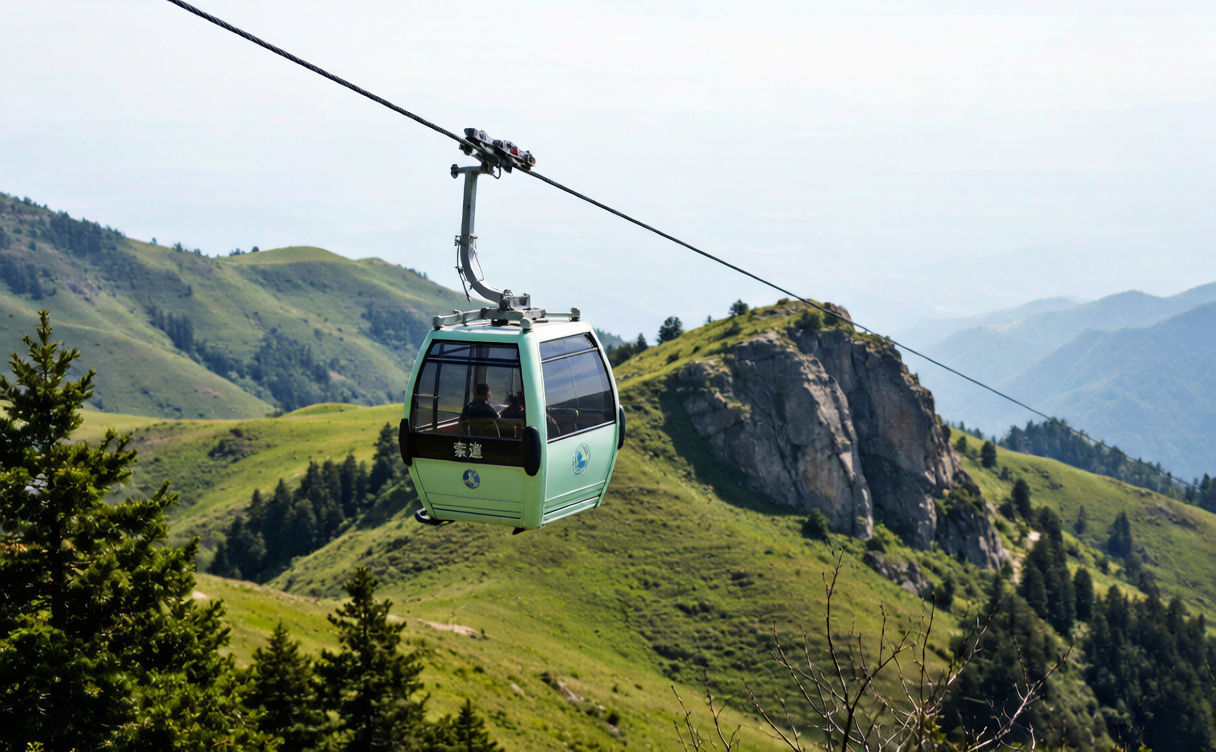
Beyond transport, 2026 sees several scenic upgrades that matter for trip planning. Zhangjiajie opened a new glass-bottom cable car on a secondary peak, spreading crowds off the overwhelmed Tianmen Mountain core. In Guizhou, the Libo Xiaoqikong boardwalk network was extended with step-free sections, improving access to the turquoise rivers. And several Silk Road sites in Gansu added timed-entry reservation systems to cap daily numbers — good for the experience, but it means booking Dunhuang’s Mogao Caves weeks ahead in peak season. Plan routes that use the fresh lines instead of the crowded classics to make the most of the new capacity.
Sample Itineraries Using the 2026 Openings
Two concrete loops show how the changes stack up:
- Sichuan–Gansu rail loop (5 days): Fly into Chengdu (RMB 600–1,200 / US$85–170 from major hubs), spend two days on pandas and hotpot, then take the new Chengdu–Lanzhou line (~4h, RMB 260 / US$37) to Lanzhou. From there, a bus or tour to Xiahe’s Labrang Monastery (2h, RMB 60 / US$8) and the Hexi Corridor gateway of Zhangye, then exit via Lanzhou airport.
- Delta-and-Hainan hop (6 days): Arrive in Shanghai, ride the new Shanghai–Huzhou line to the water towns (day trip, RMB 45 / US$6), then use the Guangzhou–Zhanjiang line south toward the Hainan ferry, taking advantage of the 240-hour transit if your passport qualifies.
Both loops were impractical before the 2026 capacity, and both fit inside a single visa-free window for eligible nationalities.
Practical Tips for 2026 Travelers
- Re-check visa rules 2–4 weeks before you fly; the exemption lists and port counts change without much warning.
- Book the new HSR lines early for holiday periods — the Guangzhou–Zhanjiang and Chengdu–Lanzhou segments sell out on weekends.
- Use the 12306 app (with passport login) rather than third-party sites for the newly opened lines, which appear there first.
- Timed-entry reservations (Mogao Caves, Forbidden City, Zhangjiajie) are now stricter; link them to your train arrival day, not a flexible plan.
- The 240-hour clock starts at midnight of your first full day — plan the onward ticket before you land to avoid a rushed exit.
- Shoulder season (April–May, September–October) is when the new capacity actually feels empty; see our best time to visit China for the month-by-month breakdown.

FAQ
Do I still need a visa for a 10-day China stopover?
If your nationality is on the transit visa-free list and you hold a confirmed onward ticket within 240 hours, no — you can enter and leave via the designated ports without a visa.
Which new rail line is most worth building a trip around?
The Chengdu–Lanzhou railway. It connects Sichuan’s pandas and cuisine to Gansu’s Silk Road and the Hexi Corridor in a single rail day, where before it needed a flight or a long bus.
Are the visa-free rules the same at every port?
No. The 240-hour policy applies at the expanded list of 60+ ports; some smaller airports still only offer 72 or 144 hours, or none. Match your entry city to the current list.
Will the new lines be crowded?
Weekends and holidays, yes — the Guangzhou–Zhanjiang segment in particular. Mid-week and shoulder season they run with empty seats.
Do I need to reserve attractions in advance now?
Increasingly, yes. Timed-entry systems at Mogao Caves, the Forbidden City, and Zhangjiajie mean same-day walk-up is no longer reliable in peak months.
Is it worth traveling with kids under the new rules?
Yes — the longer visa-free window and faster trains suit family loops, and child-ticket rules on the new lines are straightforward once you know the seating layout.
Can I combine the visa-free transit with the new trains?
Yes. The 240-hour clock runs regardless of how you move inside China, so you can fly into one city and take a high-speed train to another before your onward flight, as long as you leave within ten days.
Has hotel registration changed under the new rules?
No. Foreign guests still register at check-in through the hotel’s system; the visa-free expansion adds no extra steps, though you should keep your confirmed onward ticket handy for occasional spot checks.
Written by Karl Huang, updated August 2026.