

Every winter, almost the entire world population of Siberian cranes — several thousand critically endangered white birds that breed in Arctic Russia — funnels down to one place: the mudflats of Poyang Lake in Jiangxi Province. They share the shallows with hundreds of thousands of swan geese, tundra swans, oriental storks and white-naped cranes, turning China’s largest freshwater lake into one of Asia’s great wildlife spectacles. Yet Poyang barely registers on foreign itineraries. This Poyang Lake guide explains the lake’s strange breathing rhythm (it shrinks to a fraction of its summer size each winter — which is exactly why the birds come), where to actually see cranes, how to get to Poyang Lake from Nanchang, and how to build a two-day trip around wetlands, an ancient town and China’s most famous porcelain city next door.
Understanding the Lake That Breathes
Poyang isn’t a fixed body of water. In summer flood season it can sprawl beyond 3,000–4,000 square kilometers; by deep winter it contracts dramatically, leaving vast exposed mudflats, shallow feeding pools and grass flats. That seasonal collapse is the whole ecological point: receding water concentrates tubers, snails and fish into buffets that migratory birds can reach. The Poyang Lake National Nature Reserve at Wucheng, northwest of the lake, protects the core crane wintering grounds, and the lake’s wetlands are recognized under the Ramsar Convention as internationally important — the Ramsar listing for Poyang Lake summarizes why this single site matters to entire species. Around 95% of the world’s Siberian cranes may winter here in a given year; lose Poyang and you effectively lose the species.
Best Time to Visit Poyang Lake
Be blunt about this: Poyang is a winter destination. The best time to visit Poyang Lake for birdlife is late November through late February, when crane and goose numbers peak; December and January are the safest bets. Days are chilly (roughly 3–10°C), often with damp wind off the flats — dress like you mean it. Early winter (mid-Nov to mid-Dec) balances bird numbers with slightly milder weather.
Outside winter the lake is a different, quieter trip: April–June brings green wetlands, summer herons and full water for boat views; July–August is hot, humid and flood-prone; September–October is a transition with returning early migrants. If birds are the goal, do not come in summer expecting cranes — they’re in Siberia. For pairing Poyang’s winter window with the rest of a China route, our guide to the best time to visit China maps what works when across regions.
How to Get to Poyang Lake
Nanchang, Jiangxi’s capital, is the gateway, with high-speed rail from every direction. From there you push out to the lake’s viewing areas by bus or car.
| Route | Option | Time | Approx. Cost |
|—|—|—|—|
| Shanghai → Nanchang | High-speed train | 3–4 hours | RMB 300–450 (US$42–63) |
| Guangzhou → Nanchang | High-speed train | 4–5 hours | RMB 350–500 (US$49–70) |
| Nanchang → Wucheng (nature reserve) | Bus via Yongxiu + local transfer / taxi | 2–2.5 hours | RMB 40–150 |
| Nanchang → Poyang County (east shore) | Bus or train + taxi | 2–3 hours | RMB 60–120 |
| Nanchang → lake areas | Hired car with driver (day) | Flexible | RMB 600–900 (US$85–125) |
Honest advice: public transport reaches the towns, but the last miles to viewing dikes and reserve gates are awkward without a car. A hired driver for a day or two is the single best money you’ll spend here, especially in winter when you’ll want to chase light and move between sites. Train logistics are painless with the right prep — see our high-speed train guide for foreigners for booking and passport-gate details.
Where to See the Birds
Wucheng — Poyang Lake National Nature Reserve
The classic site. The old river-port town of Wucheng sits on a peninsula between the Gan and Xiu rivers, surrounded by reserve lakes (Dahuchi and Shahu are famous among birders). Access to core zones is controlled — the reserve typically operates visitor facilities, observation towers and, in season, guided arrangements; check current entry rules locally, as protection policies tighten in strong crane years. Even from public dikes and tower viewpoints, the winter spectacle of geese lifting off by the tens of thousands is unforgettable.
Nanjishan Wetland (southern lake)
A national nature reserve across island-dotted shallows south of the lake proper, quieter and less developed, best visited with a local driver who knows the current dike roads.
Poyang County Wetland Park (east shore)
The most tourist-ready option: boardwalks, boat channels through reed beds and family-friendly infrastructure, with an entry fee typically around RMB 60–120 depending on boat add-ons. Fewer rare cranes than Wucheng, far easier logistics.
Photography Timing
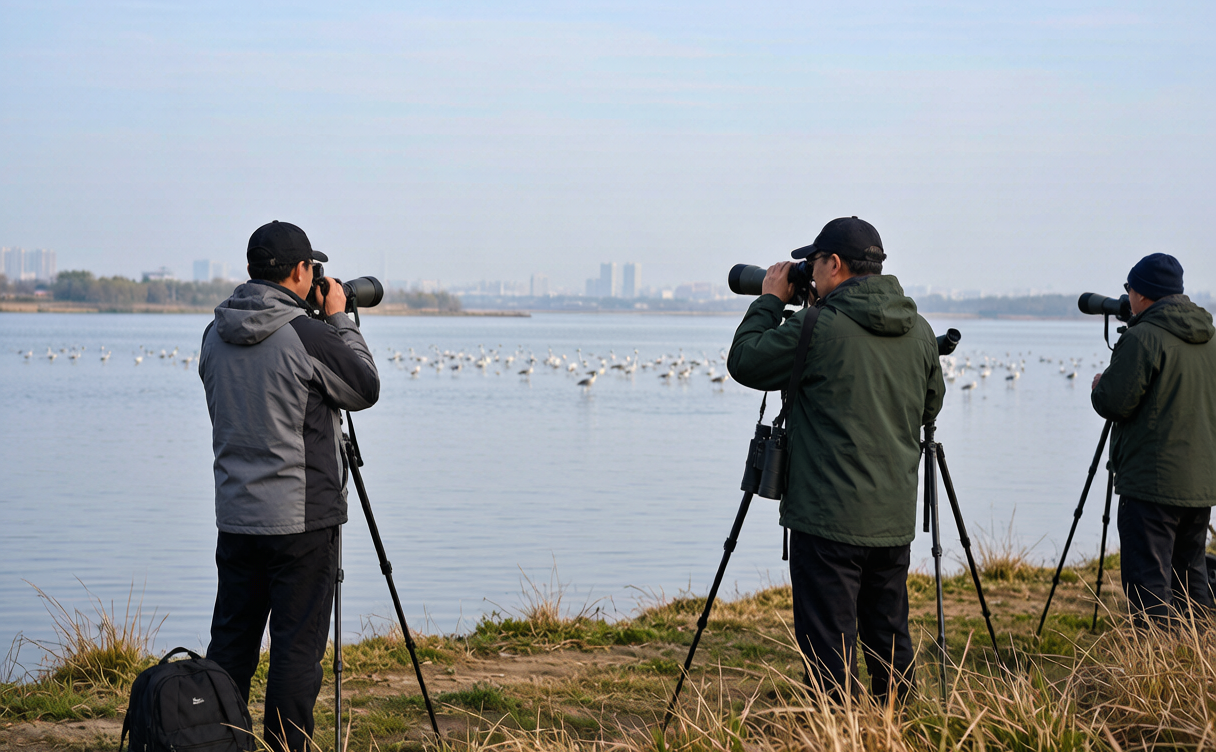
Winter dawn is everything: mist on the shallows, low gold light, and the morning fly-out when goose flocks leave roost pools in waves. The hour before dusk delivers the return flights. Midday light on grey mudflats is flat and harsh, so plan a long lunch. Bring the longest lens you own — ethical viewing distances here are large, and a spotting scope or 500mm+ equivalent earns its weight. Never walk onto the flats toward birds; a single flush costs the flock calories it needs to survive winter.
Beyond the Birds
Stone Bell Hill (Shizhongshan) at Hukou watches the surreal two-tone confluence where the lake’s clearer water meets the silty Yangtze. Wucheng old town itself repays a wander — a once-wealthy river port with restored lanes and temple fragments. And 90 minutes east sits Jingdezhen, China’s porcelain capital for a thousand years, whose kiln museums and ceramics workshops pair perfectly with a lake trip. Combine all three and you have one of eastern China’s best offbeat winter circuits — the kind of route our off-the-beaten-path China guide exists to champion.
Where to Stay
Most travelers sleep in Nanchang (full range, RMB 200–600 for solid mid-range near Bayi Square or the riverfront) and day-trip out. For dawn birding, staying closer matters: Wucheng town has simple guesthouses and small hotels (RMB 120–250) — book by phone or app and don’t expect English. Poyang County and Yongxiu offer standard business hotels around RMB 150–300. Winter heating in budget rooms can be weak; ask for a room with working air-con heating and bring warm sleepwear.
What to Eat
Poyang’s kitchens are all about the lake: silver fish (whitebait) scrambled with eggs, steamed mandarin fish, spicy braised carp, lake shrimp, and rice-flour steamed pork. Jiangxi food is quietly one of China’s spiciest — expect chili in everything unless you ask for bu la (not spicy). In Nanchang, hunt down the city’s famous mixed rice noodles (ban fen) and Wucheng-style dried fish sold as gifts. Warming winter hotpots around the lake towns are exactly what a day on a windy dike demands.
Sample Itinerary: 2 Days from Nanchang
Day 1 — Wucheng and the reserve. Early drive from Nanchang (leave by 6am for dawn light). Morning on the observation towers and dikes around Dahuchi/Shahu; picnic lunch; afternoon exploring Wucheng old town; dusk fly-in from a west-facing dike. Overnight in Wucheng or return to Nanchang.
Day 2 — East shore or culture. Either the Poyang County Wetland Park boardwalks and reed-channel boat, or pivot inland to Jingdezhen’s porcelain workshops. Evening high-speed train onward from Nanchang.
Add a third day in deep winter for Nanjishan or a second dawn at Wucheng — no two mornings on the flats look alike.
Practical Tips
- Dress in serious layers: windproof shell, hat, gloves. Dike-top wind chill is brutal even at 5°C.
- Binoculars are non-negotiable; rentals are rare, so bring your own.
- Access rules to reserve core zones change with bird numbers and policy — confirm locally, and always follow ranger instructions.
- English is scarce everywhere around the lake; a translation app and your hotel’s help with drivers go a long way.
- Roads on reclaimed land can flood or close; build slack into winter driving plans and check conditions — general precautions in our China travel safety tips apply doubly on rural winter roads.
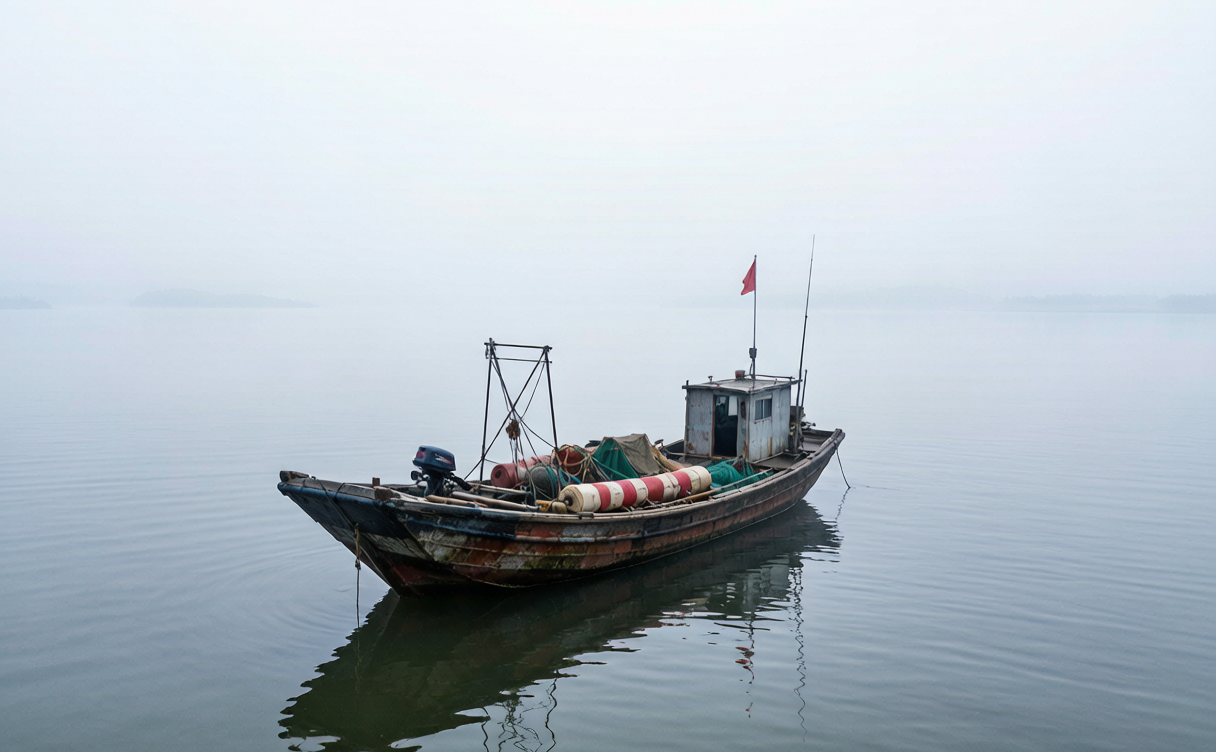
- A ten-year fishing ban has been in force on the lake; don’t expect (or seek) wild-caught lake fish from unofficial sellers.
FAQ
Can I see Siberian cranes for certain?
Nothing in wildlife is certain, but December–January at Wucheng gives you a genuinely strong chance, along with guaranteed mass flocks of geese and swans.
Do I need a guide or permit?
The public dikes and wetland parks need no permit. Core reserve zones have controlled access; local guides or reserve staff arrangements are the reliable way in and worth it for finding cranes.
Is one day enough?
One long day from Nanchang works for a taste. Two days transforms the trip — dawn is the show, and dawn requires sleeping nearby.
How cold does it get?
Typically 0–10°C in the day, occasionally below freezing at dawn. Damp wind makes it feel colder than the numbers.
Is Poyang Lake suitable for non-birders?
Yes, if you frame it as winter wetland scenery plus Wucheng old town and Jingdezhen porcelain. Pure beach-and-boat travelers should come in early summer instead.
Why is the lake so small in winter?
Seasonal outflow to the Yangtze drains it naturally each autumn. The shrinking is not a drought emergency by default — it’s the cycle the entire ecosystem depends on.
Written by Karl Huang, updated July 2026.