

Mount Wutai is less a mountain than a high-altitude valley ringed by five flat-topped summits — wutai literally means “five terraces” — and packed with more than 50 active monasteries. This is the oldest and holiest of China’s four sacred Buddhist mountains, associated with Manjusri, the bodhisattva of wisdom, and it feels different from the cable-car circuses elsewhere: maroon-robed monks debate in courtyards, Mongolian and Tibetan pilgrims prostrate along the roads, and two of China’s oldest surviving wooden buildings stand quietly in the foothills. At 3,061 meters on its highest terrace, with the town of Taihuai sitting at about 2,200 meters, this Mount Wutai guide covers the temples worth your time, how to reach this remote corner of Shanxi, and how to handle the altitude and famously changeable weather.
Best Time to Visit Mount Wutai
The best time to visit Mount Wutai is June through September, when the high valley is green, wildflowers cover the terraces, and daytime temperatures hover between 15°C and 22°C — locals call it “the cool world” because it stays fresh while lowland Shanxi bakes. July and August bring the most pilgrims and the major temple fairs, which adds atmosphere but also crowds.
May and October are quieter and beautiful, though nights drop near freezing. Winter (November–April) is harsh: temperatures can hit −20°C, snow closes the summit roads, and many guesthouses shut — yet the snowbound monasteries are magical for hardy travelers. Whatever the season, pack a warm layer; weather on the terraces can cycle through sun, fog, and hail in an afternoon. Slot Wutai into your wider route with our best time to visit China planner.
How to Get There
Wutai is remote by Chinese standards — that’s part of the appeal. The gateway city is Taiyuan, Shanxi’s capital, with Beijing a practical alternative.
| From | Option | Time | Approx. Cost |
|—|—|—|—|
| Beijing | High-speed train to Wutaishan Station, then bus/taxi (50 km) | ~2.5 hrs + 1 hr | RMB 150–180 + 30–120 |
| Taiyuan | Direct bus to Taihuai town | ~4 hours | RMB 75–85 (USD 11) |
| Taiyuan | High-speed train to Wutaishan Station + transfer | ~1.5 hrs + 1 hr | RMB 60–80 + 30–120 |
| Datong (Yungang Grottoes) | Long-distance bus | ~4 hours | RMB 80–100 |
| Beijing | Direct tourist bus (seasonal) | 5–6 hours | RMB 130–150 |
Note that Wutaishan railway station is about an hour’s drive from Taihuai town inside the scenic area — budget for the transfer. Entry to the scenic area costs around RMB 135 in high season plus a RMB 50 sightseeing bus ticket; individual temples charge small extra fees (RMB 4–10). Train booking with a foreign passport is explained in our high-speed rail guide.
What to See: Things to Do in Mount Wutai
The Taihuai Temple Cluster
Most monasteries cluster around Taihuai town, walkable from any guesthouse:
- Tayuan Temple: home of the 50-meter Great White Stupa, the valley’s landmark. Join pilgrims turning the prayer wheels around its base at dusk.
- Xiantong Temple: the oldest foundation on the mountain, dating to the Han dynasty era, with a shimmering bronze hall cast in the Ming dynasty.
- Pusading (Bodhisattva Summit): a Qing-era imperial temple at the top of 108 steps — one for each earthly temptation. The rooftop view over the golden and grey roofs of Taihuai is the best in town.
- Shuxiang Temple: houses a 9.9-meter statue of Manjusri riding a lion, the mountain’s spiritual signature.
Wuye Temple and the Pilgrim Rituals
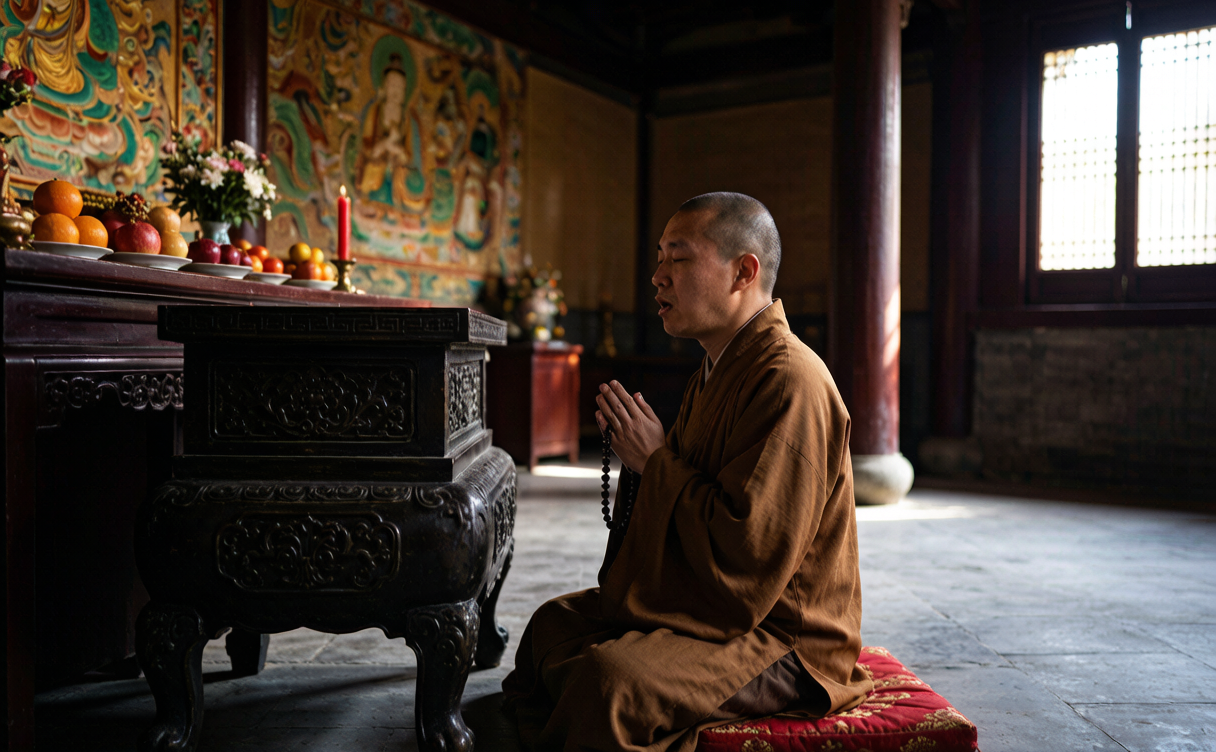
Wuye Temple is the busiest devotional site in the valley — arrive around dawn and you’ll find queues of pilgrims with incense, and often traditional Shanxi opera performed on the facing stage as an offering. It typically opens very early, around 5am–6am, and the atmosphere is unforgettable.
The Five Terraces
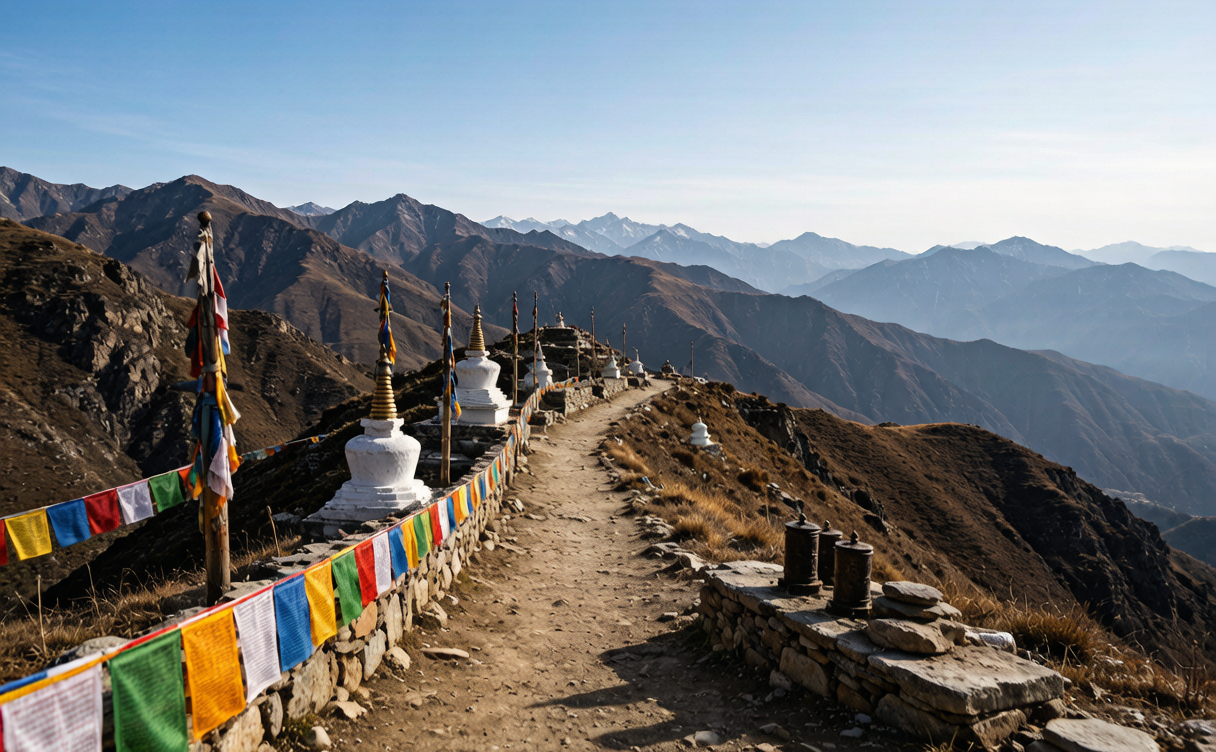
Each of the five summits carries a small temple dedicated to a manifestation of Manjusri. The North Terrace (Beitai, 3,061m) is the highest point in northern China; the East Terrace is famous for sunrise above a sea of clouds. Local minibuses run pilgrims to the terrace tops in season for roughly RMB 70–350 depending on how many you combine.
Foguang and Nanchan Temples
Outside the main valley stand two quiet giants of architectural history: Foguang Temple (857 AD) and Nanchan Temple (782 AD), the two oldest intact wooden halls in China, rediscovered by architects Liang Sicheng and Lin Huiyin in 1937. They require a hired car (half-day, RMB 300–400) and reward every yuan for anyone who cares about ancient buildings. The whole mountain is inscribed on the UNESCO World Heritage List largely because of this ensemble.
Hiking Routes, Difficulty, and Altitude
The classic trek is the Big Terrace Circuit (Da Chaotai) — linking all five summits on foot, roughly 50–75 km over 2–4 days depending on your route, following grassy ridgelines between 2,400m and 3,061m. It’s a pilgrimage as much as a hike: gradients are mostly gentle, but distances, thin air, and sudden weather make it a genuine undertaking. Simple pilgrim rest houses and terrace temples offer beds and meals along the way.
Shorter options include the two-hour walk up to the East Terrace from Hongmen, or simply climbing Dailuoding hill above Taihuai via its 1,080 steps (or a small chairlift, about RMB 85 round trip) for a panorama of the valley.
Altitude and safety: Taihuai at ~2,200m rarely troubles anyone, but the terraces top 3,000m — walk slowly on summit paths, hydrate, and expect biting wind even in July. Thunderstorms build fast on the exposed grasslands; descend if the sky turns. Trekkers should carry offline maps, layers, and sun protection. Route-planning basics are covered in our China hiking and treks guide.
Where to Stay
Taihuai town is full of family guesthouses (RMB 100–250) and mid-range hotels (RMB 300–600); the Marriott-affiliated resort near the entrance tops the range at RMB 800+. The most memorable option is a temple stay: several monasteries accept overnight guests for a modest donation, with 5am chanting as your alarm clock — our China temple stay guide explains etiquette, booking, and what to expect from monastic lodging.
What to Eat
Wutai’s food is Shanxi comfort cooking with a strong vegetarian streak. Try knife-shaved noodles (daoxiaomian), oat-flour youmian rolls steamed in bamboo, wild mushroom hotpot from the surrounding hills, and taimo, the local steamed bread. Monastery restaurants serve excellent vegetarian set meals for RMB 20–40, and pilgrim canteens are the cheapest honest food in town. Shanxi’s aged vinegar shows up on every table — use it liberally on the noodles.
Sample Itinerary: 2 Days
Day 1: Arrive from Taiyuan or Beijing by midday. Afternoon circuit of Tayuan, Xiantong, and Shuxiang temples, then climb Pusading’s 108 steps for sunset over the rooftops. Evening stroll around the stupa with the pilgrims.
Day 2: Dawn visit to Wuye Temple, then either minibus to the East and North terraces for the high-altitude scenery, or a hired car out to Foguang and Nanchan temples for the ancient wooden halls. Return to Taihuai for a monastery lunch before your onward bus.
With a third day, climb Dailuoding at sunrise and start the multi-day terrace trek — or simply slow down, which is what Wutai does best.
Practical Tips
- Carry cash in small notes for temple donations and incense; mobile payment covers everything else.
- Dress modestly, walk clockwise around stupas and prayer wheels, and ask before photographing monks; interiors are usually no-photo zones.
- Temples typically open around 7am–8am and close by 6pm; Wuye Temple opens earlier.
- Nights are cold year-round at this altitude — bring a real jacket even in August.
- ATMs exist in Taihuai but can be unreliable; sort finances in Taiyuan or Beijing first.
- Wutai remains blissfully underdeveloped compared with China’s other sacred mountains; more places like it fill our off-the-beaten-path China guide.
FAQ
How many days do I need at Mount Wutai?
Two full days covers the Taihuai temples plus either the terraces or the ancient wooden halls. Trekkers doing the five-terrace circuit need four to five days total.
Do I need a guide?
No — the valley is easy to navigate independently. A driver-guide helps for Foguang/Nanchan and the terrace roads, and trekkers may want a local guide in poor weather.
Is altitude sickness a problem?
Rarely in town (2,200m), occasionally on the 3,000m terraces. Ascend gradually, hydrate, and take the summit paths slowly.
Can I stay overnight in a monastery?
Yes, several accept guests for a small donation. Expect basic rooms, early bells, and simple vegetarian meals — one of the best cultural experiences in northern China.
When do the temple fairs happen?
The biggest gatherings fall in the sixth lunar month, usually July, when pilgrim numbers peak and the valley hums with ceremony.
Is Mount Wutai suitable for non-Buddhist visitors?
Completely. The architecture, mountain scenery, and living pilgrimage culture are compelling regardless of belief — just observe basic temple etiquette.
Written by Karl Huang, updated July 2026.