

Turpan is a place of superlatives. Sitting in a deep desert basin in Xinjiang, China, it contains the country’s lowest point (Aydingkol Lake, 154 meters below sea level), records some of its hottest summer temperatures, and receives barely 16 millimeters of rain a year — yet it produces some of the sweetest grapes on earth. The trick is the karez, an ancient network of underground irrigation channels that carries snowmelt from the Tianshan mountains beneath the scorching desert floor. Around this engineering marvel grew a Silk Road oasis of vineyards, adobe drying houses, ruined desert cities and lively bazaars. This Turpan travel guide covers the Flaming Mountains, Jiaohe ruins, grape valleys, Uyghur cuisine and the practical details of visiting one of the most atmospheric stops on China’s old Silk Road.
Why Visit Turpan
Few places compress so much into such a small radius. Within an hour’s drive of the city center you can walk the streets of Jiaohe, a 2,000-year-old city carved from a river island; descend into a working karez channel; photograph the rippling red Flaming Mountains made famous by the classic novel Journey to the West; and sit under a grape trellis eating hand-pulled noodles. Turpan’s blend of desert geology, Silk Road history and living Uyghur culture — the music, the bread ovens, the raisin houses — makes it the most rewarding short stop in eastern Xinjiang. If you are stitching together a longer route through the region, our full China Silk Road itinerary places Turpan in context between Dunhuang and Urumqi.
Best Time to Visit Turpan
The best time to visit Turpan is late August through early October, when the heat relents and the grape harvest fills the bazaars. April–May is the pleasant runner-up.
- Spring (April–May): 15–28°C, apricot blossoms, comfortable sightseeing weather.
- Summer (June–August): Fierce. Daytime highs regularly exceed 40°C, and the Flaming Mountains surface can be far hotter. Sightsee at dawn and after 6pm; the long summer evenings help.
- Harvest season (late August–early October): Warm days, cool nights, fresh grapes and melons everywhere — the classic time to come.
- Winter (November–March): Cold (−5 to −10°C at night) and very quiet; some sites shorten hours.
Cross-check with our national overview of the best time to visit China if Turpan is one leg of a longer trip, since Xinjiang’s calendar differs from the east coast.
How to Get There
Turpan North station is on the Lanzhou–Urumqi high-speed line, which makes arrival far easier than the desert setting suggests.
| Route | Option | Time | Approx. Cost |
|—|—|—|—|
| Urumqi → Turpan North | High-speed train (D) | 50–70 min | ¥55–75 ($8–11) |
| Dunhuang (Liuyuan) → Turpan North | High-speed train | 3–3.5 hr | ¥180–230 ($25–32) |
| Lanzhou → Turpan North | High-speed train | 8–9 hr | ¥450–560 ($63–79) |
| Urumqi airport → Turpan | Private car / DiDi | ~2.5 hr | ¥350–500 ($49–70) |
| Turpan North station → city center | Taxi / shuttle | 25–30 min | ¥30–50 ($4–7) |
Note that Turpan North station sits well outside town; budget half an hour for the transfer. Seat reservations sell out around the October holiday, so book early — our China high-speed train guide for foreigners explains exactly how.
What to See: Top Experiences in Turpan
Jiaohe Ancient City
Jiaohe may be the best-preserved earthen city on the Silk Road: a leaf-shaped plateau between two river gorges, its Buddhist stupas, government offices and homes carved directly from the loess more than two millennia ago. It is inscribed as part of the UNESCO World Heritage Silk Roads corridor — see the official UNESCO listing for background. Go at opening (typically around 9am Xinjiang working hours) or in the last two hours of daylight; midday is brutal in summer. Entry is about ¥70 ($10); allow two hours.
The Karez Irrigation System
The karez wells are Turpan’s lifeline: hand-dug vertical shafts linked by gently sloping tunnels that deliver mountain snowmelt to the vineyards without losing it to evaporation. Several thousand kilometers of channels were dug over the centuries, and the Karez Museum in town lets you walk beside cool running water while the desert bakes above. Entry roughly ¥40 ($6) — combine it with the adjacent vineyard courtyards.
Flaming Mountains and Bezeklik Caves
The Flaming Mountains are a 100-km ridge of eroded red sandstone that appears to ripple like fire in afternoon light. The roadside viewpoint with its giant thermometer is a quick photo stop; the better excursion continues into the Mutou Valley to the Bezeklik Thousand Buddha Caves, where fragments of vivid murals survive in cliffside grottoes above a green river bend (about ¥40 entry).
Grape Valley and Tuyoq Village
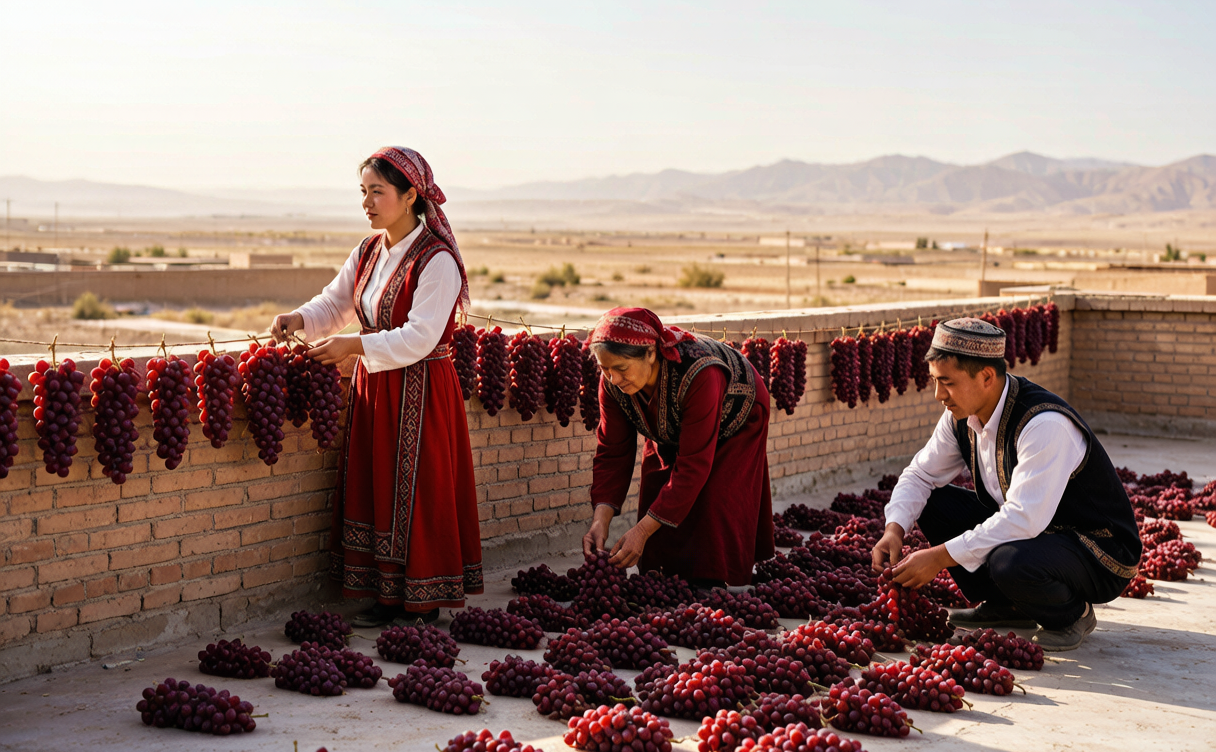
Grape Valley is a ribbon of trellised vineyards squeezed between the Flaming Mountains’ bare slopes — touristy but genuinely pretty, with raisin-drying houses (chunche) whose latticed mud-brick walls let hot wind cure the fruit. Further east, Tuyoq is a quieter adobe village wrapped around a mosque and a green gorge, good for slow wandering and photographs of traditional oasis life.
Emin Minaret
On the city’s edge stands the Emin Minaret (Sugong Ta), an elegant 44-meter tower of patterned sun-dried brick completed in 1778, beside a cool, carpeted mosque hall. It is the tallest minaret in China and lovely in low light; entry around ¥45.
Where to Stay
- Oasis mid-range (¥250–450 / $35–63): Comfortable hotels cluster around Gaochang Road and Qingnian Road in central Turpan; look for one with a shaded courtyard.
- Budget (¥100–200 / $14–28): Chain hotels and family guesthouses near the bazaar; simple but air-conditioned, which is what matters here.
- Character stays (¥400–700 / $56–98): A few vineyard guesthouses in Grape Valley let you sleep under the trellises — book well ahead for harvest season.
Air conditioning is non-negotiable from June to September.
What to Eat
Turpan’s food is Uyghur cuisine at its most confident, one of the great regional traditions within Chinese cooking:
- Laghman: Hand-pulled noodles tossed with peppers, tomatoes and lamb.
- Kebabs and samsa: Cumin-dusted lamb skewers and baked meat pastries pulled from tandoor-style ovens.
- Polo: Carrot-and-lamb rice cooked in vast pans at the bazaar.
- Grapes, raisins and melons: Dozens of grape varieties in season, plus year-round raisins in a rainbow of colors — buy them at the night market.
- Nang bread: Wheel-sized flatbreads stamped with patterns, best warm.
Sample Itinerary: 2 Days in Turpan
Day 1 — West loop. Morning at Jiaohe Ancient City before the heat builds. Midday break at the Karez Museum’s cool underground channels, then lunch under a vine trellis. Late afternoon at the Emin Minaret, and dinner at the night bazaar: kebabs, polo, fresh melon.
Day 2 — East loop. Hire a driver (¥400–600 for the day) for the Flaming Mountains viewpoint, Bezeklik Thousand Buddha Caves and Tuyoq Village, with a late-afternoon stop in Grape Valley for raisins and shade. Evening high-speed train onward to Urumqi or Dunhuang.
Add a third day for Gaochang ruins and the Astana tombs if ancient history is your thing — things to do in Turpan easily stretch to fill it.
Practical Tips
- Time quirk: All of China runs on Beijing time, but daily rhythms in Xinjiang skew about two hours later — restaurants and sites open and close later than you might expect. Confirm hours locally; sites typically open around 9–10am.
- Heat management: Two liters of water per person on excursions, sun hat, high-SPF sunscreen. Summer sightseeing happens early and late.
- Documents: Carry your passport everywhere; hotels and attractions register it, and occasional checkpoints on highways are routine — allow a few extra minutes.
- Getting around: Sites are scattered; a hired car for a day is the standard solution and hotels arrange them easily.
- Cash and apps: Alipay/WeChat Pay work everywhere including bazaar stalls; keep small cash for fruit vendors. These Turpan travel guide tips apply across the region.
FAQ
Is Turpan worth visiting?
Absolutely. It packs UNESCO-listed ruins, extraordinary desert landscapes and a distinctive food culture into a compact, affordable stop — one of the highlights of any Silk Road journey through Xinjiang, China.
How many days do I need?
Two full days covers the classic west and east loops. Three lets you add Gaochang and slow down over lunch in the vineyards.
How do I get to Turpan?
The high-speed train from Urumqi takes about an hour; Dunhuang is 3–3.5 hours. That is how to get to Turpan with the least hassle — flying into Urumqi and railing onward.
How hot does it really get?
July afternoons above 40°C are normal, and the Flaming Mountains’ surface can read far higher. Visit in shoulder season or structure summer days around dawn and evening.
Is Turpan good for independent travelers?
Yes. With a hired driver for the scattered sites and translation apps for menus, independent visitors manage comfortably, though English is rare outside hotels.
Written by Karl Huang, updated July 2026.