

Western Hunan — Xiangxi in Chinese — is where the province folds itself into green gorges, stilted wooden towns and mist that rarely lifts before nine in the morning. This is the homeland of the Miao and Tujia peoples, whose riverside villages, silver-heavy festival dress and smoked-bacon kitchens have drawn Chinese photographers for decades while remaining almost unknown to Western travelers. The Xiangxi Tujia and Miao Autonomous Prefecture holds the postcard town of Furong hanging over a waterfall, the garrison town of Qianzhou, the mountain fortress of the Southern Great Wall, and Aizhai’s dizzying canyon bridge. This Xiangxi travel guide shows you how to string them together by high-speed rail and local bus, what to eat, and when the terraced hills look their best.
Why Visit Xiangxi
Most foreign visitors to Hunan see Zhangjiajie’s stone pillars and leave. Xiangxi, immediately south and west, offers something different: living minority culture in a landscape of rivers and karst. Villages here are working places — chickens under the stilt houses, chili peppers drying on railings, elders weaving on porch looms — not open-air museums. Prices are low, trains are new, and a week can be filled without seeing another Western face. The prefecture capital Jishou anchors the region, with everything of interest within ninety minutes of it. If that sounds appealing, you are exactly the reader our off-the-beaten-path China guide was written for.
Best Time to Visit Xiangxi
The best time to visit Xiangxi is April–May and September–November. The region is humid subtropical, hilly and noticeably cooler than lowland Hunan.
- Spring (March–May): 14–25°C. Rapeseed flowers and rice-planting scenes in April; frequent light rain keeps the gorges dramatic.
- Summer (June–August): 26–33°C and humid, but village elevations take the edge off. Rivers run full — best season for waterfall photos at Furong.
- Autumn (September–November): Dry, clear, harvest colors on the terraces; the top window overall.
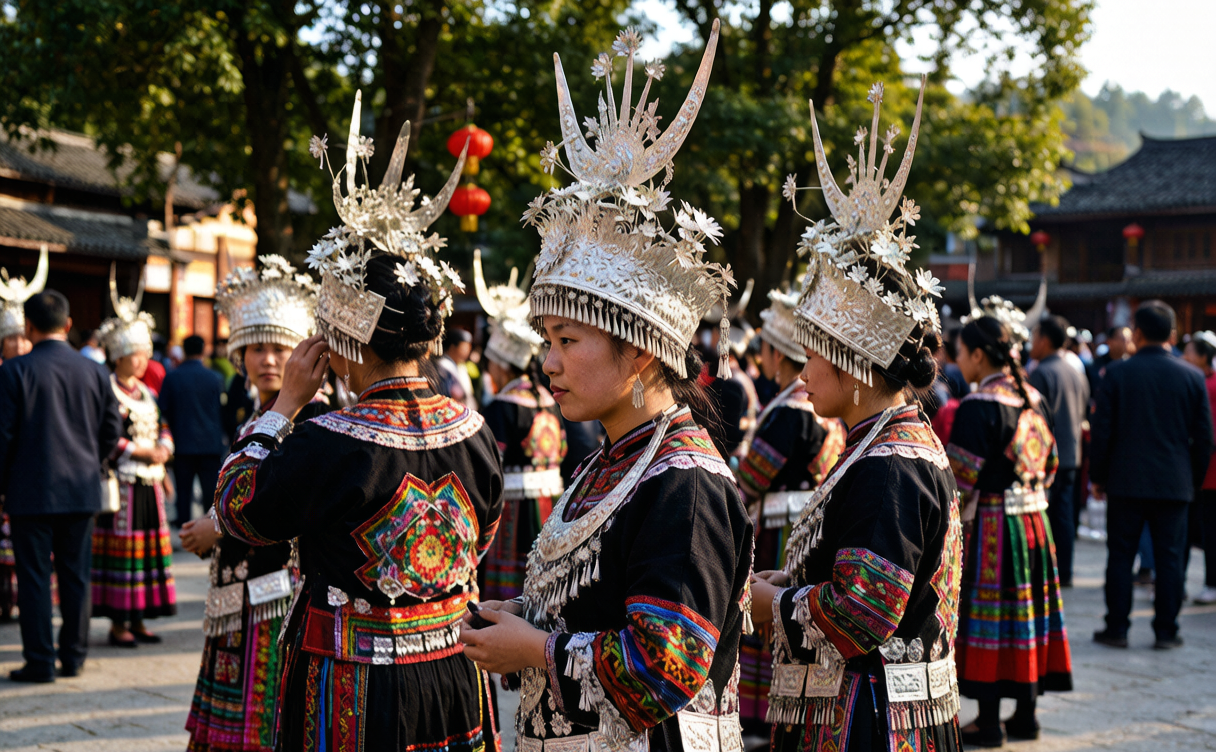
- Winter (December–February): 2–10°C, misty and quiet. Miao New Year celebrations (usually late autumn/early winter by the lunar calendar) bring out the silver headdresses and long-table feasts.
Festival dates shift each year with the lunar calendar, so confirm locally. For nationwide seasonal planning, see our best time to visit China overview.
How to Get There
The Zhangjiajie–Jishou–Huaihua high-speed line (opened 2021) transformed access. Jishou East is the hub; Furong Town has its own station.
| Route | Option | Time | Approx. Cost |
|—|—|—|—|
| Changsha → Jishou East | High-speed train (G) | 1.5–2 hr | ¥160–210 ($22–29) |
| Zhangjiajie West → Furong Town | High-speed train (G) | ~30 min | ¥40–60 ($6–8) |
| Zhangjiajie West → Jishou East | High-speed train (G) | 45–60 min | ¥70–90 ($10–13) |
| Jishou → Dehang village | Local bus | ~1 hr | ¥10 ($1.50) |
| Jishou → Fenghuang area | Bus / DiDi | 1–1.5 hr | ¥25 bus, ¥120 DiDi |
Trains sell out on weekends and holidays; book a few days out via the national rail operator’s official China Railway 12306 site or app. Our China high-speed train guide for foreigners covers everything from passport registration to seat classes.
What to See: Top Experiences in Xiangxi
Furong Town (Furong Zhen)
A 2,000-year-old Tujia town stacked on stilts directly above a broad waterfall — at night, when the lanterns come on and the falls are lit, it is one of the most theatrical sights in China. Walk the flagstone main lane, take the boat below the falls for the classic view, and try the rice tofu made famous by the 1986 film that gave the town its name. Entry to the old town is about ¥100 ($14); staying overnight inside lets you enjoy it after the day-trippers leave.
Dehang Miao Village
Tucked in a box canyon of sheer karst walls an hour from Jishou, Dehang is the most accessible authentically Miao village in the region. Trails lead up the Liusha waterfall — at 216 meters among China’s tallest drops, thin as a ribbon — and along rice terraces hemmed by peaks. Village entry with shuttle runs around ¥100. Morning mist here is the photograph you came for.
Aizhai Bridge
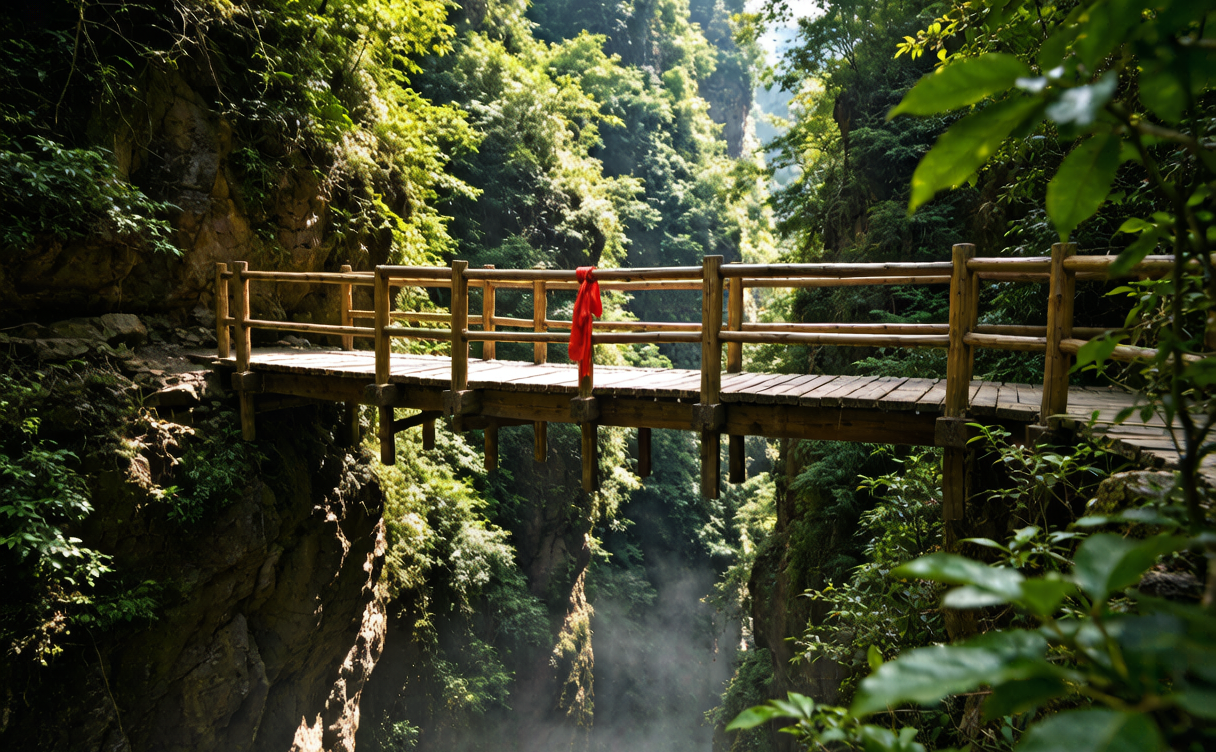
Just west of Jishou, the Aizhai suspension bridge throws a four-lane expressway across a 350-meter-deep canyon — among the highest bridges on earth. A visitor area and cliffside walkway beneath the deck give bracing views; combine it with Dehang, which sits in the same canyon system.
The Southern Great Wall and Qianzhou Ancient Town
Near Fenghuang, the “Miaojiang Great Wall” is a Ming-dynasty frontier wall that once separated imperial garrisons from Miao highlands; restored sections climb steep ridges with wide views. Qianzhou, on Jishou’s edge, is a quieter garrison old town with a superb confluence-side pagoda and almost no crowds.
Mengdong River Drifting
In summer, rafting trips run the Mengdong River gorges near Furong Town — two to three hours of green cliffs, mild rapids and water fights with neighboring boats (about ¥180–240 / $25–34, roughly May–October).
Where to Stay
- Furong Town guesthouses (¥200–450 / $28–63): Waterfall-view rooms in converted stilt houses are the region’s signature stay; book ahead for weekends.
- Jishou city hotels (¥180–350 / $25–49): The practical hub — modern chains near Jishou East station and the Qianzhou old town.
- Dehang homestays (¥100–200 / $14–28): Simple family-run rooms inside the village; cold beer, home cooking, waterfall soundtrack.
- Comfort tier (¥500+ / $70+): A few boutique properties in Furong Town and near Aizhai offer canyon views and better English service.
What to Eat
Xiangxi cooking is Hunan heat plus mountain smokehouse:
- Xiangxi smoked bacon (larou): Pork cured over wood fires in farmhouse rafters, stir-fried with garlic shoots or dried radish.
- Blood duck (xue ya): The region’s celebrated dish — duck braised with its own blood, chilies and rice wine; richer than it sounds.
- Miao sour fish soup: River fish in a tangy fermented-tomato broth, the backbone of any long-table feast.
- Furong rice tofu (mi doufu): Silky rice curd in chili-vinegar sauce, eaten at the waterfall’s edge.
- Kiwi and golden pomelo: Xiangxi’s orchards supply much of China’s kiwifruit; buy roadside in autumn.
Hunan’s xiang cuisine is one of China’s eight great regional traditions, and Xiangxi’s smokehouse style is its mountain dialect.
Sample Itinerary: 3 Days in Xiangxi
Day 1 — Furong Town. Arrive by high-speed train (30 minutes from Zhangjiajie West). Afternoon exploring the stilt lanes and waterfall boat trip; overnight in a falls-view guesthouse. The lit waterfall after 8pm is the day’s finale.
Day 2 — Dehang and Aizhai. Train to Jishou East, bus into Dehang canyon. Hike to Liusha waterfall (two hours round trip), lunch on sour fish soup in the village, then the Aizhai Bridge viewpoint late afternoon. Overnight in Dehang or Jishou.
Day 3 — Qianzhou and onward. Slow morning in Qianzhou ancient town, blood duck lunch, then an afternoon train from Jishou East to Changsha, Zhangjiajie or beyond. With extra days, add the Southern Great Wall or summer river drifting.
Practical Tips
- Weather layers: Gorges are cool and damp even in summer evenings; pack a light shell year-round.
- Cash for villages: Alipay/WeChat Pay dominate, but tiny village stalls occasionally prefer small notes.
- Festival etiquette: Ask before photographing people in festival dress; a smile and a shown photo go a long way.
- Getting around: Local buses are cheap but infrequent after 5pm — plan return legs, or use DiDi from Jishou.
- Family-friendly: Trails at Dehang and Furong are manageable for school-age kids, and guesthouse owners dote on young travelers.
FAQ
Where exactly is Xiangxi?
Xiangxi is the Tujia and Miao Autonomous Prefecture in far western Hunan province, centered on Jishou, roughly between Zhangjiajie to the north and Fenghuang to the southeast.
Is Xiangxi worth visiting compared with Fenghuang?
Yes — Fenghuang is beautiful but heavily touristed; Xiangxi’s Furong Town, Dehang and Qianzhou deliver similar architecture and stronger village life with a fraction of the crowds. Many travelers combine both.
How many days do I need?
Three days covers the core — Furong Town, Dehang, Aizhai and Qianzhou. Five days adds the Southern Great Wall, Mengdong drifting and slower village time; things to do in Xiangxi scale with your patience for mist.
How do I get to Xiangxi?
High-speed rail is how to get to Xiangxi painlessly: under two hours from Changsha to Jishou East, or thirty minutes from Zhangjiajie West to Furong Town.
Do people speak English?
Almost none outside a few Furong Town guesthouses. Translation apps and screenshots of Chinese place names (芙蓉镇, 德夯, 矮寨大桥, 乾州古城) solve most situations.
Is it safe for solo travelers?
Very. Rural Hunan is welcoming and low-crime; the main hazards are slippery flagstones and overeating smoked bacon.
Written by Karl Huang, updated July 2026.