

Hunan cuisine is one of China’s eight great regional kitchens, and it does not hide its heat. This Hunan cuisine guide takes you through the chopped-chili fish heads, the smoked cured meats, and the braised pork that made the province famous. Hunan sits in south-central China, humid and green, and its cooks lean on fresh chili rather than numbingly hot peppercorns — the spice is bright, direct, and built to make you sweat. Unlike the sweet-sour gloss of some Chinese takeout, a Hunan plate is loud: chili is a vegetable here, cooked into the dish, not just a garnish. The province also loves làwèi, everything smoked and cured through the winter, which gives the food a second, darker layer under the heat.
Best Time to Visit Hunan
The best time to visit Hunan is April to May and September to November, when the heat eases and the hills are green. Summer (July to August) is hot and sticky, often above 35°C, though that is also peak crayfish season in Changsha. Winter is cold and damp, with little snow. For a wider seasonal plan, our best time to visit China page helps you stack Hunan with nearby provinces.
How to Get There
How to get to Hunan is simplest via Changsha, the capital. Most visitors fly into Changsha (长沙) at Huanghua International Airport (CSX), with flights from Beijing (about 2.5 hours), Shanghai (about 2 hours), and Guangzhou (about 1.5 hours). Changsha South is a major high-speed rail hub: Guangzhou is 2.5 hours (around CNY 300 second class), Shanghai 5–6 hours, and Beijing about 6 hours. Foreign riders should read our China high-speed train guide for foreigners before booking, since the apps and ID checks differ from home.
Hunan Cuisine Guide: The Dishes to Know
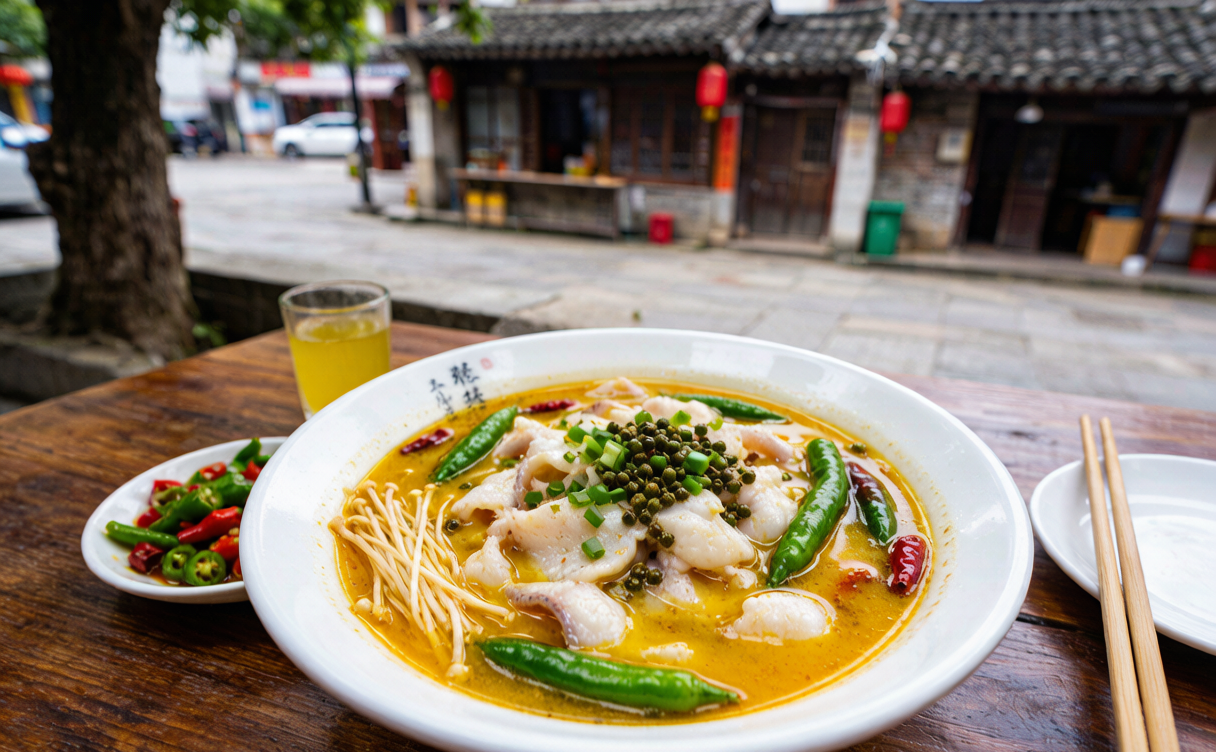
Start with duòjiāo yútóu (剁椒鱼头), chopped-chili fish head — the dish that defines Hunan spicy food. A large fish head is split, covered in fermented chopped red chili, and steamed, then often finished with a sizzle of hot oil. It feeds two to three and runs CNY 60–120. Order “zhōng là” (medium spicy) if you are unsure, and use the extra chili as a condiment for plain rice.
Another essential is Máo shì hóngshāo ròu (毛氏红烧肉), Mao’s braised pork, a glossy pork-belly dish from Shaoshan, the hometown of Mao Zedong, slow-braised in soy and rock sugar until it lies down on the plate. It is rich rather than fiery, about CNY 40–60. The everyday staple is làjiāo chǎoròu (辣椒炒肉), chili fried pork, a wok of thin pork, green chili, and black beans at CNY 35–50 that you will order again and again.
For variety, try làwèi (腊味), the smoked and cured meats — bacon, sausage, and fish hung over wood smoke through the winter — and kǒuwèi xiā (口味虾), spicy crayfish, a Changsha summer ritual eaten by the jin (500g) for CNY 60–100. Street-level, chòu dòufu (臭豆腐), stinky tofu, is fried crisp and ladled with chili sauce for CNY 5–10; the smell is stronger than the taste. A note for first-timers: Hunan heat is not the same as Sichuan heat. Sichuan buzzes your tongue with numbing huājiāo pepper; Hunan just burns, clean and straight from the chili itself. If a dish is listed “super spicy” (特辣, tè là), believe it, and keep a bowl of plain rice handy to reset between bites.
Where to Eat: Changsha and Beyond
Changsha is the food capital. Walk Pozi Street (坡子街) and Huogongdian (火宫殿) for snack halls of stinky tofu, smoke-braised dishes, and sugar cakes. For a retro experience, the Wenheyou (文和友) food court rebuilds an old Changsha inside a tower, packed with noodle and crayfish stalls. A full dinner for two with beer is CNY 150–300; street snacks are a few yuan each. Crayfish is eaten with your hands and a bib, and the default order is by the jin — ask for “bàn jīn” (half a jin) if a whole one is too much. Most night markets run late, peaking after 9 p.m., so plan your big snack crawl for after dark rather than before dinner.
Outside the city, the scenery earns its own meals. The Zhangjiajie travel guide covers the sandstone peaks where you can eat Tujia-style cured pork between cable-car rides. For things to do in Hunan that mix food and old towns, the riverside evening markets near the avatar mountains are worth a slow evening.
Hunan Travel Tips and Daily Budget
Practical Hunan travel tips: spice here is chili, not numbing — tell the kitchen your level, because “là” defaults to hot. Download a translation app for dish names, and keep small cash for night markets. Food runs CNY 80–150 per day if you mix snacks and one restaurant meal, or CNY 200–350 with crayfish and beer. Changsha moves late and eats later, so don’t expect quiet restaurants before 7 p.m. The snack streets get crowded on weekends; go on a weeknight for the same food without the elbows. If a stall advertises “old brand” (老字号, lǎozìhào), it usually means the recipe is worth the queue.
Where to Stay
Stay in central Changsha, near Pozi Street or the IFS tower, where mid-range hotels cost CNY 300–600 per night. Being central puts the night markets within walking distance and saves taxi time after a spicy dinner. Book early around May Day and National Day holidays, when the city fills up.
Sample Food Itinerary
Day 1: Arrive in Changsha, graze Pozi Street for stinky tofu and sugar cakes, then dinner of chopped-chili fish head.
Day 2: Lunch on Mao’s braised pork and chili fried pork, an afternoon at Wenheyou, then a late crayfish feast by the river.
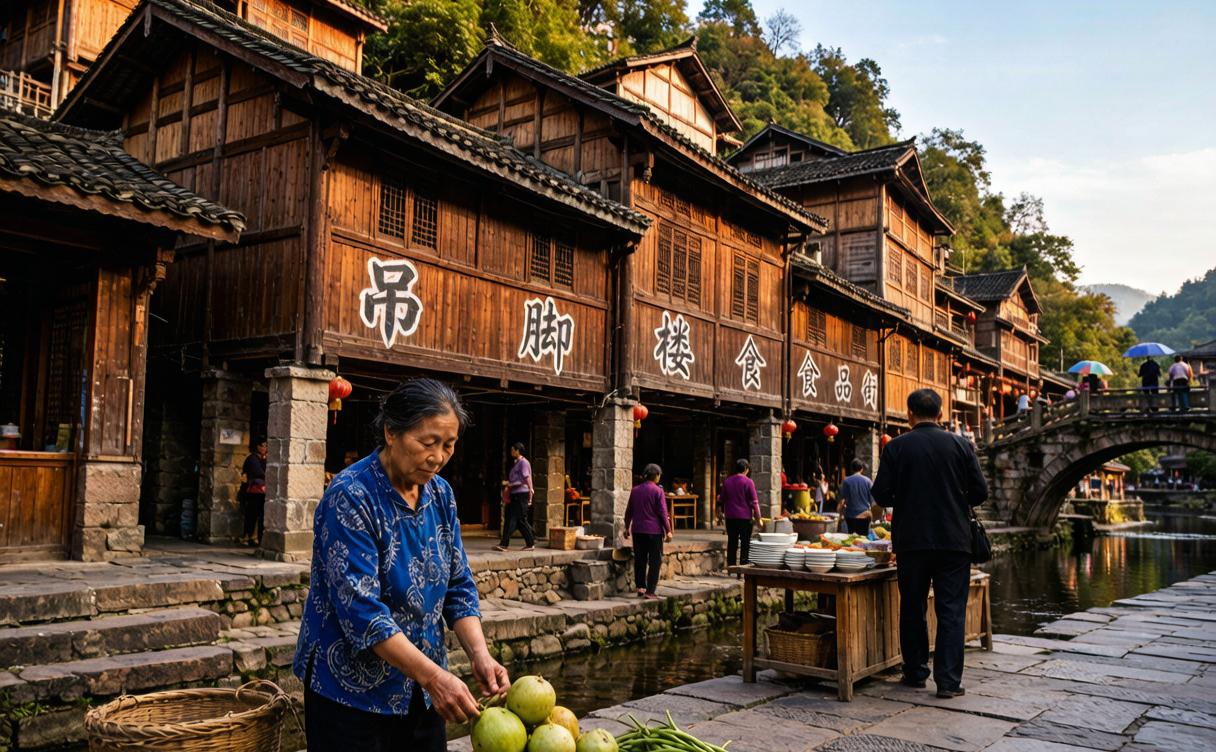
Day 3: A morning train to Zhangjiajie for peaks and cured pork, or west to the Fenghuang ancient town (below) for riverside snacks. A flexible Hunan itinerary leaves room for both if you have five days.
FAQ
Is Hunan food hotter than Sichuan? Different. Hunan uses fresh and pickled chili for straight heat; Sichuan adds numbing peppercorn. Hunan feels more directly spicy.
What is Mao’s braised pork? A sweet-savory pork-belly dish from Shaoshan, named after Mao Zedong, who grew up there. It is the gentle entry point to the cuisine.
Can I eat mildly? Yes. Order “wēi là” (mild) and lean on braised pork, smoked meats, and rice. The chili fish head can be shared.
Is stinky tofu safe? Yes, it is fully fried and served hot. The aroma is the only shock; the taste is mild and savory.
What should I drink with Hunan food? A cold lager or a sweet soy milk cuts the heat better than water. Locals also drink a light rice wine (米酒, mǐjiǔ) with cured meats — go easy, it sneaks up on you.
Plan Your Trip
A Hunan itinerary is for travelers who like their food loud. These Hunan travel tips should get you ordering chili fish head with confidence on night one. For more things to do in Hunan beyond the table, the Zhangjiajie write-up linked above is the natural next read.
For transport and regional background, TravelChinaGuide’s Hunan page (https://www.travelchinaguide.com/cityguides/changsha.htm) is a reliable reference.