

I still remember the first time I stepped off the train in Qingdao. The sea air smelled of salt and something else—something malty and warm that I couldn’t quite place. A friend laughed and pointed toward the red-brick towers rising behind the old German quarter. “That,” he said, “is where Qingdao’s heart lives.” He meant the Tsingtao Beer Museum, and within an hour I understood exactly what he meant.
Qingdao and beer are inseparable. The city brewed its first batch of German-style lager in 1903, and more than a century later that same brewery has been reborn as one of the most atmospheric museums in northern China. If you are a foreign visitor looking for a taste of China that feels both familiar and utterly foreign, this is the place to start.
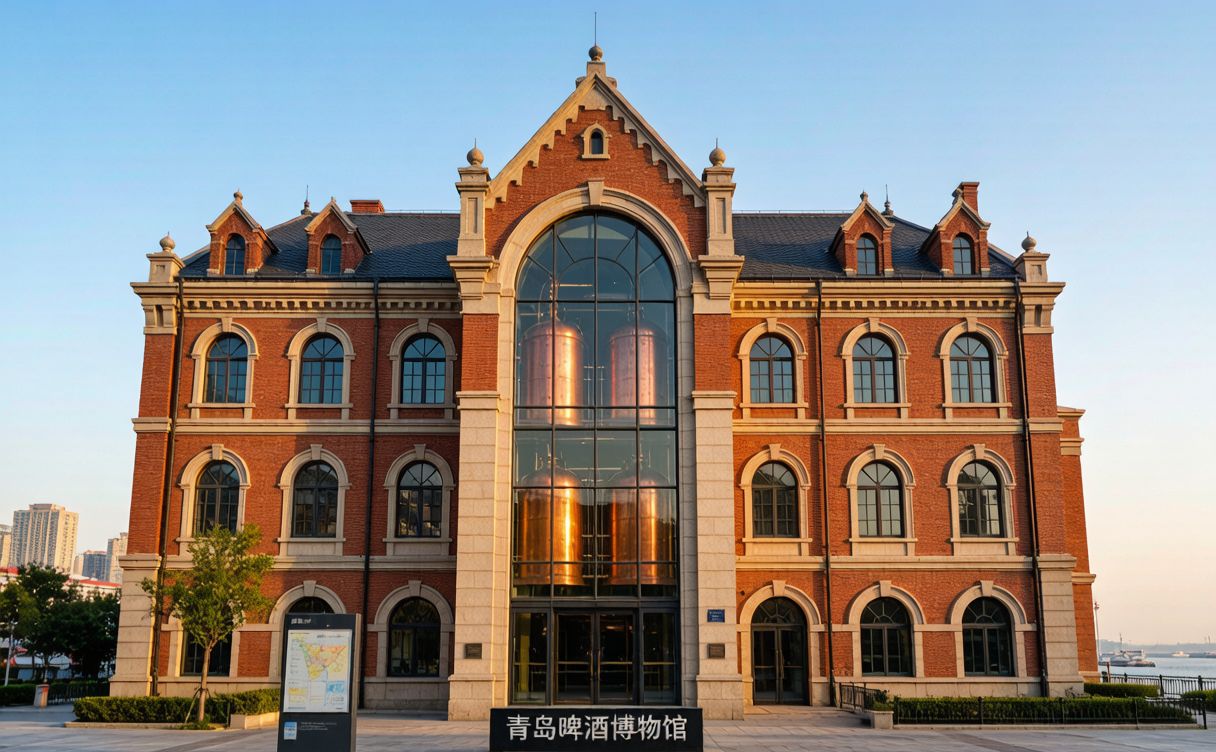
Getting There
The museum sits at 56 Dengzhou Road, right in the heart of Qingdao’s old town, about a fifteen-minute walk inland from the Zhanqiao Pier waterfront. I walked there myself one cool morning, weaving past breakfast stalls selling jianbing and steamed buns, and the route alone was worth it—Qingdao’s low hills and European-style buildings make for an easy, scenic stroll. If you want to pair the museum with a seaside walk, our guide to Qingdao’s Zhanqiao Pier explains how to reach the iconic breakwater just beyond.
If you would rather not walk, a taxi from the city center costs only a few dollars and the driver will know the spot by name. The Qingdao metro is another solid option; hop off near the old town and follow the signs. The walk from the pier is flat and pleasant, so I recommend doing both in a single relaxed morning before the midday heat builds.
What to See
The museum is cleverly split into two halves: the historic brewery and the modern exhibition. I spent nearly an hour in the old section alone, where original copper kettles, wooden fermenting vats, and a 1903 German-built boiler still stand exactly where brewers left them. The air carries a faint, yeasty sweetness, and the low light makes the brass glow.
Upstairs, the modern galleries tell the story of how a small German joint venture became China’s most famous beer. There are vintage advertisements, old bottles, and an interactive timeline that even non-Chinese speakers can follow thanks to English placards. My favorite corner was the “Beer World” hall, a sensory room where lights and sound simulate the journey of a single drop of barley from field to glass.
Don’t miss the old underground fermentation cellars. They are cool, dim, and wonderfully atmospheric—I half expected a mustached brewmaster to appear around the corner. The route flows logically, so you never feel lost, and benches are placed at just the right intervals for tired feet.
The Tasting
Now to the part everyone waits for. At the end of the tour, the museum hands you a freshly poured sample of unfiltered draft beer—the kind you simply cannot buy in a bottle anywhere else. It arrives cool, cloudy, and topped with a thick, creamy head. I took my first sip and immediately understood why locals guard this stuff like a secret.
The tasting line moves quickly but never feels rushed. You get a small glass of the raw, unpasteurized Tsingtao and, in the adjacent bar, a second pour of a seasonal or specialty brew. On my visit the specialty was a crisp wheat beer that tasted nothing like the familiar green bottle back home. There is also a “beer DNA” station where you can fill a takeaway growler for a small fee—I did, and it was gone by dinner.
If you don’t drink alcohol, ask the staff for the non-alcoholic option; they pour a soft version for drivers and kids, and no one makes a fuss. The gift shop sells branded glasses and snacks, but the real souvenir is the memory of that first cloudy sip.
Tips
A few things I wish I had known before my first visit. Buy your ticket online in advance during summer—lines at the gate can stretch around the block, and a pre-booked QR code lets you walk straight in. Go early in the day if you can; the tasting bar is calmer before noon and the light through the old windows is gorgeous for photos.
Wear comfortable shoes. The brewery is a working historic building with uneven floors and a few sets of stairs, so heels are a poor choice. Photography is welcome in most areas, but flash is discouraged near the vintage equipment. If you don’t drink alcohol, ask the staff for the non-alcoholic option—they pour a soft version for drivers and kids, and no one makes a fuss.
Plan about two hours total. Rushing through in forty minutes means missing the cellars, and those are the soul of the place. And bring a light jacket even in summer; the fermentation cellars stay genuinely chilly.
As for practicalities, the museum opens daily around 8:30 a.m. and last entry is typically mid-afternoon, though hours stretch longer in peak summer. Standard admission is modest by Western standards—roughly the price of a cafe lunch—and it includes your two tasting pours, which makes it one of the best-value attractions in the city. Children under a certain height often enter free, and there is step-free access to most of the modern galleries, though the historic cellars involve stairs. I found the staff friendly and used to foreign guests, so don’t hesitate to ask questions even if your Mandarin is rusty.
Best Time
Qingdao’s climate is refreshingly mild compared with the rest of northern China, but the museum experience changes with the seasons. I visited in late spring and loved the empty halls and cool sea breeze. Summer (June to August) is peak season—the beer festival atmosphere is electric, but so are the crowds.
Autumn, from September to October, is my personal favorite: the weather is crisp, the local seafood is at its best, and the tourist numbers thin out just enough. Winter is quiet and a little cold, but the indoor museum is a cozy refuge and you’ll often have the tasting bar to yourself. Whenever you choose, our best time to visit China guide helps you time the rest of your trip around weather and festivals.
Good to Know
One last practical note before you go. The museum sits within walking distance of Qingdao’s Badaguan area, a leafy district of old villas perfect for a post-beer wander, so you can easily combine the two. Entrance includes the basic tasting; specialty pours and growlers cost extra. English signage is good throughout, and audio guides in several languages are available at the desk.
The brewery behind the museum is still very much alive, and if you want to dig deeper into the brand’s history and current brews, the official site is the best source: Tsingtao Brewery. I left with a slightly dizzy head and a new appreciation for a city that turned a colonial-era brewery into a point of pride—history you can taste, and honestly, the best kind.