

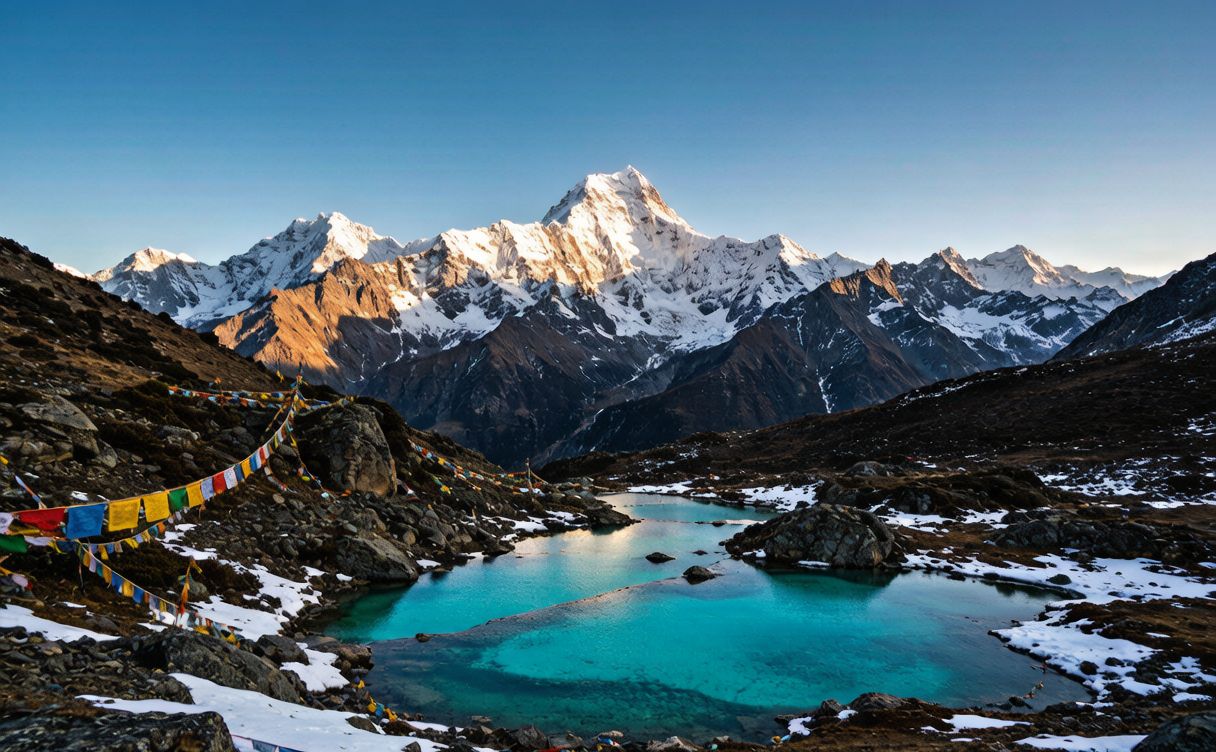
The first time I gasped for air at 4,600 meters, it wasn’t from the cold. It was because I’d just rounded a prayer-flag ridge and the whole of Daocheng Yading dropped open beneath me — three snow peaks burning white against a sky so blue it looked Photoshopped. My lungs disagreed with the altitude, but my eyes filed a formal complaint about ever having to leave. Tucked into the far west of Sichuan, this is the kind of place that makes you forgive China’s endless train rides. Locals call it “the last Shangri-La,” and for once the marketing isn’t lying.
The Three Sacred Mountains
Yading Nature Reserve is built around a Tibetan Buddhist holy trinity. The three peaks — Chenresig (Xiannairi, 6,032 m), Jampayang (Yangmaiyong, 5,958 m) and Chanadorje (Xianuoduoji, 5,958 m) — represent the Bodhisattvas of mercy, wisdom and power. You don’t need to be religious to feel something here. When I stood at the lakeside viewpoint below Chenresig, a Tibetan pilgrim walked past spinning a prayer wheel, and neither of us said a word. The silence at that altitude has weight.
What surprises most visitors is the scale. These aren’t postcard backdrops you admire from a car window — they dominate the entire valley. On a clear morning the reflections in the lakes are so precise you’d swear the mountain had been duplicated. The park rangers told me the three peaks are almost never all visible at once; I counted myself lucky to catch two. A guide told me later that locals believe seeing all three in one day brings a year of good fortune. I’ll take what I can get.
Milk Lakes and the Core Zone
The headline hike inside the core zone ends at two glacial lakes: Milk Lake (Niunai Hai) and Five-Color Lake (Wuse Hai). Milk Lake earns its name — a milky turquoise pool dammed by a moraine, ringed by bare scree and a single thread of meltwater. It sits at roughly 4,600 m, which is exactly where my earlier gasping happened.
The trail from the Luorong Pasture shuttle drop-off is only about 3 km each way, but don’t let the distance fool you. At that elevation every step is a negotiation with your own oxygen debt. I watched a fit German backpacker — trail runner, no less — sit down halfway and quietly question his life choices. The reward at the top is Five-Color Lake, a deeper, oil-slicked pool that shifts green, blue and amber depending on the light. Bring the wide lens; this is the money shot of the entire yading snow mountains range.
Getting There From Chengdu
Most foreign travelers start in Chengdu, and the good news is logistics have improved enormously. You have three real options:
- Fly. Chengdu has direct flights to Daocheng Yading Airport (the highest civilian airport in the world at 4,411 m). The flight is under an hour, but landing high is a brutal way to start acclimatizing — more on that below.
- Drive / bus. The classic overland route runs 700+ km through Kangding, Litang and the stunning litang plateau. It’s two long days, but the scenery between Chengdu and the reserve is half the trip.
- Tour. Many visitors bolt Yading onto a Sichuan loop that also includes Jiuzhaigou and pandas.
If you want to pair the pandas with your flight prep, read our Chengdu pandas and city guide before you book — spending a night or two low in Chengdu first is the single best acclimatization trick I know.
Altitude and Acclimatization (the honest part)
Let me be blunt: altitude is the boss here, and it doesn’t care about your fitness level. Daocheng town itself sits at 3,700 m, and the trailheads push past 4,500 m. The number-one mistake tourists make is flying straight in and trying to summit the lake hikes on day one. I did roughly that and spent that night awake, heart thudding, convinced I was dying. I wasn’t — it was mild AMS (acute mountain sickness).
Practical advice that actually works:
- Arrive low. Spend 1–2 nights in Chengdu (500 m) or Kangding (2,560 m) first.
- Hydrate like it’s a job. The dry Tibetan air dehydrates you faster than you’d think.
- Go slow and eat carbs. Your body burns more at altitude; dumplings are medicine.
- Pack diamox if your doctor approves, and never hike alone if you feel dizzy.
- Descend if symptoms worsen. The mountain will still be there tomorrow; your brain cells might not.
If you’re building a broader China hiking plan, our China hiking and treks guide covers altitude strategy across the country, not just here.
Best Season to Visit
Timing makes or breaks a Daocheng Yading trek. The reserve is high and harsh:
- April–May: melting snow, fewer crowds, but cold and muddy trails.
- Late September–October: the sweet spot. Golden grasslands, crisp air, snow already on the peaks, and the famous “red grass” (Hongcaodi) blazing. This is when I went, and I’d do it again in a heartbeat.
- November–March: brutally cold, some facilities close, but eerily empty.
- July–August: lush and green, but this is the rainy season and the peaks hide in cloud more often than not.
For a national overview of when to travel, our best time to visit China piece lays out regional weather patterns so you can sequence Sichuan alongside the rest of your trip.
Permits, Tickets and Logistics
Good news for foreign tourists: unlike parts of the Tibetan Plateau, Yading does not require the special Tibet Travel Permit. You need only a standard Chinese tourist visa and the park entry ticket. As of recent seasons, entry runs around ¥146 in peak months, plus shuttle bus fees inside the reserve (mandatory — private cars stop at the gate). The park enforces a daily visitor cap, so booking online ahead through the official platform is wise in October.
Inside, electric shuttles ferry you from the gate to Zhaguanbeng, then a longer bus climbs to Luorong Pasture, the launch point for the lake hikes. The whole system is efficient but early starts matter — buses fill, and the light is best before 10 a.m. Cash is rarely needed; even the high plateau runs on WeChat Pay these days.
A guide told me the park once let visitors hike all the way to the base of Chenresig; conservation rules now keep the core tighter. Respect the ropes. This is a UNESCO biosphere reserve, designated under the Man and the Biosphere Programme — the ecosystem is fragile and the line between “pristine” and “loved to death” is thinner than the air up there. You can read more about the designation from UNESCO’s MAB programme.
Why It Belongs on Your List
I’ve stood on a lot of mountains, and few have the sheer “I can’t believe this is real” punch of Yading. It’s remote, it’s demanding, and it will test your lungs — but that’s precisely the point. The Daocheng Yading experience isn’t a checkbox; it’s a threshold. You go up thin and come down changed.
If you’re assembling a longer China itinerary, our China bucket list attractions ranks Yading against the country’s other icons, from Zhangjiajie’s pillars to the Tiger Leaping Gorge. And if highland travel is your thing beyond Sichuan, the Shangri-La Yunnan travel guide picks up the “Shangri-La” thread in the next province over — a natural northern extension of the same Tibetan-edge landscape.
One last word of advice from someone who learned the hard way: book your accommodation in Daocheng town (not the gate) for the night before, sleep low, and start early. The mountains reward the patient.