

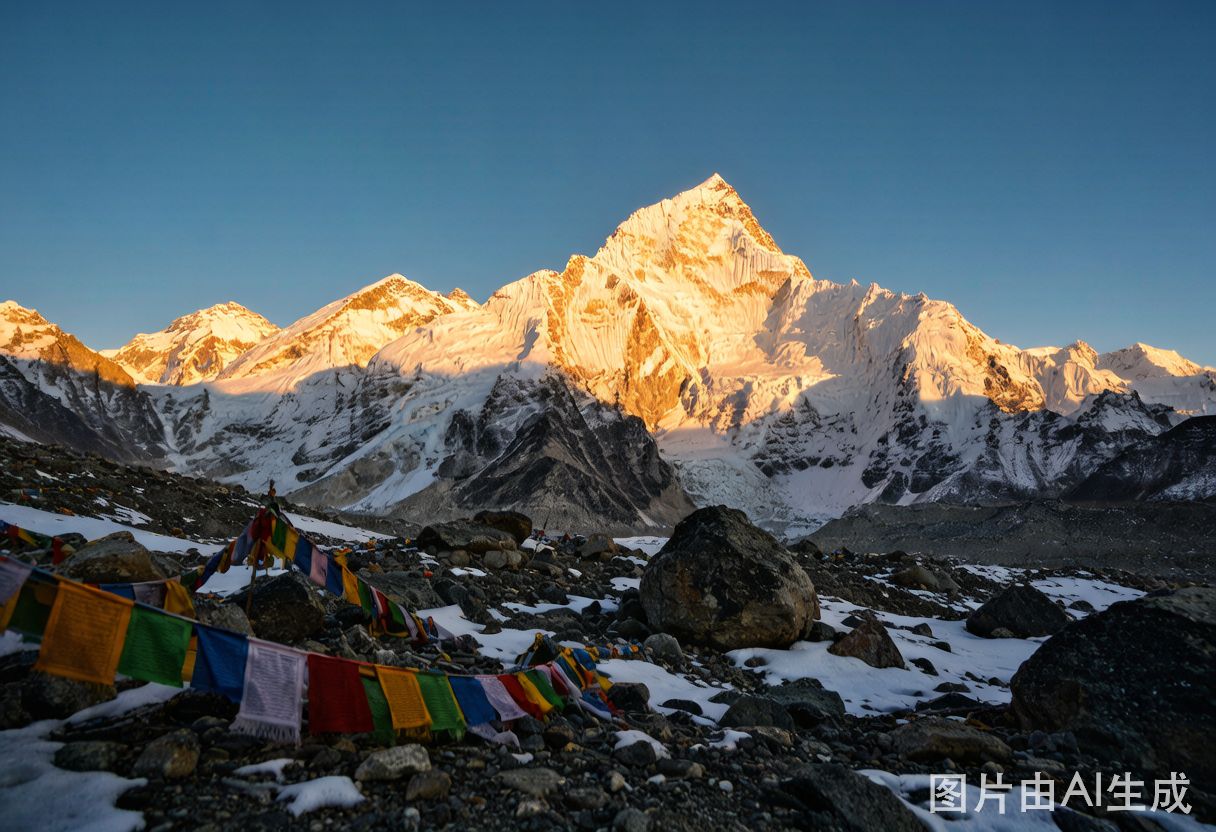
I have stood in a lot of cold, wind-scoured places in my travels across China, but nothing prepared me for the moment the road curved over Pang La pass and Mount Everest, Tibet, China slid into view — a single white pyramid at the end of a grey river of peaks. There is no gradual reveal. One second you are staring at a wall of Himalayas, the next the highest point on Earth is filling your windshield. I remember the oxygen-thin silence, the prayer flags snapping in a wind that never seems to stop, and the slightly ridiculous thought: I drove here.
This is the Tibet-side Everest Base Camp, Tibet, China — not the trekking camp in Nepal, but the vehicle-accessible viewpoint on the north face, reachable as part of a journey through the Tibetan Plateau. If you are a foreign traveler planning to see Everest from China, this guide is built from my own three trips along the route, with the practical hard-won details that brochures leave out.
The Road from Lhasa to the Foot of Everest
Almost everyone reaches Everest Base Camp, Tibet, China by road, and the road begins in Lhasa, Tibet, China. There is no train or flight that drops you at base camp; you acclimatize in the capital, then drive west across the plateau. My first night in Lhasa I did almost nothing — sat in a teahouse near the Potala Palace, drank butter tea, and let my body argue with the 3,650-meter altitude. That lazy day was one of the smartest travel decisions I have ever made.
The classic drive runs Lhasa → Gyantse → Shigatse → Tingri → base camp, roughly 700 kilometers that takes two to three days with stops. The stretch between Shigatse and Tingri is where the landscape turns biblical: vast, treeless, and ringed by snow. You will cross high passes — Gyatso La at over 5,200 meters — where the world looks like the inside of a freezer that someone forgot to close.
I always tell first-timers to treat the drive itself as the trip, not just transportation. The monasteries, the turquoise lakes, the roadside nomads with yak herds — these are the Tibet most visitors never write about. If you are building a longer China itinerary, many travelers fly into Lhasa after exploring Xi’an, whose Terracotta Army makes a neat cultural counterpoint to the empty plateau.
Permits, Guides, and the Paperwork That Opens the Gate
Here is the part nobody enjoys but everyone must do: you cannot just rent a car and drive to Everest Base Camp, Tibet, China. Foreign travelers must travel on an organized Tibet tour with a licensed guide and a Chinese driver. This is not a suggestion; it is the rule, and the checkpoint at Tingri will turn you back without it.
You will need two documents. The first is the Tibet Travel Permit (TTB permit), arranged by your tour operator in Lhasa using your Chinese tourist visa and confirmed itinerary. The second, for the Everest region specifically, is the Aliens’ Travel Permit, issued in Shigatse. Your guide handles both, but you must supply a passport valid for at least six months and a clear scan well ahead of time — I advise starting the paperwork a month before departure.
A few realities from experience: permits are tied to a fixed route, so you cannot spontaneously decide to detour. Your guide and vehicle are mandatory for the entire trip. And yes, there is a base camp entry fee (plus a vehicle fee) collected at the checkpoint, so carry cash in yuan even though you may have been paying for everything else by phone. Before you leave home, sort out your Chinese tourist visa — no permit, no matter how good your itinerary, works without it.
Best Season to Stand Beneath Everest
Timing is everything on the plateau. I have been in April, when the wind could peel the skin off your face, and in October, when the sky was a blue I have never seen anywhere else. The best window is late April to early June and mid-September to late October. These shoulder seasons give you clear air, manageable (relatively) temperatures, and the famous uninterrupted views of the summit.
Avoid July and August if you can. That is the monsoon fringe — clouds build over the Himalayas by midday and Everest often hides behind a grey curtain. You also get the rain-soaked, potholed road sections that turn a pleasant drive into a white-knuckle slog. Winter (November to March) is brutally cold, with base camp facilities partly closed, though the mountain is staggeringly clear if you can handle minus-20 nights.
For context on broader timing across the country, our best time to visit China overview helps you stack Tibet with other regions in one trip.
Altitude: The Real Boss of This Trip
Let me be blunt, because nobody warned me clearly enough the first time. The altitude is the hardest part of Everest Base Camp, Tibet, China — harder than the permits, harder than the cold. Base camp sits at about 5,200 meters. That is higher than many people’s first Himalayan pass back home. The air holds roughly half the oxygen of sea level.
Symptoms hit differently for everyone. On my second trip a fit 30-year-old cyclist in our group spent a miserable night vomiting from altitude sickness while a 60-year-old grandmother breezed through. Acclimatize gradually: spend two full days in Lhasa, another night in Shigatse (3,800 m) before pushing higher, and climb slowly. Drink absurd amounts of water. Skip the alcohol the first few nights — I learned that lesson the loud way in a Shigatse hotel lobby.
Carry diamox (acetazolamide) if your doctor approves, and a portable oxygen canister as insurance, not as a crutch. If you feel a pounding headache that medicine doesn’t touch, breathlessness at rest, or confusion, descend — there is no view worth a hospital evacuation. The Qinghai Lake region, slightly lower and a common acclimatization stop on the Xining route, is a good shakedown for how your body handles thin air before you commit to Everest.
What to Pack for the Tibetan Plateau
The packing list for Everest Base Camp, Tibet, China looks like a contradiction: you are going to the roof of the world in a vehicle, but you will still freeze. Layering is the entire strategy.
- Insulation: A real down jacket (not a fashion puffer), thermal base layers, a windproof shell. Even in “warm” October the windchill at base camp hits below zero.
- Sun protection: The UV at altitude is savage. High-SPF sunscreen, lip balm, sunglasses rated for snow glare, and a brimmed hat. I came back from trip one with a sunburned scalp through my hair.
- Footwear: Waterproof, broken-in boots. The camp ground is rocky and often icy.
- Health: Diamox, ibuprofen, rehydration salts, a basic first-aid kit, hand sanitizer, and any personal meds in original packaging.
- Electronics: Power bank (cold kills batteries fast), camera with spare cards, and a plug adapter — check our China plug and adapter guide before you fly.
- Cash and documents: Yuan in small bills, passport, permit copies. Signal is patchy, so don’t rely on phone payments past Shigatse.
One more thing: a thermos. Hot water from the guesthouse in the morning becomes the small comfort that gets you through a frozen dawn at the viewpoint.
The Base Camp Experience Itself
The modern Tibet-side camp is a row of simple guesthouses and tent lodges at the edge of the moraine, with the mountain filling the northern horizon. You cannot walk to the climbers’ camp (that is restricted), but the public viewpoint 4 kilometers away — reached by the park shuttle — is where everyone gathers at dawn.
I arrived the evening before and paid for the cold: stepping out of the tent at 5 a.m., the Milky Way was so bright it cast shadows. Then the summit caught the first light and turned from grey to gold to blinding white. No photo does it justice, and I say that as someone who takes too many photos.
Facilities are basic. The guesthouses have thin walls and shared squat toilets; hot showers are a luxury you should not expect. Food is limited and pricey — instant noodles and dumplings mostly. Bring snacks from Lhasa. The stars, the silence, and that unimaginable mountain are the real amenities.
If the plateau has hooked you, the Yunnan route offers a gentler highland fix — our Kunming guide is a good springboard into the southeast Tibetan fringe and its own sacred mountains.
Extending Your Pilgrimage
Most people don’t come all the way to Everest Base Camp, Tibet, China just for one mountain. The same permit route lets you add Yamdrok Lake, the Sakya Monastery, and the Gyirong border scenery. I often pair the trip with a few extra days in Lhasa, Tibet, China to properly visit the Potala and Jokhang before flying out.
Treat the whole thing as a pilgrimage in the original sense — a journey with a destination that changes you a little. The paperwork is annoying. The altitude is humbling. The cold is real. But when the sun hits that summit and the wind goes quiet for one impossible second, you will understand why people keep coming back to the roof of the world.
Plan it properly, respect the mountain and the rules, and Everest from the China side will be the chapter of your China travels you tell stories about for decades.
For current regulations, seasonal road status, and official permit information, consult the Tibet Tourism Bureau: Tibet Tourism.