

The first time I stood on the Jiankou Great Wall, the wind nearly took my hat off and the wall beneath my boots was a pile of fractured grey bricks half-swallowed by hawthorn and pine. There was no ticket gate, no cable car, no souvenir stall — just a 600-year-old fortification leaning into the ridges of the Yan Mountains, looking defiant. If you have done the postcard-perfect sections near Beijing and want the Wall the way the Ming generals saw it, Jiankou is the hike I send my most adventurous readers to, and the one I warn them about hardest.
Jiankou (箭扣, “Arrow Nock”) is an unrestored stretch of the Great Wall about 70 km northeast of central Beijing, in Huairou District. Unlike Mutianyu or Badaling, which have been rebuilt, reinforced, and made visitor-friendly, Jiankou has been left to weather, erode, and collapse on its own terms. That is precisely its appeal — and precisely its danger.
What Makes Jiankou Different
Most foreign visitors to Beijing see the Wall at Badaling or Mutianyu. Both are spectacular and safe, and both have been extensively restored. I have written a full comparison in Mutianyu vs Badaling Great Wall if you want help choosing your first visit. But the moment you step onto Jiankou, you understand why hikers treat it as a different animal entirely.
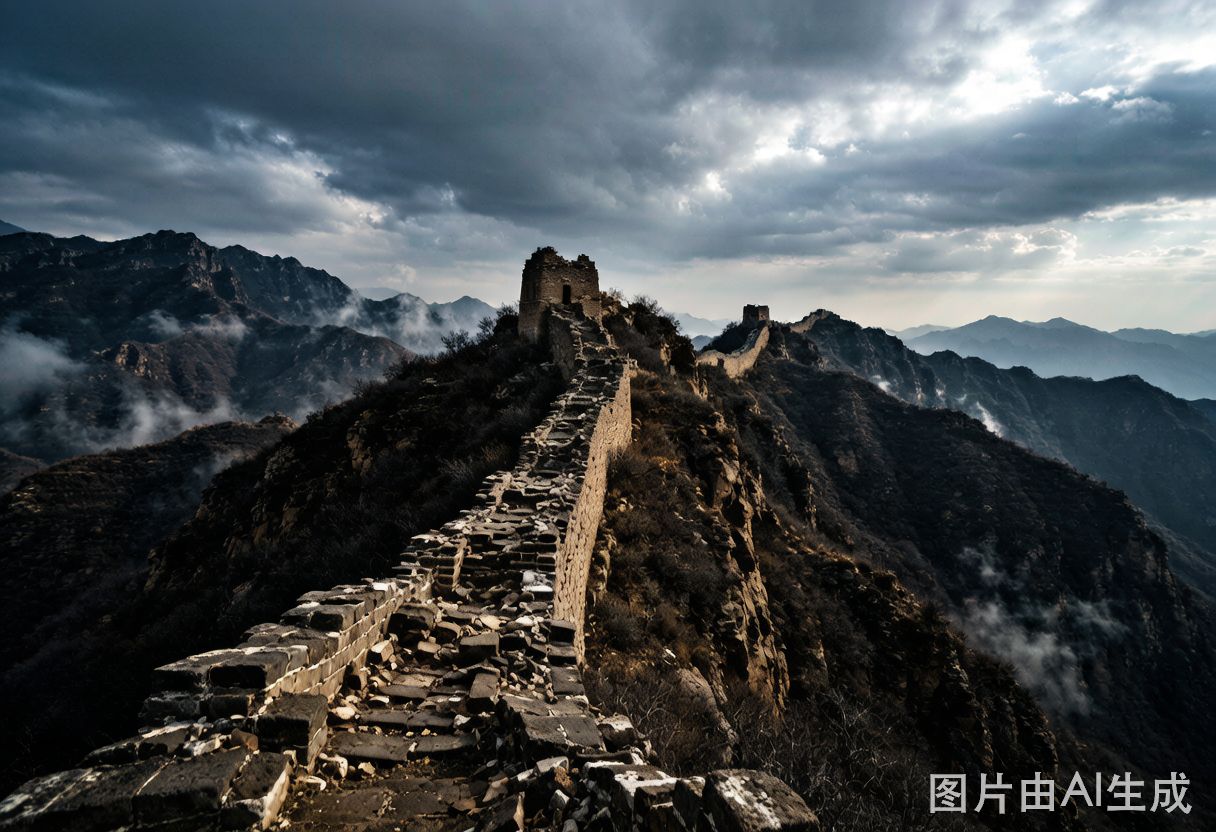
Here the wall is not a flat, paved promenade. It climbs ridges at angles that feel absurd, with towers teetering on exposed peaks and sections where the parapet has crumbled away to leave a narrow, uneven footpath with a sheer drop on one side. The brick is loose underfoot and slick with moss after rain. In places the wall simply ends, and you scramble down a scree slope to rejoin it lower on the ridge.
The famous landmarks along Jiankou each have a name and a reputation:
- Zhengbei Tower (正北楼) — a large, square watchtower sitting on a high spine, the most popular photo subject and a natural turning point.
- The Nine-Eyes Tower (九眼楼) — a rare multi-opening tower at the western end, said to have the most windows of any on the Wall.
- The “Sky Stairs” (天梯) — a near-vertical stretch of wall so steep that you are essentially climbing it on all fours.
- The Eagle Flies Facing Upward (鹰飞倒仰) — a notorious downward traverse where even eagles, locals say, must fly belly-up to get through. I have done it; I do not recommend it to anyone without a head for heights.
- Beijing Knot (北京结) — where two branches of the Wall meet, a common through-hike junction to Mutianyu.
This is a scramble, not a walk, and depending on your route, a serious climb.
Getting There from Beijing
Jiankou has no public transport to the trailhead and no official entrance — you get close, then walk or hire a local the rest. Here is the route I use:
- Get to Huairou. From Beijing, take the 916 express bus from Dongzhimen to Huairou District (about 1–1.5 hours).
- Transfer to a local driver. In Huairou, hire a car or motorcycle taxi (local drivers congregate near the bus station) to your chosen trailhead village — most use Xizhazi Village (西栅子村), sitting right at the base of the wall with a few guesthouses and guides.
- Walk in. From Xizhazi it is a 30–60 minute uphill walk to the wall, depending on which tower you aim for.
The simplest plan is to stay overnight in Xizhazi, start early, and hike the wall and return, or arrange a Mutianyu through-hike (a long day) with a pre-booked pickup. My Beijing 3-Day Itinerary shows how to slot a Wall day in without rushing the city.
A practical note on cost: there is no ticket for Jiankou, but some villagers charge a small guiding fee (typically 20–50 RMB, negotiable), and transport to and from Huairou is where most of your money goes. Budget for a driver both ways, because mobile signal is patchy and you cannot easily summon a ride when you come down.
The Hike Itself
I usually start from Xizhazi and climb to Zhengbei Tower first, because it is the most achievable objective and gives you the signature view west toward the Nine-Eyes Tower and east toward Beijing Knot. From the village the climb is steep but short — about 40 minutes — and then the wall opens up.
Walking east from Zhengbei toward Beijing Knot is the prettiest stretch but also the most exposed — a brutally undulating ridge where the wind pushes you sideways and the “Sky Stairs” climbs so steeply I counted my footsteps to avoid thinking about the drop.
Most day-hikers turn around at Beijing Knot or Zhengbei and return the way they came. The through-hike to Mutianyu is for fit, experienced people with a full day and a pre-arranged exit — it adds several hours of ridge walking and a restored, easy descent at the end. I have done it once; I would not do it solo.
Why Photographers Love It
Ask any Great Wall photographer in Beijing where they shoot, and Jiankou comes up first. The reasons are obvious the moment the clouds lift:
- Untamed silhouettes. Broken, leaning towers against folded green ridges photograph like nowhere else on the Wall.
- Sunrise and sunset light. Because the wall runs east–west, you get long golden light raking across the brick in the early morning and late evening.
- Fog and snow. After rain or in winter, sea-of-clouds effects roll through the valleys, turning the towers into islands. Some of my favorite shots were taken in February after a light snow.
If you want to time and position your shoot well, my guide to the Best Photo Spots for Great Wall Sunrise breaks down where to stand and when the light hits. Bring a tripod and fully charged batteries — cold drains them fast.
Safety Warnings — Read This Twice
I am not exaggerating: Jiankou has injured and killed visitors. It is officially closed to tourism in the sense that it is unrestored and unmanaged, with no rescue infrastructure on the wall. Before you go, internalize these:
- No railings, no repairs. The wall is falling apart; loose bricks shift under your weight, and a misstep near the unguarded edge is a long fall.
- Weather turns fast. The Yan Mountains generate sudden wind, rain, and low cloud. I have been caught in a whiteout on Beijing Knot where I could not see the next tower 50 meters away. Turn back if visibility drops.
- Wear proper footwear. Trail runners or light hiking boots with grip. Sneakers slide; flip-flops are a hospital visit waiting to happen.
- Go with a group or a local guide. Villagers in Xizhazi know which sections are safe and which have collapsed since last season. A guide costs little and is worth every yuan.
- Tell someone your route and ETA. Signal is unreliable; do not rely on your phone to call for help.
- Avoid the “Eagle Flies Facing Upward” traverse unless you are genuinely experienced and roped. Several serious accidents have happened there.
- Get travel insurance that covers hiking. I cover this in China Travel Safety Tips and in my insurance guide — do not skip it for an activity like this.
If you are with kids, older parents, or anyone unsure on their feet, Jiankou is the wrong Wall — send them to Mutianyu and meet for duck afterwards.
Best Season to Visit
Timing makes or breaks a Jiankou trip. Here is my season ranking:
- Autumn (late September–early November) is the best: cool, dry, clear skies, and the ridges turn gold and red. Visibility for photography is superb.
- Spring (April–May) is good but windy; the new green is lovely and crowds are thin.
- Winter (December–February) is stunning after snow but brutally cold on an exposed ridge, with ice making the brick treacherous. Only for well-equipped, experienced hikers.
- Summer (June–August) is the one I avoid: heat, humidity, sudden thunderstorms, and dense vegetation hiding loose footing and snakes.
Whatever season you pick, check the forecast that morning and aim for a clear, calm day. For city-wide timing, see Best Time to Visit Beijing.
Practical Tips Before You Go
A few things I wish every first-timer knew:
- Start early. Be on the wall by 8–9 am for daylight margin on the descent and to beat afternoon weather.
- Pack light but smart: 1.5–2 liters of water, snacks, a rain shell, sun protection, a basic first-aid kit, and that headlamp.
- Download offline maps. Gaode (Amap) works reasonably here; screenshot your route.
- Leave the wall cleaner than you found it. There is no cleanup crew. Carry out what you carry in.
- Manage expectations. This is not a “see the Wall in an hour” stop. It is a half-to-full-day commitment with real physical demand.
If you want the easiest possible Wall experience with transport handled, my Great Wall Beijing Day Trip guide covers the low-effort options — useful to read so you know exactly what you trade away by choosing Jiankou.
Where Jiankou Fits in Your Beijing Trip
Jiankou works best as a dedicated day (or overnight) carved out of a longer Beijing stay, not as a quick add-on between the Forbidden City and dinner. Pair it with a relaxed city day on either side, because your legs will want the rest.
For official background on the Wall’s history and UNESCO status, the UNESCO Great Wall of China page is my go-to reference.
Jiankou is not for everyone, and I say that as someone who loves it. But if you are the kind of traveler who would rather scramble a 600-year-old wall than queue for a cable car, who measures a view by the effort it took to reach it, and who respects the mountain enough to turn back when it says no — then Jiankou will give you the most memorable Great Wall experience within a short drive of Beijing.
Just go prepared, go with someone who knows the ridge, and go home with all your bones intact.