

On a quiet evening in a teahouse in Xi’an, the lights dim and a small screen glows from behind. A general on horseback gallops across it, a monkey king leaps between clouds, and a tiger turns and roars — all made from thin pieces of painted leather held on bamboo sticks centimeters from the cloth. This is Chinese shadow puppetry, a folk art that has told stories in light and shade for more than two thousand years. For travelers it offers something rare: a performance tradition that is intimate, portable and still alive.
Unlike a large stage show, a shadow play happens at close range. You sit on the audience side of the screen while the puppeteers work in a cramped booth behind it. This Chinese shadow puppetry guide will help you find the shows, understand the craft and perhaps make a puppet of your own.
The Origins and Legend of Chinese Shadow Puppetry
Most accounts trace Chinese shadow puppet history to the Han dynasty, about two thousand years ago. A famous legend tells of Emperor Wu and his beloved consort Lady Li: after her death, a court practitioner is said to have cut her likeness from leather and projected its shadow onto a screen, letting the grieving emperor see her once more. Whether literally true or not, the story captures the art’s emotional core — giving absence a visible form.
By the Song dynasty, shadow puppet theatre China had moved from imperial courts into bustling cities. Accounts describe professional troupes, dedicated playhouses and shows that ran from dusk until dawn. The art spread along trade routes, absorbing local dialects and music, and regional schools emerged with distinct figure sizes and repertoires. According to China.org.cn’s culture coverage, Chinese shadow puppetry was inscribed on UNESCO’s Representative List of the Intangible Cultural Heritage of Humanity in 2011.
From Hide to Hero: Crafting the Figures
A finished figure is the product of patience and precise technique. Artisans traditionally use cow or donkey hide, chosen for thickness and translucency, which is soaked, scraped thin and dried until it is stiff enough to carve yet supple enough to move. Good leather is the difference between a silhouette that looks flat and one that seems to breathe.
Designs are drawn first, then cut with small knives in a process that can take days for a single character. Fine chisels pierce patterns — floral scrolls on a robe, scales on a dragon, the texture of armor. These holes are not mere decoration: light passing through them creates the delicate internal lines that give each figure its personality.
Puppets are then painted with transparent dyes in reds, greens, yellows and blacks, applied to the back of the hide so the front stays smooth. Joints at the shoulders, elbows, knees and waist are linked with cord, letting an operator make a figure bow, stride or fight. A single character may have more than a dozen separate pieces, assembled like a tiny flat puzzle.
Behind the Screen: How a Performance Comes Alive
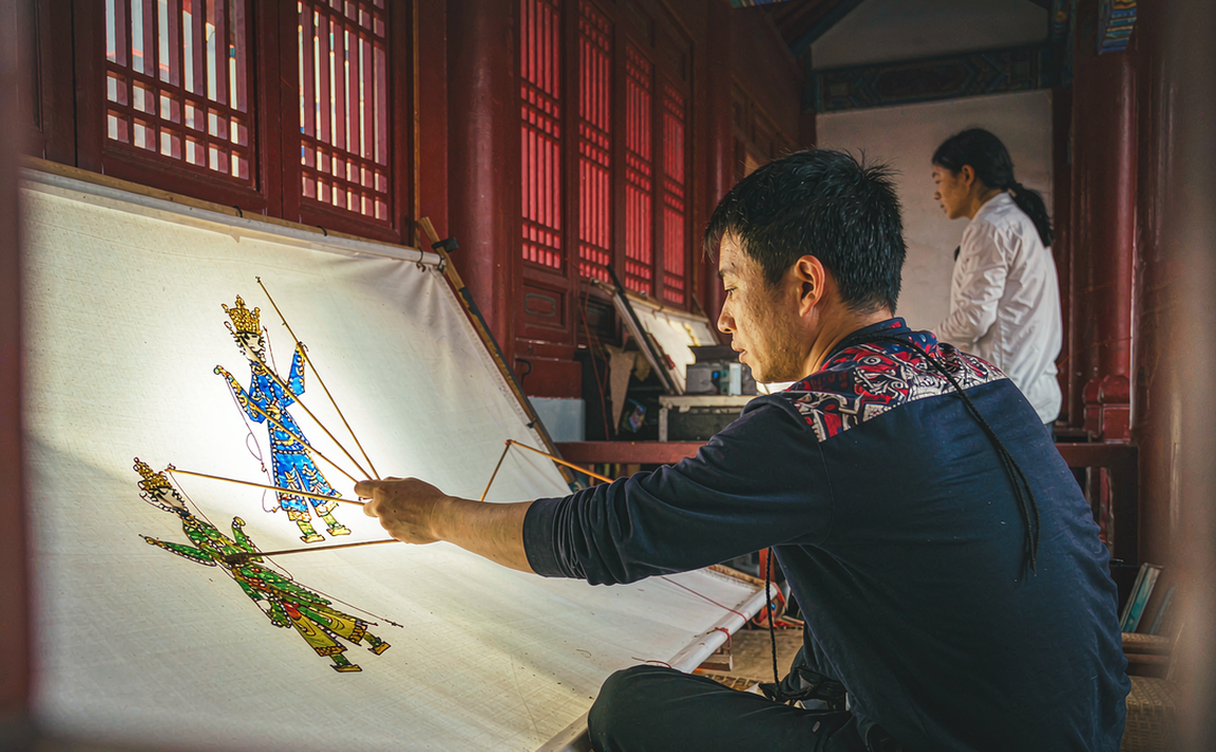
The magic happens in the booth behind the screen. A puppeteer holds each figure by a central rod, with smaller sticks attached to the hands and head; by twisting and tapping these, one performer can make a character walk, gesture or draw a sword. The best operators work several figures at once, so quickly that the audience forgets they are being held at all.
Lighting is deliberately simple. Traditional troupes used an oil lamp or candle, while modern ones favor a small bulb or LED placed low and close to the screen, keeping shadows sharp and slightly larger than life. The puppeteer must press each figure flat against the cloth, because even a small gap blurs the outline.
Sound carries half the drama. A typical ensemble has a small drum, cymbals, a two-stringed fiddle and a bamboo flute, plus a singer who voices every character in a stylized local style. Musician and puppeteer cue each other constantly: a drum roll signals a battle, a flute phrase a moment of longing. If you enjoy the energy of a Beijing opera performance, you will recognize familiar theatrical DNA here, on a far more intimate scale.
Stories on the Screen: Classic Repertoire
The repertoire draws from the same wells as China’s novels and legends, so even first-time viewers can follow along. Episodes from Journey to the West are perennial favorites: the trickster Sun Wukong leaping through clouds, fighting demons and outwitting the cautious monk Tang Sanzang. A puppet duel has real acrobatic flair.
Scenes from Romance of the Three Kingdoms and Water Margin bring generals and outlaws to the screen in elaborate battles staged with dozens of figures. You may also see folk tales about filial children, clever magistrates or star-crossed lovers. Many troupes still perform ritual pieces once believed to ward off misfortune and ensure a good harvest.
Do not worry if you cannot follow every word of the singing. Most venues provide English plot summaries, and the visual storytelling is clear on its own. A puppet army charging across a glowing screen is understandable in any language.
Regional Styles Worth Seeking Out
Chinese shadow puppetry is not one uniform style. Shaanxi, often called the cradle of the art, favors large, bold figures with strong outlines and vigorous carving, telling stories of heroes and emperors to high-pitched local Qinqiang singing.
Further west, Gansu and Qinghai preserve older, more austere forms, sometimes staged in temple grounds during harvest celebrations. Tangshan in Hebei developed a delicate style with smaller, finely carved figures and softer northern melodies, once popular in old Beijing teahouses. Sichuan and Chongqing plays lean toward humor and everyday comic scenes. To trace these differences, plan a museum route through provincial capitals before seeing a live show.
Where to Watch Shadow Puppetry in China
Knowing where to watch shadow puppetry in China makes the difference between a frustrating search and a memorable evening. Dedicated theatres are easiest. Xi’an has several long-running venues in its tourist districts, some with nightly shows and English plot summaries. Beijing, Chengdu and Shanghai also host regular performances in cultural centers or historic teahouses, and some districts pair them with Chinese acrobatics on one ticket.
Museums are a good entry point too. Many provincial museums display historic puppets, carving tools and old scripts, and several run weekend demonstrations — ideal for understanding the craft before a full performance.
Festivals raise the odds of impromptu shows. During Spring Festival and the Lantern Festival, troupes set up temporary screens in parks, temple fairs and village squares; if your trip overlaps one of the country’s major traditional festivals, check local listings. Rural troupes in Shaanxi and Gansu also perform at weddings and fairs, usually free, though you should ask before photographing.
Hands-On: Shadow Puppetry Workshops in China
For a deeper experience, shadow puppetry workshops China now operate in several tourist-friendly cities. Xi’an and Beijing lead the way, with studios offering two-hour sessions in which you carve a simple figure, paint it and manipulate it behind a small screen. No artistic background is needed, and most provide materials and an English-speaking instructor.
Expect a simplified puppet, often a single character or an animal such as a tiger. Instructors pre-cut the trickiest pieces, so the carving stage is manageable, and you will learn why the figures are jointed as they are and how much coordination a simple gesture requires.
Workshops pair naturally with other crafts: many travelers combine a session with a Chinese calligraphy class, since both reward patience and a steady hand. If you like learning by doing, this is the best way to move from spectator to participant.
Chinese Shadow Puppetry vs Wayang: What’s the Difference?
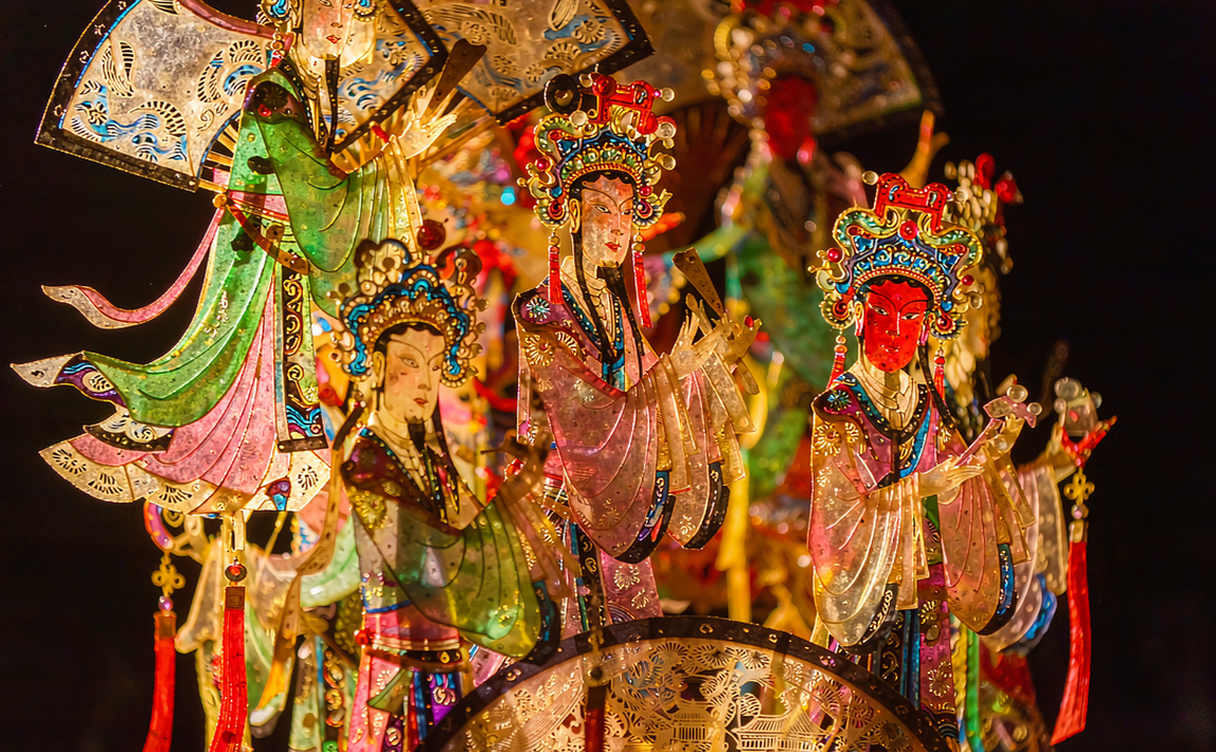
Travelers who have seen Indonesian wayang kulit often ask how the two compare. Chinese shadow puppetry vs wayang discussions usually start with the figures: Chinese puppets are smaller, more colorful and cut from thinner, more translucent leather, while Javanese wayang figures are larger, mostly unpainted and carved with fine, lacy detail.
The traditions differ too. Wayang uses a gamelan orchestra and Hindu epics such as the Ramayana, whereas Chinese shadow theatre draws on Chinese novels, folk tales and local opera music. Both use a screen and a light source, but the stories and musical language are distinct — seeing both on one trip shows how one idea was shaped by two cultures.
Frequently Asked Questions
Is Chinese shadow puppetry still performed today?
Yes. Professional troupes, museum programs and festival shows keep it active, and a new generation of artisans teaches the craft in workshops and schools.
What should I expect from a shadow puppet theatre China performance?
A show of roughly 30 to 60 minutes in a small venue with a white screen, live music and singing in a local dialect. English summaries are increasingly common at major venues, but read the synopsis first.
Where to watch shadow puppetry in China on a tight schedule?
Xi’an is the most reliable city, with several nightly venues in the center. With only one evening, pick a theatre advertising English-friendly shows and book ahead.
Are shadow puppetry workshops China suitable for children?
Absolutely. Most studios welcome families and offer simplified cutting and painting for younger participants, though an adult should stay close during carving.
How long does a typical workshop take?
Most introductory sessions run 90 minutes to two hours, including a short performance using the puppets you have made.
Final Thoughts
Chinese shadow puppetry rewards the traveler who slows down. It is an art of small gestures — a flick of the wrist, a sliver of light through a carved robe, a singer’s sudden rise in volume — yet behind them lie two millennia of storytelling and regional pride.
Whether you catch a show in Xi’an, a museum demonstration in Chengdu or a carver in a village studio, you are witnessing a tradition that survives by adapting. Bring curiosity, read the plot summary and let the shadows do the rest.