

This China calligraphy experience guide is for anyone who has stood in a temple hall, looked at a scroll of black characters breathing across white silk, and thought: I want to try that. A China calligraphy experience is one of the most quietly profound things you can do on a trip here, because it hands you a brush, slows your breathing, and connects you, stroke by stroke, to a written tradition older than any European language you speak. I have taken classes in Beijing, Hangzhou and a small village outside Xi’an, and each one rearranged how I look at Chinese characters forever.
If you are hunting for the best calligraphy experience China offers a visitor, the good news is that it is bookable, affordable and welcoming to absolute beginners who cannot read a single character.
Where to learn calligraphy in China
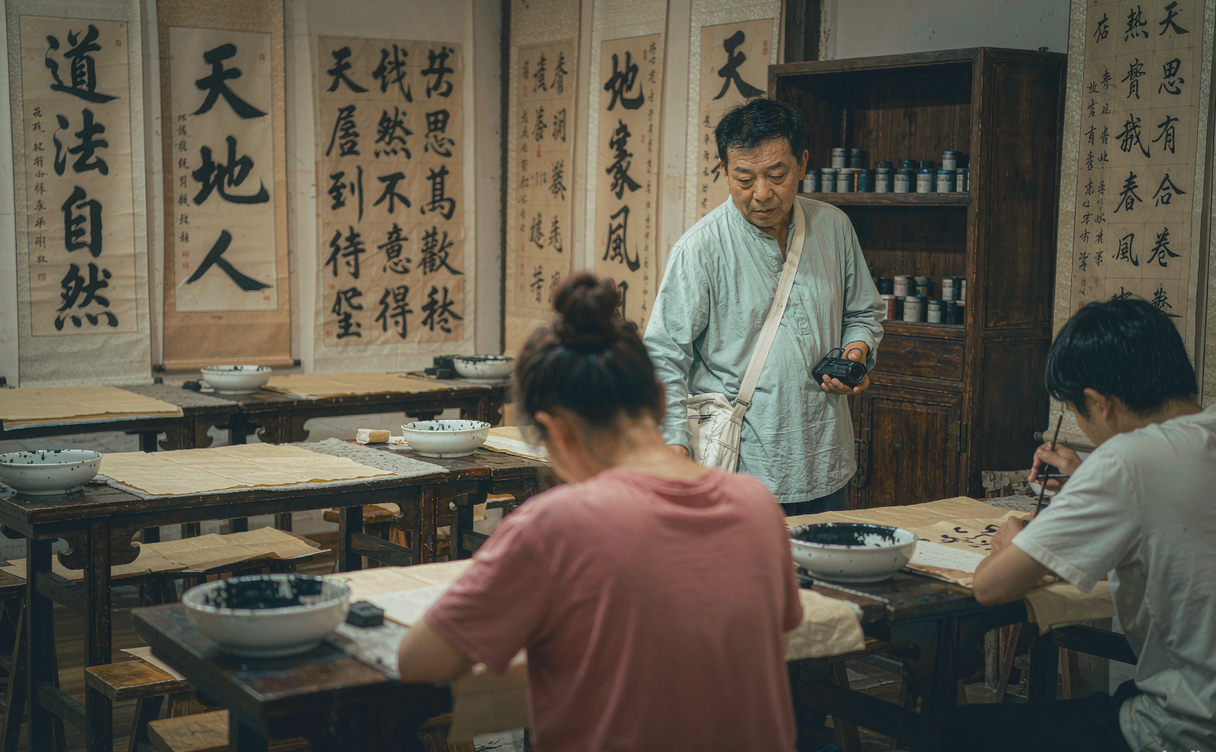
The classic entry point is a calligraphy workshop Beijing style: a studio tucked into a hutong where a teacher hands you a wolf-hair brush, a stone inkstone, and a sheet of rice paper, then walks you through the eight basic strokes of the character “yong” — the traditional first lesson. A two-hour beginner class in such a studio runs 150–350 yuan including materials, and you leave with your own rolled-up work. The teachers I met near the Lama Temple and in the Fangjia hutong were patient with my trembling wrist and delighted by my terrible first strokes.
Outside the capital, Hangzhou’s tea-mountain villages and Suzhou’s scholar courtyards offer calligraphy alongside other arts, often in gorgeously atmospheric rooms. For a different flavor, Xi’an and Luoyang blend calligraphy with stone-stele rubbing — you ink a centuries-old carved inscription and pull a paper impression, which feels like time travel. Our China culture travel overview (part of the slow-travel series) explains how to build a trip around such craft days rather than museum dashes.
What actually happens in a class
A Chinese calligraphy class China visitors take usually opens with sitting correctly: upright, relaxed, brush held vertically between thumb and two fingers. Then comes the ink — you grind a stick against the stone with a little water, a meditative ninety seconds that centers you before a stroke is made. The teacher demonstrates the fundamental strokes, and you copy them endlessly on newsprint, because control of the brush, not pretty characters, is the first goal.
The leap that surprised me: when you finally write a real character, the difference between a wooden “printed” look and a living one is entirely in the pressure and speed of your wrist. A good teacher will correct your grip five times in an hour, and that repetition is the point. I left my first class able to write maybe three characters worth keeping, but I could feel why the art demands a lifetime.
Best calligraphy experience China: picking the right format
There are roughly three formats, and knowing them helps you choose. The cheapest is the drop-in studio class, great for a taste. The middle tier is a half-day workshop bundled with tea or seal-carving, usually 300–600 yuan, which I recommend because the extra context sticks. The top tier is a multi-day retreat, sometimes at a temple or academy, where you practice two hours daily and actually produce a hanging scroll — these run 1,500–4,000 yuan with lodging and are the best calligraphy experience China can give a serious beginner. If you are still deciding where to learn calligraphy China as a first-timer, my advice is to start with a single drop-in class in Beijing or Hangzhou and scale up only if the brush grabs you.
If you want the artistic company of other traditional arts, calligraphy pairs naturally with tea ceremony and tai chi. Our China tea tour guide and China kung fu tai chi guide describe complementary workshops you can stack into a single cultural week, and the China cooking class guide adds a hands-on food day for balance.
Calligraphy as a China cultural class
Framed more broadly, a calligraphy session is the ideal China cultural class because it requires no language. Your teacher may speak little English, but the brush, the grid paper and the repeated demonstration communicate everything. Some of my favorite travel memories are wordless: a Beijing master nodding at my improved “yong,” a Hangzhou grandmother laughing at my smudged characters, the shared satisfaction of a clean vertical stroke.
For a calmer, more residential version, a few temple and academy stays weave calligraphy into morning routines alongside meditation and chanting. The China temple stay guide covers these, and they suit travelers who want the discipline without the city noise. I spent two nights at one such place and wrote the same character two hundred times; by the end it looked like a different person’s hand.
Why it matters: the art behind the characters
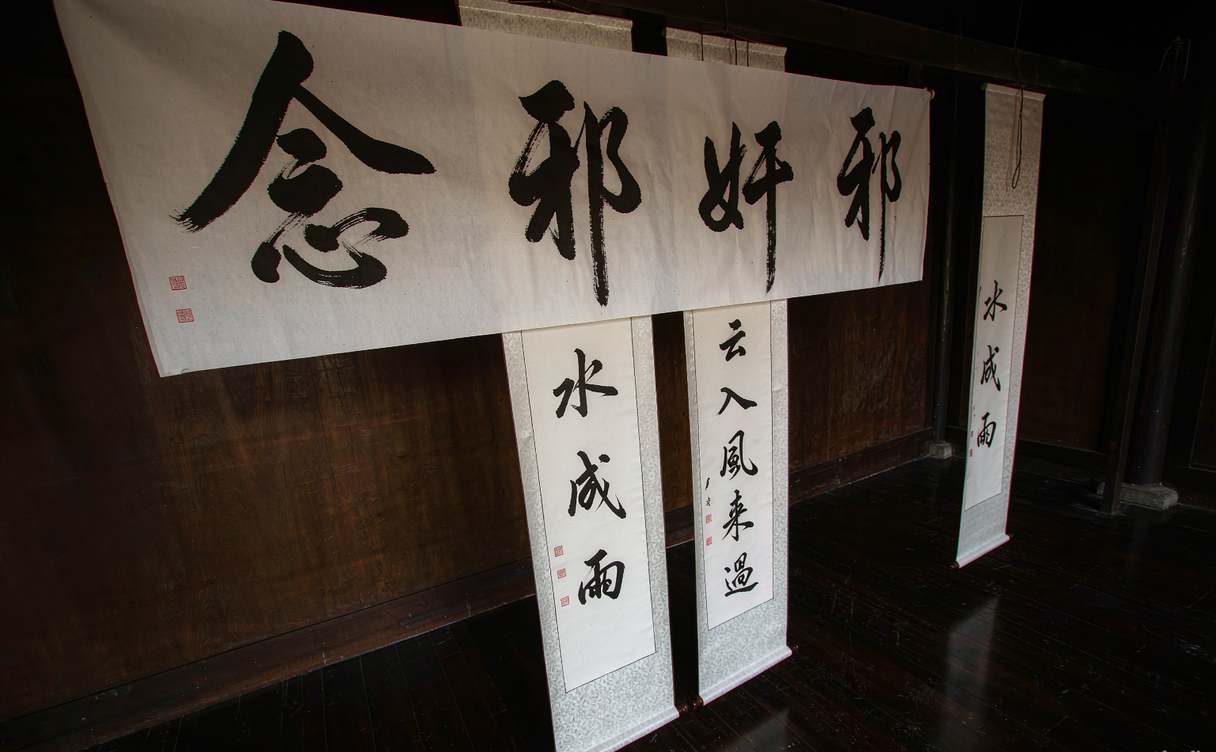
It helps to know what you are practicing. Chinese calligraphy is not decoration but a high art form — a way of writing that prizes rhythm, balance and the trace of the moving brush as much as the meaning of the words. It has shaped East Asian aesthetics for two thousand years and is still taught to children alongside math. For a clear, well-sourced introduction to its history and the main script styles (seal, clerical, regular, running, cursive), the Chinese calligraphy entry on Wikipedia is an excellent primer before you pick up a brush.
Practical tips for your first brush
A few things I learned so you don’t repeat my mistakes. Wear clothes you don’t mind getting ink on — splatter happens. Book weekday mornings when studios are quiet and teachers have time; weekend tourist slots are rushed. Ask whether materials are included, because some cheap listings charge extra for paper and ink. And resist the urge to rush to complicated characters; the masters insist the eight strokes of “yong” contain everything, and they are right.
Photography is usually welcomed, but ask before filming the teacher — some prefer the moment to stay private. If you fall in love with it, a travel brush-and-ink set costs 40–120 yuan at any stationery shop and flies home easily, so you can keep practicing on the kitchen table. I still grind ink most Sunday mornings, two years after my first Beijing class.
Bringing the experience home
The souvenir from a calligraphy day beats any trinket: your own scroll, smudges and all, rolled in a bamboo tube. Several studios will mount and box a piece for shipping if you ask. I gave my first “yong” to my niece and kept the second; both remind me that travel’s best lessons are the ones your hands learn.
If you want to go deeper, the China ethnic minorities travel guide shows how minority regions preserve their own scripts and painting traditions, a fascinating counterpoint to Han calligraphy and a worthwhile add-on if your trip reaches the southwest.
Calligraphy is the rare travel experience that gets better after you leave — the muscle memory stays in your wrist, and every Chinese sign you pass becomes a little more legible, a little more alive. Whether you take one two-hour class or a week-long retreat, a China calligraphy experience will slow you down in exactly the way a good trip should. Pick up the brush; the worst that happens is a smudged sheet, and the best is a new way of seeing.