

Most first-time visitors to mainland China treat the country like a checklist: Beijing for the wall, Xi’an for the warriors, Shanghai for the skyline, then home. It works, but it misses the point. This China slow travel guide is for the traveler who would rather spend a week in one place than a day in five. Slow travel China is not a niche; it is the most natural way to see a country this large and this old.
What Slow Travel Means Here
Slow travel is less about speed and more about depth. It means renting a room in a village for a fortnight instead of photographing it for an hour. It means learning the name of the noodle stall and the rhythm of the morning market. The reward is that China, which can feel overwhelming at a sprint, becomes legible when you let it settle. You start to notice that the same gesture means different things in different provinces, and that the “China” of the coast is not the “China” of the interior.
A long stay China travel plan also saves money and nerves. Constant packing, station-hopping, and hotel check-ins are tiring and expensive; staying put lets your daily costs drop while your understanding rises. Our China budget travel guide breaks down how staying longer in fewer places actually lowers your daily spend.
Pick a Base, Not a List
The first move is choosing one or two bases and treating everything else as a day trip. Dali, in Yunnan, is perfect: a old town beside a lake with mountains behind it, cheap long-term rentals, and easy trains to Lijiang and Kunming. Guilin and its neighbor Yangshuo let you wake up to karst peaks and paddle a river before breakfast. Even a megacity works — Chengdu rewards a slow week of teahouses, hotpot, and panda mornings far better than a rushed two days.
The art of travel deeply China is saying no to the next destination. Resist the urge to “add one more city.” The China solo travel guide has notes on traveling alone that apply just as well to couples and friends who want room to breathe.
Why the Countryside Changes Everything
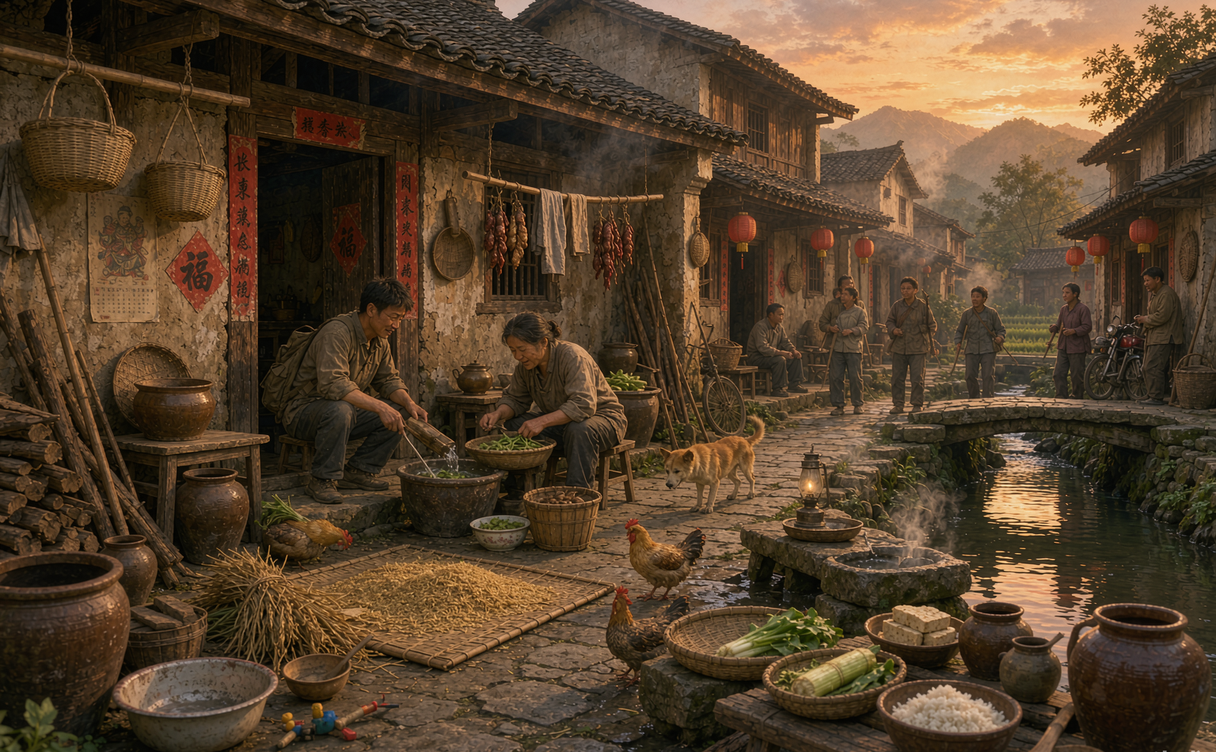
China rural slow travel is where the concept pays off most. In a village in Guizhou or Anhui you are not a face in a queue; you are the foreigner who buys vegetables at the same stall each morning, and within days you are invited to weddings, funerals, and harvest dinners. These are the moments no guidebook sells. The catch is infrastructure: rural buses run on schedules that reward patience, and a scooter or a local driver becomes your best friend.
For places worth settling into, the China homestay guide lists family-run stays where the host becomes part of the experience rather than a transaction. A good homestay turns a stay into a conversation.
Getting Around Without the Rush
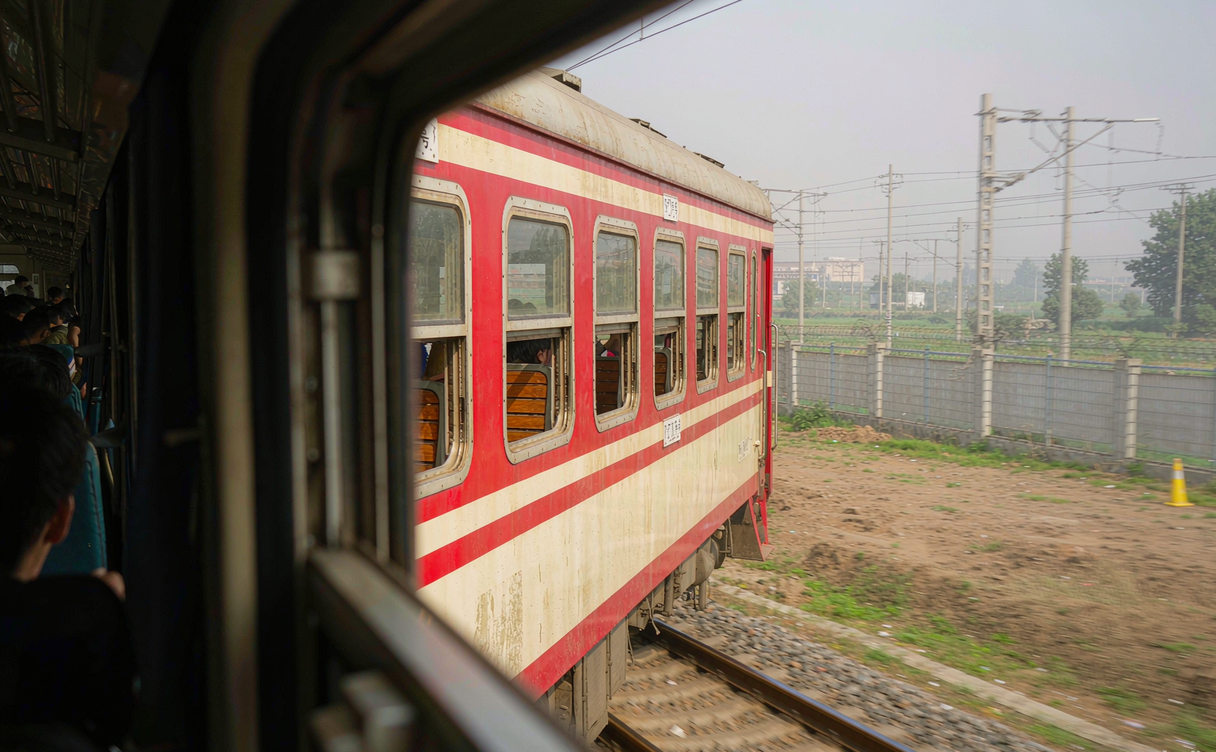
High-speed rail makes slow travel oddly efficient: you can base in one city and still reach a different landscape for a day. But the slower trains — the green ones that stop at every county — are themselves an activity, a moving window onto ordinary life. Our China train vs flight guide helps you decide when speed helps and when it hurries you past the good part.
Off the Beaten Path, Gently
You do not need to hike into wilderness to escape the crowds. Plenty of China slow tourism happens in mid-sized cities most foreigners skip: Quanzhou on the coast, Kashgar in Xinjiang, China’s far west for Silk Road atmosphere, or the river towns of Jiangsu. The China off-the-beaten-path guide maps these quieter corners, many of which have excellent budgets and almost no other tourists in the low season.
Sleeping Under the Stars
For the truly unhurried, the China glamping and camping guide covers where you can sleep outside without sacrificing comfort. A night in a tent beside a Qinghai lake or a Gansu desert camp slows your pulse in a way no hotel achieves. Just confirm permits and seasons, as some protected areas restrict camping.
The UNESCO Angle
Many of China’s best slow-travel bases sit near UNESCO World Heritage sites, from the old towns of the south to the cultural landscapes of the west. Basing near one lets you visit at opening and closing, when the tour buses are gone and the place belongs to residents again — the defining slow-travel trick.
Slow travel also changes how you eat. Instead of hunting famous restaurants, you eat wherever the locals queue, day after day, until the cook remembers your order. That repetition is the whole point; the goal is not to have eaten well once but to have belonged somewhere briefly.
Practical Limits to Plan Around
Visas are the main constraint on a long stay. Most visitors enter on a short tourist visa or visa-free transit, which caps your time. If you want months, research the longer options before you fly, because extending on the ground is harder than it looks. Wi-Fi, laundry, and a local SIM all become daily concerns when you stop moving — all covered in our slower-living guides.
The travelers who return to China are usually the slow ones. They came for the wall and left thinking about a grandmother in a village who taught them to fold dumplings, or a teahouse where an afternoon dissolved without a plan. That is the trade: you see less, and you understand more.
Making It Work at Home
Before you leave, build slack into the itinerary — literally block days with nothing scheduled. Tell yourself the empty days are the itinerary. Learn a dozen phrases, download offline maps of your base, and tell your bank you will be stationary in one region. The less you “do,” the more China gives back.
Learning the Local Pace
The single habit that separates a slow traveler from a tourist is the willingness to repeat. Eat at the same noodle shop three days running and the owner starts saving you the good seat. Walk the same riverside path at the same hour and you learn which bench catches the evening light. China rewards this repetition because the country is dense with unspoken routines — exercise groups at dawn, chess under the bridge, the evening scooter migration home — that only reveal themselves to someone present long enough to see them twice.
Language as a Slow-Travel Tool
You do not need fluency, but ten minutes a day with a phrasebook transforms a long stay. Ordering in Mandarin, even badly, turns a transaction into a small social event, and locals in slower towns especially appreciate the effort. Write down the characters for your base, your allergies, and “I am staying nearby for a while” — the last one changes how people treat you, from passing customer to temporary neighbor. A translation app on your phone helps with on-the-spot meaning when your memory fails.
When Slow Travel Does Not Work
Be honest about its limits. China’s scale means a single base cannot show you the country; you will miss the dunes, the peaks, the north. Slow travel trades breadth for depth, and that is a real cost, not a poetic one. The fix is to plan two or three long bases across a longer trip rather than one, letting the train do the connecting while you stay put at each end. A month split between Yunnan and the Yangtze delta teaches more than a frantic two weeks touching eight provinces.
Slow travel in China is not a style so much as a permission slip: to stop performing the trip and start living it. Give a place two weeks and it will hand you a version of itself that the one-day visitor never meets.