Hainan is China’s southernmost province and its only tropical island, where the South China Sea meets palm-lined beaches, misty interior mountains, and some of the most distinctive cooking in the country. For travelers who think Chinese food begins and ends with the northern wheat belt or the Cantonese dim sum table, a trip to Hainan is a gentle surprise. The island’s cooking is lighter, sweeter, and more coconut-forward than almost anywhere else in mainland China, built around what the sea and the warm land provide every day. If you are planning a broader trip, our China travel guide for first-timers is a good place to start mapping the rest of the country around your island stop.
What Is Hainan Cuisine?
Hainan cuisine is the collective name for the cooking of Hainan island, and it sits apart from the better-known regional styles of the mainland. Where Sichuan numbs, Hunan burns, and northern roasts lean heavy, Hainan cuisine prizes freshness, subtlety, and the natural flavor of the ingredient. The island’s climate makes this possible: year-round warmth means vegetables, herbs, and fruit grow in constant rotation, while a coastline that wraps the entire province puts fish, crab, shrimp, and shellfish on the table within hours of the catch.
The result is a style of cooking that rarely hides behind chili oil or heavy sauces. A typical Hainan meal balances a simply poached protein, a coconut-infused broth or rice, a plate of stir-fried greens, and something sour or pickled to cut the richness. Coconut, ginger, scallion, and a light soy dipping sauce do most of the flavor work. For context on how this fits into the national picture, our guide to Chinese food: the eight great cuisines explains where island cooking sits alongside the classic regional families.
What Is Hainanese Chicken Rice?
Ask anyone outside China what Hainan food means to them and the answer is almost always the same: Hainanese chicken rice. This is the dish that traveled. In the late nineteenth and early twentieth centuries, Hainanese migrants carried the recipe across the strait to Southeast Asia, where it became a national obsession in Singapore and Malaysia and a street-food staple from Bangkok to Penang. The version that came home to Hainan, however, is the original and in many ways the purest.
At its core, Hainanese chicken rice is poached chicken served with seasoned rice cooked in the chicken broth and fat, plus a trio of dips: ginger-scallion paste, a dark soy sauce, and a chili-lime sauce. The chicken is never boiled hard; it is lowered into gently simmering water, rested, and chilled so the skin stays silky and the meat stays tender. The rice is the quiet star. Cooked in the reserved stock with crushed garlic and aromatics, it picks up a savory depth that turns a side dish into the reason people order a second plate. In Hainan itself, the dish is often eaten at room temperature, and it is the benchmark by which a local cook is judged.
Wenchang Chicken
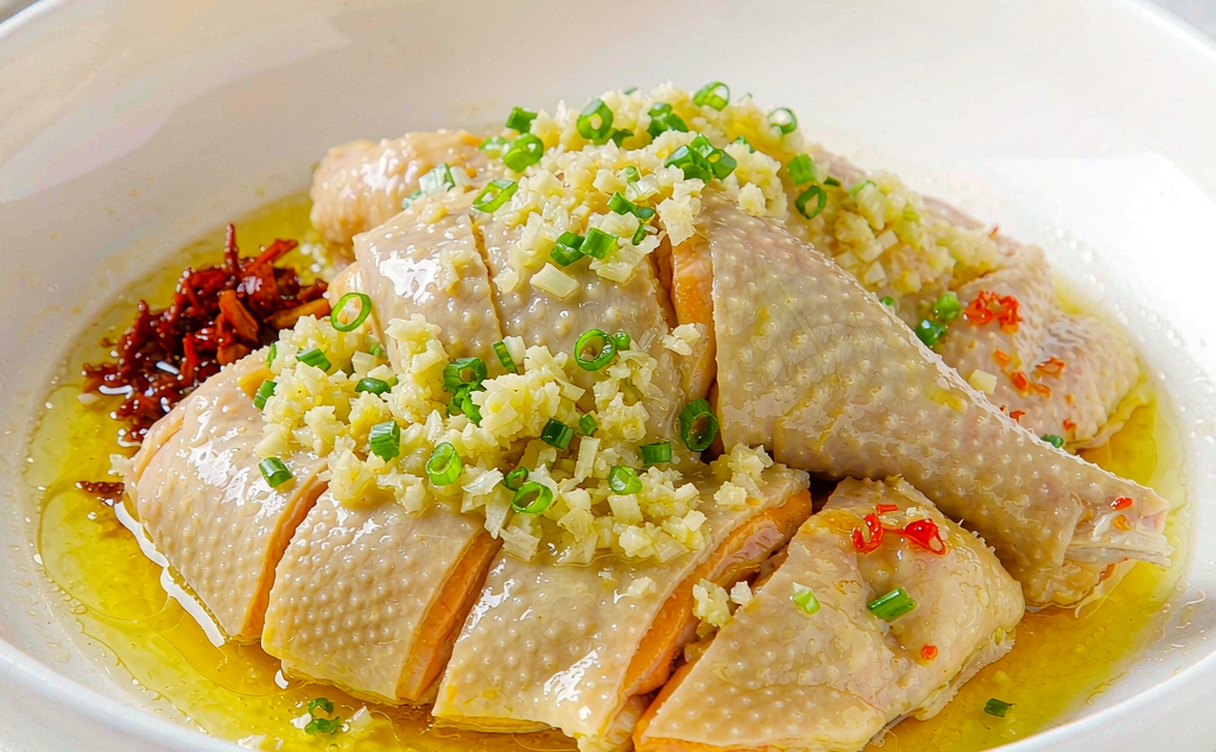
If Hainanese chicken rice is the ambassador, Wenchang chicken is the king at home. Named for the town of Wenchang on the island’s northeast coast, this is a specific breed of free-range bird prized for its thin skin, firm texture, and clean flavor. The birds are often raised on a diet of coconut flesh and rice, which local cooks swear gives the meat its sweet finish.
The classic preparation is white-cut, or “baitang,” meaning the chicken is poached whole and served in pieces with nothing more than a bowl of ginger-scallion oil and a little salt. No glaze, no stir-fry, no disguise. The point is to taste the bird. A well-made Wenchang chicken has a faint yellow cast to the skin and a layer of jelly-like fat beneath it that melts at body temperature. Travelers who only know fried or braised chicken will be surprised by how much flavor a plain poach can carry. This is the dish to seek out first when you land.
Hainan Seafood
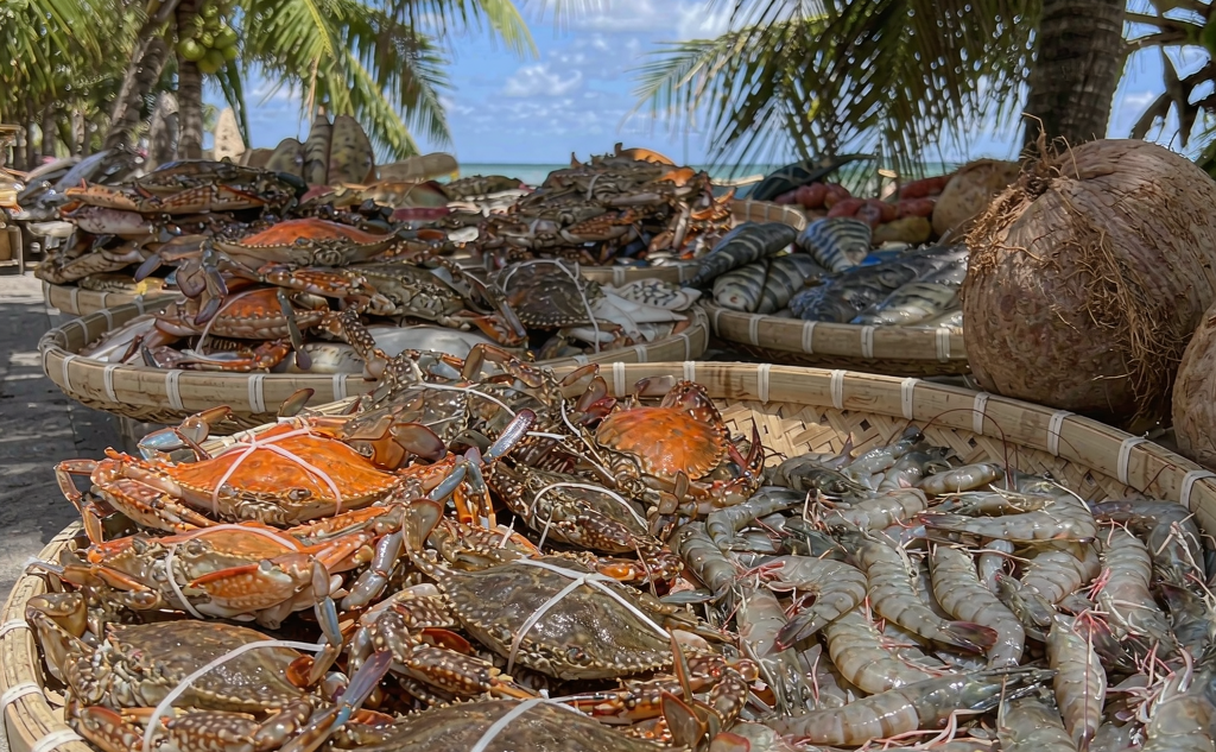
It would be impossible to talk about Hainan food without devoting real attention to Hainan seafood. The island is surrounded by warm, nutrient-rich water, and the local fishing culture is old and serious. In the evening, coastal towns from Haikou to Sanya fill with open-air seafood stalls where you point at the tank and the cook tells you how he will prepare it.
Two ingredients deserve special mention. The first is Hele crab, a hairy crab from the waters near the town of Hele in the south. Smaller and sweeter than many mainland crabs, it is steamed simply and eaten with a little vinegar and ginger, the meat prized for its delicate texture. The second is the island’s endless supply of pink shrimp, grouper, mackerel, and squid, most prepared with a minimum of intervention: steamed with garlic, lightly braised in a clay pot, or stir-fried with fermented black beans. If you want the full picture of what the sea provides here, our best things to do in China guide touches on coastal regions worth combining with an island visit.
Coconut-Based Dishes and Tropical Fruits
Coconut is the ingredient that most clearly separates Hainan cooking from the mainland. The island grows coconut palms in profusion, and cooks use every part of the fruit. Coconut water becomes a poaching liquid for chicken and fish. Coconut milk enriches curries and rice puddings. Grated fresh coconut folds into steamed cakes and sweet soups. One of the most comforting dishes on the island is coconut chicken hotpot, where a clear coconut-water broth is brought to the table with slices of free-range chicken, corn, and fresh mushrooms, then cooked at the table.
The fruit situation is just as good. Hainan is China’s mango capital, and from spring through summer the markets overflow with varieties that rarely reach the north fresh. Pineapple, papaya, dragon fruit, rambutan, and small sweet pineapples grow across the interior. A common street snack is fresh-cut fruit with a dusting of chili-salt, a sweet-savory combination that sounds strange and tastes addictive. Travelers who enjoy a slow afternoon with a drink should also see our China tea house guide for where to pair local teas with tropical desserts.
Dongshan Lamb and Island Specialties
Not everything on Hainan is from the sea. Dongshan lamb, raised on the hills near the town of Dongshan, is the island’s answer to northern roast meat. The animals graze on shrubland and wild herbs, which gives the meat a lean, slightly gamey character that local cooks handle with confidence. The most famous version is a braise with fermented tofu, ginger, and a touch of liquor, served bubbling in a clay pot. Eaten with rice after a day on the beach, it is rich without being heavy.
Other island specialties worth hunting down include Hainan noodles, a breakfast bowl of thin wheat noodles in a pork-and-seafood broth topped with peanuts and pickles, and various stuffed vegetables filled with a seasoned pork and shrimp paste. The province also makes a fragrant rice wine and a range of preserved fruits that make easy souvenirs. For travelers deciding when to visit for the best produce, our best time to visit China overview covers seasonal timing across regions.
Where to Eat: Haikou and Sanya
The two cities every visitor uses as bases are Haikou, the provincial capital on the north coast, and Sanya, the resort city in the far south. Haikou is the better place to eat like a local. Its old town and night markets are full of small restaurants serving Wenchang chicken, Hainan noodles, and cheap seafood at honest prices. The Qilou historic district is a good evening wander, with colonial arcades turned into food streets.
Sanya is more tourist-oriented, with upscale resorts and beachfront restaurants, but it is also where the seafood is at its freshest thanks to the deep-water docks nearby. The First Market area lets you buy live seafood and have a nearby stall cook it for a small fee, the most reliable way to guarantee both quality and value. Between the two cities, the east coast road passes through Wenchang, where the signature dishes are at their source. If you are building a multi-city itinerary, our Beijing first-time travel guide helps plan the northern leg of a longer China trip.
How Hainan Cuisine Differs From Cantonese
Because Hainan sits just across the strait from Guangdong, many visitors assume the food is simply Cantonese with a beach. There is overlap: both styles value freshness and light cooking, and both use ginger, scallion, and soy with restraint. But the differences are real. Cantonese cooking still leans on roasting, double-boiling, and a wide repertoire of dim sum, while Hainan cooking is more rustic and coconut-dependent, with a stronger pull toward the sea and the tropics.
Where a Cantonese cook might braise a chicken in soy until it is mahogany and glossy, a Hainan cook poaches it pale and serves it cool. Where Cantonese desserts lean on red bean and lotus seed, Hainan turns to coconut and tropical fruit. And where Cantonese food spreads across a huge diaspora with endless variation, Hainan food stays stubbornly local, which is exactly why it feels so distinct once you taste it on the island. For travelers who enjoyed Cantonese dim sum elsewhere, our notes on Cantonese food and dim sum make a useful comparison before or after the trip.
Hainan Food Specialties
For readers who want a quick checklist of what to order, here are the dishes that define a Hainan table: Wenchang chicken, Hainanese chicken rice, Hele crab, coconut chicken hotpot, Dongshan lamb, Hainan noodles, and whatever tropical fruit is in season. None require adventure-eating courage; the flavors are friendly and the preparations clean.
What is Hainanese chicken rice? It is poached chicken served with rice cooked in chicken broth and fat, plus ginger-scallion and soy dipping sauces. The dish originated in Hainan and became famous across Southeast Asia through migration.
Is Hainan food spicy? Generally no. Hainan cuisine is mild and fresh compared with Sichuan or Hunan food, relying on ginger, scallion, coconut, and light soy rather than chili.
Hainan, China is profiled in detail on Wikipedia’s Hainan page, which covers the island’s geography and culture for travelers who want background before they eat their way across it.