

Spending a night under the vast skies of the Gobi is one of the most memorable things you can do on a trip through northern China. A real Gobi desert camping experience blends the silence of an empty horizon, the warmth of a small campfire, and some of the clearest stargazing on the planet. If you are planning your first overland trip, our beijing-first-time-travel-guide is a useful starting point, because Beijing is the most common gateway city for travelers heading north toward Inner Mongolia.
Where the Gobi Desert Is in China
The Gobi is not a single sea of sand like the Sahara. It is a cold, high desert of gravel plains, low dunes, and rocky outcrops that stretches across the border region of northern China and southern Mongolia. On the Chinese side, the Gobi covers large parts of Inner Mongolia Autonomous Region and reaches into northern Gansu province. The two main Chinese gateways for a Gobi desert camping trip are Hohhot and Ejin Banner in Inner Mongolia, and Dunhuang in Gansu. Dunhuang sits on the historic Silk Road and is the launch point for the singing sand dunes of Mingsha Shan, while the Alxa League of Inner Mongolia offers some of the most remote and photogenic stretches of open desert in the country.
For a broader sense of the region’s geography, the encyclopedic overview at Gobi Desert explains how this ecosystem spans both sides of the international line and why it is classed as a cold desert rather than a hot one.
What a Gobi Desert Camping Experience Includes
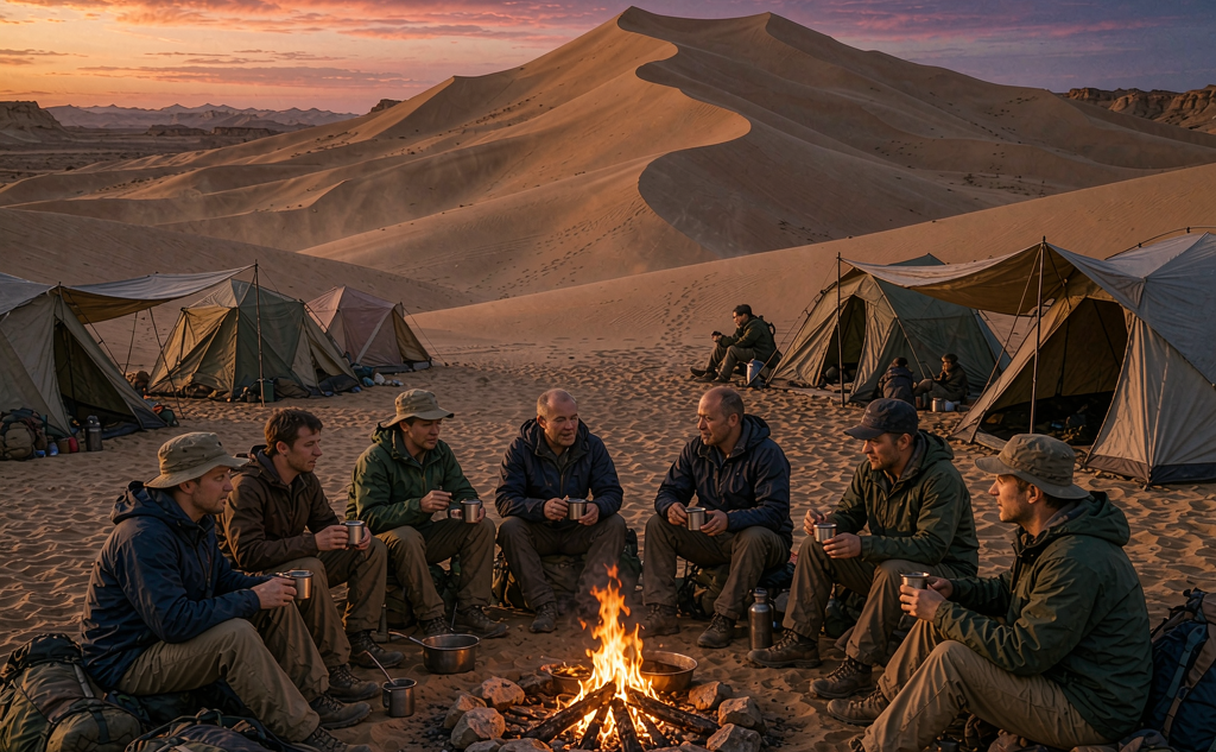
Most organized Gobi desert tours build the night around a simple but unforgettable rhythm. You arrive at the campsite in the late afternoon, often after a camel trek or a 4×4 drive across the gravel flats. Tents are usually sturdy canvas dome or yurt-style structures set up by the camp crew, though some operators let you pitch your own if you bring gear. As the sun drops, the temperature falls fast, and that is when the campfire becomes the center of everything: tea, grilled lamb skewers, and conversation while the light fades to deep blue.
After dinner, the real highlight begins. With almost no light pollution, the Gobi sky fills with stars, the Milky Way arching overhead with a clarity you rarely see in cities. Many camps offer a short astronomy talk or simply leave you with a reclining chair and a blanket. Waking before dawn to watch the sun rise over the dunes is the quiet payoff that makes the cold worthwhile.
If you want to extend your China itinerary beyond the desert, our best-time-to-visit-china guide covers Xi’an, which is the natural rail hub between the Gobi and central China, and a great place to pair desert scenery with the Shaanxi History Museum.
Best Seasons for Desert Camping China
Timing matters more in the Gobi than almost anywhere else. Summers are hot during the day but the desert cools dramatically at night, which actually suits camping. The most comfortable windows are late spring, from May to early June, and autumn, from September to mid-October. These months bring mild days, crisp nights, and the least wind. Winter camping is possible for the well prepared, but temperatures can plunge well below freezing after dark.
Avoid the peak of summer only if you dislike heat, and avoid late winter and early spring because of occasional sandstorms that can shut down travel. Whenever you go, book Gobi desert tours a few weeks ahead, since camp capacity in remote areas like Alxa is limited.
How to Get There From Beijing and Xi’an
Most international travelers fly into Beijing and then take a domestic flight or an overnight train to Hohhot, the capital of Inner Mongolia. From Hohhot, a private transfer or a small-group tour continues west toward the desert camps near the Alxa League or the dunes at Resonant Sand Bay. If you would rather approach from the Gansu side, take a high-speed train or flight to Xi’an and connect onward to Dunhuang, where the desert begins almost at the edge of town.
Rail travel in China is efficient and comfortable, and the china-travel-guide-for-first-timers section of our site walks through the slower, tea-house side of Chinese travel culture that you can enjoy on rest days between desert drives. For those who want a completely different landscape after the dry north, our best-things-to-do-china coverage of Guilin and Yangshuo shows how green and watery southern China can be by comparison.
Where to Camp in the Gobi
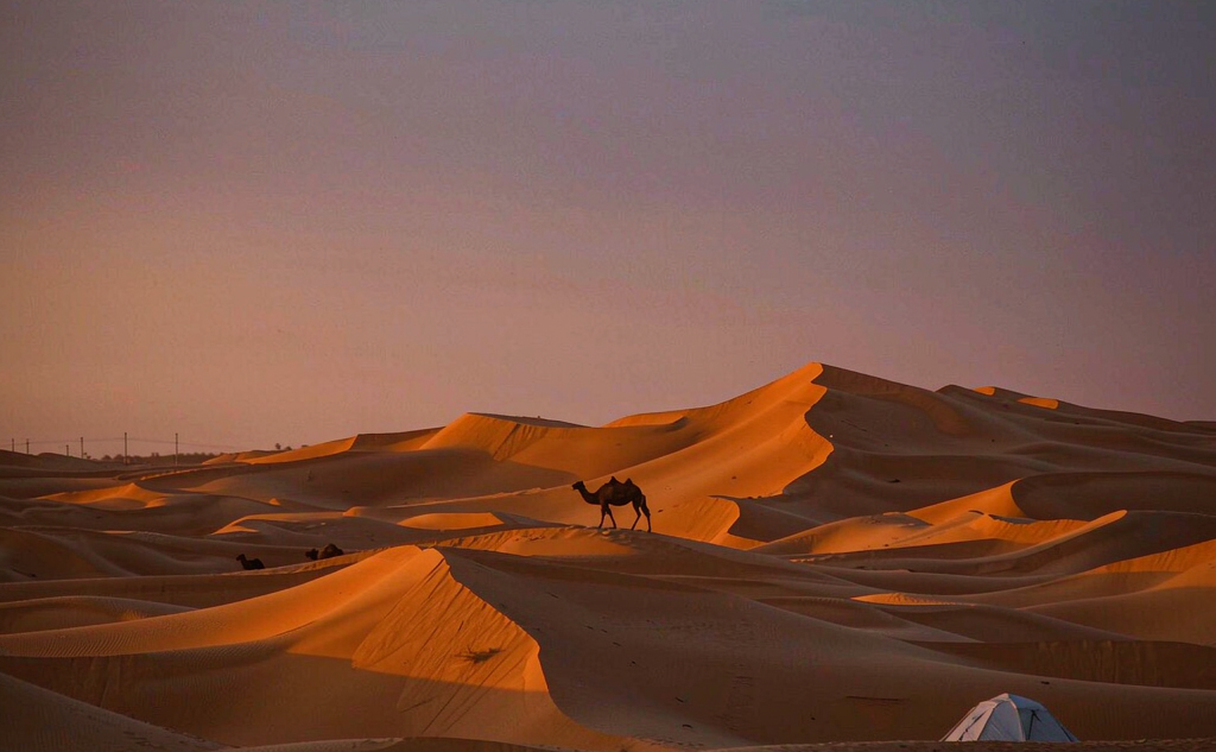
The most popular places to camp in the Gobi on the Chinese side fall into two camps. In Inner Mongolia, the Alxa League near Ejin Banner offers vast, empty landscapes and the nearby Badain Jaran dunes for those who want big sand. Closer to Hohhot, Resonant Sand Bay (Xiangshawan) is a developed desert resort with fixed camps, camel rides, and evening shows, ideal for first-timers who want comfort. In Gansu, the area around Dunhuang lets you camp near the Mingsha Shan dunes and still visit the Mogao Caves and Crescent Lake by day.
Choosing between them depends on your appetite for roughness. Developed camps give you beds, toilets, and hot food. Wild camps put you miles from anyone, with only your tent and the stars. Both deliver the core Gobi desert camping feeling: stillness, big skies, and a fire at night.
What to Pack
Desert packing is about handling a 20-degree swing between day and night. Bring a warm layer even in summer, a windproof jacket, a hat, and sunglasses for the glare. A headlamp is essential once the campfire dies down. Sunscreen and lip balm are non-negotiable, and a refillable water bottle keeps you hydrated on dry, windy days. Sturdy closed shoes protect your feet from hot sand and sharp gravel. If you are on an organized tour, the operator supplies tents and meals, but a small sleep liner and your own pillow make the night far more comfortable.
Safety and Respect
Camp only in permitted areas or with a licensed operator. The Gobi is deceptively easy to get lost in because landmarks blur at distance, and mobile signal is patchy away from towns. Tell someone your plan, carry extra water, and never wander off alone after dark. Respect the land by packing out all trash and not disturbing the sparse vegetation or wildlife. Local herders and camp staff are your best source of advice, so listen to them.
FAQ: Common Gobi Desert Camping Questions
Where to camp in the Gobi
The easiest and safest options are licensed desert camps in Inner Mongolia’s Alxa League, the Resonant Sand Bay resort near Hohhot, and the Mingsha Shan area outside Dunhuang in Gansu. Each lets you camp in the Gobi with support, food, and toilets close by, which matters when night temperatures drop sharply.
Best time for Gobi desert trips
Late May to early June and September to mid-October are the sweet spots. Days are mild, nights are crisp, and winds are calm. Skip the sandstorm-prone weeks of early spring and be ready for freezing nights if you choose winter.
Is desert camping China suitable for families
Yes, especially at developed camps like Resonant Sand Bay, where short camel rides, bonfires, and fixed tents keep children comfortable. Wild camps are better for experienced travelers who already know how to handle cold nights and limited facilities.
Do I need a guide to camp in the Gobi
For first-time visitors, booking one of the established Gobi desert tours is strongly recommended. Guides handle transport across featureless terrain, supply water and warmth, and know the safe zones away from protected land and military areas.