

The Tang Dynasty (618 to 907) is remembered as a golden age in Chinese history, a period when China led the world in poetry, painting, trade, and cultural confidence. For travelers today, the legacy of this era is most alive in Xi’an, the ancient capital of Chang’an, where you can walk through reconstructed city walls, read the poems of Li Bai, and stand beneath the same pagoda that once held sacred Buddhist texts carried in from India.
If you are planning a trip and want broader context, our China travel guide for first-timers is a good place to start, and you can pair it with our list of the best things to do in China for a fuller itinerary.
Founding and the Peak Years
The Tang Dynasty was founded by the Li family, who seized power after the collapse of the short-lived Sui Dynasty. The early emperors moved quickly to stabilize the realm, reform the tax system, and open the roads to the west. The reign of Emperor Taizong laid the administrative foundation, but the true cultural peak came during the Kaiyuan era under Emperor Xuanzong, roughly the early eighth century.
This was a time of relative peace, a growing population, and extraordinary wealth flowing in along the Silk Road. Chang’an became the largest city on earth, home to perhaps a million residents. For a traveler interested in the long view of Chinese history, it helps to remember that the Tang came before the later Ming-era monuments many visitors know, such as those covered in our Forbidden City ticket guide and the Great Wall of China guide.
The dynasty eventually fractured after the An Lushan Rebellion in the mid-eighth century, and while it continued for another century and a half, the earlier confidence never fully returned. Still, the artistic and literary output of the Tang remains a high-water mark.
Chang’an: The Cosmopolitan Capital
Chang’an, today’s Xi’an, was laid out on a precise grid, with the imperial palace at the northern end and wide thoroughfares running north to south and east to west. Foreign merchants, Buddhist pilgrims, musicians, and diplomats lived in designated quarters. You could hear Sogdian, Sanskrit, Persian, and Old Turkic spoken in the markets alongside Chinese.
The city was so influential that later capitals across East Asia borrowed its plan. When you visit Xi’an today, the modern city sits inside the Ming dynasty wall, but the Tang-era layout is still legible in the broad avenues and in the southern suburbs where the great temples once stood. Walking the Xi’an city wall at dusk gives you a sense of how a walled capital felt, even if the Tang ramparts themselves are gone.
Poetry: Li Bai and Du Fu
No Tang Dynasty guide would be complete without its poets. Li Bai, often called the immortal of wine, wrote with a wild, romantic energy that still feels modern. Du Fu, his friend and contrast, wrote with compassion about ordinary suffering and the cost of war. Together they define the emotional range of Tang verse.
You do not need to read classical Chinese to enjoy them; excellent English translations exist, and many tourist sites in Xi’an quote their lines on plaques. A traveler who learns even a few lines of Li Bai before the trip will find the experience richer. The Shaanxi History Museum in Xi’an displays scrolls and rubbing replicas that connect the poems to the objects of the age.
The Silk Road and Trade
The Tang prospered because it controlled and protected the eastern end of the Silk Road. Caravans brought jade, horses, carpets, and glass from the west, and carried silk, porcelain, and paper eastward. The capital’s markets sold goods from as far as Byzantium.
This trade was not only material. Religions traveled the road too, including Buddhism, Nestorian Christianity, and Islam, each leaving communities in the city. The cosmopolitan Tang attitude toward foreigners is one of the things that makes the era so appealing to modern travelers who want a more open, connected picture of ancient China.
Tang Tombs and Murals
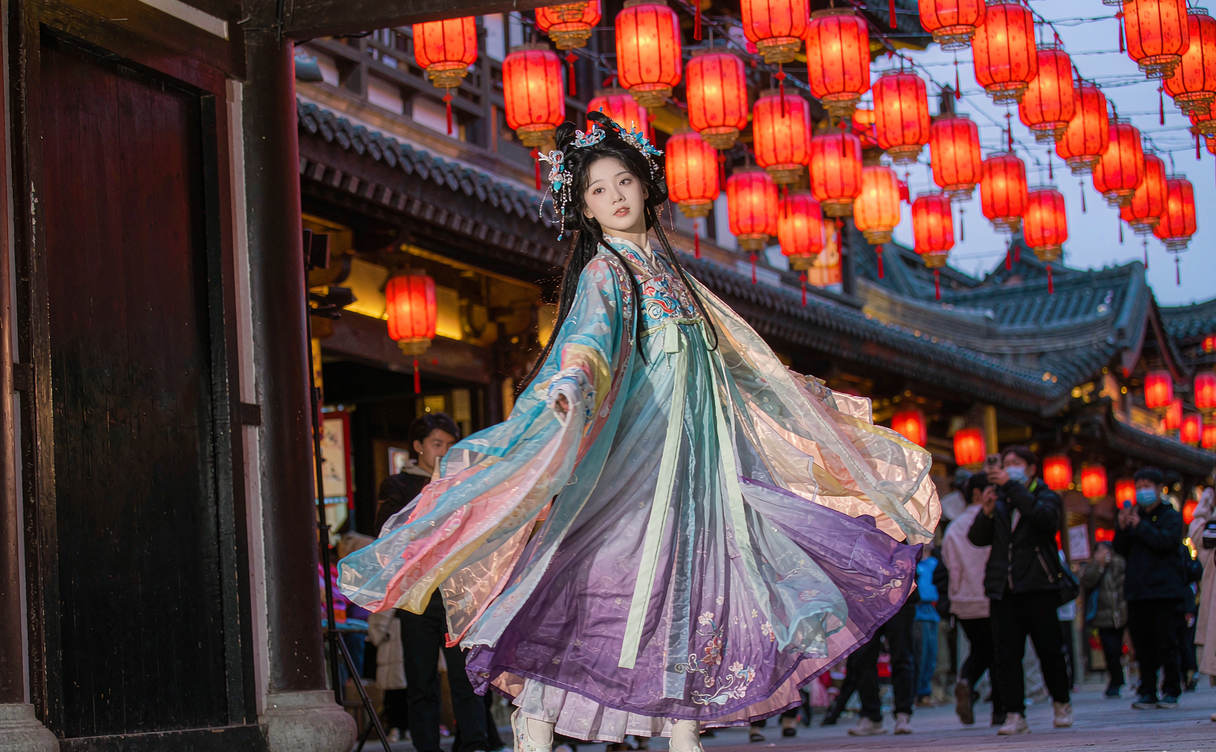
The tombs of Tang emperors and nobles, scattered on the hills south of the capital, preserve some of the finest mural painting in Chinese art. These wall paintings show court ladies, horses, chariots, and celestial beings with a confidence and movement that later periods rarely matched.
Several tomb sites are open to visitors, and the murals themselves are often moved to climate-controlled museums for protection. The detail in a Tang lady’s dress or a galloping horse tells you more about daily life than any textbook. If you enjoy this kind of art, plan a half day outside the city center to see at least one tomb museum.
Buddhism and the Wild Goose Pagoda
Buddhism reached a high point under the Tang. The monk Xuanzang traveled to India, returned with a vast collection of sutras, and spent years translating them. To house those texts, the Wild Goose Pagoda was built in the south of Chang’an, a towering brick structure you can still climb today.
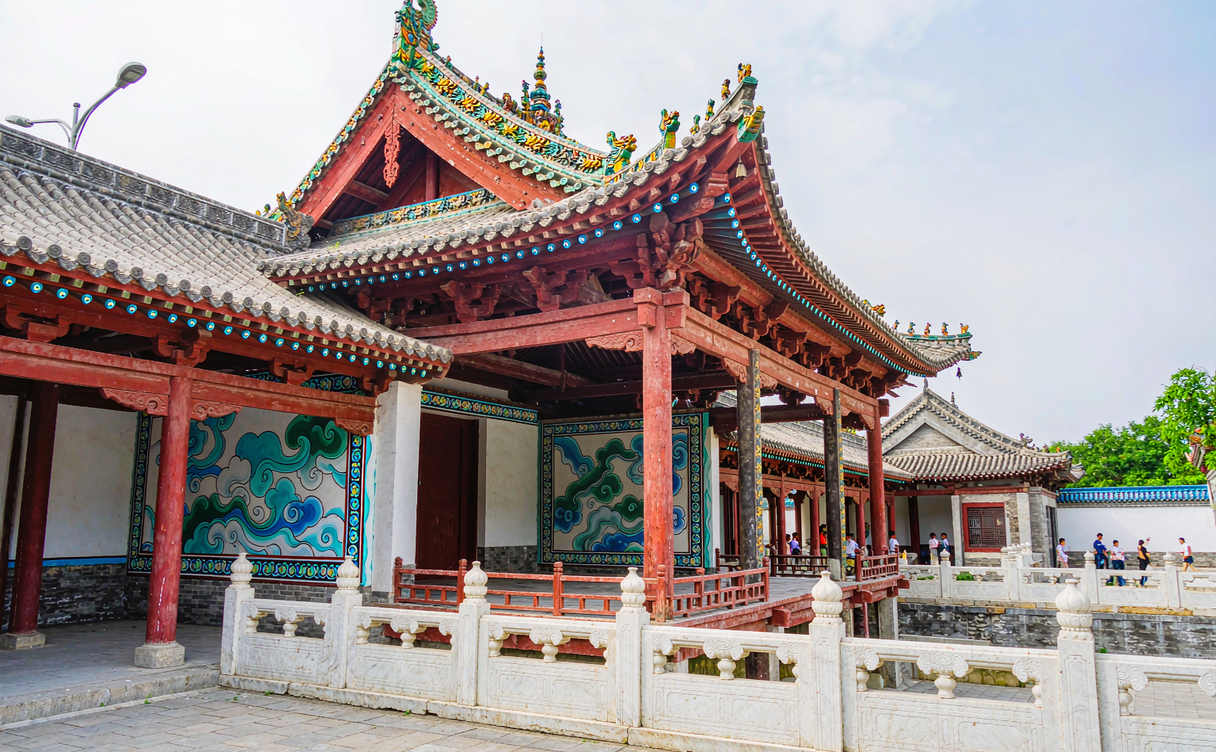
Standing atop the pagoda, you look out over a modern city that grew from the same ground. The nearby Da Ci’en Temple complex lets you experience the devotional atmosphere, with incense, chanting, and the steady rhythm of pilgrims. It is one of the most direct ways to feel the spiritual life of the Tang world.
Experiencing Tang Heritage Today
A traveler in Xi’an can build a satisfying Tang-focused itinerary in three or four days. Start at the Shaanxi History Museum, then move to the Wild Goose Pagoda and its evening music fountain. Spend a morning at the Small Wild Goose Pagoda and the Xi’an Museum, which together tell the Tang story clearly. In the evening, watch a Tang-themed show such as the Legend of the Tang Dynasty song and dance performance, which recreates court music and costume.
Food is part of the experience too. The Tang loved noodles, mutton, and stuffed pastries, many of which survive in Xi’an’s Muslim Quarter and surrounding restaurants. Try the persimmon cakes and the biangbiang noodles as a small culinary bridge to the past.
For the full atmosphere, visit on a clear night when the city lights the ancient-style buildings along the Datang Everbright City pedestrian street, a reconstructed Tang entertainment district packed with lanterns, street performers, and tea houses.
Why the Tang Still Matters
The reason travelers are drawn to this dynasty is not only its art but its spirit. The Tang was confident enough to absorb the world and still remain itself. That openness is visible in the faces of its pottery figures, the spread of its poetry, and the crowds that filled its capital.
For historical background and a scholarly overview of the period, the Encyclopaedia Britannica entry on the Tang Dynasty is a reliable reference to read before you go.
Tips for Visiting Tang Sites in Xi’an
Arrive early at the Shaanxi History Museum, because timed tickets sell out. Wear comfortable shoes; the tomb sites involve some walking on uneven ground. If possible, hire a licensed guide at the Wild Goose Pagoda, since the historical details make the climb meaningful. Combine indoor museums with one outdoor tomb visit so the day does not feel repetitive.
Consider the season. Spring and autumn offer the most comfortable weather for walking the city and its suburbs. Summer can be hot, while winter is cold but far less crowded, which some travelers prefer for photography.
Frequently Asked Questions
When was the Tang Dynasty?
The Tang Dynasty ruled from 618 to 907, a span of nearly three hundred years. Its cultural and economic peak is usually placed in the seventh and early eighth centuries, especially during the Kaiyuan era of Emperor Xuanzong.
What were the Tang Dynasty capitals?
The primary capital was Chang’an, today’s Xi’an, with a secondary eastern capital at Luoyang. Chang’an was the political, economic, and cultural heart of the empire and the eastern terminus of the Silk Road.
Who were the famous Tang poets?
The two most celebrated are Li Bai, known for his romantic and free-spirited verse, and Du Fu, admired for his humane and historically aware poetry. Together they are the cornerstone of any tang poetry reading list.
How can I use a tang dynasty guide to plan a trip?
A good tang dynasty guide points you to Xi’an’s museums, the Wild Goose Pagoda, Tang tomb murals, and evening Tang-themed performances, helping you build a focused three to four day heritage itinerary.
The Tang Dynasty offers travelers something rare: a chance to stand inside a moment when China was the center of the world’s imagination. With the right planning, Xi’an becomes not just a stop on a China trip but a destination in its own right, where poetry, trade, and faith still speak across thirteen centuries.