

The first time I really tasted West Lake Vinegar Fish, I was sitting at a window table where the water of Hangzhou’s West Lake went flat and grey under a spring drizzle. The plate arrived whole — a single fish, skin on, lying in a pool of clear amber sauce that looked nothing like the sticky red sweet-and-sour glaze I had braced myself for. I dipped my chopsticks in expecting a punch of vinegar and got something stranger: a clean, sweet-savoury gloss that made the flesh taste almost like crab. That gap between the name and the reality is the whole reason this dish is worth understanding before you order it — or try to cook it at home.
What West Lake Vinegar Fish actually is
West Lake Vinegar Fish (Xi Hu Cu Yu, 西湖醋鱼) is the signature dish of Hangzhou and, by extension, of Zhejiang cuisine. Despite the name, it is not a sharp, lip-puckering vinegar dish. The “vinegar” in the title refers to a balanced sweet-and-sour glaze built on Zhejiang rice vinegar (xiangcu, 香醋), rock sugar, and a small amount of light soy, reduced until it turns into a glassy, barely-there coat that sits on top of the fish rather than drowning it.
The cooking method is the quiet genius here. The fish is never deep-fried and never braised in a heavy sauce. It is scored, briefly poached in simmering water or stock until just set, then lifted onto a plate and napped with the warm vinegar glaze at the moment of serving. The result is a dish that prizes the original flavour of the fish above everything else — a philosophy that defines the “fresh and mellow” school of Hangzhou cooking.
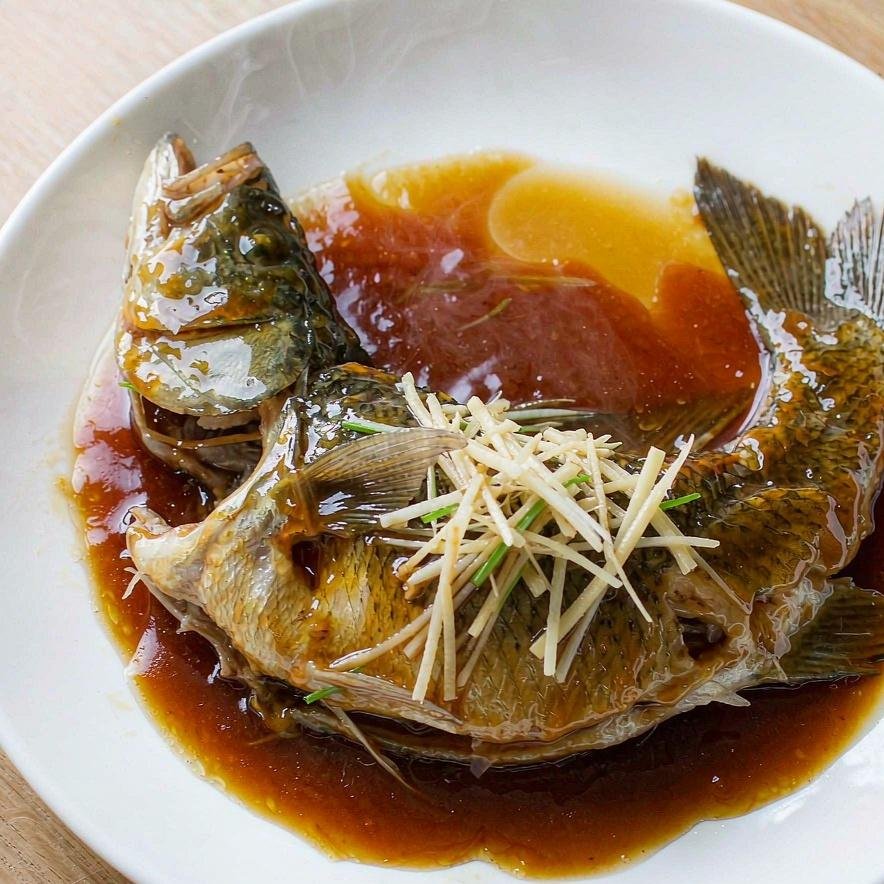
People often mistake it for the Westernised “sweet and sour fish” you get in takeaway boxes abroad. They are not the same dish, and the difference is the whole point — something we will come back to when we compare them head to head.
The fish matters more than the sauce: grass carp and the “starving” trick
The traditional choice is grass carp (caoyu, 草鱼). On paper that sounds odd, because grass carp is a muddy, bony, pond-raised fish that few chefs would pick for a delicate showcase dish. The reason it works is a peculiar piece of old Hangzhou kitchen craft: the fish is kept alive in clear tanks and “starved” (e’yang, 饿养) for two to three days before cooking, fed nothing so its gut empties and the muddy pond flavour clears from the flesh.
Done properly, that clearing step turns a humble, earthy fish into something clean and sweet with a faint crab-like delicacy — which is exactly why old descriptions of the dish talk about the flesh tasting like crab meat. At home you will not have a live tank, so buy the freshest grass carp you can find, ask the fishmonger to gut and scale it, and if possible keep it in a clean bucket of aerated water for a day. A fresh river bass or sea bass is a fair substitute if grass carp is unavailable, though purists will shake their heads.
What does West Lake Vinegar Fish taste like
Imagine flaking white fish that yields in clean layers, with none of the greasiness of fried fish and none of the heaviness of a braise. The sauce lands first as sweetness, then a soft acidity folds in behind it, and a whisper of ginger cuts through so the whole thing stays bright rather than cloying. The texture of the flesh should be tender enough to lift with chopsticks in a single soft piece, never dry, never rubbery.
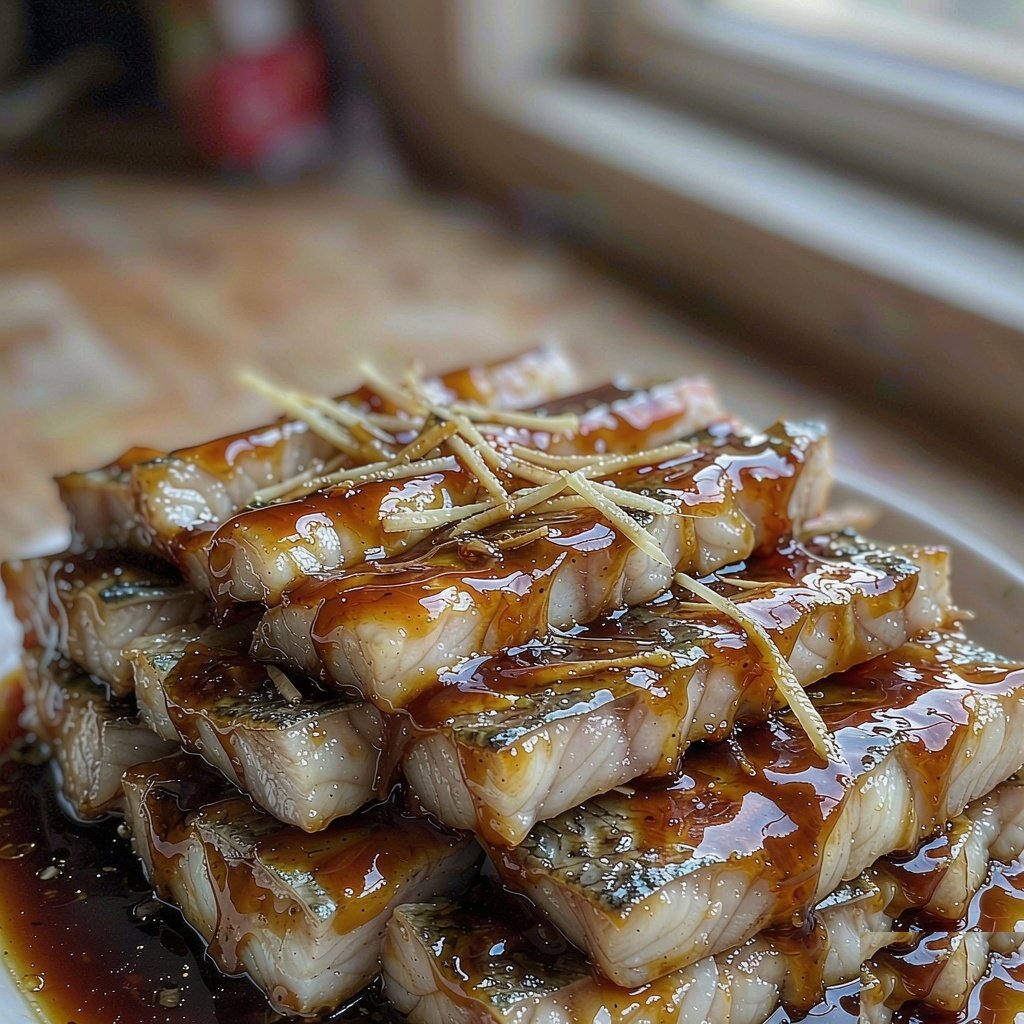
A well-made version is subtle to the point of being understated. This is a dish you judge by how little it needs — no chilli, no overwhelming spice, just fish, sugar, vinegar, and restraint. If your first reaction is “that’s it?”, you may have ordered it at a tourist trap that over-sugared it, or you may simply prefer louder food. Both are fair.
A short history: brother-in-law, sister-in-law, and an emperor
The dish carries one of the better folk legends in Chinese cooking. The story goes that during the Southern Song dynasty a brother-in-law and sister-in-law ran a small lakeside eatery; when the sister fell ill, the brother-in-law cooked her a fish in sweet vinegar to sharpen her appetite, and the recipe — chushao zhuanzhen, “the brother-in-law and sister-in-law’s treasured recipe” — was passed down. Like most food legends it is part romance, part marketing, but it sticks because the dish really does feel like home cooking dressed up for company.
What is documented is the restaurant. Lou Wai Lou (楼外楼), still operating on the shore of West Lake, has served the dish since 1848, and the Qing emperor Qianlong is repeatedly credited in tourist lore with “discovering” it on a southern tour. Whether or not Qianlong ever dipped his chopsticks, the dish became the dish of Hangzhou through exactly this kind of association with the lake, the scholars, and the slow leisure of Jiangnan.
West Lake Vinegar Fish ingredients
This is a short ingredient list, which is why quality and proportions matter more than technique. For two servings:
- 1 live or very fresh grass carp, about 600–750 g (or substitute river/sea bass)
- Zhejiang rice vinegar (xiangcu), 60 ml — do not substitute plain white vinegar, the aroma is the dish
- Rock sugar or caster sugar, 45 g
- Light soy sauce, 15 ml
- Finely slivered young ginger, 20 g (plus a little for the poaching water)
- Scallion, 1 stalk, tied
- Cornflour (cornstarch), 1 heaped tablespoon, mixed with 2 tablespoons cold water
- Neutral oil, 1 tablespoon
- Salt, a pinch, for the poaching water
The vinegar and the sugar are not negotiable in their ratio — roughly 4:3 vinegar to sugar by volume keeps the glaze balanced. Too much sugar and it becomes candy; too much vinegar and it loses the Hangzhou softness. The ginger is the only aromatic, and it should be cut into hair-thin threads so it reads as a fragrance rather than a chunk.
How to make West Lake Vinegar Fish at home, step by step
The method looks simple and punishes carelessness, so read it through once before you start. The whole cook takes about twenty minutes.
1. Score the fish. Make three or four diagonal cuts through the thickest part of each side, about 1.5 cm deep, stopping short of the bone. This lets heat reach the centre fast so the flesh cooks evenly without overcooking the outside.
2. Poach, do not boil. Bring a wide pot of water to a bare simmer with a pinch of salt, the scallion, and a few ginger slices. Slide the fish in and keep the water at a gentle shimmer — not a rolling boil, or the skin tears. Cook 6–8 minutes depending on size; the flesh should turn opaque and lift easily from the bone at the cuts.
3. Rest on the plate. Lift the fish out carefully with two spatulas, lay it on a warm serving plate, and discard the poaching aromatics. Keep the fish whole; do not flake it.
4. Build the vinegar glaze. In a small pan, warm the oil, add the ginger threads for ten seconds, then pour in the rice vinegar, sugar, and light soy. Stir over medium heat until the sugar dissolves and the liquid simmers.
5. Thicken glossily. Stir the cornflour slurry once more and pour it into the simmering sauce in a thin stream, whisking until the sauce turns translucent and coats a spoon with a light film. It should look like warmed glass, not wallpaper paste.
6. Nap and serve immediately. Pour the glaze evenly over the hot fish and bring it to the table at once. The contrast between the just-poached fish and the warm sauce is the dish; five minutes of waiting and the magic sags.
Who should order it — and who might be disappointed
Order this if you genuinely like the taste of fish and enjoy restraint over heat. It is the dish to choose when you want to understand Hangzhou rather than be entertained by it. Travellers who appreciate a clean white wine, a steamed crab, or sashimi will probably love it.
Skip it, or lower your expectations, if you need chilli and bold spice to enjoy a meal — this is not that food. Anyone wary of fine bones should also hesitate: grass carp is a bony fish, and picking through pin bones with chopsticks is part of the experience whether you like it or not. And if your hotel buffet or airport “Chinese restaurant” offers it, assume it has been sweetened into dessert; seek out a proper Hangzhou kitchen instead.
Tips, mistakes, and regional twists
The three mistakes home cooks make are easy to avoid. First, boiling instead of poaching tears the skin and toughens the flesh — keep the water at a shimmer. Second, over-thickening the sauce turns it cloudy and gluey; stop the moment it coats a spoon. Third, letting the fish sit after saucing ruins the temperature contrast, so time the sauce to finish as the fish comes out of the water.
Regionally, Shanghai and neighbouring Jiangsu versions lean a little heavier on soy, giving a darker, more savoury glaze, while strict Hangzhou renditions stay paler and more vinegar-forward. Some modern kitchens finish with a few drops of sesame oil for aroma, though traditionalists leave it out. None of these twists change the core idea: fish first, sauce second, restraint always.
Where to eat West Lake Vinegar Fish in Hangzhou
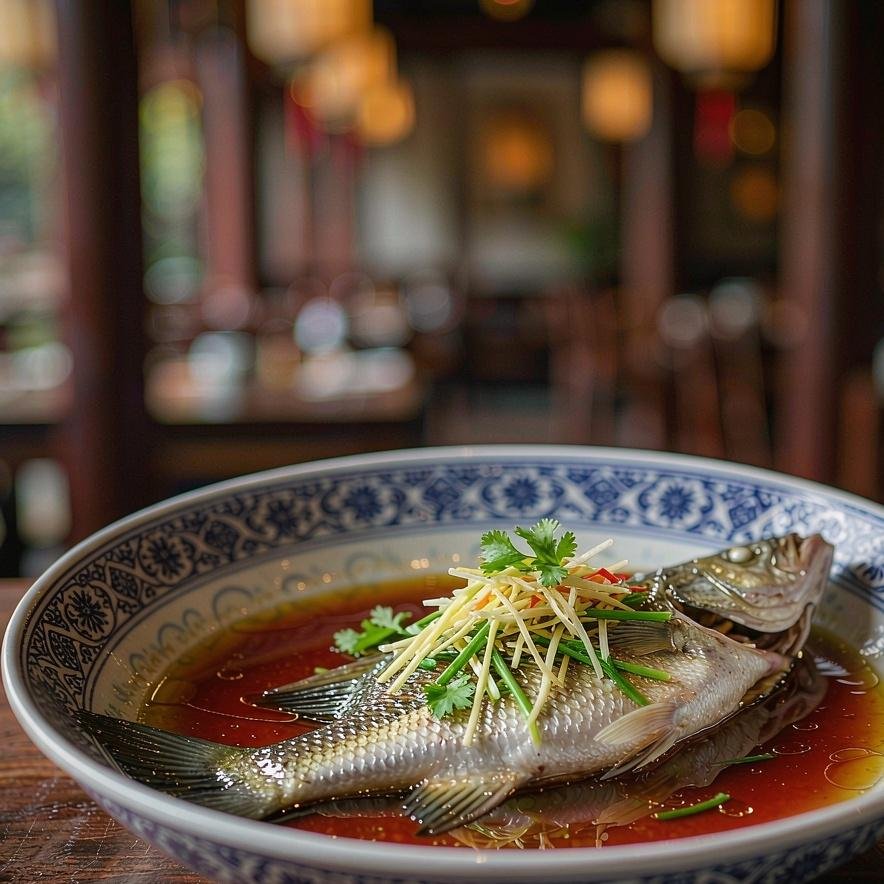
If you are in the city, the obvious pilgrimage is Lou Wai Lou on the northern shore of the lake, where the dish is performed with the confidence of 170 years of repetition. Expect a queue and a bill that reflects the address. For a calmer, more local experience, the small Hangbang-cuisine (Hangzhou home-style) restaurants tucked into the streets around Nanshan Road and the old city serve quieter, often better-executed versions at a fraction of the price. Our Hangzhou food guide walks through the neighbourhoods worth targeting and the dishes to pair it with.
One practical note for travellers: order it early in the meal, alongside a vegetable and a soup, rather than as part of a sprawling banquet where it gets lost. It is a dish built for a small table and a slow afternoon looking at water.
West Lake Vinegar Fish vs sweet and sour fish
This comparison trips up almost everyone on their first trip to China. The takeaway-box “sweet and sour fish” abroad is typically battered, deep-fried, and drowned in a thick red tomato-and-vinegar sauce — loud, crunchy, and sweet. West Lake Vinegar Fish is the opposite: unbattered, poached, sauced with a thin clear glaze, and aimed at the fish’s own flavour rather than masking it. If you have only ever had the fried version, the Hangzhou dish will taste almost austere by comparison, and that austerity is the point. It belongs to the same family as the careful, wine-and-stock cookery of Huaiyang cuisine, where subtlety is the highest form of skill.
FAQ
How many calories are in West Lake Vinegar Fish?
Because the fish is poached rather than fried and the glaze is mostly vinegar and sugar, a typical restaurant portion lands around 250–350 kcal, markedly lighter than battered sweet-and-sour fish. The sugar in the glaze is the main calorie source after the fish itself, so the sauce is where most of the indulgence sits.
What is the authentic West Lake Vinegar Fish sauce recipe?
The authentic glaze is rice vinegar, rock sugar, a touch of light soy, and slivered ginger, thickened lightly with cornflour and poured over the fish hot. There is no ketchup, no pineapple, and no red food colouring in a proper version — if your sauce is bright red, you are not eating the Hangzhou original.
Can I find West Lake Vinegar Fish near me outside China?
Outside China it is rare, because it depends on very fresh fish and a cook who understands restraint rather than a formula. A handful of serious Hangzhou or Jiangnan restaurants in major cities carry it; most generic “Chinese” menus will not. Search for regional Jiangzhe (Jiangsu-Zhejiang) kitchens rather than Cantonese or Sichuan ones.
Is West Lake Vinegar Fish very fishy or bony?
A fresh, properly “starved” fish should not taste fishy at all — the sweetness and vinegar glaze keep it clean. It is, however, bony if made with traditional grass carp, so eat slowly and pick through the pin bones. Choosing bass reduces the bone problem considerably.
What wine or drink pairs with it?
A crisp, dry white wine or a light jasmine tea suits it far better than a heavy red. Locally, a cold glass of Hangzhou’s own Longjing tea (Dragon Well) is the classic pairing and echoes the region’s obsession with clean, delicate flavours.
Why is it called vinegar fish if it isn’t sour?
The name describes the ingredient that defines the glaze — Zhejiang rice vinegar — not the intensity of the sourness. The sugar balances the vinegar so the finished dish reads as sweet-savoury with a soft acidic lift, which is exactly how Hangzhou cooks intend it.
West Lake Vinegar Fish is less a recipe than a test of patience and freshness, and that is why it has outlasted every food trend to wash over Hangzhou for two centuries. Cook it within minutes of poaching, respect the vinegar-to-sugar ratio, and buy the best fish you can — do those three things and you will understand why a plain poached carp became the dish a whole city puts on its postcards. The next time you stand at the edge of the lake with an appetite and a little rain, order it whole, eat it slowly, and let the restraint do the talking.