

The hiss that opens a Chinese morning
The first sound I associate with a real Chinese breakfast is a hiss, not a hello. Walk past any neighborhood breakfast stall before eight and you will hear it: a vendor drops a pale, twisted rope of dough into a wok of shimmering oil, and within two seconds the thing erupts, stretching and blanching into a long, blistered golden bar. That bar is youtiao — the fried dough stick that anchors morning tables from Shanghai lane houses to Beijing hutongs and the smallest county-town bus stations. Most travelers meet it dunked into warm soy milk, but the stick itself deserves a closer look, because making it well is harder than it looks and eating it well is a small daily ritual.
What exactly is youtiao?
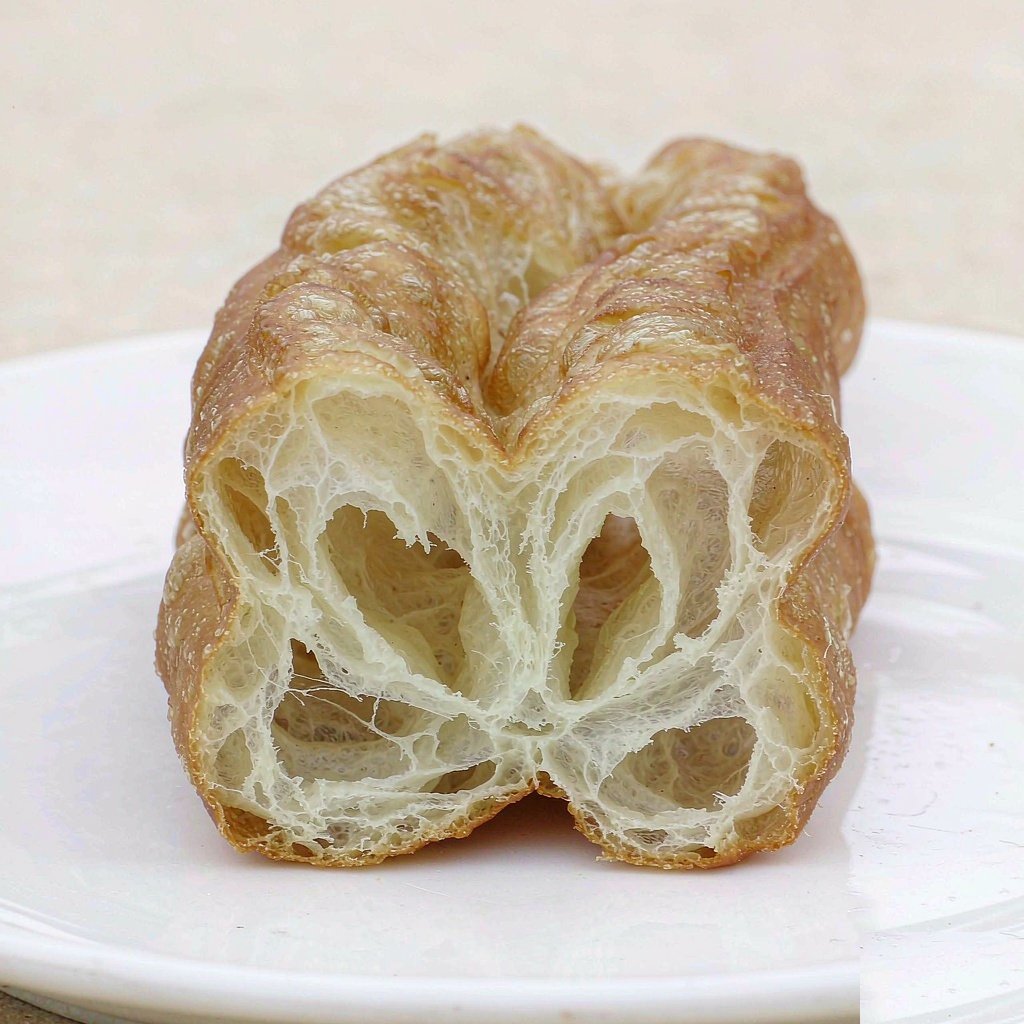
Youtiao is a strip of wheat dough leavened, stretched into a rough double strand, and deep-fried until it puffs into a hollow, crisp shell around a tender, faintly chewy crumb. The name literally reads “oil strip,” and the classic shape is two thin ropes pressed together at the ends and twisted once so they fry as a single elongated stick. In different regions you will hear it called you zha gui (fried ghost), gao you tiao, or simply “the fried dough” — but the object is the same: savory, never sweet, and built to be torn, not bitten whole.
What makes it distinct from a doughnut or a churro is restraint. There is no sugar in the dough, no cinnamon, no filling. The flavor is wheaty and lightly saline, carried almost entirely by texture: the contrast between a crackly, bubbled crust and the warm, airy inside. That contrast is the whole point, and it is also the hardest thing to reproduce at home. If you want the full picture of how it fits into the wider table, our Chinese breakfast guide maps out the companions it usually shares the plate with.
What does youtiao taste like?
Break a fresh one while it is still hot and you get two experiences at once. The outside snaps — a dry, brittle crunch like the top of a good baguette — and the inside gives way to something almost bread-like but lighter, with random air pockets where steam expanded the dough against the oil. The taste is mild: a gentle saltiness, a faint toasted wheat sweetness from the Maillard browning, and almost no fat flavor despite the deep frying, because the dough seals so fast that it absorbs surprisingly little oil when the temperature is right.
Temperature is everything. At its best, eaten within minutes of leaving the oil, youtiao is hollow and shattering. An hour later it turns leathery and a little greasy, which is why vendors fry to order and why the best ones sell out by nine. Texture, not seasoning, is the ingredient you are actually chasing.
Youtiao ingredients: what actually goes in the dough
One reason this chinese fried dough sticks recipe travels so well is the short, forgiving ingredient list. You do not need anything exotic. The only real decision is your leavening, and I strongly recommend an alum-free version for home cooks.
- 500 g all-purpose flour, medium gluten (about 10–11% protein)
- 280 ml cold water, added gradually
- 8 g fine salt
- 10 g sugar (optional — it only helps browning, not sweetness)
- 20 g neutral oil (vegetable or rapeseed) worked into the dough
- 6 g double-acting baking powder
- 3 g baking soda
- Oil for frying — a neutral, high-smoke-point oil, filled to at least 6 cm deep
The baking powder plus baking soda pair is the modern, youtiao without alum solution. Older street recipes used alum (potassium aluminum sulfate) for extra lift and a longer crisp, but home kitchens have no reason to use it, and the baking-powder method gives a perfectly respectable puff. Some cooks add one egg for a richer, slightly more cake-like crumb; I leave it out to keep the taste clean and the structure open.
How to make youtiao at home, step by step
If you have never tried how to make youtiao at home, the method is simple in words and fussy in timing. The dough must be cold and relaxed, and the oil must be hot and steady.
1. Mix the dough. Combine flour, salt, sugar, baking powder, and baking soda. Add the oil, then the cold water, and stir to a shaggy mass. Knead only until it comes together — about three minutes. Over-kneading tightens the gluten and fights the puff.
2. Rest it cold, overnight. Cover and refrigerate at least 8 hours, preferably 12. This slow rest is what lets the gluten relax and the leaveners distribute. Skipping it is the single most common reason home youtiao comes out dense.
3. Roll and cut. The next morning, roll the cold dough on a lightly oiled surface into a long rectangle about 5 mm thick. Cut it into strips roughly 2 cm wide and 12 cm long.
4. Twist two strands. Lay one strip on top of another, press a chopstick down the center to seal, then gently stretch and twist the pair once. The twist is what gives youtiao its signature double-bar look and its hollow tunnel.
5. Fry at the right heat. Bring the oil to 180–190°C (355–375°F). Slide in two or three sticks and, using chopsticks, gently press and turn them so they expand evenly. They should balloon within seconds. Fry about 60–90 seconds, turning once, until deep gold.
6. Drain and eat. Lift out, drain on a rack (not paper, which steams the crust), and eat within minutes. That is the entire process — no filling, no glaze, no second proof.
Why your youtiao comes out flat
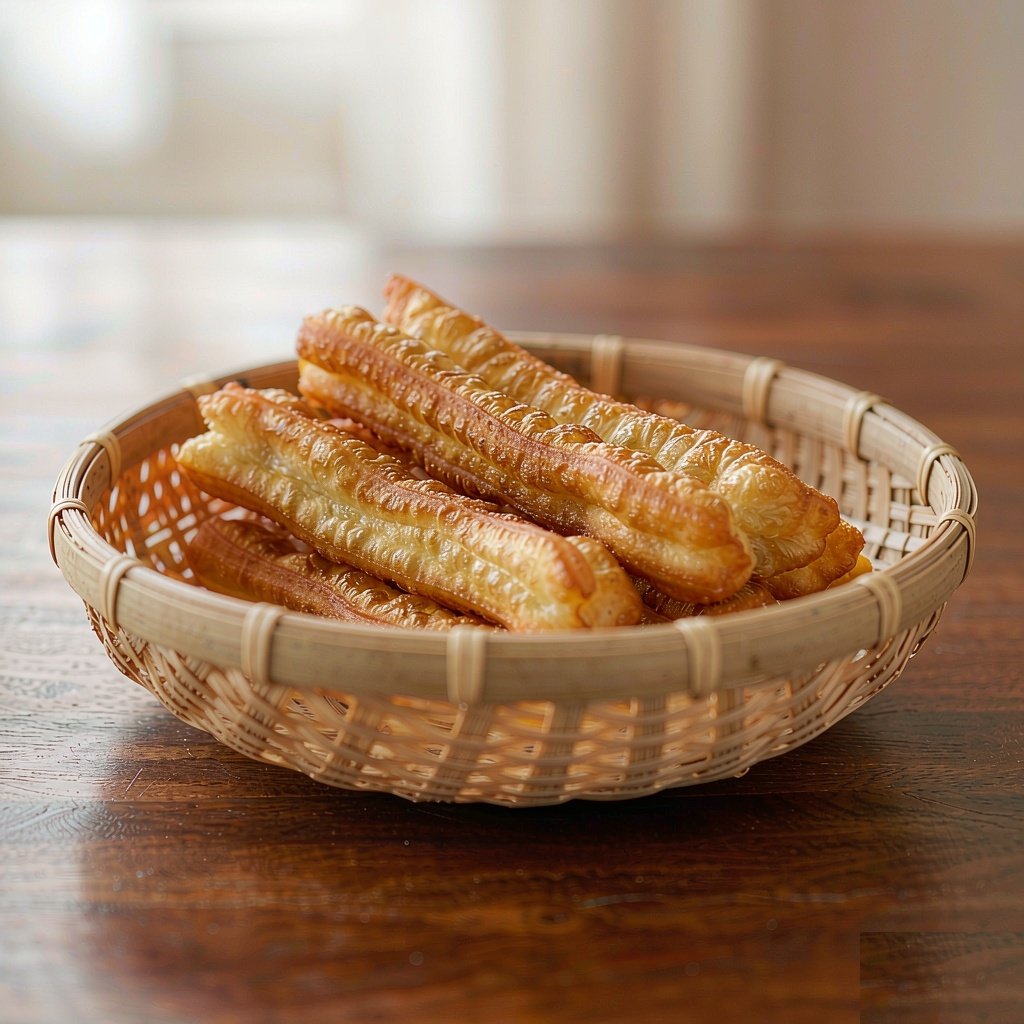
Most failures trace to three habits. First, oil that is too cool: the dough absorbs grease and never lifts, giving you a pale, soggy stick. Second, dough that is too warm or overworked when it hits the fryer, which tightens the gluten so it cannot expand. Third, twisting too tightly, which pinches the tunnel shut. The fix for all three is the same discipline street vendors have: keep the dough cold, keep the oil honest, and handle it gently. A kitchen thermometer removes the guesswork — if you are frying below 175°C, pull back and let it climb.
How to eat youtiao: soy milk, congee, and the rice roll
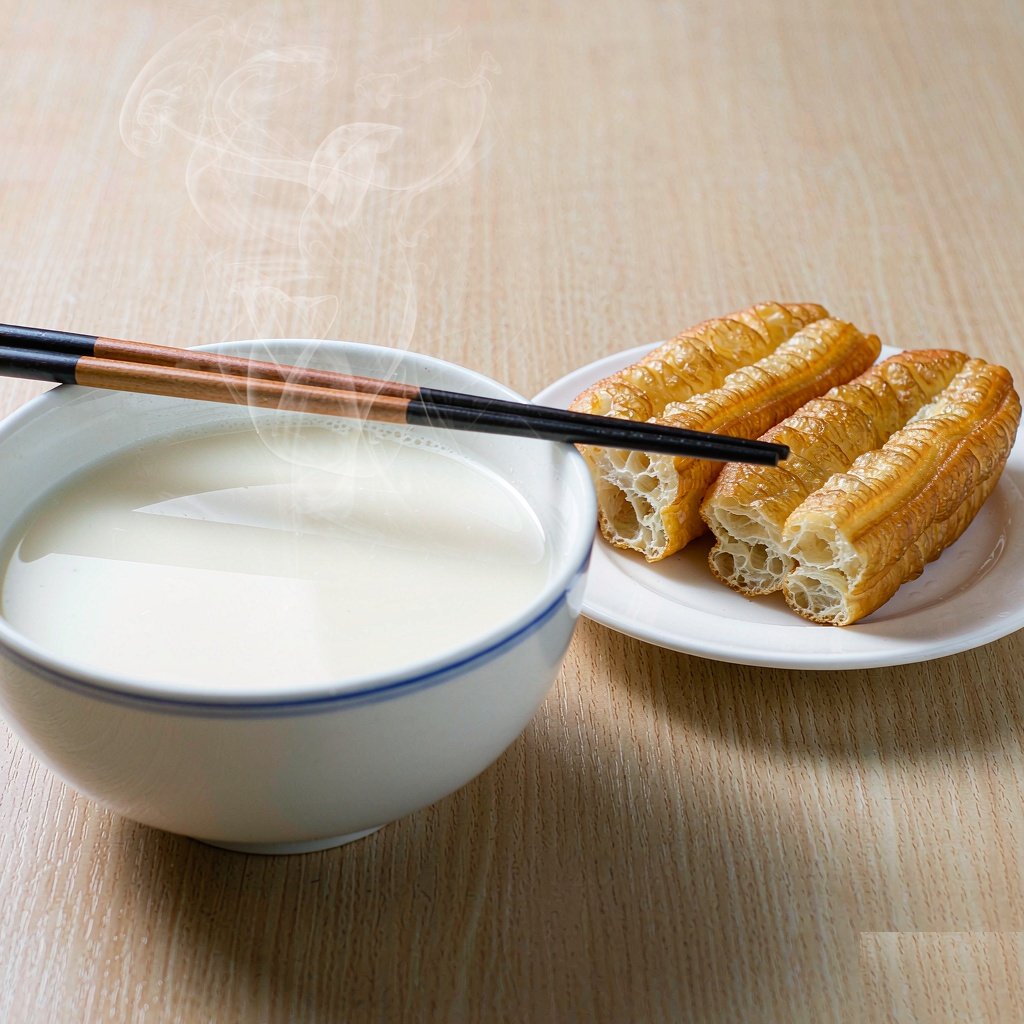
The stick is rarely the whole breakfast. The most famous how to eat youtiao move is the dunk: tear a piece and drop it into a bowl of doujiang, soy milk. In the north that soy milk is often salty, loosened with a pinch of pickled vegetable and scallion; in the south it is sweet and warm. Either way the dough softens at the edges while staying crisp at the center — a texture you cannot get any other way.
Beyond soy milk, youtiao gets tucked into cifantuan, a sticky-rice roll wrapped around the fried stick with a little pork floss or crushed sesame, and it is the default stir-in for plain congee when you want something with a crunch. For travelers, understanding these pairings is half the fun of a morning market, and our regional breakfast guide walks through the stalls where you will see them assembled by hand.
Youtiao calories and who should go easy
A single average stick runs roughly 230–280 youtiao calories, almost all from refined flour and frying oil, with about 8–10 g of fat and very little fiber or protein. It is a treat, not a staple, and a few groups should treat it that way. Anyone watching blood sugar will feel the refined-carb spike; people managing sodium should note the salted dough; and because it is deep-fried, those cutting saturated or total fat will want to share one rather than eat two. None of this makes it off-limits — it makes it a once-or-twice-a-week breakfast rather than a daily one, best balanced with the protein and vegetables in the rest of the meal.
Where to eat youtiao in China
You will find where to eat youtiao in China is less a question of place than of hour. The best versions come from single-purpose breakfast stalls and the zao can counters inside larger restaurants, usually between 6 and 9 a.m. In Shanghai look for it inside cifantuan shops; in Beijing pair it with a bowl of savory doujiang at a hutong corner stand; in Guangzhou it shows up alongside congee at yum cha dim sum houses. Because it is cheap and filling, it is also one of the easiest budget meals in China a first-time visitor can confidently order — point at the basket, hold up two fingers, and you are set.
Is youtiao just a Chinese donut?
It is the comparison everyone makes, and the honest answer is no. A youtiao vs donut match-up fails on three points: youtiao is unsweetened and savory, it is leavened for a hollow tunnel rather than a cakey crumb, and it is eaten as a vehicle for soy milk or rice rather than as a standalone sweet. Next to a churro it is closer — both are fried wheat ropes — but churros are sugared and often dipped in chocolate, while youtiao stays plain and salty. Think of it instead as the savory, elongated cousin of fried bread: closer to an unsweetened Indian bhatura or a Turkish borek strip than to anything dusted in sugar.
Frequently asked questions
Can you make youtiao without alum?
Yes, and you should. The traditional lift came from alum, but a combination of baking powder and baking soda produces the same hollow puff at home with none of the aluminum concerns. The only trade-off is a slightly shorter crisp window, which matters only if you are frying hours ahead — and you should not be.
How long does homemade youtiao stay crispy?
At room temperature, genuinely crisp for about 20–30 minutes, then it softens into a pleasant chew for another hour or two. After that it turns tough. Reheat in a dry skillet or toaster oven for two minutes to revive some snap; never microwave it, which makes it rubbery.
What do Chinese people eat youtiao with?
Most commonly with soy milk (sweet in the south, salty in the north), inside a sticky-rice cifantuan roll, or torn into congee. In cafes you will occasionally see it served with condensed milk for dipping, a modern, sweeter twist aimed at younger diners.
How many calories are in one youtiao?
One standard street-size stick is about 230–280 calories, depending on length and how much oil it absorbed. Two sticks with a bowl of soy milk makes a filling breakfast in the 450–550 calorie range.
Is youtiao vegan and halal?
The basic dough is vegan — flour, water, salt, oil, and leaveners, no egg or dairy required. Halal status depends on the oil and the kitchen; at a standard Chinese breakfast stall the oil is usually vegetable, but if certification matters, ask or buy from a clearly halal-certified vendor.
Is youtiao the same as a Chinese donut?
Not really. Youtiao is savory, unsweetened, and hollow, eaten with soy milk or rice rather than as a sugary treat. If you want the sweet fried option, that is a different item entirely — youtiao is the salty, bread-like one.