

If you are building a China itinerary and want somewhere that pairs a real stretch of coastline with a genuinely unusual piece of the Great Wall, Qinhuangdao deserves a spot. This port city in Hebei province sits on the Bohai Sea, about three hours from Beijing by train, and it quietly delivers two headline experiences that are hard to combine anywhere else: the sandy resorts of Beidaihe and the Old Dragon’s Head, where the Great Wall literally runs into the ocean. Our Qinhuangdao travel guide walks you through how to get there, when to go, what to do, and where to eat, so you can plan a trip that feels relaxed rather than rushed.
Why Qinhuangdao is worth the detour
Most foreign visitors to northern China fly into Beijing and stay within the capital’s ring road. That is understandable, but it leaves out a coastline that has drawn Chinese holidaymakers for more than a century. Qinhuangdao is actually a cluster of distinct areas rather than one neat town. The main railway station and the city center handle transport and business, Beidaihe is the beach resort district to the southwest, Shanhaiguan is the historic garrison town to the northeast where the Wall meets the sea, and the port itself gives the whole place its working character.
The city takes its name from Qin Shi Huang, the first emperor of a unified China, who is said to have sent envoys from this coast in search of immortality. You do not need to care about that legend to enjoy the place, but it is a nice thread that ties the region’s history together. For a traveler, the practical appeal is simpler: cool sea breezes in summer, long beaches, fresh seafood, and a Wall viewpoint you cannot see in Beijing or Xi’an.
Getting there: the Qinhuangdao to Beijing train
The easiest way in is the Qinhuangdao to Beijing train. High-speed services run from Beijing’s main stations to Qinhuangdao Station or Beidaihe Station, and the fastest connections take roughly two hours, with most journeys landing in the two-to-three-hour range depending on the stop pattern. Trains are frequent, tickets are cheap by Western standards, and the carriages are clean and quiet. Book a few days ahead in peak summer, because the beach crowds travel on exactly these trains.
A useful planning note: decide which station matches your plans before you buy. If your hotel is in Beidaihe, arriving at Beidaihe Station saves a transfer. If you want Shanhaiguan and the Old Dragon’s Head first, Qinhuangdao Station is the better arrival point, with onward buses and taxis covering the final stretch to the Wall. Either way, the train removes any need to fly, and the stations connect smoothly to local taxis and ride apps.
If you are extending a Beijing trip, pair this with a food stop before you leave the capital. Our Beijing zhajiangmian guide covers the noodle dish worth eating on your last morning in town.
Beidaihe: the beach resort done right
The heart of most visits is Beidaihe, a low-key seaside district that has been a summer retreat since the early 1900s. The main public beach is wide, soft underfoot, and backed by a pedestrian promenade where you can rent a bike, buy a corn cob from a street cart, or simply watch the morning swimmers.
A Beidaihe beach summer guide has to start with timing. July and August are the busy season: warm water, evening fireworks feel in the air, and the fullest choice of guesthouses and seafood joints. June and early September are the sweet spot for many travelers, with warm enough sea temperatures and far fewer people on the sand.
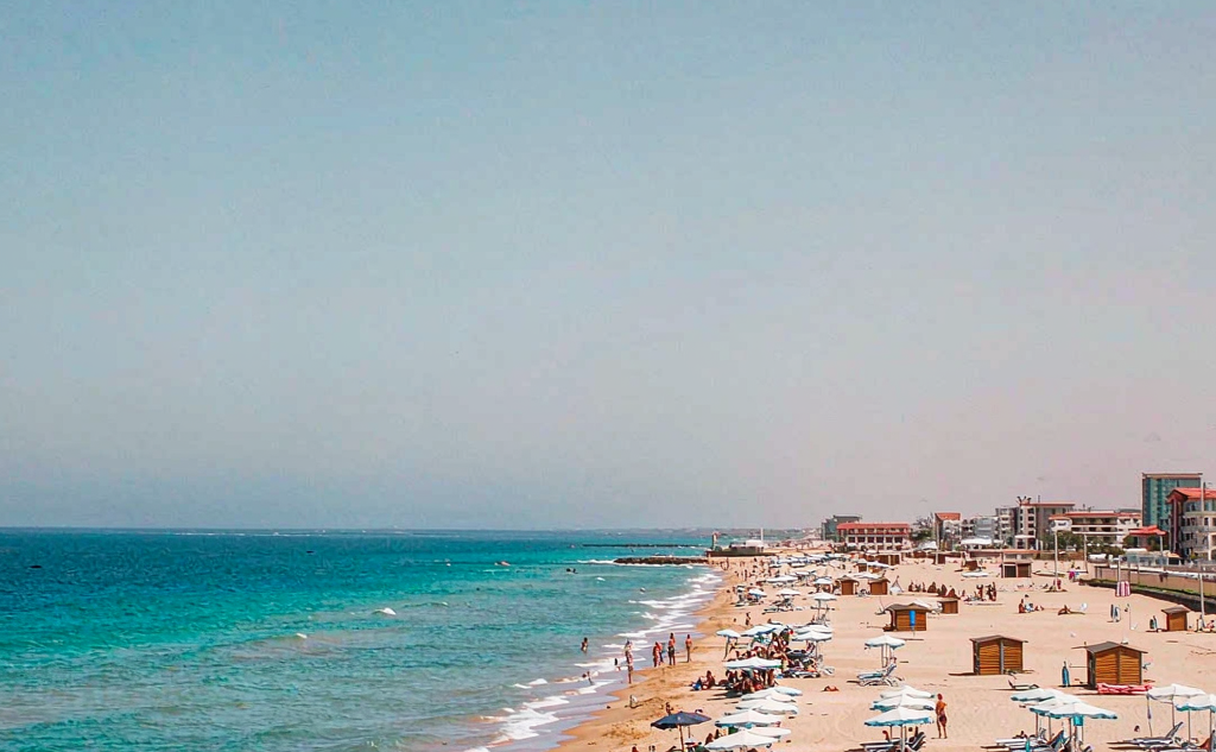
Beyond the beach itself, Beidaihe has a few low-effort wins. The Pigeon Nest Park (Geziwo) is the classic spot for sunrise over the sea, and on a clear morning the rocks and tidal flats fill with photographers. The Linjiang Road area has cafes and small hotels with a relaxed, slightly faded resort charm. If you want a quieter swim, the beaches east toward Nandaihe are less developed and noticeably calmer.
The Old Dragon’s Head: where the Great Wall meets the sea
The single most distinctive thing to do in Qinhuangdao is visit the Old Dragon’s Head Great Wall Qinhuangdao, known in Chinese as Laolongtou. This is the eastern starting point of the Ming Dynasty Wall, and a section of it has been rebuilt so that it thrusts out over the rocks and dips straight into the Bohai Sea. Standing on the stone deck where waves crash against the Wall base is a genuinely different Great Wall experience from the mountain passes near Beijing.
Give yourself half a day here. The site includes the headland fortress, a small fort, and walkways along the coast where you can see how the Wall was engineered to defend against seaborne raids. Go early in the day if you can: the light on the water is better, and the tour groups arrive later. Combine it with a walk through nearby Shanhaiguan’s old town, which still has sections of its Ming-era garrison walls and a slower, more local pace than the beach districts.
If you enjoy this kind of coastal mountain scenery, our Baishishan mountain Hebei guide describes another dramatic Hebei landscape worth adding to a longer northern China route.
More things to do in Qinhuangdao
Once the headline sights are covered, the city has a comfortable set of secondary stops that fill a day or two without feeling like box-ticking.
The Qinhuangdao Wildlife Park, on the road toward Beidaihe, is a drive-through style park that works well with kids. The Xigang garden area, built on a former freight rail yard, has been turned into open green space with old tracks, art installations, and sea views that locals use for evening walks. The port district itself is worth a short look if you like working harbors and big ships, especially at dusk.

For a calmer half-day, the Jieshi mountains and the coastal road east of the city give you clifftop views and small temples without the crowds of the main resorts. If your trip is part of a wider Hebei and Beijing loop, our Tanzhe Temple Beijing guide points to a peaceful temple escape on the capital’s outskirts that pairs well with this kind of itinerary.
Best season to visit Qinhuangdao
The best season to visit Qinhuangdao is late spring through early autumn, with June and September being the most balanced choices for foreign travelers who want good weather without peak crowds. Summer (July to August) is warmest and best for swimming, but it is also when Chinese school holidays push the beaches and trains to capacity. May and October can be lovely and quiet, though the sea is too cool for most swimmers by October.
Winters are cold and windy, and many beach businesses close, so aim for the warmer half of the year. Pack a light layer even in summer: sea breezes and air-conditioned trains can be chilly, and an evening on the promenade gets cool fast.
Eating well: Qinhuangdao seafood restaurants
A trip here is partly an excuse to eat by the water. Qinhuangdao seafood restaurants line the coast road in Beidaihe and the streets near the port, and the format is usually simple: pick your fish or shellfish from a tank or a display, agree on a price by weight, and choose how it is cooked. Steamed clams, grilled squid, prawns, and local flatfish are reliable choices, and a cold local beer rounds it out.
Two practical tips. First, confirm the price per jin (a Chinese unit of weight) before ordering, especially at places that do not show a menu with clear numbers. Second, the best meals are often at modest, busy spots rather than the large hotels. Ask your guesthouse host where they eat; the answer is usually better than anything a map app surfaces for tourists.
The broader food story of the region is worth knowing before you sit down. Our Hebei cuisine guide explains the northern Chinese staples, noodle styles, and flavor habits you will meet across the province, which helps you read a menu with more confidence. If you keep a vegetarian traveling companion, our vegetarian restaurants Beijing guide has tips that translate to the capital portion of your trip.
A note on nearby planning
Because Qinhuangdao sits so close to Beijing, many travelers treat it as a two- or three-day extension rather than a stand-alone destination. Two nights in Beidaihe and one day in Shanhaiguan for the Old Dragon’s Head make a tidy loop, and you can still be back in Beijing for a flight out within the same week. For verified travel context on the wider region, the China Highlights Qinhuangdao guide is a reputable external resource, while our own Qinhuangdao Beidaihe travel guide keeps the on-the-ground detail in one place.
Practical tips before you go
A few small things make the trip smoother. Carry some cash as well as a payment app, because smaller seafood stalls and ticket booths at quieter sites may not take cards. Learn the characters for your hotel name or keep a screenshot, because taxi drivers in the districts outside the main station may not speak English.
Plan your beach day around the sunrise rather than only the afternoon; the light and the emptiness are the best part of Beidaihe. And leave one meal unscheduled so you can follow a local recommendation when it appears, which in a seafood town is half the fun.
Want a custom Qinhuangdao plan that links the beaches and the Old Dragon’s Head with your Beijing dates? Tell our team your travel style and we will sketch a route.
Final thoughts
Qinhuangdao is the kind of place that rewards travelers who like a slower pace and a mix of experiences. You get the rare combination of a real seaside holiday and a Great Wall section you cannot see anywhere else, plus seafood that tastes better because it was in the water that morning. Keep the timing flexible, ride the trains, and let the beach set the rhythm. For more on the wider province’s food and scenery, our Hebei cuisine guide and Baishishan mountain Hebei guide are good next reads.
Book your Beijing-to-Qinhuangdao train with confidence using our step-by-step help, and we will flag the station that matches your hotel.
Qinhuangdao will not shout for attention the way the Great Wall at Badaling or the Forbidden City does, and that is exactly why it works as a break from big-city touring. Spend a few days, swim if the season allows, watch the Wall meet the sea, and eat simply and well.
Ready to build the full itinerary? Send us your dates and interests and we will return a day-by-day Qinhuangdao and Hebei plan you can actually use.