

For travelers who want more from China than the usual city skyline, a China Taoist mountains route offers something quieter and older. It threads together four of the country’s most sacred peaks, each tied to Taoism, each with its own mood, architecture, and legend. The route is not a single trail but a journey by train and bus across three provinces, linking Wudang in Hubei, Qingcheng near Chengdu, Longhu in Jiangxi, and Laojun in Henan. It suits slow travelers, photographers, hikers, and anyone curious about the spiritual side of the landscape.
Taoism is one of the world’s oldest living philosophies and faiths, built around harmony with nature, balance, and the breath of the mountains. A good overview of its origins and practice can be found on the Taoism page. Walking this route is a way to feel those ideas rather than just read them.
Why Build a Route Instead of Visiting One Mountain
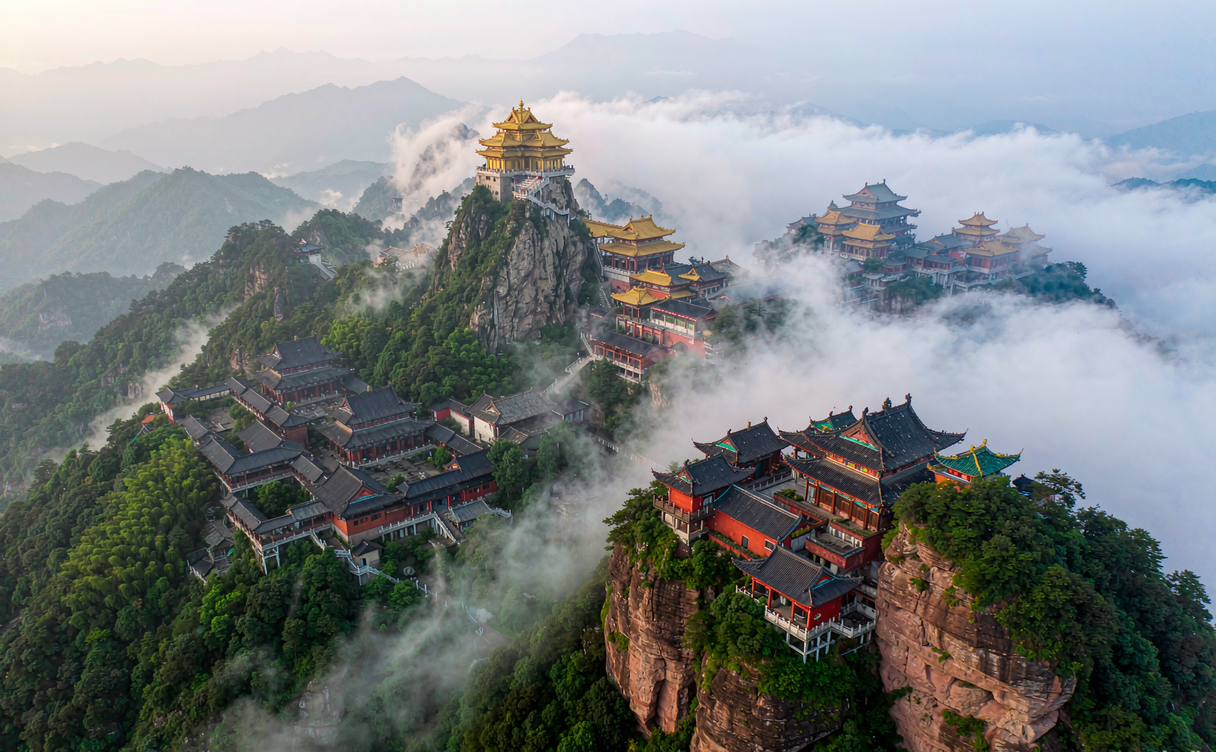
Most visitors pick a single famous peak and move on. The problem is that each Taoist mountain tells only part of the story. Wudang is the home of internal martial arts and imperial-funded temples. Qingcheng is the misty birthplace of the Taoist faith in west China. Longhu is where the Celestial Masters tradition began, with river gorges and cliff tombs. Laojun is the jade-like limestone peak named for the supreme sage, famous for its glass walkway and golden summit. Seen together, they form a layered picture of how Taoism grew across the country.
A China Taoist mountains route also spreads your risk. Weather, crowds, and seasonal closures affect each site differently. If one mountain is fogged out, the next leg of your trip still delivers. And because these peaks sit on major rail lines, the travel between them becomes part of the pleasure rather than a chore.
Stop One: Wudang Mountain, Hubei
Wudang is the anchor of the route and the most spectacular in scale. The mountain holds a chain of temples climbing toward the Golden Summit, where a gilded hall sits above the clouds. The hike up is long but rewarding, with stone paths, pine forest, and sudden views. For travelers who prefer not to walk the whole way, a combination of shuttle bus and cable car covers most of the climb. This is the heart of Taoist mountain cable car and hiking, where you can let the lift do the heavy lifting and save your legs for the final ridge.
Spend at least a full day here, ideally two. The early morning light on the purple cliffs is the reason people return. If your time is limited, begin your planning at Wudang Mountain in Hubei, which covers tickets, routes, and where to stay near the base.
Stop Two: Qingcheng Mountain, Chengdu
From Hubei, an overnight or daytime high-speed train brings you to Chengdu, the gateway to Qingcheng. Qingcheng is split into a front mountain, dense with temples and pilgrims, and a back mountain, quieter and more forested. The front is easier and richer in history; the back is better for a peaceful walk among streams and wooden bridges.
Qingcheng is tied to the founding of Taoism more than two thousand years ago, and the atmosphere is gentle and green. A short cable car runs on the front side, but many travelers enjoy the shaded stone steps that wind up to the main hall. Pair this stop with a day in Chengdu itself for food and pandas before moving on. More detail on trails and access is at Mount Qingcheng near Chengdu.
Stop Three: Longhu Mountain, Jiangxi
The jump from Chengdu to Jiangxi is the longest leg, best done by high-speed rail with one transfer, often through Wuhan or Nanchang. Longhu Mountain is different from the others because water defines it. The Lushen River runs between red sandstone peaks, and boat tours drift past hanging coffins wedged into the cliffs by an ancient people whose methods remain a mystery.
This is also the cradle of the Celestial Masters, the lineage that organized Taoism into a structured church. The temples here are smaller and more intimate than Wudang’s, and the bamboo raft rides at dawn are a highlight. Because Longhu sits far from the other stops, it works well as the southern anchor of the route. Plan the visit with help from Longhu Mountain Jiangxi guide.
Stop Four: Laojun Mountain, Henan
Laojun Mountain rises in western Henan and has become one of the most photographed peaks in China for good reason. Its golden summit halls sit on a sea of limestone pillars that, in winter, wear a cap of snow. A long cable car carries visitors close to the top, and a glass sky walk lets the brave step out over the void. The sunrise from the summit, when the sea of clouds rolls below the golden roofs, is the kind of image that stays with you.
Laojun fits naturally between Longhu and your exit city, or as a grand finale before flying home from Luoyang or Xi’an. Full logistics are at Laojun Mountain guide.
Begin your Taoist mountains journey at Wudang Mountain and build outward from there.
Planning a Wudang to Qingcheng Mountain Itinerary
A sensible order is Wudang first, then Chengdu and Qingcheng, then a flight or train south to Longhu, then north to Laojun, ending near Xi’an or Luoyang. This Wudang to Qingcheng Mountain itinerary keeps rail transfers short and lets you adjust if weather turns. Allow ten to fourteen days for the full loop if you want to linger, or seven to nine days if you trim one stop.
Trains in China are fast, cheap, and punctual, which makes the route practical even for first-time visitors. Book seats a few days ahead during holidays, and always carry your passport, since it is checked at stations.
Transport by Train Between the Peaks
The backbone of this trip is the high-speed network. Wuhan connects Hubei to the rest of the country, Chengdu anchors the southwest, and Nanchang or Yingtan serve Jiangxi. A Taoist mountains route transport by train is realistic because every stop sits within reach of a major hub. Use a rail app or the official booking site to compare times, and favor daytime trains so you can watch the countryside change from forested hills to rice paddies to red cliffs.
Buses and shuttles fill the last miles from station to trailhead. At each mountain, a scenic area shuttle is included or inexpensive, and it saves long walks on paved roads before the real paths begin.
Best Season for Taoist Mountains China
Timing shapes the whole experience. The best season for Taoist mountains China is spring, from April to early June, and autumn, from September to early November. Spring brings fresh green and fewer crowds. Autumn gives clear skies, cool hiking weather, and the first touches of color on the slopes.
Summer is lush but hot and crowded, especially at Wudang and Qingcheng. Winter is cold yet magical, particularly at Laojun, where snow on the golden roofs creates postcard scenes, though some cable cars and paths close in heavy ice. Shoulder months give you the best balance of comfort and open facilities.
A Taoist Temple Stay China Route Experience
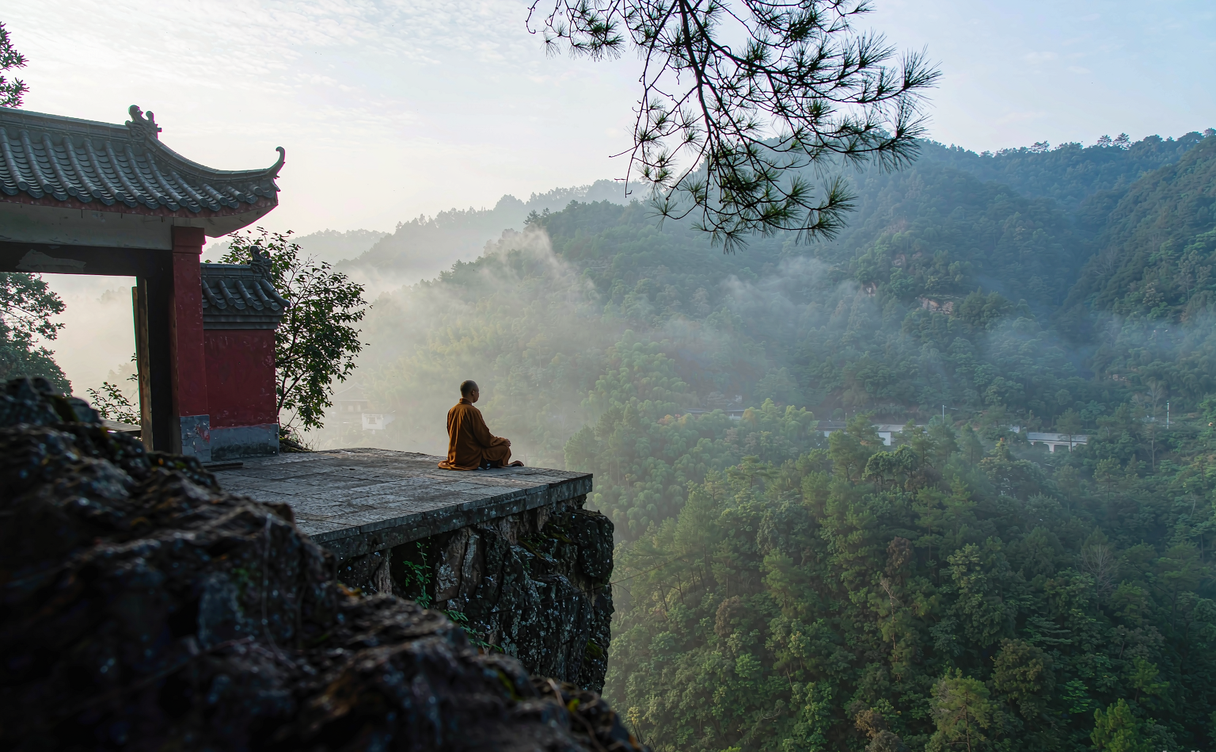
For a deeper visit, build a Taoist temple stay China route by sleeping near or within the sacred areas. Wudang and Qingcheng both offer simple guesthouses where you can join morning chanting, eat vegetarian meals, and rise before the crowds. A temple stay trades comfort for atmosphere: thin walls, early bells, and the smell of incense at dawn. It is the closest most travelers get to the rhythm of monastic life.
Book these stays directly or through a local operator, and keep expectations modest. The reward is silence, stars, and a sense of place that a day trip cannot match.
Taoist Mountain Cable Car and Hiking Tips
Every mountain on this route balances lift and legwork. Use the cable car to save energy for the sections that matter, then hike the ridge lines and temple stairs on foot. Wear sturdy shoes with grip, bring a light rain shell, and carry water even when the weather looks calm. Mist can roll in fast and drop temperatures by several degrees.
Start early. The first two hours after opening are the quietest and the most photogenic. Keep small bills and a power bank handy, since signal can fade on the higher paths. If you want more ideas for activities across the country, see the best things to do in China.
Want the full picture before you book? Read our best things to do in China to pair these mountains with cities and rivers.
Sample Two-Week Loop
Day one to three, Wudang. Day four to five, travel to Chengdu and explore Qingcheng. Day six, rest in Chengdu. Day seven to eight, rail south to Longhu. Day nine to ten, travel north to Laojun. Day eleven to twelve, Luoyang or Xi’an as a soft landing. Day thirteen, fly home. This loop is flexible: drop Longhu if time is short, or add Huashan as a fifth peak since it is close to Xi’an and also holds deep Taoist history. You can read more about that option in the Huashan Mountain guide.
Final Thoughts
A China Taoist mountains route is less a checklist than a mood. It rewards patience, early starts, and a willingness to slow down. The temples, the mist, the cable cars, and the long quiet ridges all point back to the same idea: that the mountains are teachers. Travel them in order, travel them by train, and let each peak add a verse to the same old poem.
Ready to walk the temples and ridges? Start with Wudang Mountain in Hubei and map the rest of your sacred peaks today.