

If you have ever wandered the night markets of northwestern China, you have probably caught the scent first: slow-braised pork, cumin, and toasted flatbread drifting down a lantern-lit alley. That aroma belongs to roujiamo, the Shaanxi street food that travelers love to call the Chinese hamburger. The name literally breaks into rou (meat) and jiamo (a bun stuffed inside), and the comparison to a burger is useful for first-timers, even if the reality is far older and more interesting than any fast-food counter.
This roujiamo guide covers what the sandwich is, how it is made, how it differs from its dumpling cousins, what you will pay, and exactly where to bite into the best versions in Xi’an. Whether you are planning a trip or just curious about what is roujiamo Chinese hamburger really means, read on.
What Exactly Is Roujiamo?
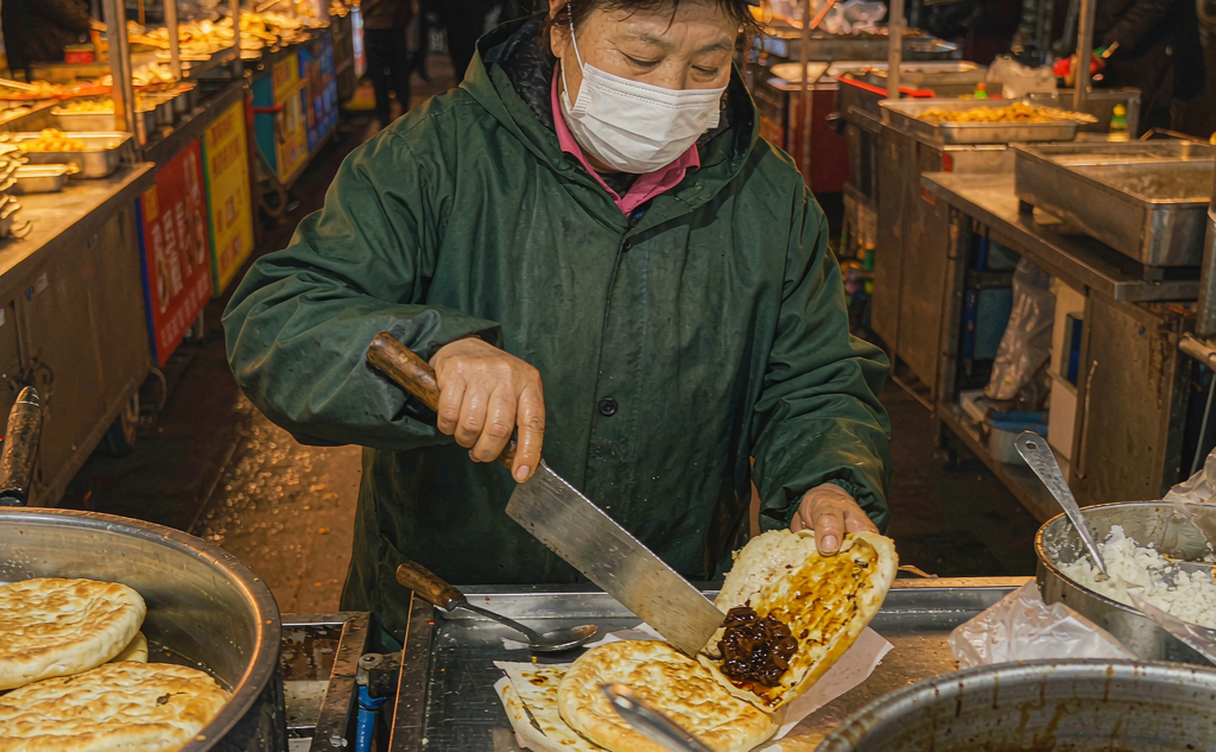
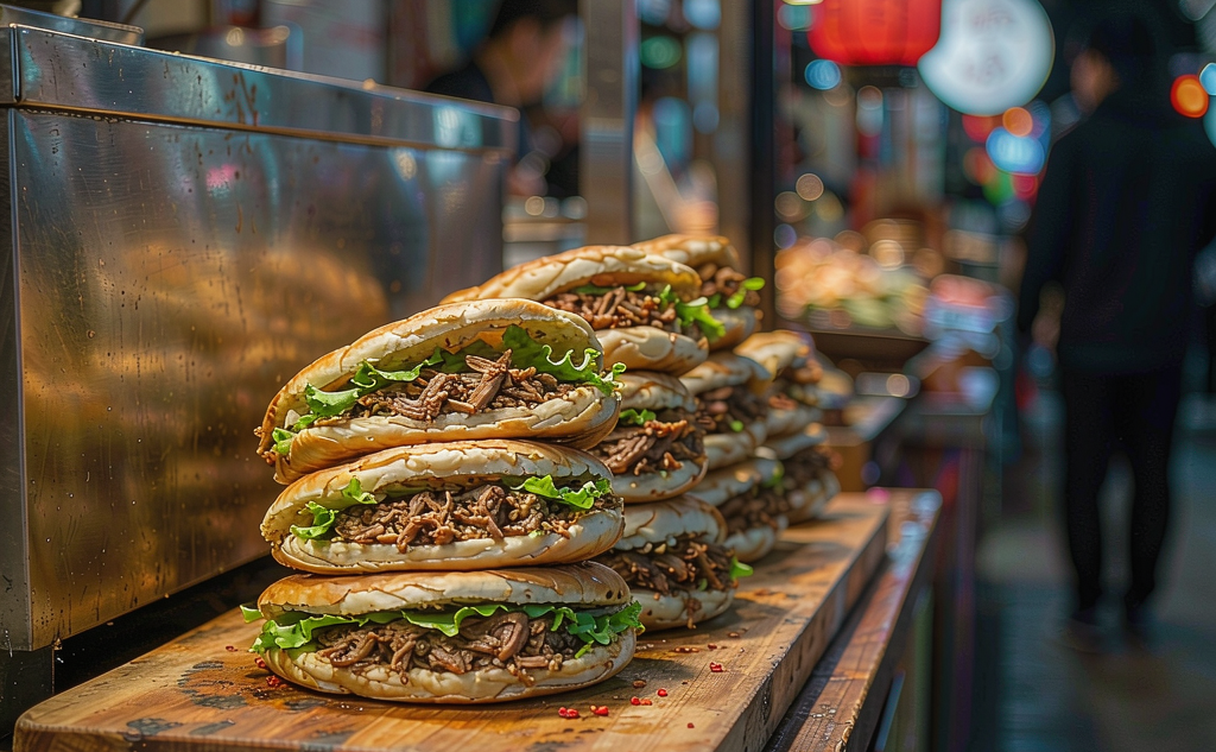
At its core, roujiamo is braised or stewed meat pressed into a round, chewy flatbread called baijimo. The bread is baked against the wall of a clay oven or on a griddle until the outside turns blistered and crisp, then it is split open and stuffed with finely chopped, intensely savory meat.
The filling is the soul of the dish. Pork is most common in the Xi’an area, but in Muslim quarters and across the wider Shaanxi region you will also find beef and lamb versions. The meat is simmered for hours in a master stock with spices like star anise, fennel, cinnamon, and Sichuan peppercorn, then minced and mixed with a spoonful of the rich, gelatinous cooking liquid. The result is succulent, aromatic, and nothing like a dry deli sandwich.
There are two main styles you should know. The Guanzhong style from the Xi’an plain uses a round, dense baijimo with a slightly chewy crumb. The Tongguan style, from the eastern county of the same name, uses a flaky, layered flatbread that shatters when you bite it, a texture locals insist is the superior vehicle. Both are worth trying so you can pick a side.
Roujiamo Versus Baozi Filling
A common point of confusion for newcomers is the roujiamo versus baozi filling question. Both are Chinese foods built around a wheat wrapper and a meat center, but the experience is completely different. Baozi are steamed buns with a soft, pillowy dough encasing a loose or juicy filling; you eat them with chopsticks or by hand, often as a meal with soup. Roujiamo, by contrast, uses a baked or griddled flatbread with a firmer, toasted crust, and the meat is chopped fine and bound with its own gravy rather than left in a single mound.
Think of it this way: a baozi is a gentle, steamed hug, while roujiamo is a handheld, savory crunch. The breads are not interchangeable, and you will not find roujiamo meat sitting inside a steamed bun. If you love dumplings and buns, our guide to dumpling restaurants in Xi’an will help you map out the broader landscape, but roujiamo earns its own dedicated stop on any food crawl.
How to Order Roujiamo in Chinese
You do not need fluent Mandarin to eat well, but a few phrases make the experience smoother and cheaper. Knowing how to order roujiamo in Chinese also signals respect to the vendor and often earns you a warmer welcome.
Start with the basics: “Yi ge roujiamo” means one sandwich. If you want the pork version, say “zhurou roujiamo”; for beef, “niurou roujiamo”; for lamb, “yangrou roujiamo”. Want it spicy? Ask for “jia la” (add chili). Want the crisp Tongguan style? Request “Tongguan baijimo” or simply “su bing” for the flaky cake. Pointing at someone else’s order works too, and most stalls display prices in Arabic numerals.
Prices are usually posted on a board, so you can confirm before paying. A friendly “duoshao qian?” (how much?) clears up any doubt. Many travelers pair their sandwich with a bowl of cold noodle or a glass of sour plum drink, and the combo makes a perfect light meal.
Roujiamo Prices in Xi’an
Understanding roujiamo prices in Xi’an helps you budget and spot tourist traps. At local breakfast stalls and hole-in-the-wall shops, a standard pork roujiamo runs about 8 to 14 yuan. The premium Tongguan flaky version, or stalls using higher-quality meat, can reach 15 to 25 yuan. Inside the Muslim Quarter’s busiest tourist strips, prices creep up to 20 or 30 yuan, and portion sizes sometimes shrink, so wander a street or two away from the main drag for better value.
For context, that is roughly the same as a cheap bowl of noodles and far less than a restaurant entree. Street roujiamo is meant to be eaten standing up, within a minute or two of assembly, while the bread is still warm and the fat has not yet cooled into a waxy film. If a sandwich has been sitting under a heat lamp for ten minutes, politely ask for a fresh one.
Where to Eat the Best Roujiamo in Xi’an
Now to the practical part: best roujiamo in Xi’an where to eat. The city is dotted with reputable stalls, but a few stand out for consistent quality and local devotion.
The Muslim Quarter (Huimin Jie) is the obvious starting point, though it rewards explorers who duck into the side alleys rather than the central pedestrian lane. Look for shops where the baijimo is baked to order and a line of locals snakes out the door. A well-known name travelers cite is Fan Ji Roujiamo near the Bell Tower, prized for a lean, fragrant pork filling, but smaller neighborhood shops in the Beilin district often match or beat it.
For the flaky Tongguan style, seek out dedicated Tongguan baijimo shops, which have spread across the city in recent years. These tend to sit away from the tourist core, near universities and residential blocks. Ask your hotel concierge or a local taxi driver for the nearest one and you will likely be pointed somewhere excellent and uncrowded.
If you want to build a full day around eating, combine your sandwich hunt with our broader Xi’an food guide, which lays out markets, noodle shops, and snack streets in one route. You can also branch out to our Shaanxi food guide for the wider regional picture, from biangbiang noodles to mutton paomo.
Ready to taste it for yourself? Plan your Xi’an food crawl with our complete Xi’an food guide and start mapping your must-eat list today.
Beyond Xi’an: Roujiamo Across Shaanxi
While Xi’an is the headline, roujiamo appears all over Shaanxi province with local twists. In Baoji to the west, vendors lean heavier on the spice and sometimes add crushed garlic. In the north near Yan’an, heartier portions reflect the colder climate and grain-based diet. Wherever you go, the ritual is the same: bread baked hot, meat braised long, and the two pressed together in your hand.
Travelers building a regional itinerary should read our Shaanxi food guide for context on how roujiamo fits alongside other provincial specialties. And if your appetite runs to noodles, our Xi’an street food and biangbiang guide explains the famous wide, belt-like strands that pair beautifully with a roujiamo half a meal later.
A Bit of History and the Bigger Picture
Roujiamo’s roots are often traced back more than two thousand years to the Han dynasty, with some writers connecting its braised-meat technique to the “wax meat” of the Zhou era. Whatever the precise lineage, the sandwich is a genuine piece of living culinary history, sold today on the same kind of flat griddle its ancestors might recognize. For a neutral overview of the dish’s background and regional names, the Wikipedia entry on roujiamo is a handy reference.
It also helps to see roujiamo inside China’s vast food map. Our Chinese food guide to the eight cuisines shows where Shaanxi’s wheat-and-mutton traditions sit relative to Cantonese, Sichuan, and Jiangsu cooking. And if you are shaping a whole trip rather than just a menu, our best things to do in China roundup can help you balance temples, mountains, and market stalls.
Curious how roujiamo compares with the rest of China’s regional cooking? Dive into our Chinese food guide to the eight cuisines and discover where Shaanxi fits in the national feast.
Tips for the First-Timer
A few closing pointers will make your first roujiamo better. Eat it immediately; the magic is in the contrast between hot, crisp bread and warm, fatty meat. Don’t be shy about asking which style is available, since some stalls only bake one kind of bread. Watch the chop: the best shops mince the meat to order so you see the steam rise. And pace yourself, because Xi’an’s street food scene is generous and you will want room for noodles, skewers, and sweet persimmon cakes afterward.
For travelers who want structure, pairing this snack with a proper noodle stop turns a quick bite into a memorable afternoon. Our Xi’an street food and biangbiang guide is the natural companion read, walking you from one corner stall to the next with confidence.
Make roujiamo the centerpiece of your next adventure: book your Xi’an trip and use our best things to do in China list to fill every day with something delicious.
Roujiamo may look like a humble sandwich, but it carries the flavor of an ancient trade-route city in every bite. Master the order, find a stall that bakes to order, and you will understand why locals queue for it at dawn. This roujiamo guide is your starting point, but the real education happens on a Xi’an street corner, warm bread in hand, with the spice of the Silk Road still in the air.