

The Wrapper Is the Whole Argument
A wonton wrapper is the thinnest thing in a Chinese kitchen. Rolled down to about half a millimetre, good ones turn nearly translucent — hold one up to a lamp and the light comes through. Set that next to a northern jiaozi wrapper, which is thick, chewy, and built to survive a hard boil, and you understand the two foods before tasting either. The wonton is the southern answer to the dumpling: less skin, more juice, and a broth that does half the seasoning for you. I learned this the slow way, in a Guangzhou morning market, watching a woman fold several hundred wontons an hour without once looking down at her hands.
That speed tells you something else worth knowing. Wontons are supposed to be quick and a little rough. Unlike pleated dumplings, where symmetry signals skill, a wonton that looks machine-perfect usually means someone used a mould. Hand-folded ones have slack in the skin, and that slack turns silky in the pot.
What a Wonton Actually Is
Wontons (馄饨, húntun) are small parcels of seasoned minced pork — very often with shrimp — sealed in thin square wrappers of wheat dough. They are boiled briefly and served in broth, tossed in chili oil, or pan-fried until the bottoms go crisp. The name is old. It sounds identical to hùndùn (混沌), the formless chaos that existed before heaven and earth separated, and early food writing leaned on that pun: a shapeless little bundle of filling sealed inside skin, exactly like the primordial blob the cosmologists described. Regions renamed the parcel as it travelled. In Guangdong it became wantān (云吞, “swallowing clouds”), in Sichuan chāoshǒu (抄手, “crossed hands”, after the fold), in Fujian biǎnròu (扁肉), in Hubei simply bāomiàn.
If you want to see how the north handles the same basic idea with thicker skin and a heavier hand, our guide to Chinese dumplings walks through the whole family. The short version: a dumpling is a meal with architecture; a wonton is a bowl of comfort with a loose, almost improvised structure. Neither is better. They solve different problems.
The Taste, Described Properly
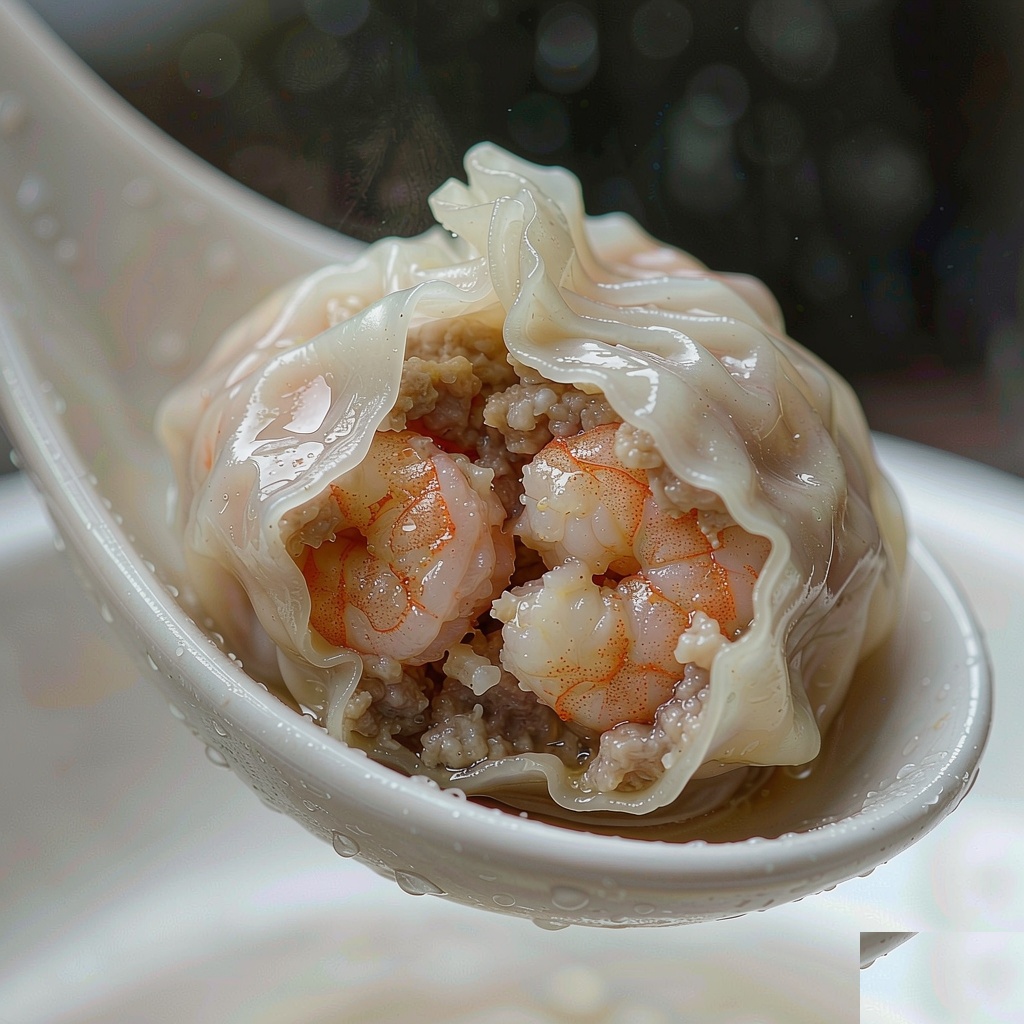
Bite through the wrapper first. It should offer almost no resistance — a soft slip, then the filling, which is where the design pays off. Because the skin is so thin, the filling stays loose and juicy rather than dense. A good pork-and-shrimp wonton gives you the snap of shrimp, then the fat richness of pork, lifted by ginger, scallion, and a whisper of sesame oil. The broth matters as much as the parcel. Cantonese shops simmer pork bones and dried flounder for hours; the result is light but deeply savoury, nothing like the salt water some tourist restaurants serve. Sichuan goes the other way entirely: the parcels land in a bowl of red chili oil, black vinegar, and garlic, the numbing tingle of Sichuan pepper arriving a beat behind the heat. Same parcel, two completely different dishes.
The Filling: What Goes In, and How Much
This is the version I cook at home for four people, roughly forty wontons with a dozen or two to spare. Amounts are worth following on the first pass — filling is easy to get subtly wrong.
- Ground pork, 300 g — ask for about 30% fat; lean pork gives you a dry, bouncy filling instead of a juicy one
- Raw shrimp, 150 g, peeled and chopped into chunks the size of a pea — half mashed, half whole, for texture contrast
- Scallion and ginger water, 4 tbsp — grate a thumb of ginger and a scallion, steep in 60 ml warm water ten minutes, squeeze, keep the liquid
- Light soy sauce, 1 tbsp; Shaoxing wine, 1 tbsp
- Sesame oil, 1 tsp; white pepper, a generous pinch; salt, 1 tsp; sugar, ½ tsp
- Square wonton wrappers, about 50 — buy the thin “Shanghai-style” ones, not the thick “Hong Kong style” if you can choose
One step people skip: stir the pork in one direction for two full minutes until it turns sticky and slightly stringy, adding the ginger-scallion water a spoonful at a time so the meat drinks it in. That stickiness is what keeps the filling juicy instead of crumbly. Fold in the shrimp last, gently, so the chunks stay intact.
Folding Wontons Without Fuss
Forget the ornate folds you see in shopfronts. The everyday home fold takes about ten seconds each:
- 1. Lay a wrapper flat, a corner pointing at you. Dab the edges with water.
- 2. Place about a teaspoon of filling just below centre. More than that and the parcel bursts; less and all you taste is skin.
- 3. Fold the bottom corner up over the filling and roll once, toward the far corner, so you have a tight little cylinder with a triangle of skin left on top.
- 4. Press the two remaining side corners together around the filling, wet one corner, and pinch them into each other. You get the classic hooded shape with a little tail.
- 5. Press firmly anywhere the skin overlaps — an unsealed wonton opens in the pot and dumps its filling into your broth.
- 6. Set finished parcels on a floured tray, not touching. They stick to each other with depressing enthusiasm.
Freeze any you will not cook within a few hours: freeze them flat on the tray first, then bag them once solid. Frozen wontons go straight into boiling water, no thawing, and cook fine with one extra minute.
From Pot to Bowl
Bring a wide pot of water to a rolling boil and drop the wontons in loose. They sink, then rise — that first float is not doneness, it is the halfway signal. Give them two more minutes, until the wrappers turn from chalky white to slightly translucent and you can see the filling’s shadow through the skin. Fish them out with a spider or slotted spoon; never drain the pot over them, which tears the skins.
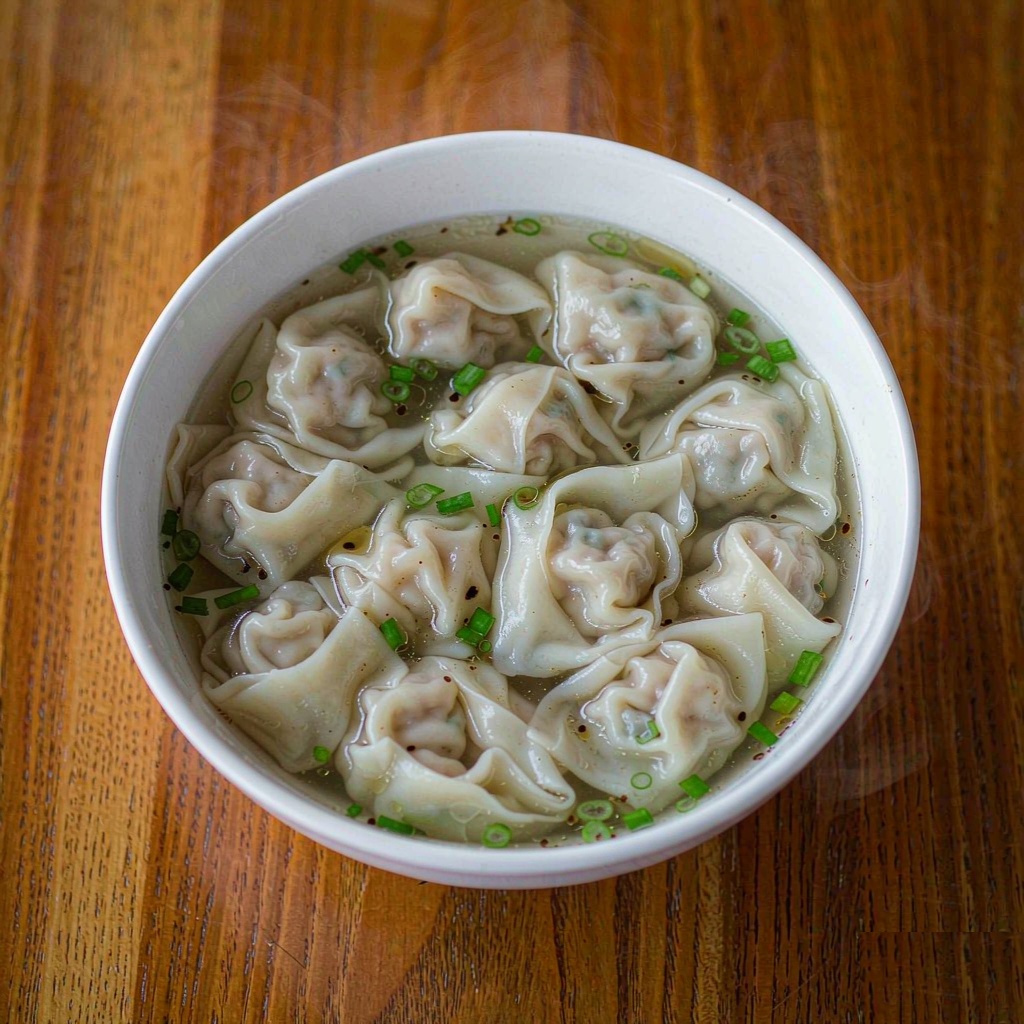
For the clear-bowl version, build the seasoning while they cook: per bowl, half a cup of good chicken stock, a teaspoon of light soy, a few drops of sesame oil, and boiling water to top up. Slide in the wontons, then scatter sliced scallions, a pinch of dried seaweed, and — if you have it — a few dried baby shrimp for depth. This is the bowl I grew up with, and it is the version the photo below shows: plain-looking food that depends entirely on the broth being right.
Who Should Order a Bowl, and Who Should Think Twice
Wontons suit almost everyone, which is why they show up at breakfast stalls and late-night counters alike. Clear-broth wontons are one of the gentlest things on a Chinese menu: soft texture, mild seasoning, easy to eat when tired or unwell, and forgiving for children and older diners. Travellers easing into the cuisine after a rough street-food week could do worse than start here. The clear-soup version is also relatively low in fat, with most of the calories coming from the pork and the thin skin.
The caution list is short but real. The wrapper is wheat flour, so anyone avoiding gluten is out of luck — there is no honest workaround. Fillings almost always contain shrimp and pork, and the Sichuan chili-oil version brings a second allergy risk in sesame oil, plus serious heat. Broths run saltier than they taste, which matters if you are watching sodium. And the pan-fried version, glorious as it is, doubles the fat — not the bowl to order if your stomach is already objecting to the trip.
Variations Worth Knowing Before You Travel
The Cantonese put wontons over springy alkaline noodles — wantān mēn (云吞面) — with the parcels hidden under the noodles so they stay firm, a small act of engineering that says a lot about Cantonese pragmatism. Noodle-and-parcel pairings like this run all over the country, and our guide to China’s regional noodle dishes covers the wider map. In Sichuan, order hóngyóu chāoshǒu (红油抄手) and expect the bowl to arrive glossy and red; the numbing-heat balance varies shop by shop, and locals argue about it the way some people argue about football. Shanghai does the opposite move: dà húntun (大馄饨), large wontons stuffed with shepherd’s purse and pork, big enough to be a full lunch.
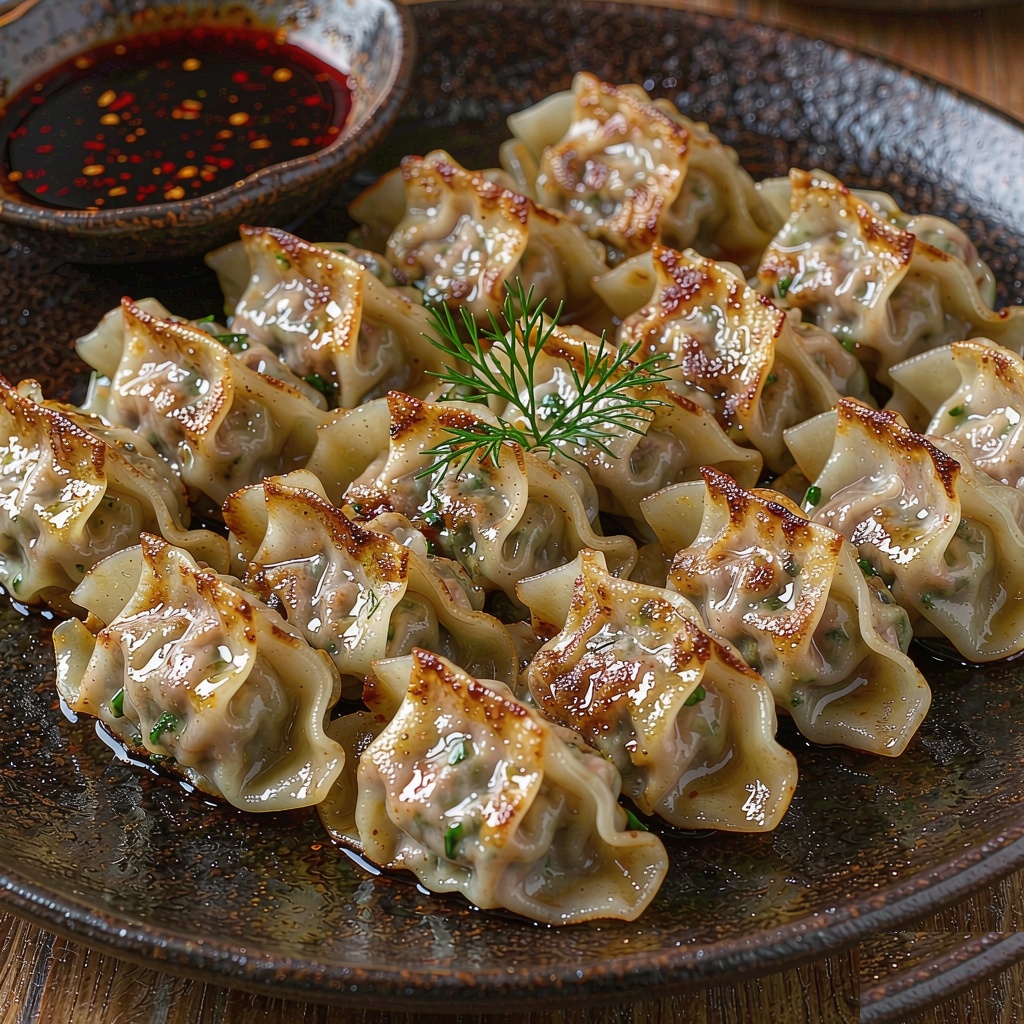
And then there is the fried lane. Pan-fry boiled-then-cooled wontons in a shallow film of oil until the bottoms turn golden and brittle, and you get the plate below — crunch first, then the same juicy interior. It is a common home finish, cheaper than dumplings for a crowd. If you like the idea of a parcel with a surprise inside, Shanghai’s soup dumplings take the concept further, sealing hot broth inside the skin itself.
Practical tips worth their weight: season the filling a little stronger than seems wise, because the thin wrapper and bland broth dilute it; never crowd the pot, or the parcels glue together; and if your wrappers dry out while folding, cover the stack with a damp cloth. Make a double batch once and you will have emergency dinners in the freezer for a month. There are fancier foods in China, and food writers write about most of them. But at seven in the morning in a southern city, with steam on the windows and a spoon in your hand, a bowl of wontons is the dish most people would actually choose.