

If you spend more than a day in Nanjing, you will hear about the duck before you taste it. This is a city that brags about its waterfowl the way others brag about their skyline. Walk into any neighborhood restaurant, any train station gift shop, or any auntie’s kitchen around the Mid-Autumn festival, and the subject comes up: Nanjing salted duck. It is not the glossy, lacquered roast duck you might know from Beijing. It is paler, leaner, faintly aromatic, and served cold in neat slices with a little pile of ginger. For travelers, it is the single most representative thing to eat in the former capital, and yet almost nobody orders it confidently on the first try.
This Nanjing salted duck guide is here to fix that. Below you will learn what the dish actually is, where to find a good version, how to say it in Chinese without embarrassment, how it differs from its famous northern cousin, what it costs by the half or the whole, and how to bring some home without it going bad in your luggage.
What exactly is Nanjing salted duck
The dish is known locally as yan shui ya, which translates roughly to “salt-water duck.” Do not let the word “salted” scare you. The duck is not dried and shriveled like a holiday ham. It is a whole bird cured briefly in a brine of salt, Sichuan peppercorn, and a handful of aromatics, then poached gently in stock until just cooked through. The meat stays moist and tender, the skin renders to a soft, jellied layer, and the flavor is clean rather than aggressive. A well-made bird tastes of duck first and seasoning second.
The curing is what gives the meat its signature pale, slightly translucent look near the bone. Traditional makers in Nanjing age the brine and treat the process almost like a craft. The best versions are eaten at room temperature, never reheated, which is why you will often see them stacked in deli cases rather than coming steaming from a wok.
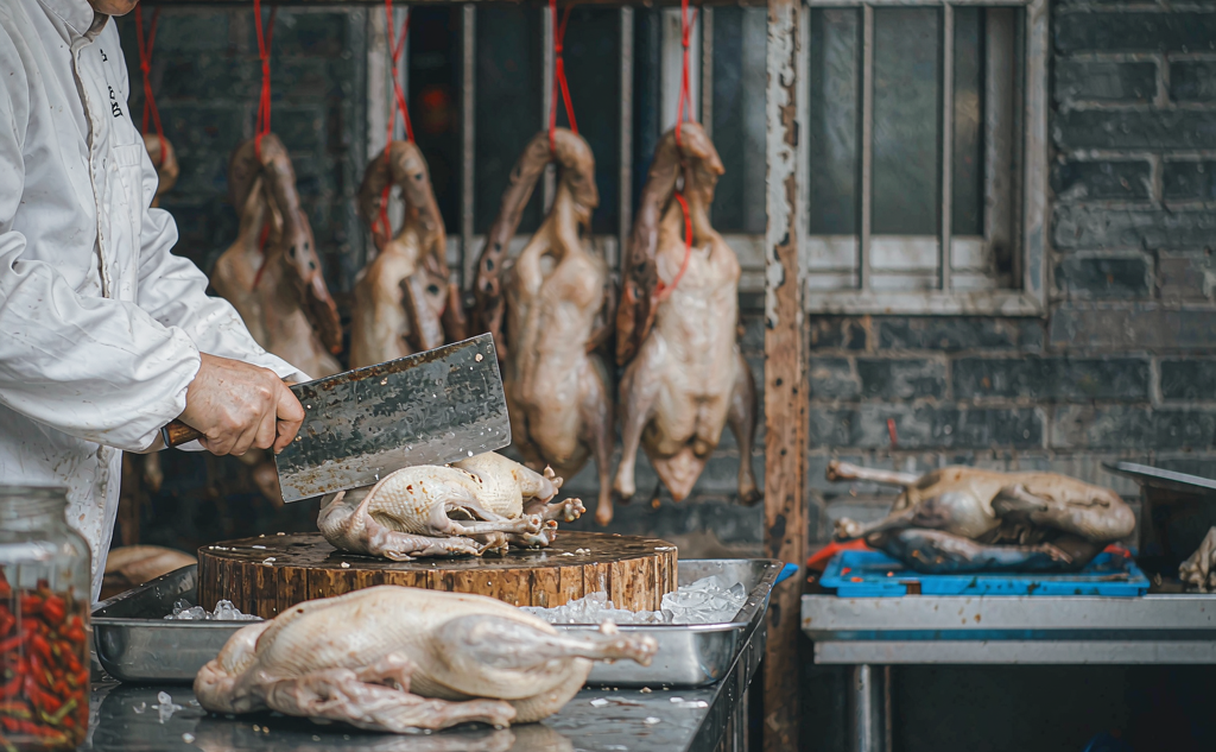
A useful habit is to think of this as a cold-cut culture, not a hot-meal culture. You buy it by weight, you take it home or to a table, and you eat it with rice, beer, or just a few bites standing at the counter. It is everyday food, not a banquet centerpiece, which is precisely why visitors underestimate it.
A short backstory that actually matters
Nanjing sits on the Yangtze and has been ringed by lakes and paddies for centuries, which made duck farming easy and cheap. The local climate also suited a preserved, brine-cured bird that could be kept without refrigeration through the humid months. Over time the dish moved from peasant preservation trick to city symbol. Today you will find it everywhere from hole-in-the-wall shops to hotel buffets, and during the autumn festival season the queues outside famous shops can wrap around the block.
If you want the deeper culinary context, the dish has its own place in the broader story of Chinese cuisine, which you can read about in this overview of Chinese food on Wikipedia. It helps to know that Nanjing’s style belongs to the Huaiyang family of cooking, prized for subtlety rather than heat or heavy sauce.
Best place to eat salted duck in Nanjing
The big names are hard to miss. Shui Xi Men, a historic shop brand, is the one tourists are sent to, and for good reason: the ducks are consistent, the meat is tender, and the counters are fast. Xu’s Salted Duck is another long-running favorite with locals who care more about taste than photo opportunities. You will also stumble onto excellent versions at neighborhood markets where a single family has been curing ducks for thirty years.
For a sit-down experience, pair the duck with a few hot dishes at a local Jiangsu restaurant. Order a half duck to start, then add a soup and a green vegetable. The cold slices against a warm bowl of rice is the kind of meal Nanjing people actually eat. If your trip is built around our Nanjing food guide, salted duck should be your first stop, not your last.
The Confucius Temple area is a natural place to combine sightseeing with snacking. You can wander the lantern-lit streets, then duck into a side shop for a takeaway portion. Our Nanjing Confucius Temple guide maps out the easiest walking route if you want to eat and explore in one loop.
Plan your tasting route with our full Nanjing travel guide so you can hit the best duck shops between the major sights.
How to order salted duck in Chinese
You do not need fluent Mandarin, but a few phrases will save you from ending up with a deep-fried surprise. The dish is yan shui ya, pronounced roughly “yen-shway-yah.” If you want half, say ban zhi, “bahn-jir.” A whole duck is zheng zhi, “jeng-jir.” Most shop counters will simply point at the bird and ask how much you want by weight, so learning the numbers helps: yi jin is one jin (about half a kilo).
A practical tip: many travelers worry the vendor will give them the bony bits. Point at the breast and say xiong, “shyong,” if you want white meat. If you want it sliced rather than chopped through the bone, ask for pian, “pyen,” meaning slices. These small words go a long way and usually earn you a smile.
Nanjing salted duck versus Beijing roast duck
This is the comparison every first-timer makes, and the two could not be more different. Beijing roast duck is a production: the bird is inflated, glazed, roasted until the skin shatters, then carved tableside and wrapped in thin pancakes with scallion and sweet bean sauce. It is rich, theatrical, and expensive. Nanjing salted duck is quiet: poached, chilled, sliced, and eaten plain with a dab of ginger. It costs a fraction of the roast duck and asks nothing of you but an appetite.
Neither is “better.” They answer different cravings. If you want spectacle and a splurge, the north wins. If you want the honest flavor of the city and a snack you can carry, Nanjing wins. We break down the northern side in our Beijing duck guide so you can decide which to prioritize on a China trip.
Salted duck prices and whole versus half
Prices move with the season and the shop, but as a rough 2026 range, a whole duck runs about 60 to 100 yuan at a reputable counter, and a half is naturally half that. Festival periods around September and October push prices up because demand spikes and the ducks are considered at their fattest and best. Tourist-heavy areas charge a premium, so stepping two blocks off the main drag often saves you twenty percent.
Whole versus half is mostly a logistics question. A whole duck is roughly one and a half to two kilos and feeds four to six as part of a meal, or two hungry travelers over two snacks. A half is the right call if you are solo, if you want to try other dishes too, or if you are uncertain about liking the cold style. Vendors are happy to sell by weight if you just want a taste, so do not feel locked into a full bird.
Where to buy Nanjing salted duck to take home
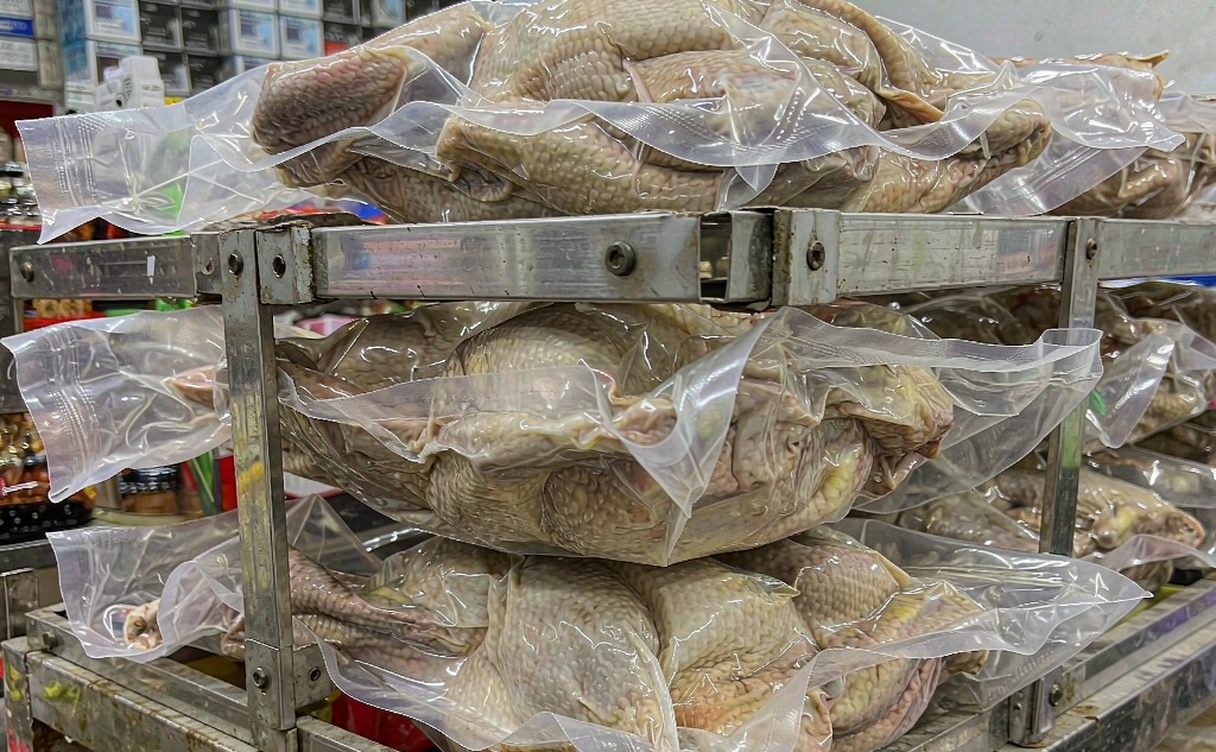
Salted duck is the classic Nanjing souvenir, and the vacuum-packed versions at the train station and airport exist precisely for travelers. A sealed whole duck travels well for a day or two unrefrigerated and longer if you can keep it cool. For the freshest take-home, buy from a busy shop the morning before you leave and ask for the vacuum seal; many counters do it on the spot for a small fee.
If you are flying internationally, check your home country’s rules on cooked poultry before you wedge a duck into your suitcase. Most cooked, vacuum-sealed products are fine, but rules vary and a confiscated duck is a sad ending to a good trip. For a wider food-souvenir strategy across the country, our China food tour guide covers what travels and what does not.
Want a duck-focused itinerary that strings together the best shops and sights? Build it around our best things to do in China list for a trip that eats well from city to city.
A few etiquette notes
Eat the slices at room temperature, not cold from the fridge; the flavor flattens when icy. A little ginger sits on the plate for a reason, use it. And do not expect sauce or a fuss. The point is restraint. If you pair it with something, make it plain rice, a light soup, or a cold beer. Nanjing locals treat it as a casual pleasure, and you should too.
One more thing: the best duck you eat may not be at a famous shop. Some of the most memorable portions come from a random market stall where the owner has been curing since the 1990s. Wander, point, and trust the queue. A long line of locals is the only review system you really need.
Putting it together
Nanjing salted duck is the rare travel food that is both the symbol of a place and genuinely good to eat. Learn the few words to order it, pick a reputable shop or a busy stall, decide half or whole based on your hunger, and consider a vacuum pack for the trip home. Do that, and you will have eaten the city the way Nanjing actually does, not the way a postcard suggests.
Ready to build the rest of your China eating plan? Add a duck stop to every day of your visit and let the city’s quiet signature dish become the through-line of your trip.